台式服务器
CN → US| HS Code | Tariff Rate | Origin | Destination | Doc |
|---|---|---|---|---|
| 8471500150 | 35.0% | CN | US | Official Doc |
| 8471490000 | 17.5% | CN | US | Official Doc |
| 8517620090 | 35.0% | CN | US | Official Doc |
| 8517620020 | 35.0% | CN | US | Official Doc |
Product Images
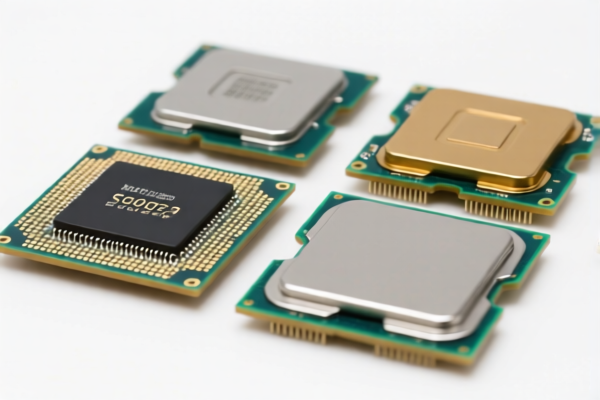
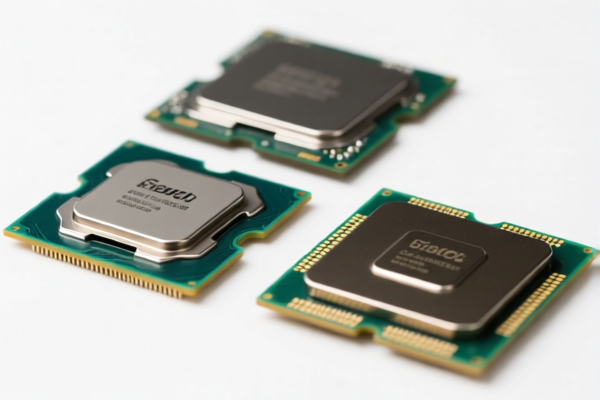
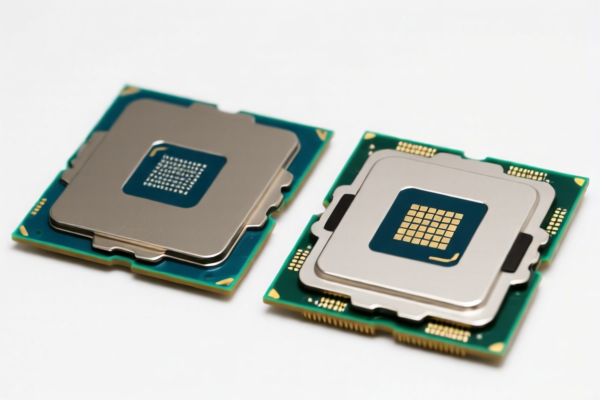
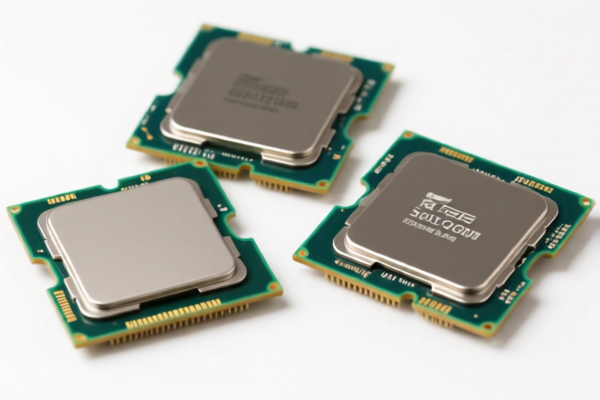
AI Analysis
🖥️ Desktop Server Classification Analysis & Customs Clearance Guide (2026)
🌐 HS Code Reference & Customs Strategy | Latest Tariff Rules for "Desktop Server" | Professional Clearance Protocol
📌 I. Product Definition & Core Classification Logic: What is a "Desktop Server"?
A Desktop Server is a compact computing unit designed for small-to-medium business (SMB) environments, home offices, or edge computing. Unlike traditional rack-mount servers, it fits on a desk or under a monitor.
Critical Classification Distinction:
In US Customs terminology, the classification depends heavily on its primary function and physical configuration:
1. As an ADP (Automatic Data Processing) Unit: If it functions as a standalone computer with built-in display support or acts as a general-purpose processing unit, it falls under Chapter 84.
2. As a Data Transmission Device: If it is primarily configured as a router, switch, or dedicated data forwarding device, it falls under Chapter 85.
⚠️ Key Differentiator:
- If the device is a general-purpose computer (CPU, RAM, Storage) used for data processing → HS Code 8471.
- If the device is specialized for network routing/switching → HS Code 8517.
📦 II. HS Code Classification Details (Based on Provided Data)
Based on the input data for "Desktop Server", there are 4 potential HS Codes with distinct tariff implications. Below is the detailed breakdown.
| HS Code | Summary / Justification | Total Tax Rate | Tax Composition (China Origin → US) |
|---|---|---|---|
| 8471.50.01.50 | Classified as a processing unit of an ADP machine. It meets the definition for non-CRT display types or general processing units associated with desktop setups. | 35.0% | Base: 0% Add'l Tariff (301): 25% IEEPA Section 122: 10% |
| 8471.49.00.00 | Classified as an ADP machine where the function is consistent with machines entering as a system. This code often applies to certain monitor/display configurations or specific processing units not covered under 8471.50. | 17.5% | Base: 0% Add'l Tariff (301): 7.5% IEEPA Section 122: 10% |
| 8517.62.00.90 | Classified as a machine for receiving, converting, and transmitting data. This is used if the server is primarily functioning as a network transmission device. | 35.0% | Base: 0% Add'l Tariff (301): 25% IEEPA Section 122: 10% |
| 8517.62.00.20 | Classified as a data processing and transmission device, specifically falling under switches and routers. If the server is hardwired for routing, this code applies. | 35.0% | Base: 0% Add'l Tariff (301): 25% IEEPA Section 122: 10% |
🔍 Key Insight:
The only code with a lower total tax rate (17.5%) is8471.49.00.00. All other interpretations lead to a 35.0% total tax rate.
Note: The 17.5% rate implies a lower Section 301 additional tariff (7.5% vs 25%), likely due to specific subheading exclusions or different functional classifications.
💰 III. Detailed Tariff Analysis (2026 Context)
✅ Applicable Country: United States (US)
✅ Origin: China (CN)
✅ Effective Dates: Tariffs active for imports from China.
🎯 1. High-Tariff Scenarios (35.0% Total)
Codes: 8471.50.01.50, 8517.62.00.90, 8517.62.00.20
| Item | Detail |
|---|---|
| Base MFN Rate | 0.0% (Most servers/network devices have 0% base duty) |
| Section 301 Additional Tariff | 25.0% (Applies to most electronics and computer hardware from China) |
| IEEPA Section 122 Tariff | 10.0% (Specific additional levy on Chinese imports) |
| Total Effective Tax Rate | 35.0% |
| Tax Calculation | CIF Value × 35% |
| De Minimis Exemption | ❌ Not Eligible. Section 301 and IEEPA tariffs generally exclude de minimis (Section 321) relief. |
📌 Explanation:
- Section 301 (25%): Applied to goods listed in Sections 3 & 4 of the Trade Act. Computer servers and networking equipment are heavily targeted.
- IEEPA 10%: An additional national security or economic emergency tariff applied to specific Chinese goods.
- Result: For8517.62(Network Routers/Switches) and most8471.50(Processing Units), the cost impact is severe.
🎯 2. Lower-Tariff Scenario (17.5% Total)
Code: 8471.49.00.00
| Item | Detail |
|---|---|
| Base MFN Rate | 0.0% |
| Section 301 Additional Tariff | 7.5% (Note: Some subheadings of 8471 have reduced Section 301 rates due to specific exclusions or classifications as "monitor/display systems" rather than general processing units in certain contexts) |
| IEEPA Section 122 Tariff | 10.0% (Applies uniformly) |
| Total Effective Tax Rate | 17.5% |
| Tax Calculation | CIF Value × 17.5% |
| De Minimis Exemption | ❌ Not Eligible |
📌 Critical Warning:
While8471.49.00.00offers a significant savings (17.5% vs 35%), it is often reserved for monitors or specific display systems (as per the summary "consistent with other machines in the form of a system").
Risk: If the CBP (Customs and Border Protection) inspector determines the "Desktop Server" is a general-purpose computer (CPU-heavy) rather than a display-related system, they may reclassify it to8471.50.01.50or8471.30, triggering the 35% rate and back duties.
🛠️ IV. Customs Clearance Strategic Advice
✅ 1. Documentation Checklist (Mandatory)
| Document | Requirement | Purpose |
|---|---|---|
| Product Specification Sheet | ✔️ Must detail CPU, RAM, Storage, Network Ports, and Power Supply. | Proves if it's a general-purpose computer (ADP) or a network device. |
| Commercial Invoice | ✔️ Must clearly state "Desktop Server" and HS Code. Avoid vague terms like "Computer Hardware." | Prevents ambiguity during customs review. |
| Country of Origin Certificate | ✔️ Proof of Chinese origin. | Confirms applicability of Section 301 and IEEPA tariffs. |
| Function Description | ✔️ Detailed narrative: "Is it used for file storage, web hosting, or network routing?" | Critical for distinguishing between 8471 (Computer) and 8517 (Telecom/Network). |
✅ 2. Classification Strategy & Risk Mitigation
Scenario A: General Purpose Desktop Server
- Characteristics: Runs Windows/Linux, has USB ports, general computing power.
- Recommended HS Code:
8471.50.01.50 - Tariff: 35%
- Risk: Low risk of misclassification if declared as "Processing Unit."
- Advice: Accept the 35% rate. Do not attempt to force
8471.49unless it is actually a display system.
Scenario B: Network-Optimized/Edge Server
- Characteristics: Primarily handles data routing, switching, or dedicated data transmission.
- Recommended HS Code:
8517.62.00.90or8517.62.00.20 - Tariff: 35%
- Risk: If it runs general OS, CBP may shift to
8471. - Advice: Ensure hardware lacks general-purpose user interfaces (like standard VGA/HDMI for desktop use) if claiming
8517.
Scenario C: Attempting Lower Tax (17.5%)
- Recommended HS Code:
8471.49.00.00 - Tariff: 17.5%
- Risk: HIGH. This code is primarily for monitors or display systems. A standard server will likely be rejected.
- Advice: Do not use this code unless the device is explicitly a monitor-with-computing-capability or a specific display terminal. Misclassification here can lead to penalties and audits.
✅ 3. Key Clearance Tips (Pro Tips)
🔥 "Function Defines Function, Not Name!"
- Name on Invoice: "Desktop Server" is acceptable, but add "ADP Processing Unit" or "Data Transmission Equipment" to align with the HS Code.
- Ports Matter:
- If it has USB, HDMI, Ethernet, and PCIe slots → Likely 8471 (Computer).
- If it has only Ethernet/SFP ports and no user interface → Likely 8517 (Network Device).
- Section 301 Exclusions: Check if any specific model number is excluded from the 25% tariff. (Current data shows no exclusion, so assume 25% applies).
- IEEPA 10%: This is non-negotiable for Chinese-origin goods in this category.
🌍 V. Market Comparison & Final Verdict
| Classification | HS Code | Total Tax | Best For |
|---|---|---|---|
| Standard ADP Unit | 8471.50.01.50 |
35.0% | Most Desktop Servers (General Purpose) |
| Network Device | 8517.62.00.90 |
35.0% | Servers acting as Routers/Switches |
| Display/System | 8471.49.00.00 |
17.5% | ⚠️ High Risk for Servers. Only use if it's essentially a monitor system. |
📌 Final Recommendation:
For a standard Desktop Server, the safest and most accurate classification is8471.50.01.50with a 35% total tax rate.
- Do not attempt to use8471.49.00.00unless you have a compelling technical argument that it is a "system" entry primarily for display purposes, as this invites audit.
- Do not use8517unless the device is exclusively for data transmission and lacks general computing functions.
🎯 VI. Conclusion: Precision Prevents Penalties
🎯 Takeaway:
🔹 "Server or Switch? Know the Difference!"
🔹 35% is the standard for Chinese Desktop Servers under current 2026 trade policies (Section 301 + IEEPA).
🔹 17.5% is a trap if misapplied. Only use8471.49for true display systems.
📌 Action Item:
1. Confirm Hardware Specs: Does it have general-purpose inputs/outputs? → Use 8471.50.
2. Calculate Cost: Budget for 35% duty on CIF value.
3. Declare Accurately: Use clear terminology to avoid CBP reclassification.
📣 Pro Tip:
If your Desktop Server is not made in China (e.g., Vietnam, Mexico), you may avoid the 25% Section 301 tariff, reducing the total to 10% (IEEPA only) or 0% depending on FTA rules. Supply chain diversification is the only way to reduce this tax burden significantly.
✨ Accurate Classification = Predictable Costs.
💼 Don't let HS Code errors eat your margins!
Customer Reviews
About HS Code Classification
The Harmonized System (HS) is an internationally standardized nomenclature developed by the World Customs Organization (WCO) to classify traded products. Over 200 countries use the HS system as the basis for customs tariffs, trade statistics, and import/export regulations.
Each HS code follows a hierarchical structure:
- Chapter (2 digits) — Broad category of goods (e.g., Chapter 84: Machinery and Mechanical Appliances)
- Heading (4 digits) — More specific grouping within the chapter
- Subheading (6 digits) — Internationally standardized breakdown, used by all WCO member countries
- National subdivisions (8-10 digits) — Country-specific extensions for further classification, such as US HTSUS 10-digit codes
Correct HS code classification is essential for smooth customs clearance, accurate duty payment, and compliance with trade regulations. Misclassification can lead to customs delays, overpayment of duties, or penalties.
When importing from CN to US, the applicable tariff rates may include:
- Most-Favored-Nation (MFN) rate — The standard duty rate applied to WTO members
- General rate — Applied to countries without trade agreements
- Trade remedy duties — Additional tariffs such as Section 301 (anti-dumping), Section 232 (national security), or countervailing duties
The information provided on this page is for reference purposes only. For official classification, please consult with your local customs authority or a licensed customs broker.