合成革卡包
CN → US| HS Code | Tariff Rate | Origin | Destination | Doc |
|---|---|---|---|---|
| 4205008000 | 35.0% | CN | US | Official Doc |
| 4202316000 | 43.0% | CN | US | Official Doc |
| 4202321000 | 0.0% | CN | US | Official Doc |
Product Images
AI Analysis
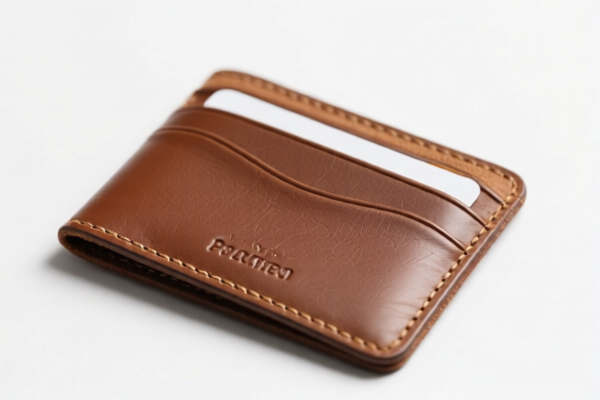
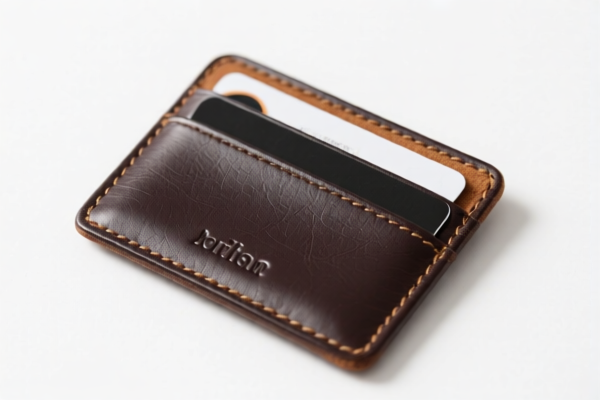
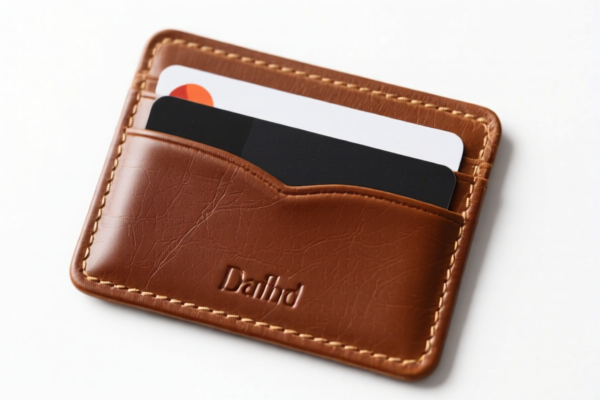
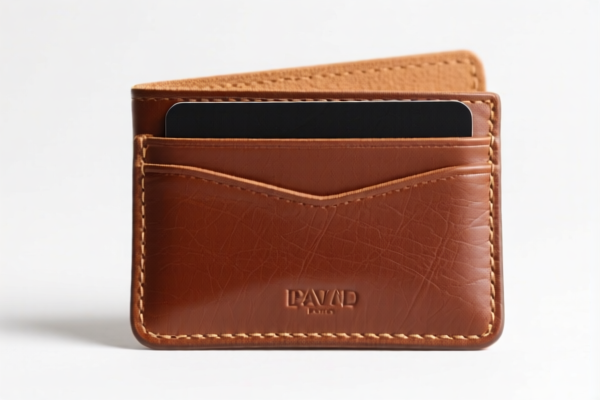
👛 Synthetic Leather Card Holder (Bi-fold/Mini Wallet)
🌐 HS Code Reference & Customs Clearance Guide | 2026 Latest Tariff Analysis | Professional Clearance Strategy
📌 I. Product Definition & Classification: Do You Really Know "Synthetic Leather Card Holder"?
A synthetic leather card holder is a small carrying case designed to hold credit cards, ID cards, and sometimes cash or coins. In international trade, it is generally categorized under Chapter 42 (Articles of Leather; Related Articles), specifically within heading 4202 (Trunks, suitcases, vanity cases, etc.) or 4205 (Other articles of leather or composition leather).
The critical classification depends on the structure and material composition: * Category A (Simple Construction): Simple sleeves or holders made of "composition leather" (artificial/synthetic leather) → Often falls under 4205.00. * Category B (Structured/Bag-like): Features compartments, linings, or behaves as a "small article for personal use" → Falls under 4202.31 or 4202.32.
⚠️ Key Distinction Point:
- If it is a simple sleeve without complex lining/structure → Likely 4205.00.80.00.
- If it has compartments, flaps, or behaves like a small bag → Likely 4202.3x.xxxx.
- The material type (Plastic Sheet vs. Textile) significantly impacts the sub-heading in 4202.
📦 II. HS Code Classification Details (2026 Latest Tariff Authority Comparison)
Based on the provided data, here are the three possible classifications for a Synthetic Leather Card Holder importing from China to the USA:
| HS Code | Product Description & Summary | Key Characteristics |
|---|---|---|
4205.00.80.00 |
Other articles of leather or composition leather (Simple synthetic leather wallet/card holder). | ✅ Simple Construction: Matches "other leather or synthetic leather articles". ❌ Not a "bag" or "container" with complex structure. |
4202.31.60.00 |
Articles of apparel or accessories, of plastics, or of textile materials, wholly or in chief weight (Regenerated Leather Category). | ✅ Regenerated Leather: Classified as a "carried article" made of "regenerated leather". ✅ Material: Synthetic leather considered as regenerated leather/plastic sheet. |
4202.32.10.00 |
Articles of apparel or accessories, of plastics, or of textile materials, wholly or in chief weight (Laminated/Reinforced Plastic/Textile). | ✅ Composite Material: Fits "laminated or reinforced plastic/textile materials". ✅ Usage: Carrying articles for personal items. |
🔍 Focus Reminder:
-4205.00.80.00is typically for simple synthetic leather goods (like basic card sleeves).
-4202.3xcodes are for structured small articles (like bi-fold wallets with coin pockets/linings).
- Tax rates vary significantly based on which code is chosen, especially with US Section 301 and IEEPA tariffs.
💰 III. 2026 Latest Tariff Rate Breakdown (Including Surtaxes & Policy Add-ons)
✅ Applicable Country: United States (US)
✅ Origin: China (CN)
✅ Effective Time: Current Rates (2025-2026)
🎯 1. 4205.00.80.00 —— Simple Synthetic Leather Card Holder (Simple Article)
| Item | Content |
|---|---|
| Base Tariff | 0.0% |
| Section 301 Surtax | +25.0% |
| IEEPA Surtax (Sec 122) | +10.0% |
| Total Tax Rate | 35.0% |
| Tax Calculation | CIF Value × 35% |
| De Minimis Exemption? | ❌ NO (Not eligible for de minimis exemption under these surtaxes) |
| Legal Path | Base: 0% + Section 301: 25% + IEEPA: 10% |
📌 Explanation:
- This is the simplest classification with the lowest tax burden among the options.
- "Base 0%": Simple articles of composition leather often have low base rates.
- "Total 35%": High due to combined 301 (25%) and IEEPA (10%) tariffs.
- Strategy: Use this code if the product is a simple sleeve without complex lining or compartments.
🎯 2. 4202.31.60.00 —— Synthetic Leather Card Holder (Regenerated Leather Category)
| Item | Content |
|---|---|
| Base Tariff | 8.0% |
| Section 301 Surtax | +25.0% |
| IEEPA Surtax (Sec 122) | +10.0% |
| Total Tax Rate | 43.0% |
| Tax Calculation | CIF Value × 43% |
| De Minimis Exemption? | ❌ NO |
| Legal Path | Base: 8% + Section 301: 25% + IEEPA: 10% |
📌 Note:
- This code treats the item as a "carried article" made of regenerated leather.
- Higher Base Rate (8%) increases the total cost.
- Suitable for wallets with regenerated leather content or specific "apparel accessory" classification.
🎯 3. 4202.32.10.00 —— Synthetic Leather Card Holder (Plastic/Textile Composite)
| Item | Content |
|---|---|
| Base Tariff | 12.1¢/kg + 4.6% |
| Section 301 Surtax | +25.0% |
| IEEPA Surtax (Sec 122) | +10.0% |
| Total Tax Rate | 12.1¢/kg + 4.6% + 35.0% |
| Tax Calculation | (12.1¢/kg × Weight) + (CIF Value × 4.6%) + (CIF Value × 35%) |
| De Minimis Exemption? | ❌ NO |
| Legal Path | Base: 12.1¢/kg + 4.6% + Section 301: 25% + IEEPA: 10% |
📌 Warning:
- This is the most complex and potentially expensive classification.
- Specific Duty (12.1¢/kg): Adds cost based on weight.
- Ad Valorem (4.6%) + Surtaxes (35%): Total ad valorem is ~39.6%.
- Suitable for card holders made of laminated plastic or textile materials rather than pure "leather-like" material.
🛠️ IV. Customs Clearance Practical Advice (Avoid Pitfalls Guide)
✅ 1. Essential Documentation Checklist
| Document | Required | Purpose |
|---|---|---|
| ✅ Product Specifications | ✔️ | Describe material (PU, PVC, TPU?), structure (foldable, single sleeve?), dimensions. |
| ✅ Material Composition | ✔️ | Specify % of synthetic leather vs. lining. Critical for 4205 vs 4202 distinction. |
| ✅ Product Photos | ✔️ | Show front, back, interior compartments, and label. |
| ✅ Commercial Invoice | ✔️ | Clearly state "Synthetic Leather Card Holder" or "Composition Leather Holder". |
| ✅ Packing List | ✔️ | Include net weight (critical for 4202.32.10.00 specific duty). |
✅ 2. Declaration Strategy (Key Mnemonic)
🔥 "Simple Sleeve = 4205 (0% Base); Structured Bag = 4202 (8% Base); Plastic Composite = 4202.32 (Weight Tax)"
| Scenario | Recommended HS Code | Risk if Misclassified |
|---|---|---|
| Simple Card Sleeve (No lining, no coin pocket) | 4205.00.80.00 |
Misclassifying as 4202 → Overpay taxes. |
| Bi-fold Wallet (With lining, flap, compartments) | 4202.31.60.00 or 4202.32.10.00 |
Misclassifying as 4205 → Underpay taxes → Penalty & Audit. |
| Plastic-coated Fabric Holder | 4202.32.10.00 |
Misclassifying as leather → Classification error. |
✅ 3. Special Considerations
| Situation | Advice |
|---|---|
| OEM Custom Design | Provide design sheets to prove it is a "card holder" and not a "wallet" or "purse". |
| Material Verification | If the "synthetic leather" is actually PVC/PU film on textile, use 4202.32.10.00. If it is imitation leather sheets, use 4205.00.80.00 or 4202.31.60.00. |
| De Minimis Risk | All these codes are subject to Section 301 and IEEPA surtaxes, which override de minimis exemptions for shipments from China. Do not rely on $800 exemption for these specific goods if they fall under these surtax categories. |
🌍 V. Global Market Comparison (2026 Latest)
| Country/Region | Recommended HS Code | Tariff (China Origin) | Certification | Note |
|---|---|---|---|---|
| 🇺🇸 USA | 4205.00.80.00 |
35.0% (Total) | None specific | Highest base rate is 4202 at 43%. |
| 🇨🇳 China | 4205.00.80.00 |
~10-15% (Import Duty) | None | Domestic production uses different codes. |
| 🇪🇺 EU | 4205.00 |
~5-12% | CE (if applicable) | No Section 301 equivalent. |
| 🇬🇧 UK | 4205.00 |
~5-12% | UKCA | Post-Brexit rules apply. |
📌 Conclusion:
- USA is the most challenging market for synthetic leather goods due to combined 301 + IEEPA tariffs.
- Choose4205.00.80.00if possible to minimize base duty, provided the product structure qualifies.
- Prepare for ~35-43% total duty regardless of the specific HS code chosen.
📌 VI. Common Errors & Pitfalls (Lessons Learned)
❌ Mistake 1: Declaring a structured wallet as a simple card sleeve (4205)
👉 Result: Customs may reclassify to 4202, charging 43% or 35%+weight tax, plus penalties for misdeclaration.
❌ Mistake 2: Ignoring IEEPA 10% Surcharge
👉 Result: Underestimating costs by 10%. All Chinese-origin goods are subject to this if not exempt.
❌ Mistake 3: Confusing Synthetic Leather with Plastic Sheets
👉 Result: Using 4202.32 (Plastic) when it should be 4202.31 (Regenerated Leather) or vice versa.
👉 Tip: If the material can be torn and reconstituted, it may be "Regenerated Leather". If it's a coated fabric, it might be "Plastic/Textile".
✅ Correct Approach:
"Synthetic Leather Card Holder, PU Material, Single Compartment, No Coin Pocket, Model XYZ"
🎯 VII. Conclusion: Professional Declaration, Cost Optimization!
🎯 Remember the Rules:
🔹 "Simple Sleeve? Use 4205 (0% Base). Structured Wallet? Use 4202 (8% Base)."
🔹 "Total Tax = Base + 25% (301) + 10% (IEEPA). Minimize Base to Minimize Total."📌 Pro Tip:
- If your synthetic leather is thin and flexible (like a sleeve), push for4205.00.80.00.
- If it has rigid structure, lining, or multiple compartments, expect4202codes.
- Always include weight in documentation, as4202.32.10.00has a specific duty component.
📣 Immediate Action:
📞 Consult a Customs Broker to verify material composition.
📄 Prepare Detailed Product Descriptions to support4205classification if applicable.
🚀 Plan for 35%+ Duty in your pricing strategy for US imports.
✨ Professional Clearance Starts with Accurate Classification!
💼 Every Percent Matters in Global Trade!
Customer Reviews
About HS Code Classification
The Harmonized System (HS) is an internationally standardized nomenclature developed by the World Customs Organization (WCO) to classify traded products. Over 200 countries use the HS system as the basis for customs tariffs, trade statistics, and import/export regulations.
Each HS code follows a hierarchical structure:
- Chapter (2 digits) — Broad category of goods (e.g., Chapter 84: Machinery and Mechanical Appliances)
- Heading (4 digits) — More specific grouping within the chapter
- Subheading (6 digits) — Internationally standardized breakdown, used by all WCO member countries
- National subdivisions (8-10 digits) — Country-specific extensions for further classification, such as US HTSUS 10-digit codes
Correct HS code classification is essential for smooth customs clearance, accurate duty payment, and compliance with trade regulations. Misclassification can lead to customs delays, overpayment of duties, or penalties.
When importing from CN to US, the applicable tariff rates may include:
- Most-Favored-Nation (MFN) rate — The standard duty rate applied to WTO members
- General rate — Applied to countries without trade agreements
- Trade remedy duties — Additional tariffs such as Section 301 (anti-dumping), Section 232 (national security), or countervailing duties
The information provided on this page is for reference purposes only. For official classification, please consult with your local customs authority or a licensed customs broker.