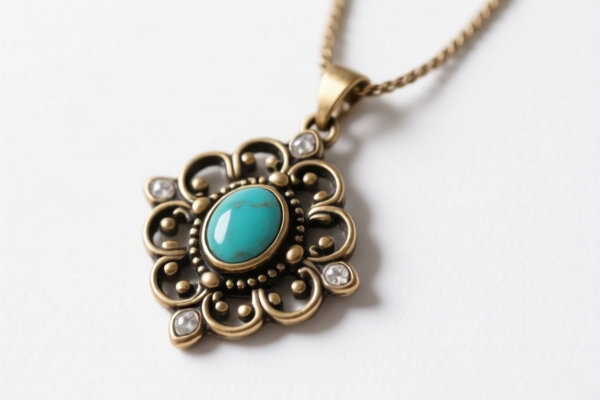
吊坠装饰品
CN → US| HS Code | Tariff Rate | Origin | Destination | Doc |
|---|---|---|---|---|
| 7116102500 | 23.0% | CN | US | Official Doc |
| 7113115000 | 22.5% | CN | US | Official Doc |
| 7116201500 | 24.0% | CN | US | Official Doc |
| 7113195095 | 23.0% | CN | US | Official Doc |
| 7117909000 | 28.5% | CN | US | Official Doc |
Product Images


AI Analysis
💎 Pendant Accessories (Jewelry & Ornamental Items)
🌐 HS Code Reference & Customs Clearance Guide | 2026 Latest Tariff Analysis | Professional Clearance Strategy
📌 I. Product Definition & Classification: Do You Truly Understand "Pendants"?
Pendant accessories are decorative items designed to be hung from a chain, cord, or necklace. In international trade, their classification depends heavily on the material composition and functional intent. They fall broadly into two categories:
Jewelry/Precious Metal Pendants: Made from precious metals (gold, silver, platinum) or semi-precious stones. These are classified under Chapter 71 (Natural or Cultured Pearls, Precious or Semi-Precious Stones). Fashion/Imitation Pendants: Made from base metals, plastic, glass, or non-precious stones. These are classified under Chapter 71 (Imitation Jewelry) or Chapter 71 (Articles of Jewelry Parts).
⚠️ Key Distinction Point:
- If the item contains precious metals, natural pearls, or semi-precious stones → Classified under HS 7113 or HS 7116.
- If the item is imitation jewelry (base metal, plastic, etc.) → Classified under HS 7117.
- Crucial Note: Material declaration must be precise. Misclassifying a gold-plated pendant as "imitation" or vice versa leads to significant tax discrepancies.
📦 II. HS Code Classification Details (2026 Latest Tariff Authority Comparison)
| HS Code | Product Description | Applicable Scenario | Material Composition |
|---|---|---|---|
7116.10.25.00 |
Pearls or cultured pearls, worked or not; articles of natural or cultured pearls | Pendant accessories; often uses pearls, precious stones, conforming to article requirements | Pearl, Precious Stone |
7113.11.50.00 |
Articles of jewelry of gold (including gold plated with platinum) or silver | Pendant accessories; belongs to jewelry category; may be silver or other precious metal | Silver, Gold, Precious Metal |
7116.20.15.00 |
Articles of semi-precious stones (including agate); worked or not | Pendant accessories; belongs to jewelry category; inferred as precious or semi-precious metal/stone mix | Semi-Precious Stone, Metal Alloy |
7113.19.50.95 |
Other articles of jewelry of precious metal or clad with precious metal | Pendant accessories; belongs to jewelry; inferred as metal or unspecified material | Precious Metal, Clad Metal |
7117.90.90.00 |
Other imitation jewelry | Pendant accessories; belongs to ornaments; inferred as common jewelry materials like metal or plastic | Base Metal, Plastic, Alloy |
🔍 Key Reminder:
- All precious/silver/gold pendants must be classified under HS 7113 or HS 7116;
- Imitation jewelry (plastic/base metal) must be classified under HS 7117;
- Do not split pendants and chains for declaration; declare as a complete set if sold together.
💰 III. 2026 Latest Tariff Rate Details (Including Surcharges, Policy Add-ons)
✅ Applicable Country: United States (US)
✅ Origin: China (CN)
✅ Effective Date: From November 10, 2025 (including subsequent imports)
🎯 1. 7116.10.25.00 —— Pearls or Cultured Pearls, Articles (Pendant Accessories)
| Item | Content |
|---|---|
| Base Duty Rate | 5.5% (ad valorem) |
| Section 301 Surcharge | +7.5% |
| Section 122 Tariff | +10% |
| Total Duty Rate | 23.0% |
| Tax Calculation | CIF Value × 23.0% |
| De Minimis Exemption Available? | ❌ No (deny_de_minimis) |
| Legal Basis Path | Section 122: 9903.01.15 → Section 301: 9903.01.25 → USITC: 7116.10.25.00 |
📌 Explanation:
- "Section 301 Surcharge 7.5%" comes from the Additional Tariffs under Section 301 of the Trade Act;
- "Section 122 Tariff 10%" is a specific surcharge for certain Chinese-origin goods;
- Total 23.0%, considered a high tariff for jewelry, requiring early cost assessment.
🎯 2. 7113.11.50.00 —— Articles of Jewelry of Gold (Including Gold Plated with Platinum) or Silver
| Item | Content |
|---|---|
| Base Duty Rate | 5.0% |
| Section 301 Surcharge | +7.5% |
| Section 122 Tariff | +10% |
| Total Duty Rate | 22.5% |
| Tax Calculation | CIF Value × 22.5% |
| De Minimis Exemption Available? | ❌ No (deny_de_minimis) |
| Legal Basis Path | Section 122: 9903.01.15 → Section 301: 9903.01.25 → USITC: 7113.11.50.00 |
📌 Note:
- Applies to silver and gold-plated pendants;
- Even if the gold layer is thin, if declared as "gold-plated jewelry," this code applies;
- Total 22.5%, slightly lower than pearl/stone items but still significant.
🎯 3. 7116.20.15.00 —— Articles of Semi-Precious Stones
| Item | Content |
|---|---|
| Base Duty Rate | 6.5% |
| Section 301 Surcharge | +7.5% |
| Section 122 Tariff | +10% |
| Total Duty Rate | 24.0% |
| Tax Calculation | CIF Value × 24.0% |
| De Minimis Exemption Available? | ❌ No (deny_de_minimis) |
| Legal Basis Path | Section 122: 9903.01.15 → Section 301: 9903.01.25 → USITC: 7116.20.15.00 |
📌 Note:
- Applies to pendants made of agate, jade, turquoise, or other semi-precious stones;
- Higher base rate (6.5%) reflects the value of natural materials;
- Total 24.0%, the highest among natural material pendants.
🎯 4. 7113.19.50.95 —— Other Articles of Jewelry of Precious Metal or Clad with Precious Metal
| Item | Content |
|---|---|
| Base Duty Rate | 5.5% |
| Section 301 Surcharge | +7.5% |
| Section 122 Tariff | +10% |
| Total Duty Rate | 23.0% |
| Tax Calculation | CIF Value × 23.0% |
| De Minimis Exemption Available? | ❌ No (deny_de_minimis) |
| Legal Basis Path | Section 122: 9903.01.15 → Section 301: 9903.01.25 → USITC: 7113.19.50.95 |
📌 Note:
- A "catch-all" code for precious metal pendants not specified in other subheadings;
- Inferred as metal or unspecified precious material;
- Total 23.0%, similar to pearl-based pendants.
🎯 5. 7117.90.90.00 —— Other Imitation Jewelry
| Item | Content |
|---|---|
| Base Duty Rate | 11.0% |
| Section 301 Surcharge | +7.5% |
| Section 122 Tariff | +10% |
| Total Duty Rate | 28.5% |
| Tax Calculation | CIF Value × 28.5% |
| De Minimis Exemption Available? | ❌ No (deny_de_minimis) |
| Legal Basis Path | Section 122: 9903.01.15 → Section 301: 9903.01.25 → USITC: 7117.90.90.00 |
📌 Note:
- Applies to plastic, base metal, or non-precious alloy pendants;
- Highest Base Rate (11.0%) among all listed codes;
- Total 28.5%, the most expensive classification in this list;
- Common in fast fashion jewelry, but costly to import into the US.
🛠️ IV. Customs Clearance Practical Advice (Battle-Tested Pitfall Avoidance Guide)
✅ 1. Document Preparation Checklist (None of These Can Be Missing)
| Document | Must Provide | Description |
|---|---|---|
| ✅ Product Specification Sheet | ✔️ | Includes material composition (e.g., "Silver Plated," "Cubic Zirconia"), dimensions, weight |
| ✅ Material Declaration Letter | ✔️ | Explicitly states if items are "Precious," "Semi-Precious," or "Imitation" |
| ✅ Product Photos (With Labels) | ✔️ | Clear images showing clasps, engravings, and any hallmark stamps |
| ✅ Third-Party Test Report | ✔️ | If claiming precious metal, provide assay certificate; if fashion, no special cert needed |
| ✅ Commercial Invoice | ✔️ | Must specify "Pendant Necklace" or "Jewelry Accessory," not vague terms like "Gift" |
| ✅ Packing List | ✔️ | Details quantity per box, ensuring no misdeclaration of volume/weight |
✅ 2. Declaration Tips (Key Mantra)
🔥 “Material Clear, Code Accurate, 28.5% is the Trap!”
| Scenario | Correct Declaration | Wrong Practice |
|---|---|---|
| Silver/Gold Pendant | 7113.11.50.00 or 7113.19.50.95 |
Misreported as "Imitation" → Higher Base Rate? No, but Audit Risk |
| Pearl Pendant | 7116.10.25.00 |
Misreported as "Stone" → 24% instead of 23% |
| Plastic/Metal Alloy Pendant | 7117.90.90.00 |
Misreported as "Precious" → Audit Failure & Penalties |
| Set (Necklace + Pendant) | Declare as Jewelry Set | Split declaration → Potential reclassification issues |
✅ 3. Special Case Handling
| Scenario | Handling Advice |
|---|---|
| OEM Custom Pendants | Provide client order + design drawings to prove "Imitation" if applicable, to avoid "Precious" scrutiny |
| Pendants with Glass Crystals | Usually 7117.90.90.00 (Imitation) unless crystals are natural quartz/sapphire |
| Mixed Material (Silver + Plastic) | Typically classified under Precious Metal code (7113) if silver content is dominant, check local CBP rules |
| Small Quantity Samples | Still subject to full duties; no De Minimis exemption for these HS codes |
🌍 V. Global Main Market Customs Clearance Comparison (2026 Latest)
| Country/Region | Recommended HS Code | Tariff Rate | Certification Requirement | Notes |
|---|---|---|---|---|
| 🇺🇸 USA | 7117.90.90.00 / 7113.xxxx |
22.5% - 28.5% | None (General) | High surcharges; No De Minimis |
| 🇨🇳 China | 7113.xxxx / 7117.xxxx |
5% - 11% | CCC (if electronic, but pendants usually not) | Base rates apply |
| 🇪🇺 EU | 7113.xxxx / 7117.xxxx |
0% - 4.5% (Varies) | REACH (Nickel/Cobalt limits) | Strict chemical safety rules |
| 🇬🇧 UK | 7113.xxxx / 7117.xxxx |
0% - 5% | None | Post-Brexit rules apply |
| 🇯🇵 Japan | 7113.xxxx / 7117.xxxx |
0% - 5.5% | JIS (If electronic) | Low base rates |
📌 Conclusion:
- USA has the highest effective duty rate due to Section 301 and Section 122 surcharges;
- EU is strict on chemical composition (nickel release), even for fashion jewelry;
- Cost Optimization: Consider shifting production to Vietnam or Mexico for US market to potentially mitigate Section 301 tariffs (verify origin rules).
📌 VI. Common Mistakes & Pitfall Avoidance (Blood-and-Tears Lessons)
❌ Mistake 1: Declaring "Gold-Plated" pendants as "Stainless Steel"
👉 Consequence: Customs reclassifies as Precious Metal (7113), applies higher base rate + penalties for fraud.
❌ Mistake 2: Using "Fashion Jewelry" as a generic term without specifying material
👉 Consequence: Customs may assign the highest possible rate (7117.90.90.00 at 28.5%) due to ambiguity.
❌ Mistake 3: Ignoring Section 122 Tariff applicability
👉 Consequence: Underpayment of 10% surcharge leads to back taxes + interest.
❌ Mistake 4: Splitting a necklace and pendant into separate shipments to avoid thresholds
👉 Consequence: Customs may consolidate and deny any potential (though unlikely here) de minimis benefits; increases administrative cost.
✅ Correct Approach:
“Silver Pendant Necklace, 18 Inches, 925 Sterling Silver, with Cubic Zirconia Stones, Model XYZ, Origin: China”
🎯 VII. Conclusion: Professional Declaration, Save Time, Reduce Costs!
🎯 Remember the Mantra:
🔹 “Material Matters, Code Decides, 28.5% is the Max, 22.5% the Min!”
🔹 “HS Code Determines Fate, Tariff Difference 6%, Declaration Error Costs Thousands!”
📌 Pro Tip:
If your pendants are originally produced in Vietnam, Mexico, Thailand, or Malaysia, you may be eligible for IEEPA Exemptions or reduced Section 301 tariffs.
Recommendation: Apply for an Advance Ruling from US Customs and Border Protection (CBP) to confirm the correct HS code and tax liability before shipping.
📣 Take Action Now:
📞 Contact a Professional Customs Broker + Provide Product Photos + Apply for HS Code Advance Ruling
🚀 Let Your Pendants Clear Customs Smoothly, Reach the Market Efficiently, and Maximize Profits!
✨ Professional Clearance Starts with Precise Classification!
💼 Every Penny of Your Cost Deserves Accurate Calculation!
Customer Reviews
About HS Code Classification
The Harmonized System (HS) is an internationally standardized nomenclature developed by the World Customs Organization (WCO) to classify traded products. Over 200 countries use the HS system as the basis for customs tariffs, trade statistics, and import/export regulations.
Each HS code follows a hierarchical structure:
- Chapter (2 digits) — Broad category of goods (e.g., Chapter 84: Machinery and Mechanical Appliances)
- Heading (4 digits) — More specific grouping within the chapter
- Subheading (6 digits) — Internationally standardized breakdown, used by all WCO member countries
- National subdivisions (8-10 digits) — Country-specific extensions for further classification, such as US HTSUS 10-digit codes
Correct HS code classification is essential for smooth customs clearance, accurate duty payment, and compliance with trade regulations. Misclassification can lead to customs delays, overpayment of duties, or penalties.
When importing from CN to US, the applicable tariff rates may include:
- Most-Favored-Nation (MFN) rate — The standard duty rate applied to WTO members
- General rate — Applied to countries without trade agreements
- Trade remedy duties — Additional tariffs such as Section 301 (anti-dumping), Section 232 (national security), or countervailing duties
The information provided on this page is for reference purposes only. For official classification, please consult with your local customs authority or a licensed customs broker.