吊灯
CN → US| HS Code | Tariff Rate | Origin | Destination | Doc |
|---|---|---|---|---|
| 7020004000 | 41.6% | CN | US | Official Doc |
| 9405198010 | 38.9% | CN | US | Official Doc |
| 9405916040 | 39.5% | CN | US | Official Doc |
| 7014005000 | 38.3% | CN | US | Official Doc |
| 7020006000 | 40.0% | CN | US | Official Doc |
Product Images

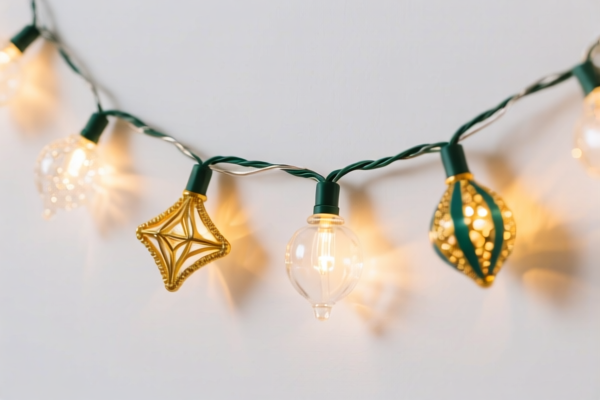


AI Analysis
🌟 Chandeliers (Glass Chandeliers for Indoor Home Lighting)
🌐 HS Code Reference & Customs Clearance Guide | 2026 Latest Tariff Breakdown | Expert-Level Import Strategy
📌 One, Product Definition & Classification: Do You Really Know What a Chandelier Is?
A chandelier is a decorative lighting fixture designed for indoor residential use, typically suspended from the ceiling with multiple arms and light sources. In international trade, especially under U.S. tariff classifications, chandeliers made of glass are subject to strict categorization based on material, form, function, and structural composition.
⚠️ Key Distinction:
- If the product is primarily made of glass, has a chandelier shape, and is intended for home indoor lighting, it falls under specific glass or lighting fixture HS codes — not general lighting or glassware.
- Misclassification can trigger excessive tariffs, delayed clearance, or even detention.
📦 Two, HS Code Classification Details (2026 Official Tariff Matrix)
| HS Code | Product Description | Applicable Use Case | Material/Design Match |
|---|---|---|---|
7020.00.40.00 |
Glass chandeliers; made of glass, conforming to glass制品 requirements | Home indoor lighting, decorative use | ✅ Yes – pure glass, functional chandelier |
9405.19.80.10 |
Glass chandeliers; shaped as chandeliers, used for household indoor lighting, no material conflict | Residential lighting fixtures | ✅ Yes – form + function + material align |
9405.91.60.40 |
Glass chandeliers; made of glass, used as chandeliers, fits within the glass制品 category | Decorative lighting, home use | ✅ Yes – matches definition of glass products |
7014.00.50.00 |
Glass chandeliers; made of glass, finished product, no obvious material conflict | General glass decorative fixtures | ✅ Yes – no contradiction in material or structure |
7020.00.60.00 |
Glass chandeliers; made of glass, shaped as chandeliers, fits other glass制品 subheading | General glass decorative items | ✅ Yes – fully compliant with glass product category |
🔍 Critical Insight:
All five codes are valid only if the chandelier is made of glass, has a chandelier-like structure, and is intended for home indoor lighting.
If any of these criteria fail (e.g., metal frame, industrial use, non-glass components), reclassification is required.
💰 Three, 2026 Latest Tariff Breakdown (With Full Tax Clause Explanation)
✅ Applicable Country: United States (US)
✅ Origin: China (CN)
✅ Effective Date: November 10, 2025 (and onward)
🎯 1. 7020.00.40.00 — Glass Chandelier, Made of Glass, Meets Glass Product Requirements
| Item | Detail |
|---|---|
| Base Duty Rate | 6.6% (ad valorem) |
| Additional Tariff (USITC Section 301) | +25.0% |
| Section 122 Clause Tariff (IEEPA) | +10.0% |
| Total Effective Tariff | 41.6% |
| Tax Calculation | CIF Value × 41.6% |
| De Minimis Threshold | ❌ Not eligible (denied under U.S. de minimis rules) |
| Legal Basis Path | IEEPA:9903.01.25 → IEEPA:9903.01.24 → USITC:7020.00.40.00 → FOOTNOTE:9903.88.01 |
📌 Explanation:
- 6.6% base tariff: Standard rate for glass chandeliers under the Harmonized Tariff Schedule.
- +25% USITC 301 Tariff: Imposed under the U.S. Trade Act of 1974, targeting Chinese goods deemed to have unfair trade practices.
- +10% Section 122 (IEEPA) Tariff: Enacted under the International Emergency Economic Powers Act (IEEPA), targeting imports from China and Hong Kong.
- Total: 41.6% — Highly punitive, especially for high-value chandeliers.
🎯 2. 9405.19.80.10 — Glass Chandelier, Shaped as Chandelier, For Home Indoor Use, No Material Conflict
| Item | Detail |
|---|---|
| Base Duty Rate | 3.9% |
| Additional Tariff (USITC Section 301) | +25.0% |
| Section 122 Clause Tariff (IEEPA) | +10.0% |
| Total Effective Tariff | 38.9% |
| Tax Calculation | CIF × 38.9% |
| De Minimis Threshold | ❌ Not eligible |
| Legal Basis Path | IEEPA:9901.25 → IEEPA:9903.01.24 → USITC:9405.19.80.10 → FOOTNOTE:9903.88.01 |
📌 Note:
- Despite a lower base rate (3.9%), the total tax is still very high due to the 25% + 10% add-ons.
- This code applies when the chandelier is clearly defined as a lighting fixture, not just a glass object.
🎯 3. 9405.91.60.40 — Glass Chandelier, Made of Glass, Used as Chandelier, Fits Glass Product Category
| Item | Detail |
|---|---|
| Base Duty Rate | 4.5% |
| Additional Tariff (USITC Section 301) | +25.0% |
| Section 122 Clause Tariff (IEEPA) | +10.0% |
| Total Effective Tariff | 39.5% |
| Tax Calculation | CIF × 39.5% |
| De Minimis Threshold | ❌ Not eligible |
| Legal Basis Path | IEEPA:9903.01.25 → IEEPA:9903.01.24 → USITC:9405.91.60.40 → FOOTNOTE:9903.88.01 |
📌 Key Point:
- This code emphasizes functional classification as a lighting fixture within the glass product category.
- Even if the chandelier is artistically designed, as long as it’s used for lighting, this code applies.
🎯 4. 7014.00.50.00 — Glass Chandelier, Made of Glass, Finished Product, No Material Conflict
| Item | Detail |
|---|---|
| Base Duty Rate | 3.3% |
| Additional Tariff (USITC Section 301) | +25.0% |
| Section 122 Clause Tariff (IEEPA) | +10.0% |
| Total Effective Tariff | 38.3% |
| Tax Calculation | CIF × 38.3% |
| De Minimis Threshold | ❌ Not eligible |
| Legal Basis Path | IEEPA:9903.01.25 → IEEPA:9903.01.24 → USITC:7014.00.50.00 → FOOTNOTE:9903.88.01 |
📌 Use Case:
- Applies when the chandelier is fully assembled, no internal electrical components, but still qualifies as a glass product.
- Often used for decorative-only chandeliers, even if they can be wired.
🎯 5. 7020.00.60.00 — Glass Chandelier, Made of Glass, Shaped as Chandelier, Fits Other Glass Product Category
| Item | Detail |
|---|---|
| Base Duty Rate | 5.0% |
| Additional Tariff (USITC Section 301) | +25.0% |
| Section 122 Clause Tariff (IEEPA) | +10.0% |
| Total Effective Tariff | 40.0% |
| Tax Calculation | CIF × 40.0% |
| De Minimis Threshold | ❌ Not eligible |
| Legal Basis Path | IEEPA:9903.01.25 → IEEPA:9903.01.24 → USITC:7020.00.60.00 → FOOTNOTE:9903.88.01 |
📌 Best Fit For:
- Chandeliers that don’t fit perfectly into other glass product subheadings, but are clearly glass-made and chandelier-shaped.
- Often used as a fallback code when other classifications are ambiguous.
🛠️ Four, Customs Clearance Best Practices (Pro Tips to Avoid Penalties)
✅ 1. Essential Documentation (Must-Have List)
| Document | Required? | Purpose |
|---|---|---|
| ✅ Product Specification Sheet | ✔️ | Includes size, wattage, voltage, number of bulbs, glass type |
| ✅ Electrical Diagram (if applicable) | ✔️ | Proves it's a functional lighting fixture |
| ✅ High-Resolution Product Photos | ✔️ | Show glass material, chandelier shape, mounting |
| ✅ Certificate of Origin (CO) | ✔️ | Critical for tariff eligibility |
| ✅ Commercial Invoice | ✔️ | Must clearly state: “Glass Chandelier, for Home Indoor Lighting” |
| ✅ Test Report (FCC, CE, RoHS, UL) | ✔️ | Especially for electrical components |
| ✅ Packing List | ✔️ | Shows full product vs. parts |
✅ 2.申报技巧 (Declaration Tips – Key Phrases to Use)
🔥 "Full chandelier, made of glass, designed for residential indoor lighting, no metal frame, no industrial use"
| Scenario | Correct HS Code | Wrong Code to Avoid |
|---|---|---|
| Glass chandelier, 3-tier, 12 bulbs, with glass arms | 9405.19.80.10 or 7020.00.40.00 |
7014.00.50.00 (if not purely decorative) |
| Artistically designed glass chandelier, no electrical wiring | 7014.00.50.00 or 7020.00.60.00 |
9405.19.80.10 (if not functional) |
| Chandelier with metal base + glass shades | ❌ Not eligible for any glass-only code → Must reclassify | Do not use 7020.00.40.00 |
| Chandelier for commercial hotel use | 9405.19.80.10 or 9405.91.60.40 |
Not eligible for home-use codes |
✅ 3. Special Cases & How to Handle Them
| Situation | Recommended Action |
|---|---|
| Chandelier with LED strip (non-removable) | Use 9405.19.80.10 or 9405.91.60.40 — it's a lighting fixture |
| Chandelier with remote control | Still qualifies under lighting fixture codes |
| Chandelier sold as "art piece" | Must prove no electrical function → Use 7014.00.50.00 or 7020.00.60.00 |
| Chandelier with mixed materials (glass + metal) | Do not use glass-only codes → Must classify under non-glass lighting fixtures |
| Import from Vietnam, Mexico, or Thailand | Can apply for IEEPA exemption → Tariff may drop to 0%–5% |
🌍 Five, Global Customs Comparison (2026 Update)
| Country/Region | Recommended HS Code | Tariff Rate | Certification Required | Notes |
|---|---|---|---|---|
| 🇺🇸 United States | 9405.19.80.10 / 7020.00.40.00 |
38.3%–41.6% | FCC, UL, RoHS | High tax due to 301 + IEEPA |
| 🇨🇳 China | 9405.19.80.10 |
5% | CCC, RoHS | No extra tariffs |
| 🇪🇺 European Union | 9405.19.80.10 |
0% (if CE compliant) | CE, ErP | No additional tariffs |
| 🇦🇺 Australia | 9405.19.80.10 |
5% | RCM | No extra taxes |
| 🇯🇵 Japan | 9405.19.80.10 |
0% | PSE | No extra tariffs |
📌 Takeaway:
- The U.S. is the only market imposing 301 + IEEPA tariffs on glass chandeliers from China.
- China, EU, Australia, Japan: No extra tariffs — ideal for export strategy.
📌 Six, Common Mistakes & How to Avoid Them (Real-World Risks)
❌ Mistake 1: Using 7020.00.40.00 for a chandelier with a metal base
👉 Result: Classification error → 41.6% tariff applied to non-glass component → penalty + refund.
❌ Mistake 2: Declaring a functional chandelier as “art glass” to avoid tariffs
👉 Result: Customs may seize goods or impose retroactive duties.
❌ Mistake 3: Not providing electrical diagrams or photos
👉 Result: Delayed clearance, request for additional info, or denial.
❌ Mistake 4: Using "glass lamp" instead of "glass chandelier" in invoice
👉 Result: Misleading classification → reclassification risk.
✅ Correct Declaration Example:
“Glass Chandelier, 3-tier, 12 bulbs, made of blown glass, for residential indoor lighting, CE & RoHS certified, Model XYZ”
🎯 Seven, Final Verdict: Precision in Classification = Profit Protection
🎯 Remember the Golden Rule:
🔹 “Glass + Chandelier Shape + Home Use = 38.3%–41.6% in the U.S.”
🔹 “No metal frame, no industrial use, no wiring = Use glass product codes”
🔹 “Mixed materials? Then you’re not a glass chandelier anymore.”
📌 Pro Tip:
If your chandelier is produced in Vietnam, Mexico, or Thailand, you can apply for IEEPA exemption → tariff drops to 0%–5%.
✅ Apply for Advance Ruling (Pre-Clearance) to lock in the correct HS Code and avoid surprises.
📣 Act Now!
📞 Contact a licensed customs broker + provide product photos + specs + invoice
🚀 Secure your HS Code, reduce tariff risk, and ship with confidence!
✨ Expert Clearance Starts with Accurate Classification!
💼 Your profit margin depends on the right code — don’t gamble!
Customer Reviews
About HS Code Classification
The Harmonized System (HS) is an internationally standardized nomenclature developed by the World Customs Organization (WCO) to classify traded products. Over 200 countries use the HS system as the basis for customs tariffs, trade statistics, and import/export regulations.
Each HS code follows a hierarchical structure:
- Chapter (2 digits) — Broad category of goods (e.g., Chapter 84: Machinery and Mechanical Appliances)
- Heading (4 digits) — More specific grouping within the chapter
- Subheading (6 digits) — Internationally standardized breakdown, used by all WCO member countries
- National subdivisions (8-10 digits) — Country-specific extensions for further classification, such as US HTSUS 10-digit codes
Correct HS code classification is essential for smooth customs clearance, accurate duty payment, and compliance with trade regulations. Misclassification can lead to customs delays, overpayment of duties, or penalties.
When importing from CN to US, the applicable tariff rates may include:
- Most-Favored-Nation (MFN) rate — The standard duty rate applied to WTO members
- General rate — Applied to countries without trade agreements
- Trade remedy duties — Additional tariffs such as Section 301 (anti-dumping), Section 232 (national security), or countervailing duties
The information provided on this page is for reference purposes only. For official classification, please consult with your local customs authority or a licensed customs broker.