商用车制动液
CN → US| HS Code | Tariff Rate | Origin | Destination | Doc |
|---|---|---|---|---|
| 3824999310 | 40.0% | CN | US | Official Doc |
| 3824999330 | 40.0% | CN | US | Official Doc |
| 3812399000 | 40.0% | CN | US | Official Doc |
| 3812397000 | 35.0% | CN | US | Official Doc |
| 3819000010 | 41.5% | CN | US | Official Doc |
| 3819000090 | 16.5% | CN | US | Official Doc |
Product Images
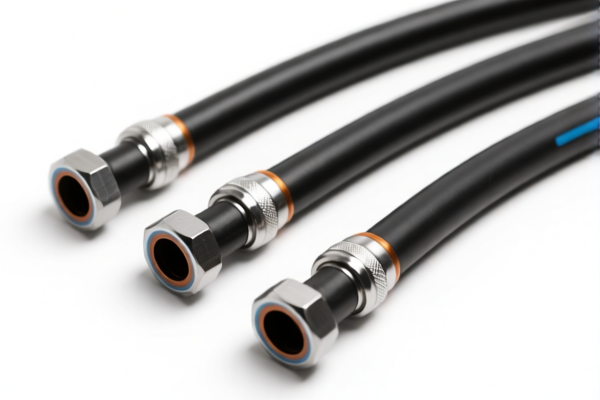
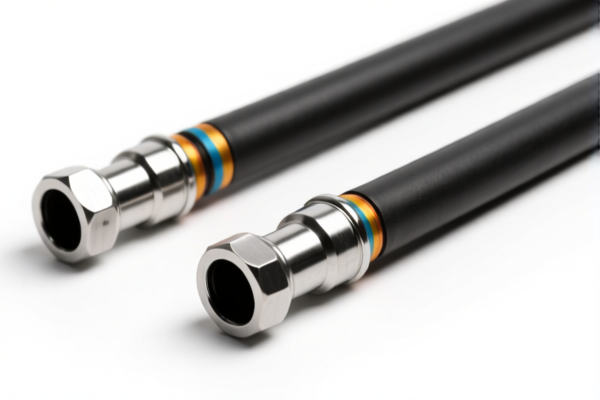
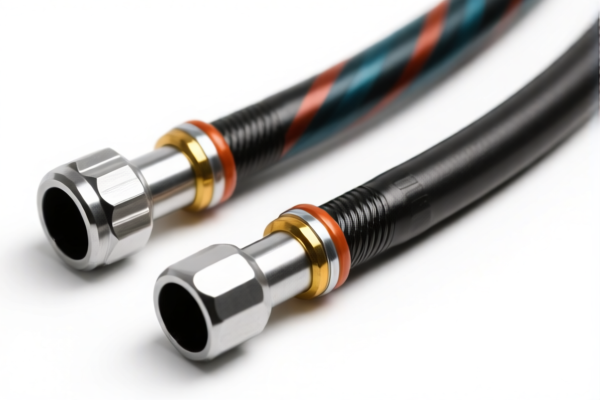
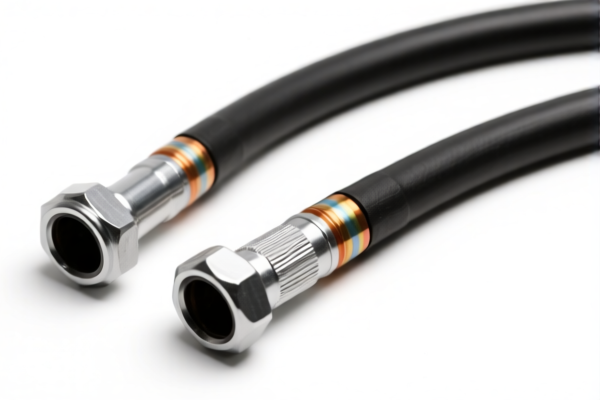
AI Analysis
🛢️ Commercial Vehicle Brake Fluid: HS Code Classification & Customs Clearance Strategy
🌐 HS Code Reference & Customs Guide | 2026 Latest Tariff Analysis | Professional Clearance Strategy
📌 I. Product Definition & Classification: What is "Commercial Vehicle Brake Fluid"?
Commercial Vehicle Brake Fluid is a specialized hydraulic liquid used in the braking systems of trucks, buses, and heavy-duty vehicles. Its primary functions are transmitting hydraulic pressure and lubricating braking components.
Key Characteristics:
- Form: Liquid formulation.
- Composition: May contain petroleum oils, mineral oils, or alcohol-based mixtures (e.g., non-cyclic, monohydroxy, unsubstituted alcohols).
- Function: Hydraulic transmission and lubrication within the brake system.
⚠️ Critical Classification Distinction:
- If the fluid contains petroleum/mineral oil as the main base and fits the definition of lubricating preparations → Consider 3403.
- If it is a hydraulic transmission liquid specifically for braking → Consider 3819.
- If it is a chemical mixture based on alcohols or other unspecified chemical components → Consider 3824.
📦 II. HS Code Classification Details (2026 Latest Tariff Authority Comparison)
The following HS Codes are derived from the provided data, categorized by material and functional characteristics:
| HS Code | Product Description & Rationale | Total Tax Rate |
|---|---|---|
3403.19.10.00 |
Lubricating Preparations Containing Petroleum/Mineral Oil Rationale: Commercial brake fluid is considered a liquid preparation containing petroleum or mineral oil, fitting the material characteristics of lubricants. |
35.2% |
3403.19.50.00 |
Other Lubricating Preparations Rationale: Used for lubrication and pressure transmission in vehicle braking systems, fitting the usage characteristics of lubricating preparations. |
40.8% |
3819.00.00.10 |
Hydraulic Transmission Liquids (Pre-mixed) Rationale: The use case is identical to hydraulic brake fluid; the material is a pre-mixed liquid for hydraulic transmission. |
41.5% |
3824.99.93.10 |
Chemical Mixtures: Unsubstituted Alcohols Rationale: The material consists of a mixture of non-cyclic, monohydroxy, unsubstituted alcohols, fitting the classification characteristics of alcohol mixtures. |
40.0% |
3824.99.93.30 |
Other Chemical Products & Preparations Rationale: Contains alcohol components, classified as a chemical mixture fitting the attribute of "other chemical products and preparations." |
40.0% |
🔍 Key Insight:
- The lowest tax rate (35.2%) applies if the fluid is classified under 3403.19.10.00 based on its petroleum/mineral oil content.
- The highest tax rate (41.5%) applies if classified under 3819.00.00.10 as a general hydraulic transmission liquid.
- Classification depends heavily on the specific chemical composition (oil-based vs. alcohol-based) and primary declared function (lubrication vs. hydraulic transmission).
💰 III. 2026 Latest Tariff Rate Breakdown (Including Additional Taxes & Policies)
✅ Applicable Country: USA (US)
✅ Origin: China (CN)
✅ Effective Date: From November 10, 2025 (including subsequent imports)
🎯 1. 3403.19.10.00 — Lubricating Preparations (Petroleum/Mineral Oil Base)
| Item | Details |
|---|---|
| Base Duty Rate | 0.2% (Ad valorem) |
| Section 301 Additional Duty | +25.0% (25% tariff on Chinese goods) |
| Section 122 Duty | +10.0% (Additional tariff under Section 122) |
| Total Tax Rate | 35.2% |
| Tax Calculation | CIF Value × 35.2% |
| De Minimis Exemption | ❌ Not Applicable (Not eligible for $800 de minimis exemption) |
| Legal Basis Path | Base: 3403.19.10.00 → Section 301: +25% → Section 122: +10% |
📌 Explanation:
- Base 0.2%: Very low standard duty for lubricants.
- 25% Section 301: Standard retaliatory tariff on Chinese industrial goods.
- 10% Section 122: Additional tariff applied to specific Chinese imports.
- Total 35.2%: A significant cost factor. Proper documentation of "lubricant" characteristics is crucial to support this lower rate compared to others.
🎯 2. 3403.19.50.00 — Other Lubricating Preparations
| Item | Details |
|---|---|
| Base Duty Rate | 5.8% (Ad valorem) |
| Section 301 Additional Duty | +25.0% |
| Section 122 Duty | +10.0% |
| Total Tax Rate | 40.8% |
| Tax Calculation | CIF Value × 40.8% |
| De Minimis Exemption | ❌ Not Applicable |
| Legal Basis Path | Base: 3403.19.50.00 → Section 301: +25% → Section 122: +10% |
📌 Note:
- Slightly higher base rate (5.8% vs. 0.2%) results in a total of 40.8%.
- Use this code if the product is classified as a general lubricant but does not meet the specific petroleum/mineral oil criteria for 3403.19.10.00.
🎯 3. 3819.00.00.10 — Hydraulic Transmission Liquids
| Item | Details |
|---|---|
| Base Duty Rate | 6.5% (Ad valorem) |
| Section 301 Additional Duty | +25.0% |
| Section 122 Duty | +10.0% |
| Total Tax Rate | 41.5% |
| Tax Calculation | CIF Value × 41.5% |
| De Minimis Exemption | ❌ Not Applicable |
| Legal Basis Path | Base: 3819.00.00.10 → Section 301: +25% → Section 122: +10% |
📌 Note:
- This code is based on functional use (hydraulic transmission).
- Highest total tax rate at 41.5%.
- Justification: "Consistent with hydraulic brake fluid usage; material is pre-mixed hydraulic transmission liquid."
🎯 4. 3824.99.93.10 & 3824.99.93.30 — Chemical Mixtures (Alcohol-Based)
| Item | Details |
|---|---|
| Base Duty Rate | 5.0% (Ad valorem) |
| Section 301 Additional Duty | +25.0% |
| Section 122 Duty | +10.0% |
| Total Tax Rate | 40.0% |
| Tax Calculation | CIF Value × 40.0% |
| De Minimis Exemption | ❌ Not Applicable |
| Legal Basis Path | Base: 3824.99.93.10/30 → Section 301: +25% → Section 122: +10% |
📌 Note:
- Applicable if the brake fluid is chemically defined as a mixture of unsubstituted alcohols or other unspecified chemical mixtures.
- Total tax rate is 40.0%.
- Justification for.10: "Mixture of non-cyclic, monohydroxy, unsubstituted alcohols."
- Justification for.30: "Contains alcohol components; fits 'other chemical products' attribute."
🛠️ IV. Customs Clearance Practical Advice (Avoiding Pitfalls)
✅ 1. Required Documentation Checklist (Mandatory)
| Document | Required | Description |
|---|---|---|
| ✅ Product Specification Sheet | ✔️ | Must detail chemical composition (oil-based vs. alcohol-based), viscosity, boiling point. |
| ✅ Formula/Composition Analysis | ✔️ | Crucial for distinguishing between 3403 (oil/lubricant) and 3824 (chemical mixture). |
| ✅ Product Photos (Label/Packaging) | ✔️ | Clear view of model, brand, and safety warnings. |
| ✅ Safety Data Sheet (SDS) | ✔️ | Essential for hazardous material classification and safety compliance. |
| ✅ Commercial Invoice | ✔️ | Must accurately describe the product (e.g., "Hydraulic Brake Fluid, DOT 3/4/5.1"). |
| ✅ Bill of Lading/Packing List | ✔️ | Consistent with invoice and SDS. |
✅ 2. Declaration Tips (Critical Strategy)
🔥 "Define the Material First, Then the Function: Oil=3403, Chemical=3824, Hydraulic=3819!"
| Scenario | Correct Declaration | Risk of Incorrect Declaration |
|---|---|---|
| Oil-Based Brake Fluid | 3403.19.10.00 (Lowest Tax: 35.2%) |
Misclassifying as 3819 (41.5%) → Overpayment by 6.3% |
| Alcohol-Based (DOT 3/4) | 3824.99.93.10 or 3824.99.93.30 (40.0%) |
Misclassifying as 3403 if no oil content → Audit Risk/False Declaration |
| General Hydraulic Fluid | 3819.00.00.10 (41.5%) |
Only use if it doesn't fit lubricant or specific chemical definitions. |
| Mislabeling "Brake Fluid" as "Lubricant" without oil | HIGH RISK | Customs may reclassify and penalize for fraud. |
📌 Key Advice:
- If the fluid contains petroleum/mineral oil, emphasize lubricating properties to justify 3403.19.10.00 (35.2%).
- If the fluid is glycol-ether based (alcohol), use 3824 codes (40.0%).
- Avoid using 3819 unless necessary, as it has the highest base rate (6.5%) leading to 41.5% total.
✅ 3. Special Considerations
| Situation | Handling Advice |
|---|---|
| DOT 3 vs. DOT 4 vs. DOT 5 | DOT 3/4 are glycol-based (alcohol); DOT 5 is silicone-based. Ensure the HS code reflects the chemical base. |
| Hazardous Material (Hazmat) | Brake fluids are often classified as Hazmat (Class 3 Flammable Liquid or Class 9 Miscellaneous). Ensure IMDG/IATA compliance for shipping. |
| Customs Audit | Provide a third-party lab report proving chemical composition to support the chosen HS Code. |
| De Minimis ($800) | ❌ Not Eligible. All these HS Codes are subject to Section 301 and Section 122 duties, so the $800 exemption does not apply. |
🌍 V. Global Market Comparison (2026 Latest)
| Country/Region | Recommended HS Code | Tariff Rate | Certification Required | Notes |
|---|---|---|---|---|
| 🇺🇸 USA | 3403.19.10.00 |
35.2% | EPA (if applicable), Hazmat Declaration | Highest duty burden due to Section 301 & 122. |
| 🇨🇳 China | 3403.19.10.00 |
~0.2% + VAT | CCC (if required), Safety Standards | Low base duty, no additional tariffs. |
| 🇪🇺 EU | 3819.00.00 |
~3.5% + VAT | REACH Registration, CLP Labeling | No Section 301/122 tariffs. REACH compliance is critical. |
| 🇦🇺 Australia | 3819.00.00 |
~5.0% | ADR (Transport), GHS Labeling | Moderate duty, strict safety standards. |
| 🇯🇵 Japan | 3819.00.00 |
~3.0% | JIS Standards, Safety Labels | Moderate duty, focus on product safety. |
📌 Conclusion:
- USA is the most expensive market due to 35.2%~41.5% tariffs.
- Optimization Strategy: If possible, optimize the chemical formulation or sourcing to qualify for the 3403.19.10.00 code (35.2%) rather than 3819 (41.5%).
- Documentation is Key: Prove the oil/lubricant content to support the lower 3403 classification.
📌 VI. Common Errors & Pitfall Guide (Lessons Learned)
❌ Error 1: Declaring as "Lubricant" when it is primarily a hydraulic transmission fluid with minimal oil content.
👉 Consequence: Customs reclassifies to 3819 (41.5%) → Overpayment + Audit Risk.
❌ Error 2: Failing to disclose alcohol/glycol content, leading to misclassification under 3824.
👉 Consequence: If the product is alcohol-based, it must be declared under 3824 (40.0%). Misdeclaring as oil-based (3403) is fraud.
❌ Error 3: Ignoring Section 122 and Section 301 in cost calculations.
👉 Consequence: Profit margins wiped out by unexpected 35%+ total duties.
❌ Error 4: Assuming De Minimis ($800) applies.
👉 Consequence: Rejection of entry or full duty assessment on the entire shipment.
✅ Correct Action:
"Commercial Vehicle Brake Fluid, DOT 4, Glycol-Ether Based, Chemical Mixture, Hazmat Class 3, Model XYZ"
Use HS Code3824.99.93.10if alcohol-based.
OR
"Commercial Vehicle Brake Fluid, Oil-Based Lubricant, Petroleum Distillates, Model XYZ"
Use HS Code3403.19.10.00if oil-based.
🎯 VII. Conclusion: Precision Classification Saves Money!
🎯 Remember the Golden Rule:
🔹 "Oil-Based = 3403 (35.2%), Alcohol-Based = 3824 (40.0%), Hydraulic = 3819 (41.5%)."
🔹 "Prove the Chemical Content to Avoid Over-Taxing!"
📌 Tips:
- For US imports, always calculate costs with the 35.2% minimum rate.
- Consider Advance Rulings (CBP Ruling) to confirm the correct HS Code before shipping.
- Work with a licensed customs broker to ensure SDS and hazardous material declarations are accurate.
📣 Immediate Action:
📞 Contact a Customs Broker + Provide Chemical Formula + Apply for Advance Ruling
🚀 Ensure Smooth Clearance, Avoid Delays, and Protect Profit Margins!
✨ Professional Customs Clearance Starts with Accurate Classification!
💼 Every Percent of Duty Saved is Pure Profit!
Customer Reviews
About HS Code Classification
The Harmonized System (HS) is an internationally standardized nomenclature developed by the World Customs Organization (WCO) to classify traded products. Over 200 countries use the HS system as the basis for customs tariffs, trade statistics, and import/export regulations.
Each HS code follows a hierarchical structure:
- Chapter (2 digits) — Broad category of goods (e.g., Chapter 84: Machinery and Mechanical Appliances)
- Heading (4 digits) — More specific grouping within the chapter
- Subheading (6 digits) — Internationally standardized breakdown, used by all WCO member countries
- National subdivisions (8-10 digits) — Country-specific extensions for further classification, such as US HTSUS 10-digit codes
Correct HS code classification is essential for smooth customs clearance, accurate duty payment, and compliance with trade regulations. Misclassification can lead to customs delays, overpayment of duties, or penalties.
When importing from CN to US, the applicable tariff rates may include:
- Most-Favored-Nation (MFN) rate — The standard duty rate applied to WTO members
- General rate — Applied to countries without trade agreements
- Trade remedy duties — Additional tariffs such as Section 301 (anti-dumping), Section 232 (national security), or countervailing duties
The information provided on this page is for reference purposes only. For official classification, please consult with your local customs authority or a licensed customs broker.