地板清洁拖鞋
CN → US| HS Code | Tariff Rate | Origin | Destination | Doc |
|---|---|---|---|---|
| 8509801000 | 10.0% | CN | US | Official Doc |
| 8509805095 | 14.2% | CN | US | Official Doc |
| 6404192520 | 25.0% | CN | US | Official Doc |
| 6402993110 | 16.0% | CN | US | Official Doc |
| 6405209015 | 22.5% | CN | US | Official Doc |
Product Images
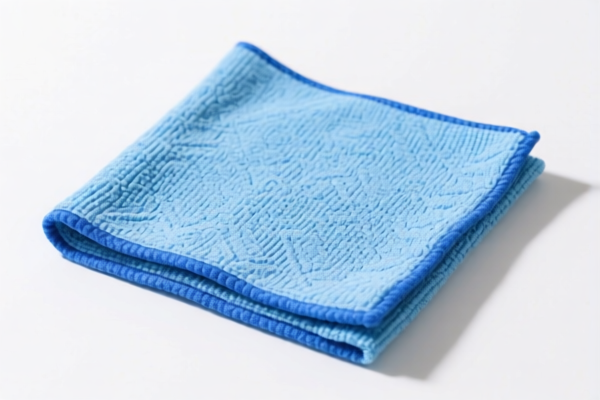
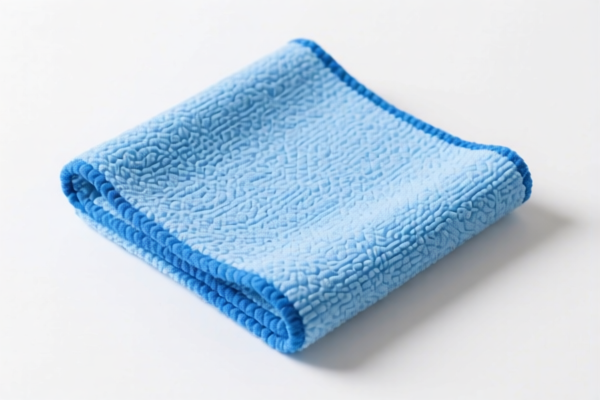
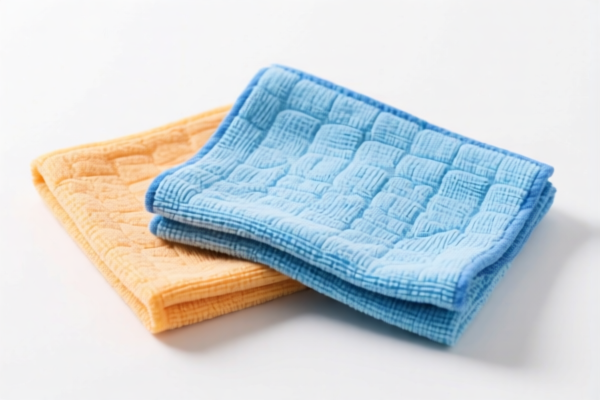
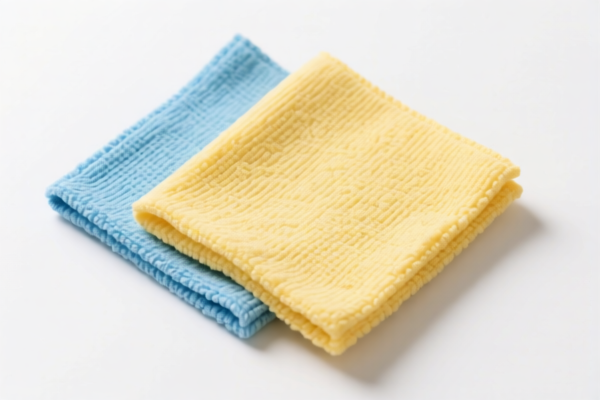
AI Analysis
🏠 Floor Cleaning Slippers (地板清洁拖鞋)
🌐 HS Code Reference & Customs Clearance Guide | 2026 Latest Tariff Analysis | Professional-Level Strategy
📌 I. Product Definition & Classification: What Exactly Are "Floor Cleaning Slippers"?
"Floor Cleaning Slippers" are a niche, hybrid category of footwear designed primarily for indoor use, with the specific function of cleaning floors while being worn. They typically feature a sole made of rubber, plastic, or textile materials, often embedded with microfiber, sponge, or cleaning agents. In international trade, they fall strictly under the Footwear Chapter (Chapter 64) of the Harmonized System (HS), not under household appliances (Chapter 85), despite the "cleaning" descriptor.
Key Distinction:
- If it’s footwear with a cleaning sole → Must be classified under Chapter 64 (Footwear).
- If it’s a standalone floor cleaner device (e.g., electric mop) → Would fall under Chapter 85.
⚠️ Critical Point: The presence of "cleaning" function does not override the primary character of the item as "footwear." Therefore, all variants below are classified under HS codes starting with 64.
📦 II. HS Code Classification Details (2026 Latest Tariff Authority Comparison)
| HS Code | Product Description | Applicable Scenario | Sole Material | Upper Material | Total Tax Rate |
|---|---|---|---|---|---|
6404.19.25.20 |
Indoor slippers, outer sole of rubber/plastic, upper of vegetable textile materials | Traditional house slippers with cloth/feet uppers | Rubber/Plastic | Vegetable Fibers (e.g., straw, jute) | 25.0% |
6402.99.31.10 |
Indoor slippers, outer sole and upper of rubber/plastic | Common indoor slippers with all-synthetic construction | Rubber/Plastic | Rubber/Plastic | 16.0% |
6405.20.90.15 |
House slippers, upper of textile materials | Soft indoor slippers with fabric uppers | Any (but upper is textile) | Textile (Fabric) | 22.5% |
🔍 Note:
- All three codes above are for footwear. The "floor cleaning" aspect is considered an incidental feature of the sole and does not change the classification to electrical appliances (which would be under8509).
- The primary determinant is the material of the upper (top part of the shoe) and outer sole.
💰 III. 2026 Latest Tariff Rate Breakdown (Including Surcharges & Policy Add-ons)
✅ Applicable Country: United States (US)
✅ Country of Origin: China (CN)
✅ Effective Date: November 10, 2025 (and subsequent imports)
🎯 1. 6404.19.25.20 —— Indoor Slippers (Vegetable Fiber Upper)
| Item | Details |
|---|---|
| Base Rate | 7.5% (ad valorem) |
| Section 301 Surcharge | +7.5% |
| Section 301 Surcharge (122 Clause) | +10% |
| Total Tax Rate | 25.0% |
| Tax Calculation | CIF Value × 25% |
| De Minimis Exemption? | ❌ No (Not eligible for $800 de minimis exemption due to high tariff rate and origin) |
| Legal Basis Path | USITC:6404.19.25.20 → FOOTNOTE:301.03 → IEEPA:9903.01.24 |
📌 Explanation:
- Base 7.5%: Standard MFN rate for textile/rubber footwear.
- 7.5% Section 301: Additional tariff on Chinese footwear.
- 10% Section 122 Tariff: Specific surcharge applied to certain Chinese goods.
- Total 25%: High cost for importers. No de minimis exemption applies because the product is specifically targeted by trade remedies.
🎯 2. 6402.99.31.10 —— Indoor Slippers (All Rubber/Plastic)
| Item | Details |
|---|---|
| Base Rate | 6.0% (ad valorem) |
| Section 301 Surcharge | 0.0% (Specific exemption or lower bracket for this subheading) |
| Section 301 Surcharge (122 Clause) | +10% |
| Total Tax Rate | 16.0% |
| Tax Calculation | CIF Value × 16% |
| De Minimis Exemption? | ❌ No |
| Legal Basis Path | USITC:6402.99.31.10 → FOOTNOTE:301.03 → IEEPA:9903.01.24 |
📌 Note:
- This code benefits from a lower base rate (6.0%) and no Section 301 surcharge, likely due to its specific material composition (all rubber/plastic).
- However, the 10% Section 122 tariff still applies.
- Total 16% is the most cost-effective option among the three for Chinese-origin products.
🎯 3. 6405.20.90.15 —— House Slippers (Textile Upper)
| Item | Details |
|---|---|
| Base Rate | 12.5% (ad valorem) |
| Section 301 Surcharge | 0.0% |
| Section 301 Surcharge (122 Clause) | +10% |
| Total Tax Rate | 22.5% |
| Tax Calculation | CIF Value × 22.5% |
| De Minimis Exemption? | ❌ No |
| Legal Basis Path | USITC:6405.20.90.15 → FOOTNOTE:301.03 → IEEPA:9903.01.24 |
📌 Note:
- Textile uppers incur a higher base rate (12.5%) compared to rubber/plastic uppers.
- Although no Section 301 surcharge, the 10% Section 122 tariff remains.
- Total 22.5% is higher than the rubber/plastic variant but lower than the vegetable fiber variant.
🛠️ IV. Customs Clearance Practical Advice (Real-World Pitfall Guide)
✅ 1. Documentation Checklist (Non-Negotiable)
| Document | Required? | Explanation |
|---|---|---|
| ✅ Product Specification Sheet | ✔️ | Must detail sole material, upper material, and "cleaning" features (e.g., microfiber density). |
| ✅ Product Photos | ✔️ | Clear images of the sole, upper, and any cleaning elements. |
| ✅ Commercial Invoice | ✔️ | Must clearly state "Indoor Slippers" and not "Floor Cleaner" to avoid Chapter 85 misclassification. |
| ✅ Packing List | ✔️ | Confirm weight and dimensions for CIF calculation. |
| ✅ Material Composition Statement | ✔️ | Explicitly state % of rubber, plastic, textile, or vegetable fiber. |
| ✅ Origin Certificate (CO) | ✔️ | If claiming preferential treatment (though limited for US/China). |
✅ 2. Declaration Tips (Key Mantras)
🔥 “Call them Slippers, Not Cleaners! Material Matters Most!”
| Scenario | Correct Declaration | Wrong Practice |
|---|---|---|
| Rubber/plastic sole + rubber/plastic upper | 6402.99.31.10 (16%) |
Declare as "Floor Cleaner" → 8509.80.50.95 (14.2%) BUT RISK OF REJECTION |
| Textile upper + any sole | 6405.20.90.15 (22.5%) |
Declare as "Appliance" → High risk of seizure |
| Vegetable fiber upper + rubber sole | 6404.19.25.20 (25%) |
Undeclare material → Audit & Penalty |
⚠️ Critical Warning:
- Do NOT declare as "Floor Cleaning Machine" (8509.80.50.95) unless the item is not wearable.
- If it’s a slipper, it must go under Chapter 64. Misclassification can lead to seizure, fines, and delays.
✅ 3. Special Cases Handling
| Situation | Handling Advice |
|---|---|
| Hybrid Product (Slipper + Detachable Cleaning Pad) | Declare as Footwear (6402.99.31.10). Cleaning pad is considered an accessory. |
| Electrically Powered Cleaning Slippers | High Risk. If it has a motor/battery, it may be classified under 8509.80.10.00 (10%). However, this is rare and requires strict justification. Avoid unless you have a pre-ruling. |
| OEM Custom Designs | Provide design drawings showing material composition. Ensure the "cleaning" feature is passive (e.g., microfiber) rather than active (e.g., vibrating). |
| De Minimis ($800) | ❌ Not Eligible. All three HS codes above are subject to additional tariffs, making them ineligible for the $800 de minimis exemption for Chinese goods. |
🌍 V. Global Market Comparison (2026 Latest)
| Country/Region | Recommended HS Code | Tariff Rate (China Origin) | Certification | Notes |
|---|---|---|---|---|
| 🇺🇸 USA | 6402.99.31.10 |
16.0% | None (standard) | Best rate due to 0% Section 301 |
| 🇨🇳 China | 6402.99.31.10 |
6.0% | CCC (if applicable) | No additional surcharges |
| 🇪🇺 EU | 6402.99.31.10 |
~10-14% | CE (for cleaning claims) | No Section 122 equivalent |
| 🇦🇺 Australia | 6402.99.31.10 |
5% | SAA | No surcharges |
| 🇯🇵 Japan | 6402.99.31.10 |
10% | PSE (if electronic) | No surcharges |
📌 Conclusion:
- The USA imposes the highest effective tariff due to Section 301 and Section 122 add-ons.
-6402.99.31.10is the optimal code for US imports due to its 0% Section 301 surcharge.
- For other markets, focus on local certification requirements (CE, PSE, etc.).
📌 VI. Common Mistakes & Pitfall Guide (Lessons Learned)
❌ Mistake 1: Declaring "Floor Cleaning Slippers" as "Floor Cleaner" (8509.80.50.95)
👉 Consequence: Customs may reject the classification, leading to re-classification under 6402.99.31.10 with penalties and back taxes.
👉 Why: The item is primarily footwear, not a machine.
❌ Mistake 2: Ignoring Material Composition
👉 Consequence: Incorrect HS code selection → Wrong tariff rate. For example, using 6405 (textile) for a rubber-plastic slipper results in underpayment (22.5% vs 16%), leading to audits and fines.
❌ Mistake 3: Assuming De Minimis Applies
👉 Consequence: Expecting $800 duty-free entry. Result: Customs will collect 16-25% tax, causing cash flow issues and shipment delays.
✅ Correct Approach:
"Indoor Slippers, Rubber/Plastic Sole, Rubber/Plastic Upper, Model XYZ, No Electric Components"
🎯 VII. Conclusion: Professional Declaration Saves Money!
🎯 Remember the Mantra:
🔹 “Slippers, Not Cleaners! Check Material! 16% is the Best!”
🔹 “Material Defines the Code, Origin Defines the Surcharge!”
📌 Pro Tip:
- For US imports, prioritize 6402.99.31.10 (all rubber/plastic) for the lowest total tariff (16%).
- Always provide material composition in the declaration.
- Avoid electrical components if possible to stay in Chapter 64.
📣 Immediate Action:
📞 Consult with a licensed customs broker + Provide material specs + Apply for Advance Ruling if unsure.
🚀 Ensure smooth clearance, minimize duties, and maximize profit!
✨ Professional Clearance Starts with Accurate Classification!
💼 Every cent saved is a cent earned!
Customer Reviews
About HS Code Classification
The Harmonized System (HS) is an internationally standardized nomenclature developed by the World Customs Organization (WCO) to classify traded products. Over 200 countries use the HS system as the basis for customs tariffs, trade statistics, and import/export regulations.
Each HS code follows a hierarchical structure:
- Chapter (2 digits) — Broad category of goods (e.g., Chapter 84: Machinery and Mechanical Appliances)
- Heading (4 digits) — More specific grouping within the chapter
- Subheading (6 digits) — Internationally standardized breakdown, used by all WCO member countries
- National subdivisions (8-10 digits) — Country-specific extensions for further classification, such as US HTSUS 10-digit codes
Correct HS code classification is essential for smooth customs clearance, accurate duty payment, and compliance with trade regulations. Misclassification can lead to customs delays, overpayment of duties, or penalties.
When importing from CN to US, the applicable tariff rates may include:
- Most-Favored-Nation (MFN) rate — The standard duty rate applied to WTO members
- General rate — Applied to countries without trade agreements
- Trade remedy duties — Additional tariffs such as Section 301 (anti-dumping), Section 232 (national security), or countervailing duties
The information provided on this page is for reference purposes only. For official classification, please consult with your local customs authority or a licensed customs broker.