地毯贴
CN → US| HS Code | Tariff Rate | Origin | Destination | Doc |
|---|---|---|---|---|
| 3918102000 | 40.3% | CN | US | Official Doc |
| 3918901000 | 40.3% | CN | US | Official Doc |
| 6807900050 | 37.7% | CN | US | Official Doc |
| 6807100000 | 35.0% | CN | US | Official Doc |
| 5705002090 | 38.3% | CN | US | Official Doc |
| 5705002030 | 38.3% | CN | US | Official Doc |
Product Images
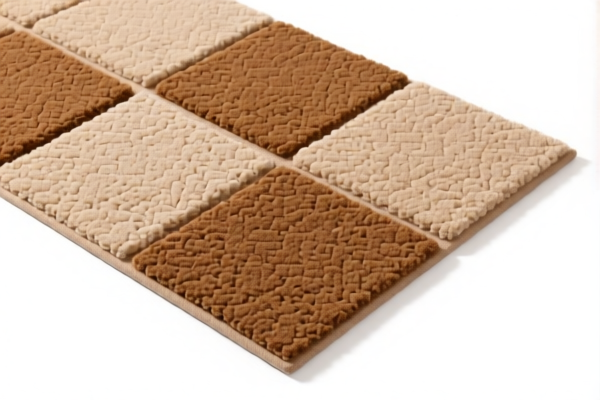
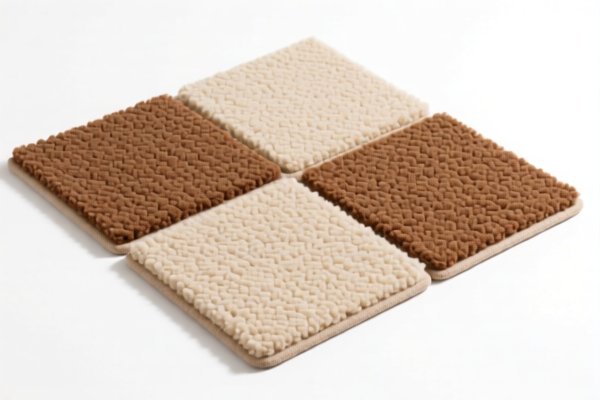
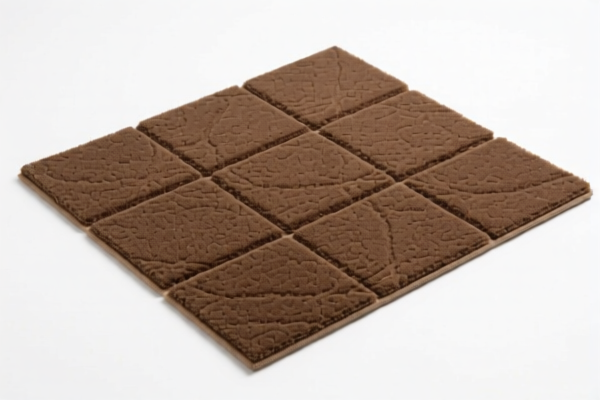
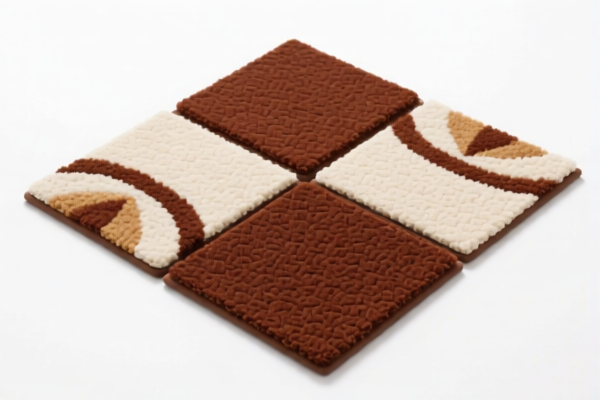
AI Analysis
🧶 Carpet Tiles (Floor Coverings)
🌐 HS Code Reference & Customs Clearance Guide | 2026 Latest Tariff Analysis | Professional Entry Strategy
📌 I. Product Definition & Classification: Do You Really Understand "Carpet Tiles"?
Carpet Tiles (also known as modular carpet or carpet squares) are modular floor covering units designed for easy installation, replacement, and maintenance. In international trade, they are classified based on their material composition and construction method.
1. Textile-Based Tiles: Made primarily of synthetic fibers (nylon, polypropylene, polyester) or natural fibers (wool) with a primary backing. 2. Non-Textile/Adhesive-Based Items: Items that might be confused with carpet tiles but are actually made of bitumen, rubber, or other non-textile materials used for flooring adhesion or covering.
⚠️ Key Distinction:
- If the item is a fabric/textile floor covering (even if self-adhesive backing is present) → Classified under Chapter 57 (Carpet); - If the item is primarily a bitumen-like adhesive substance or non-fabric matting not fitting textile definitions → Classified under Chapter 68 (Mineral Products/Asphalt).
📦 II. HS Code Classification Details (2026 Latest Tariff Authority Match)
Based on the provided data, there are two primary classification paths depending on the material inference:
| HS Code | Product Description | Material Inference | Tax Rate |
|---|---|---|---|
5705.00.20.90 |
Other carpets and other textile floor coverings, whether or not made up; Tufted, of synthetic fibers, Other | Textile/Synthetic: Inferred as textile floor covering due to "carpet" nature; no material conflict with textile category. | 38.3% |
5705.00.20.30 |
Other carpets and other textile floor coverings, whether or not made up; Tufted, of artificial fibers, Other | Artificial Fiber: Inferred as made of artificial/synthetic fibers; fits the "Other" fallback logic for textile floor coverings. | 38.3% |
6807.90.00.50 |
Goods of asphalt or of similar material (e.g., coal tar pitch) | Bitumen/Asphalt: Inferred as viscous products made of asphalt or similar materials, not specifically for roofing/exterior walls. | 37.7% |
🔍 Critical Insight:
- Most Common Scenario: "Carpet Tiles" are overwhelmingly textile-based. Therefore,5705.00.20.90or5705.00.20.30are the most likely and safe classifications for typical office or residential carpet tiles. - Edge Case: If the product is a sticky mat, adhesive backing roll, or non-fabric floor liner made of bitumen/rubber, it might fall under6807.90.00.50. However, given the name "Carpet Tile," Chapter 57 is preferred unless proven otherwise.
💰 III. 2026 Latest Tariff Rate Breakdown (Including Surcharges)
✅ Applicable Country: United States (US)
✅ Origin: China (CN)
✅ Effective Date: 2025/2026 (Current Tariff Regime)
🎯 1. 5705.00.20.90 & 5705.00.20.30 – Textile Floor Coverings (Carpet Tiles)
| Item | Content |
|---|---|
| Base Duty | 3.3% (Ad valorem) |
| Section 301 Duty | +25.0% (Additional duty on Chinese goods) |
| Section 122 Duty | +10.0% (Additional duty on specific Chinese goods) |
| Total Duty | 38.3% |
| Calculation | CIF Value × 38.3% |
| De Minimis Eligibility | ❌ NO (Section 301 and 122 duties apply regardless of value threshold) |
| Legal Basis Path | USITC:5705.00.20.90 / USITC:5705.00.20.30 → Section 301 → Section 122 |
📌 Explanation:
- Base Rate (3.3%): Standard MFN rate for other carpets. - Section 301 (25%): Part of the US-China trade war tariffs. - Section 122 (10%): Additional tariff on certain Chinese imports under Section 122 of the Trade Act of 1974. - Total: These surcharges are cumulative. For textile floor coverings, the total landed cost impact is significant at 38.3%.
🎯 2. 6807.90.00.50 – Goods of Asphalt or Similar Material
| Item | Content |
|---|---|
| Base Duty | 2.7% (Ad valorem) |
| Section 301 Duty | +25.0% (Additional duty on Chinese goods) |
| Section 122 Duty | +10.0% (Additional duty on specific Chinese goods) |
| Total Duty | 37.7% |
| Calculation | CIF Value × 37.7% |
| De Minimis Eligibility | ❌ NO (Same surcharges apply) |
| Legal Basis Path | USITC:6807.90.00.50 → Section 301 → Section 122 |
📌 Explanation:
- This classification is less common for "carpet tiles" unless the product is essentially an asphalt-based floor mat or adhesive strip. - The tax burden (37.7%) is slightly lower than the textile classification (38.3%), but the risk of misclassification is high.
🛠️ IV. Customs Clearance Practical Advice (Pitfall Avoidance Guide)
✅ 1. Required Documentation Checklist
| Document | Required | Notes |
|---|---|---|
| ✅ Product Specifications | ✔️ | Must specify material composition (e.g., "100% Nylon Face," "Polypropylene Backing"). |
| ✅ Material Composition Sheet | ✔️ | Detailed % of fibers, backing materials, and adhesives. Critical for distinguishing Ch. 57 vs. Ch. 68. |
| ✅ Product Photos | ✔️ | Show texture, edges, and backing. If it looks like fabric, argue for Ch. 57. |
| ✅ Commercial Invoice | ✔️ | Clearly state "Carpet Tiles" or "Modular Carpet," not vague terms like "Floor Mat." |
| ✅ Packing List | ✔️ | Include gross/net weight and dimensions. |
| ✅ Origin Certificate | ✔️ | Confirm CN origin to apply correct surcharges. |
✅ 2. Declaration Tips (Key Mnemonics)
🔥 “Material First, Name Second, Avoid Ch. 68 unless Bitumen!”
| Scenario | Correct Declaration | Incorrect Action |
|---|---|---|
| Standard Office Carpet Tile | 5705.00.20.90 or 5705.00.20.30 |
Misdeclaring as "Floor Mat" (Ch. 68) → Risk of audit & penalties. |
| Carpet Tile with Self-Adhesive Backing | Still 5705.00.20.xx |
Claiming Ch. 68 due to "adhesive" → Unlikely unless backing is >50% bitumen. |
| Asphalt/Felt Underlayment Roll | 6807.90.00.50 |
Calling it "Carpet" → Misclassification. |
| Wool Carpet Tile | 5705.00.20.90 (Other) |
Misdeclaring as wool-specific subcategory if not tufted/exactly matching. |
✅ 3. Special Cases & Risk Management
| Case | Handling Advice |
|---|---|
| Mixed Materials | If the tile contains both textile and non-textile parts (e.g., rubber backing), determine the essential character. For carpet tiles, textile face usually defines the essential character → Ch. 57. |
| Self-Adhesive Tiles | The adhesive component is accessory to the textile material. Do not classify under Ch. 35 (Glues) or Ch. 68 (Bitumen) unless the adhesive is the primary product. |
| Customs Audits | Keep samples. Customs may request a physical sample to verify if the "tile" is actually a non-fabric mat. |
| De Minimis Loophole? | ❌ No. Section 301 and 122 duties are not subject to de minimis thresholds for Chinese goods. Even small packages are liable. |
🌍 V. Global Market Comparison (2026 Latest)
| Country/Region | Recommended HS Code | Tariff (China Origin) | Certification | Notes |
|---|---|---|---|---|
| 🇺🇸 USA | 5705.00.20.90 |
38.3% | None specific | High tariff burden; ensure accurate material declaration. |
| 🇨🇳 China | 5705.00.20.90 |
5-10% | CCC (if applicable) | Lower duty, but re-export costs apply. |
| 🇪🇺 EU | 5703.90.90 |
4-12% | REACH | No Section 301/122 equivalent. |
| 🇬🇧 UK | 5703.90.90 |
4-12% | UKCA | Post-Brexit tariffs may vary slightly. |
| 🇦🇺 Australia | 5703.90.90 |
5% | ACCC | Moderate tariff, no surcharges. |
📌 Conclusion:
- The US market imposes the highest burden due to Section 301 (25%) and Section 122 (10%) tariffs. - Misclassification between Ch. 57 (Textile) and Ch. 68 (Non-Textile) can lead to duty evasion claims or penalties. - Always prioritize Chapter 57 for true "Carpet Tiles" to align with commercial intent and material reality.
📌 VI. Common Errors & Pitfall Guide (Lessons Learned)
❌ Error 1: Classifying carpet tiles as "Floor Mats" under Ch. 68 to avoid higher textile duties?
👉 Consequence: Customs will reject if material is textile. Risk of fraud charges and seizure.
❌ Error 2: Not declaring the adhesive backing in specifications?
👉 Consequence: May trigger additional inquiries. Clarify that adhesive is accessory to the textile.
❌ Error 3: Using vague terms like "Home Decor Mat" in invoices?
👉 Consequence: Customs cannot determine duty rate accurately → Delays, hold, potential reclassification.
❌ Error 4: Assuming de minimis exemption applies to carpet tiles?
👉 Consequence: Wrong. Section 301/122 duties apply even to low-value shipments.
✅ Correct Approach:
"Modular Carpet Tile, Synthetic Fiber (Polypropylene) Face, PVC Backing, Self-Adhesive, 50x50cm, for Office Use"
➡️ HS Code:5705.00.20.90
➡️ Duty: 38.3%
🎯 VII. Conclusion: Precision in Classification Saves Money!
🎯 Remember the Mnemonic:
🔹 "Textile Face = Ch. 57, Bitumen Base = Ch. 68, US Tariffs are 38%, Don't Guess, Classify Right!"
🔹 "Adhesive is Accessory, Don't Let it Mislead, Stick to Textile Category for Carpet Need!"
📌 Pro Tip:
If your carpet tiles are made from recycled materials or have special certifications, mention this in your product description. While it doesn't change the HS Code, it can help in risk assessment and customer acceptance in regulated markets.
📣 Immediate Action:
📞 Contact a licensed customs broker to verify material composition against HS Code
5705.00.20.90.
🚀 Ensure all shipments from China are budgeted for 38.3% duty to avoid cash flow surprises.
✨ Professional Clearance Starts with Accurate Classification!
💼 Every percentage point of duty counts in your landed cost!
Customer Reviews
About HS Code Classification
The Harmonized System (HS) is an internationally standardized nomenclature developed by the World Customs Organization (WCO) to classify traded products. Over 200 countries use the HS system as the basis for customs tariffs, trade statistics, and import/export regulations.
Each HS code follows a hierarchical structure:
- Chapter (2 digits) — Broad category of goods (e.g., Chapter 84: Machinery and Mechanical Appliances)
- Heading (4 digits) — More specific grouping within the chapter
- Subheading (6 digits) — Internationally standardized breakdown, used by all WCO member countries
- National subdivisions (8-10 digits) — Country-specific extensions for further classification, such as US HTSUS 10-digit codes
Correct HS code classification is essential for smooth customs clearance, accurate duty payment, and compliance with trade regulations. Misclassification can lead to customs delays, overpayment of duties, or penalties.
When importing from CN to US, the applicable tariff rates may include:
- Most-Favored-Nation (MFN) rate — The standard duty rate applied to WTO members
- General rate — Applied to countries without trade agreements
- Trade remedy duties — Additional tariffs such as Section 301 (anti-dumping), Section 232 (national security), or countervailing duties
The information provided on this page is for reference purposes only. For official classification, please consult with your local customs authority or a licensed customs broker.