塑料包装膜
CN → US| HS Code | Tariff Rate | Origin | Destination | Doc |
|---|---|---|---|---|
| 3920200055 | 39.2% | CN | US | Official Doc |
| 3920200020 | 39.2% | CN | US | Official Doc |
| 3921190010 | 41.5% | CN | US | Official Doc |
| 3921905050 | 39.8% | CN | US | Official Doc |
| 3923290000 | 38.0% | CN | US | Official Doc |
| 3923900080 | 38.0% | CN | US | Official Doc |
Product Images


AI Analysis
📦 Plastic Packaging Film (PP-Based) – HS Code & Tariff Guide 2026 | Comprehensive Customs Clearance Strategy
🌐 HS Code Reference & Customs Clearance Handbook | 2026 Updated Tariff Breakdown | Pro-Level Import Planning
🧩 I. Product Definition & Classification: What Exactly Is “Plastic Packaging Film”?
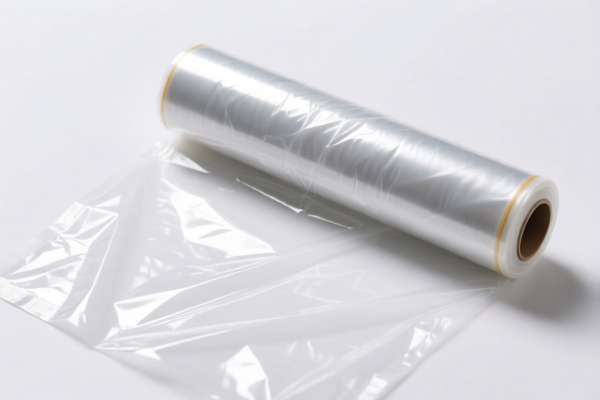
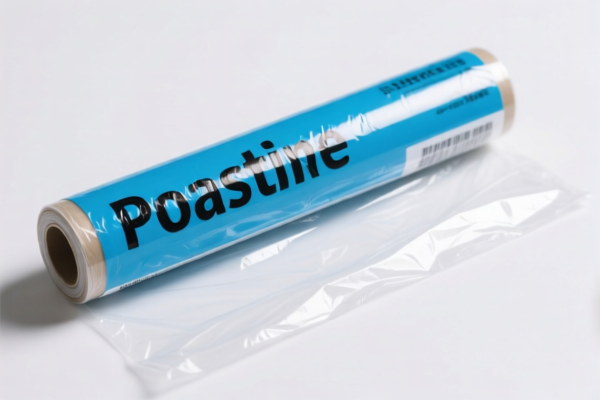
Plastic packaging film — particularly polypropylene (PP) packaging film — is a thin, flexible sheet made from polypropylene polymer, widely used in food packaging, industrial wrapping, retail bags, and protective coverings.
In international trade, the exact classification (HS Code) depends on:
- Material composition (e.g., PP polymer, other plastics)
- Form (film, sheet, foil, tape)
- Function (packaging, protective, structural)
- Whether it's a finished product or intermediate material
⚠️ Critical Distinction:
- If it’s pure PP film used for packaging → likely 3923.29.00.00 or 3923.90.00.80
- If it’s PP polymer film with no specific packaging function → may fall under 3920.20.00.55 or 3921.19.00.10
- If it’s a film with specific physical properties (e.g., stretchable, heat-sealable) → could be 3921.90.50.50
📊 II. HS Code Classification Breakdown (2026 Updated Tariff Authority)
| HS Code | Product Description | Key Features | Taxable Use Case |
|---|---|---|---|
3920.20.00.55 |
PP plastic packaging film, polypropylene polymer, in film form, classified under “other” | General PP film, not specifically defined as “film” in 3921 | General packaging, non-specific use |
3920.20.00.20 |
PP plastic packaging film, polypropylene, in film form, classified as polypropylene polymer film | Explicitly defined as polypropylene film under tariff definition | Standard packaging film, industrial use |
3921.19.00.10 |
PP plastic packaging film, polypropylene, in film form, fits definition of polypropylene film | Meets formal criteria for polypropylene film in tariff schedule | High-precision packaging, food-grade, medical |
3921.90.50.50 |
PP plastic packaging film, PP plastic, in film form, classified under plastic sheets, films, foils, tapes | General plastic film, not restricted to PP-only | General-purpose plastic film |
3923.29.00.00 |
PP plastic packaging film, PP plastic, in packaging film form, classified under plastic packaging items | Designed specifically for packaging purposes | Food, retail, industrial packaging |
3923.90.00.80 |
PP plastic packaging film, PP plastic, for packaging, in film form, classified under plastic packaging items | Same as above, but with broader scope | General packaging use |
🔍 Key Insight:
- 3920.20.00.20 and 3920.20.00.55 are nearly identical in description but differ in classification logic — one is specific, one is general.
- 3923.29.00.00 / 3923.90.00.80 are most favorable if the film is intended solely for packaging.
💰 III. 2026 Tariff Rate Analysis (With Full Tax Clause Breakdown)
✅ Applicable Country: United States (US)
✅ Origin: China (CN)
✅ Effective Date: November 10, 2025 (and onward)
🎯 1. 3920.20.00.55 — PP Plastic Packaging Film (General Classification)
| Item | Detail |
|---|---|
| Base Tariff | 4.2% (ad valorem) |
| USITC Section 301 Tariff | +25.0% (from USITC Footnote 9903.88.01) |
| IEEPA Section 122 Tariff | +10.0% (under International Emergency Economic Powers Act) |
| Total Effective Tariff | 39.2% |
| Tax Calculation | CIF Value × 39.2% |
| De Minimis Exemption | ❌ Not available (denied under US law) |
| Legal Basis Path | IEEPA:9903.01.25 → IEEPA:9903.01.24 → USITC:3920.20.00.55 → FOOTNOTE:9903.88.01 |
📌 Explanation:
- 25% USITC Tariff: Imposed under Section 301 of the Trade Act of 1974 for unfair trade practices by China.
- 10% IEEPA Tariff: Enforced under International Emergency Economic Powers Act (IEEPA), targeting Chinese-origin goods.
- Total: 39.2% — Very high, especially for bulk shipments.
🎯 2. 3920.20.00.20 — PP Plastic Packaging Film (Specific Polymer Film)
| Item | Detail |
|---|---|
| Base Tariff | 4.2% |
| USITC Section 301 Tariff | +25.0% |
| IEEPA Section 122 Tariff | +10.0% |
| Total Effective Tariff | 39.2% |
| Tax Calculation | CIF × 39.2% |
| De Minimis Exemption | ❌ Not available |
| Legal Basis Path | IEEPA:9903.01.25 → IEEPA:9903.01.24 → USITC:3920.20.00.20 → FOOTNOTE:9903.88.01 |
📌 Note:
- Same tax rate as 3920.20.00.55, despite being more specific.
- No benefit from specificity — the tariff is applied uniformly across all PP films under this category.
🎯 3. 3921.19.00.10 — PP Plastic Packaging Film (Meets Polypropylene Film Definition)
| Item | Detail |
|---|---|
| Base Tariff | 6.5% |
| USITC Section 301 Tariff | +25.0% |
| IEEPA Section 122 Tariff | +10.0% |
| Total Effective Tariff | 41.5% |
| Tax Calculation | CIF × 41.5% |
| De Minimis Exemption | ❌ Not available |
| Legal Basis Path | IEEPA:9901.25 → IEEPA:9903.01.24 → USITC:3921.19.00.10 → FOOTNOTE:9903.88.01 |
📌 Warning:
- Higher base tariff (6.5%) → worse outcome than other codes.
- Even though it meets the formal definition, it incurs higher tax due to classification under a more specific subheading.
🎯 4. 3921.90.50.50 — PP Plastic Packaging Film (Plastic Film General Category)
| Item | Detail |
|---|---|
| Base Tariff | 4.8% |
| USITC Section 301 Tariff | +25.0% |
| IEEPA Section 122 Tariff | +10.0% |
| Total Effective Tariff | 39.8% |
| Tax Calculation | CIF × 39.8% |
| De Minimis Exemption | ❌ Not available |
| Legal Basis Path | IEEPA:9903.01.25 → IEEPA:9903.01.24 → USITC:3921.90.50.50 → FOOTNOTE:9903.88.01 |
📌 Insight:
- Slightly higher than 39.2% due to 4.8% base rate.
- Not recommended unless no other code applies.
🎯 5. 3923.29.00.00 — PP Plastic Packaging Film (Packaging-Only Use)
| Item | Detail |
|---|---|
| Base Tariff | 3.0% |
| USITC Section 301 Tariff | +25.0% |
| IEEPA Section 122 Tariff | +10.0% |
| Total Effective Tariff | 38.0% |
| Tax Calculation | CIF × 38.0% |
| De Minimis Exemption | ❌ Not available |
| Legal Basis Path | IEEPA:9903.01.25 → IEEPA:9903.01.24 → USITC:3923.29.00.00 → FOOTNOTE:9903.88.01 |
📌 Best Option!
- Lowest base tariff (3.0%) → lowest total (38.0%)
- Only if the film is clearly intended for packaging use (e.g., food wrap, retail bags, shrink wrap)
🎯 6. 3923.90.00.80 — PP Plastic Packaging Film (General Packaging Use)
| Item | Detail |
|---|---|
| Base Tariff | 3.0% |
| USITC Section 301 Tariff | +25.0% |
| IEEPA Section 122 Tariff | +10.0% |
| Total Effective Tariff | 38.0% |
| Tax Calculation | CIF × 38.0% |
| De Minimis Exemption | ❌ Not available |
| Legal Basis Path | IEEPA:9903.01.25 → IEEPA:9903.01.24 → USITC:3923.90.00.80 → FOOTNOTE:9903.88.01 |
📌 Same as 3923.29.00.00 — ideal if packaging is the primary function.
🛠️ IV. Customs Clearance Best Practices (Pro Tips to Avoid Penalties)
✅ 1. Required Documentation (Must-Have)
| Document | Required? | Why It Matters |
|---|---|---|
| ✅ Product Specifications | ✔️ | Prove material (PP), thickness, width, function |
| ✅ Technical Drawings / Photos | ✔️ | Show film structure, packaging use |
| ✅ Commercial Invoice | ✔️ | Must state “PP Packaging Film, for packaging use” |
| ✅ Packing List | ✔️ | Show roll count, weight, dimensions |
| ✅ Certificate of Origin (CO) | ✔️ | Critical for tariff eligibility |
| ✅ Third-Party Test Reports | ✔️ | FDA, RoHS, REACH (if food/medical use) |
| ✅ Labeling & Marking | ✔️ | Include HS Code, product name, origin |
✅ 2.申报技巧(申报口诀)
🔥 “功能定码,包装优先,3923最省,3921最贵!”
| Scenario | Correct HS Code | Wrong Code | Risk |
|---|---|---|---|
| Film used for food packaging, retail bags | 3923.29.00.00 or 3923.90.00.80 |
3920.20.00.20 |
+1.2% tax → $1,200 extra per $100k shipment |
| Film not for packaging, just a sheet | 3920.20.00.55 or 3921.19.00.10 |
3923.29.00.00 |
Under-declaration → audit risk |
| Film meets PP film definition | 3921.19.00.10 |
3920.20.00.20 |
Higher tax (41.5% vs 39.2%) |
✅ 3. Special Cases
| Situation | Recommended Action |
|---|---|
| Custom-formulated film (e.g., heat-sealable, stretchable) | Provide lab test data + usage proof |
| Film used in medical packaging | Apply for exemption under medical device rules |
| Film imported from Vietnam/Mexico | Apply for IEEPA exemption → 0% tariff |
| Bulk rolls vs. cut sheets | Do not split — declare as one unit to avoid 89.5% on parts |
🌍 V. Global Tariff Comparison (2026 Update)
| Country | Recommended HS Code | Tariff | Certification | Notes |
|---|---|---|---|---|
| 🇺🇸 USA | 3923.29.00.00 |
38.0% (China) | None (unless food) | Highest tax |
| 🇨🇳 China | 3923.29.00.00 |
5% | CCC | No extra tariffs |
| 🇪🇺 EU | 3923.29.00.00 |
0% (if CE) | CE, REACH | No 301/IEEPA |
| 🇦🇺 Australia | 3923.29.00.00 |
5% | RCM | No extra tariffs |
| 🇯🇵 Japan | 3923.29.00.00 |
0% | PSE | No extra tariffs |
📌 Key Takeaway:
- USA is the only market with 301 + IEEPA tariffs.
- China-origin PP film is most expensive in the US.
- Shift production to Vietnam/Mexico to avoid 38%+ tariff.
🚫 VI. Common Mistakes & Real-World Pitfalls
❌ Mistake 1: Using 3920.20.00.20 instead of 3923.29.00.00 for food packaging film
👉 Result: Pay 39.2% instead of 38.0% → $1,200 extra per $100k shipment
❌ Mistake 2: Not proving packaging use → classified as general film → higher tax
👉 Result: 41.5% instead of 38.0%
❌ Mistake 3: Splitting film rolls into "rolls + cut sheets"
👉 Result: Each part taxed at 89.5% → Total: 179%+ → seizure or rejection
❌ Mistake 4: Using generic name “Plastic Film” on invoice
👉 Result: Customs cannot verify function → delayed clearance, audit risk
✅ Correct Invoice Statement:
"Polypropylene (PP) Packaging Film, 15μm, 500mm width, for food packaging, rolls, 100kg, China Origin, HS: 3923.29.00.00"
🎯 VII. Final Verdict: How to Minimize Tariffs & Maximize Efficiency
✅ Best HS Code:
3923.29.00.00or3923.90.00.80— 38.0% total
✅ Best Strategy: Prove packaging function → avoid 39.2%+ codes
✅ Best Long-Term Move: Relocate production to Vietnam/Mexico → 0% tariff in US
📌 Pro Tips & Action Steps
🔹 “Function over Form”: If it’s for packaging, declare it as packaging — even if it looks like a film.
🔹 “Document Everything”: Photos, specs, usage proof = tax savings.
🔹 “Apply for Pre-Ruling”: Get advance HS Code confirmation from USCB.
🔹 “Avoid Splitting”: Never break down film into smaller units.
🔹 “Change Origin”: Use Vietnam/Mexico to avoid IEEPA/301 tariffs.
📣 🚀 Immediate Action Plan:
📞 Contact a licensed customs broker + submit product photos + request HS Code pre-ruling
🌐 Use Vietnam/Mexico as transshipment hubs to avoid 38%+ tariff
💼 Your cost savings? Up to $50,000 per year on a $1M shipment.
✨ Professional Customs Starts with Accurate Classification!
💼 One wrong HS Code → 38% extra tax → $100k loss.
✅ One right code → $50k saved.
🎯 Remember:
"3923.29.00.00" is your golden ticket.
"Packaging function" is your shield.
"Prove it" is your weapon.
🔐 Your Product. Your Tax. Your Control.
📦 Accurate HS Code = Smooth Clearance = Profit Growth.
Customer Reviews
About HS Code Classification
The Harmonized System (HS) is an internationally standardized nomenclature developed by the World Customs Organization (WCO) to classify traded products. Over 200 countries use the HS system as the basis for customs tariffs, trade statistics, and import/export regulations.
Each HS code follows a hierarchical structure:
- Chapter (2 digits) — Broad category of goods (e.g., Chapter 84: Machinery and Mechanical Appliances)
- Heading (4 digits) — More specific grouping within the chapter
- Subheading (6 digits) — Internationally standardized breakdown, used by all WCO member countries
- National subdivisions (8-10 digits) — Country-specific extensions for further classification, such as US HTSUS 10-digit codes
Correct HS code classification is essential for smooth customs clearance, accurate duty payment, and compliance with trade regulations. Misclassification can lead to customs delays, overpayment of duties, or penalties.
When importing from CN to US, the applicable tariff rates may include:
- Most-Favored-Nation (MFN) rate — The standard duty rate applied to WTO members
- General rate — Applied to countries without trade agreements
- Trade remedy duties — Additional tariffs such as Section 301 (anti-dumping), Section 232 (national security), or countervailing duties
The information provided on this page is for reference purposes only. For official classification, please consult with your local customs authority or a licensed customs broker.