塑料墙饰条
CN → US| HS Code | Tariff Rate | Origin | Destination | Doc |
|---|---|---|---|---|
| 3921904090 | 39.2% | CN | US | Official Doc |
| 3919905040 | 40.8% | CN | US | Official Doc |
| 3919905060 | 40.8% | CN | US | Official Doc |
| 3926909989 | 22.8% | CN | US | Official Doc |
| 3926904800 | 13.4% | CN | US | Official Doc |
Product Images


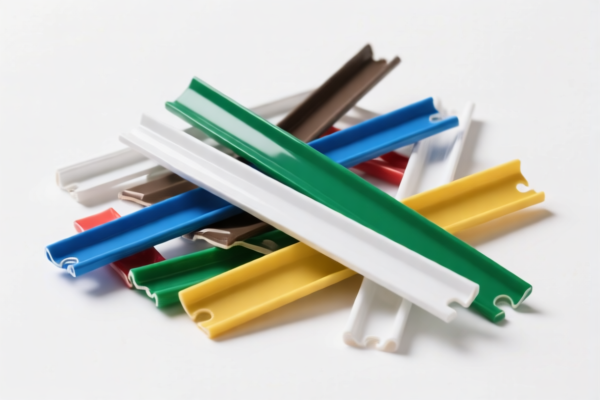

AI Analysis
🧱 Plastic Wall Decor Strips / Wall Stickers (Plastic Wall Trims)
🌐 HS Code Reference & Customs Clearance Guide | 2026 Latest Tariff Analysis | Professional Clearance Strategy
📌 I. Product Definition & Classification: What exactly are "Plastic Wall Decor Strips"?
Plastic wall decor strips (often referred to as "wall stickers," "wall molding," or "decorative films") are lightweight, decorative building materials made primarily from polymers. In international trade, their classification depends heavily on their physical form (flexible film vs. rigid profile) and functional attributes (self-adhesive vs. non-adhesive).
Two Main Categories: 1. Self-Adhesive Films/Sheets (Flat/Thin): These are flexible plastic sheets with an adhesive backing, designed to be stuck directly onto walls for decoration. They fall under headings for self-adhesive products or plastic films. 2. Decorative Moldings/Profiles (Rigid/Semi-Rigid): These are shaped plastic profiles (L-shape, C-shape, etc.) used for corner protection or aesthetic trim. They fall under headings for general plastic articles.
⚠️ Key Distinction Point:
- If the product is flat, thin, and self-adhesive, it is likely classified under 3919 (Self-adhesive plates, sheets, film...) or 3921 (Other plates, sheets...).
- If the product is a shaped profile/molding not primarily defined by self-adhesion, it is likely classified under 3926 (Other articles of plastic).
📦 II. HS Code Classification Details (2026 Latest Tariff Authority Cross-Reference)
Based on the specific characteristics of the product provided in the data, here are the five possible HS Codes and their corresponding tax implications.
| HS Code | Product Description & Logic | Tax Rate (Total) | Key Tax Components |
|---|---|---|---|
| 3921.90.40.90 | Plastic Wall Sticker (Film/Sheet Form) Made of plastic, in the form of films/sheets. Fits the "Other plastic plates, sheets, film..." logic. |
39.2% | Base: 4.2% Section 301: 25.0% Section 122: 10.0% |
| 3919.90.50.40 | Plastic Wall Sticker (Self-Adhesive) Flat shape with self-adhesive properties. Fits the "Other self-adhesive flat shapes" catch-all logic. |
40.8% | Base: 5.8% Section 301: 25.0% Section 122: 10.0% |
| 3919.90.50.60 | Plastic Wall Sticker (Self-Adhesive Film) Specifically fits self-adhesive films/sheets/tapes for wall application. |
40.8% | Base: 5.8% Section 301: 25.0% Section 122: 10.0% |
| 3926.90.99.89 | Plastic Wall Sticker (Decorative Article) Treated as a general decorative plastic article/craft, not strictly a film. |
22.8% | Base: 5.3% Section 301: 7.5% Section 122: 10.0% |
| 3926.90.48.00 | Plastic Wall Sticker (Other Plastic Article) General plastic article for decorative use, no material conflict, lowest tariff profile. |
13.4% | Base: 3.4% Section 301: 0.0% Section 122: 10.0% |
🔍 Critical Analysis:
- The difference between 3919 (Self-adhesive) and 3921/3926 (Non-adhesive/General) is crucial.
- 3919 codes carry a high 25% Section 301 tariff.
- 3926.90.48.00 is the most favorable option if the product can be argued as a general decorative plastic article rather than a self-adhesive film, as it has 0% Section 301 tariff.
💰 III. 2026 Latest Tariff Rate Breakdown (Including Additional Taxes)
✅ Applicable Country: United States (US)
✅ Country of Origin: China (CN)
✅ Effective Date: Post-November 2025 (Includes subsequent imports)
🎯 1. High-Tax Scenarios: Self-Adhesive Classification (3919.90.50.40 / 3919.90.50.60)
| Item | Details |
|---|---|
| Base Tariff | 5.8% (Ad Valorem) |
| Section 301 Tariff | +25.0% (Under US Trade Act Section 301) |
| Section 122 Tariff | +10.0% (Under IEEPA Section 122 for China-origin goods) |
| Total Effective Rate | 40.8% |
| De Minimis Exemption | ❌ Not Applicable (Denied for these HS Codes) |
| Legal Basis Path | IEEPA:9903.01.25 → USITC:3919.90.50.40 → FOOTNOTE:301.99.03.01 |
📌 Explanation:
- Products classified as self-adhesive plastics (3919) are subject to the maximum 25% Section 301 penalty.
- Combined with the 10% Section 122 tax and 5.8% base, the total burden is 40.8%.
- This makes self-adhesive wall stickers extremely expensive for US importers.
🎯 2. Medium-Tax Scenario: General Plastic Article (3926.90.99.89)
| Item | Details |
|---|---|
| Base Tariff | 5.3% |
| Section 301 Tariff | +7.5% (Reduced penalty for certain plastic articles) |
| Section 122 Tariff | +10.0% |
| Total Effective Rate | 22.8% |
| De Minimis Exemption | ❌ Not Applicable |
📌 Note:
- This classification assumes the product is a rigid or semi-rigid decorative item rather than a simple adhesive film.
- The Section 301 rate is significantly lower (7.5% vs 25%), making this a viable middle-ground strategy if the product structure allows.
🎯 3. Low-Tax Scenario: Optimal Classification (3926.90.48.00)
| Item | Details |
|---|---|
| Base Tariff | 3.4% |
| Section 301 Tariff | 0.0% (Exempt from Section 301 penalties) |
| Section 122 Tariff | +10.0% |
| Total Effective Rate | 13.4% |
| De Minimis Exemption | ❌ Not Applicable |
| Legal Basis Path | IEEPA:9903.01.24 → USITC:3926.90.48.00 |
📌 Strategy:
- This is the most cost-effective classification.
- To use this, you must demonstrate that the product is not primarily a self-adhesive film (3919) but a finished decorative plastic article.
- Key Argument: The product is a "molding," "trim," or "decorative piece" with adhesive as a secondary feature, not the defining characteristic of a "self-adhesive sheet."
🛠️ IV. Customs Clearance Practical Advice (Battle-Tested Pitfall Guide)
✅ 1. Documentation Checklist (Non-Negotiable)
| Document | Required? | Purpose |
|---|---|---|
| ✅ Product Specification Sheet | ✔️ | Must clarify material (e.g., PVC, PE, PP), thickness, and adhesive type. |
| ✅ Product Photos (Detailed) | ✔️ | Show cross-section. If it looks like a strip/molding, highlight this. If it's a roll of film, highlight flexibility. |
| ✅ Commercial Invoice | ✔️ | Description must match HS Code logic. Avoid "Self-Adhesive Wall Film" if using 3926. Use "Plastic Decorative Wall Trim" or "Plastic Wall Sticker (Decorative)." |
| ✅ Packing List | ✔️ | Ensure quantities and weights match invoice. |
| ✅ Origin Certificate (CO) | ✔️ | Proves China origin (triggers Section 122). |
✅ 2. Declaration Strategy (The "Naming" Game)
🔥 "Describe Function, Not Just Material: Trim vs. Film!"
| Product Type | Recommended HS Code | Recommended Description | Avoid Using |
|---|---|---|---|
| Sticker Roll (Thin, Adhesive) | 3919.90.50.40 / 3919.90.50.60 |
"Self-Adhesive Plastic Wall Film, Decorative" | "Plastic Molding" |
| Pre-cut Wall Sticker (Shape) | 3919.90.50.40 |
"Plastic Wall Sticker, Self-Adhesive, Cut-to-Shape" | "Plastic Article" |
| Corner Protector / Molding Strip | 3926.90.48.00 |
"Plastic Decorative Wall Trim, Corner Protector" | "Self-Adhesive Film" |
| Rigid Plastic Wall Decor Panel | 3926.90.48.00 |
"Plastic Wall Decor Panel, Interior Decoration" | "Wall Sticker" |
⚠️ Warning:
- Do not use "Self-Adhesive" in the description if you intend to classify under3926. This is a red flag for customs.
- If the product is both a film and has adhesive, customs may force it into3919(40.8% tax).
- Argument for3926.90.48.00: Emphasize that the product is a finished decorative article (a "trim" or "profile") and the adhesive is merely for installation, not the primary nature of the good.
✅ 3. Special Scenarios
| Scenario | Action Plan |
|---|---|
| Product has strong adhesive backing | Risk of 3919. Try to argue it is a "plastic article" with mounting tape. If challenged, accept 40.8% or seek Advance Ruling. |
| Product is rigid molding (L-shape) | Strong case for 3926.90.48.00 (13.4%). Provide cross-section diagrams. |
| OEM Custom Design | Provide design files to prove it is a unique "article" rather than a generic "film." |
| Small Sample Shipments | Still subject to Section 122 (10%). No de minimis exemption for these HS codes. |
🌍 V. Global Market Comparison (2026 Latest)
| Country/Region | Recommended HS Code | Tariff (China Origin) | Key Requirement | Note |
|---|---|---|---|---|
| 🇺🇸 USA | 3926.90.48.00 |
13.4% | None | Lowest tax if classified as decorative article. |
| 🇺🇸 USA | 3919.90.50.40 |
40.8% | None | High tax for self-adhesive films. |
| 🇨🇳 China | 3919 / 3926 |
5-8% | CCC (if applicable) | No Section 301/122 taxes. |
| 🇪🇺 EU | 3919 / 3926 |
0-4.5% | CE, REACH | No major punitive tariffs. |
| 🇬🇧 UK | 3919 / 3926 |
0-4.5% | UKCA, REACH | Post-Brexit rules apply. |
| 🇦🇺 Australia | 3919 / 3926 |
5% | None | Standard MFN rates. |
📌 Conclusion:
- USA is the only market with significant punitive tariffs (Section 301 + 122).
- For the US market, classification as a decorative plastic article (3926.90.48.00) saves 27.4% compared to self-adhesive classification.
- This is a critical cost-saving opportunity for exporters.
📌 VI. Common Mistakes & Pitfalls (Lessons from Tears)
❌ Mistake 1: Calling "Corner Protectors" "Self-Adhesive Wall Film"
👉 Result: Customs assigns 3919 → 40.8% tax instead of 13.4%.
✅ Fix: Use description "Plastic Corner Molding" or "Wall Trim."
❌ Mistake 2: Ignoring Section 122 (10%)
👉 Result: Even with 0% Section 301, you still pay 10% base extra tax on China origin.
✅ Fix: Factor this into pricing always.
❌ Mistake 3: Assuming "De Minimis" ($800) applies
👉 Result: These HS codes are NOT eligible for de minimis exemption due to Section 301/122 rules.
✅ Fix: All shipments, regardless of value, are subject to duties.
❌ Mistake 4: Inconsistent Descriptions
👉 Result: Invoice says "Sticker," Declaration says "Molding." → Audit Risk.
✅ Fix: Align description with HS Code logic. If using 3926, avoid "Adhesive" in the name.
🎯 VII. Conclusion: Smart Classification, Maximum Savings!
🎯 Remember the Golden Rules:
🔹 "Adhesive = Film = 40.8% Tax!"
🔹 "Trim/Profile = Decorative Article = 13.4% Tax!"
🔹 "Section 122 (10%) is unavoidable for China Origin!"
📌 Pro Tip:
If your product is borderline (e.g., a thin plastic strip with light adhesive), consider applying for an Advance Ruling from US Customs and Border Protection (CBP).
- Advance Ruling Cost: Low ($150-$300)
- Potential Savings: Up to $27,400 per $100,000 of goods (27.4% difference).
📣 Immediate Action Required:
📞 Consult your customs broker with product photos.
📄 Request an Advance Ruling if the product structure is unique.
🚀 Optimize your description to support3926.90.48.00if possible.
✨ Professional clearance starts with precise classification!
💼 Your profit margin depends on this 27.4% difference!
Customer Reviews
About HS Code Classification
The Harmonized System (HS) is an internationally standardized nomenclature developed by the World Customs Organization (WCO) to classify traded products. Over 200 countries use the HS system as the basis for customs tariffs, trade statistics, and import/export regulations.
Each HS code follows a hierarchical structure:
- Chapter (2 digits) — Broad category of goods (e.g., Chapter 84: Machinery and Mechanical Appliances)
- Heading (4 digits) — More specific grouping within the chapter
- Subheading (6 digits) — Internationally standardized breakdown, used by all WCO member countries
- National subdivisions (8-10 digits) — Country-specific extensions for further classification, such as US HTSUS 10-digit codes
Correct HS code classification is essential for smooth customs clearance, accurate duty payment, and compliance with trade regulations. Misclassification can lead to customs delays, overpayment of duties, or penalties.
When importing from CN to US, the applicable tariff rates may include:
- Most-Favored-Nation (MFN) rate — The standard duty rate applied to WTO members
- General rate — Applied to countries without trade agreements
- Trade remedy duties — Additional tariffs such as Section 301 (anti-dumping), Section 232 (national security), or countervailing duties
The information provided on this page is for reference purposes only. For official classification, please consult with your local customs authority or a licensed customs broker.