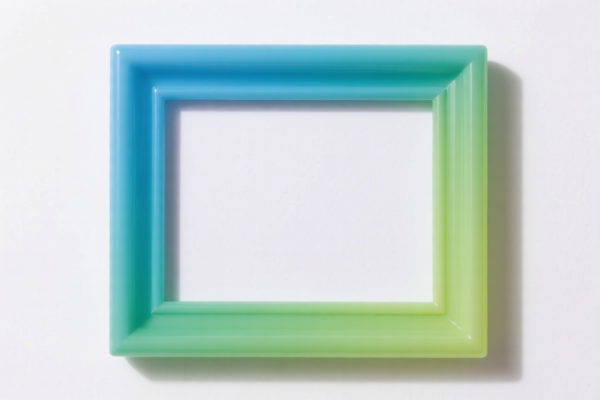
塑料简约框架
CN → US| HS Code | Tariff Rate | Origin | Destination | Doc |
|---|---|---|---|---|
| 3925200010 | 22.8% | CN | US | Official Doc |
| 3926905000 | 21.3% | CN | US | Official Doc |
| 9003110000 | 20.0% | CN | US | Official Doc |
| 3925200020 | 22.8% | CN | US | Official Doc |
| 3926909989 | 22.8% | CN | US | Official Doc |
Product Images



AI Analysis
🖼️ Minimalist Plastic Frames (Plastic Simple Frames)
🌐 HS Code Reference & Customs Clearance Guide | 2026 Latest Tariff Analysis | Professional Clearance Strategy
📌 I. Product Definition & Classification: What Exactly is a "Minimalist Plastic Frame"?
"Minimalist Plastic Frames" are versatile components made primarily of plastic materials. In international trade, their classification depends entirely on their specific end-use and physical structure. A "frame" is not a single commodity; it is a functional part of a larger system.
The key distinction lies in what the frame holds or surrounds: 1. Architectural Frames: Used for doors, windows, or sunrooms. 2. General/Miscellaneous Frames: Used for mirrors, picture frames, or unspecified assemblies. 3. Optical Frames: Specifically for eyewear/glasses.
⚠️ Critical Classification Point:
- If it is for construction (doors/windows) → Chapter 39 (Plastics Articles)
- If it is for mirrors/general use → Chapter 39 or 90 (depending on precision)
- If it is for eyeglasses → Chapter 90 (Optical Appliances)
📦 II. HS Code Classification Details (2026 Latest Tariff Authority Comparison)
| HS Code | Product Description | Application Scenario | Key Differentiator |
|---|---|---|---|
3925.20.00.10 |
Plastic Frames for Doors | Construction, architectural components | Specific to doors; matches material/form |
3925.20.00.20 |
Plastic Frames for Windows | Construction, window systems | Specific to windows; matches material/form |
3926.90.50.00 |
Plastic Frames (General/Mirrors) | Picture frames, mirror frames, general assembly | No specific use; generic plastic frame |
9003.11.00.00 |
Plastic Optical Frames | Eyeglasses, sunglasses, spectacles | Optical use; specific shape for lenses |
3926.90.99.89 |
Other Plastic Articles (Frames) | Unspecified plastic frames; no clear category | Catch-all; "Other" plastics articles |
🔍 Key Reminder:
- "Door/Window Frames" are strictly construction materials (3925).
- "Eyewear Frames" are precision optical devices (9003).
- "Miscellaneous Frames" (like photo frames) fall under general plastic articles (3926) or potentially optical if used for mirrors in specific contexts (3926.90.50.00is cited for mirror frames in data).
- Misclassification Risk: Declaring a door frame as a "picture frame" to avoid higher tariffs can lead to severe penalties.
💰 III. 2026 Latest Tariff Rate Breakdown (Including Surtaxes & Policy Add-ons)
✅ Applicable Country: United States (US)
✅ Origin: China (CN)
✅ Effective Time: Current rates including Section 301 and Section 122 tariffs
🎯 1. 3925.20.00.10 & 3925.20.00.20 —— Plastic Frames for Doors & Windows
| Item | Content |
|---|---|
| Base Duty Rate | 5.3% |
| Surtax (Sec 301) | 7.5% |
| Sec 122 Tariff | 10% |
| Total Duty Rate | 22.8% |
| Tax Calculation | CIF Value × 22.8% |
| De Minimis Exemption | ❌ Not Applicable (High risk for de minimis) |
| Legal Basis | Base tariff + 301 Surtax + Section 122 Provision |
📌 Explanation:
- Construction-related plastic frames are heavily taxed due to their bulk and strategic importance in building materials.
- The 10% Section 122 tariff adds significant cost on top of the standard 301 duties.
- Total 22.8% is a moderate-to-high rate for plastics.
🎯 2. 3926.90.50.00 —— Plastic Frames (e.g., Mirror/Picture Frames)
| Item | Content |
|---|---|
| Base Duty Rate | 3.8% |
| Surtax (Sec 301) | 7.5% |
| Sec 122 Tariff | 10% |
| Total Duty Rate | 21.3% |
| Tax Calculation | CIF Value × 21.3% |
| De Minimis Exemption | ❌ Not Applicable |
| Legal Basis | Base tariff + 301 Surtax + Section 122 Provision |
📌 Note:
- This is the most common category for generic plastic frames (e.g., photo frames, mirror borders).
- Slightly lower base rate (3.8%) than door/window frames, but still subject to full surtaxes.
- Total 21.3% applies if the frame is not specifically for doors, windows, or eyewear.
🎯 3. 9003.11.00.00 —— Plastic Optical Frames (Eyewear)
| Item | Content |
|---|---|
| Base Duty Rate | 2.5% |
| Surtax (Sec 301) | 7.5% |
| Sec 122 Tariff | 10% |
| Total Duty Rate | 20.0% |
| Tax Calculation | CIF Value × 20.0% |
| De Minimis Exemption | ❌ Not Applicable |
| Legal Basis | Base tariff + 301 Surtax + Section 122 Provision |
📌 Important:
- Lowest Base Rate (2.5%) among the options, but still subject to 17.5% in additional taxes.
- Strict Definition: Must be for spectacles/glasses. A "frame" for a photo album or mirror cannot use this code.
- Total 20.0% is the most favorable rate, but compliance is strict.
🎯 4. 3926.90.99.89 —— Other Plastic Articles (Unclassified Frames)
| Item | Content |
|---|---|
| Base Duty Rate | 5.3% |
| Surtax (Sec 301) | 7.5% |
| Sec 122 Tariff | 10% |
| Total Duty Rate | 22.8% |
| Tax Calculation | CIF Value × 22.8% |
| De Minimis Exemption | ❌ Not Applicable |
| Legal Basis | Base tariff + 301 Surtax + Section 122 Provision |
📌 Warning:
- This is a fallback category for frames that do not fit into doors, windows, mirrors, or eyewear.
- Highest Risk: Customs may challenge this classification as "too vague," leading to delays.
- Total 22.8% is the same as door/window frames. Avoid this code if a more specific one applies.
🛠️ IV. Customs Clearance Practical Advice (Real-World Pitfall Guide)
✅ 1. Documentation Checklist (Must-Haves)
| Document | Required | Notes |
|---|---|---|
| ✅ Product Specification Sheet | ✔️ | Must clearly state material (e.g., PVC, ABS), dimensions, and intended use |
| ✅ Technical Diagrams | ✔️ | Show structure: Is it a door frame? A glasses frame? |
| ✅ Product Photos | ✔️ | Clear images showing hooks, hinges, or lens holders (if optical) |
| ✅ Commercial Invoice | ✔️ | Precise Description: "Plastic Door Frame," "Plastic Eyeglass Frame," NOT just "Plastic Frame" |
| ✅ Packing List | ✔️ | List quantity, weight, and packaging type |
| ✅ Origin Certificate (CO) | ✔️ | Required for origin verification; China origin triggers tariffs |
✅ 2. Declaration Tips (Key Mnemonics)
🔥 "Use Determines Code, Don't Be Vague, Tariff Drops!"
| Scenario | Correct Declaration | Incorrect Declaration | Risk |
|---|---|---|---|
| Door Frame | 3925.20.00.10 – "Plastic Frame for Doors" |
"Plastic Frame" (Generic) | Customs reclassifies to 3926.90.99.89 → Delay |
| Window Frame | 3925.20.00.20 – "Plastic Frame for Windows" |
"Plastic Profile" | May be misclassified as raw material |
| Mirror/Photo Frame | 3926.90.50.00 – "Plastic Frame for Mirrors" |
"Plastic Decoration" | High scrutiny on intent |
| Eyeglass Frame | 9003.11.00.00 – "Plastic Optical Frames" |
"Plastic Accessories" | Wrong code, penalty risk |
| Unclassified Frame | 3926.90.99.89 – "Plastic Frame, Other" |
"Plastic Part" | Too vague, customs inquiry |
✅ 3. Special Handling Cases
| Situation | Handling Advice |
|---|---|
| Mixed Shipment (Doors + Glasses) | Split Declaration. Do not mix. Different HS Codes require different descriptions. |
| Kit Frames (Parts for assembly) | Declare as complete frame if assembled in destination. If unassembled, still likely 3925 or 3926. |
| OEM Custom Frames | Provide design files to prove intended use (e.g., specs for glasses vs. doors). |
| "Minimalist" Marketing | Do not use "Minimalist" as a technical term in HS Code justification. Use functional terms (Door, Window, Optical). |
🌍 V. Global Market Clearance Comparison (2026 Latest)
| Country/Region | Recommended HS Code | Duty Rate (China Origin) | Certification | Notes |
|---|---|---|---|---|
| 🇺🇸 USA | 3925.20 / 3926.90 / 9003.11 |
20.0% - 22.8% | None specific | Section 122 + 301 Surtaxes apply |
| 🇨🇳 China | Same HS Codes | 3.8% - 5.3% | CCC (if applicable) | No surtaxes; much cheaper |
| 🇪🇺 EU | 3925 / 3926 / 9003 |
0% - 6.5% | CE (for optical) | No Section 122/301; favorable |
| 🇬🇧 UK | Same HS Codes | 0% - 6.5% | UKCA (for optical) | Post-Brexit rules; generally low |
| 🇯🇵 Japan | Same HS Codes | 0% - 3.9% | PSE (for optical) | Low duties, stable trade |
📌 Conclusion:
- USA is the most expensive market due to Section 122 and 301 tariffs.
- EU/UK/Japan are significantly more cost-effective for plastic frames.
- Optical Frames (9003.11) have the lowest base rate (2.5%) but still face 17.5% in US surtaxes.
📌 VI. Common Errors & Pitfall Guide (Lessons Learned)
❌ Error 1: Declaring all plastic frames as 3926.90.99.89 ("Other")
👉 Consequence: Customs may reject as "insufficiently described." If it’s a door frame, they will reclassify to 3925 and assess penalties.
Correct: Use specific codes (3925.20) if applicable.
❌ Error 2: Using 9003.11.00.00 for non-optical frames (e.g., picture frames)
👉 Consequence: Classification Error. This code is reserved for eyewear. Misuse leads to audits and back-taxes.
Correct: Use 3926.90.50.00 for mirrors/pictures.
❌ Error 3: Ignoring "Intended Use" in Documentation
👉 Consequence: If the invoice says "Plastic Frame" but the product is clearly for a door, Customs will assign the higher/more specific rate and delay clearance.
Correct: Match the description to the physical function.
❌ Error 4: Not accounting for Section 122 Tariff (10%)
👉 Consequence: Profit margin erosion. Many importers forget this surtax.
Correct: Calculate Total Duty = Base + 301 (7.5%) + 122 (10%).
✅ Correct Declaration Examples:
- "PVC Plastic Door Frame, Model A1, for Residential Construction" →
3925.20.00.10- "ABS Plastic Eyeglass Frame, Prescription Type, No Lenses" →
9003.11.00.00- "Plastic Picture Frame, Black, 8x10 inch" →
3926.90.50.00
🎯 VII. Conclusion: Precision in Classification Saves Money
🎯 Remember the Mantra:
🔹 "Function Defines Code, Vagueness Costs Cash."
🔹 "Door/Window: 22.8%, Mirror: 21.3%, Glasses: 20.0%."
🔹 "Always Add 17.5% Surtax for US Imports from China."
📌 Pro Tip:
If your frames are minimalist but functional, ensure the technical specifications clearly define their use. If you are unsure, apply for an Advance Ruling (Ruling Letter) from CBP before shipping.
For optical frames, ensure they are marketed as such to justify the lower base rate.
📣 Immediate Action:
📞 Verify Product Use → Select Specific HS Code → Prepare Detailed Invoice → Calculate Total Landed Cost (CIF + 22.8%)
🚀 Avoid the "Other" Trap. Be Specific. Clear Customs Faster.
✨ Professional Clearance Starts with Accurate Classification!
💼 Your Every Dollar Saved is a Dollar Earned!
Customer Reviews
About HS Code Classification
The Harmonized System (HS) is an internationally standardized nomenclature developed by the World Customs Organization (WCO) to classify traded products. Over 200 countries use the HS system as the basis for customs tariffs, trade statistics, and import/export regulations.
Each HS code follows a hierarchical structure:
- Chapter (2 digits) — Broad category of goods (e.g., Chapter 84: Machinery and Mechanical Appliances)
- Heading (4 digits) — More specific grouping within the chapter
- Subheading (6 digits) — Internationally standardized breakdown, used by all WCO member countries
- National subdivisions (8-10 digits) — Country-specific extensions for further classification, such as US HTSUS 10-digit codes
Correct HS code classification is essential for smooth customs clearance, accurate duty payment, and compliance with trade regulations. Misclassification can lead to customs delays, overpayment of duties, or penalties.
When importing from CN to US, the applicable tariff rates may include:
- Most-Favored-Nation (MFN) rate — The standard duty rate applied to WTO members
- General rate — Applied to countries without trade agreements
- Trade remedy duties — Additional tariffs such as Section 301 (anti-dumping), Section 232 (national security), or countervailing duties
The information provided on this page is for reference purposes only. For official classification, please consult with your local customs authority or a licensed customs broker.