塑料袋
CN → US| HS Code | Tariff Rate | Origin | Destination | Doc |
|---|---|---|---|---|
| 4202221500 | 26.0% | CN | US | Official Doc |
| 3923210030 | 38.0% | CN | US | Official Doc |
| 4202929700 | 52.6% | CN | US | Official Doc |
| 4823908680 | 35.0% | CN | US | Official Doc |
| 4819400040 | 35.0% | CN | US | Official Doc |
Product Images
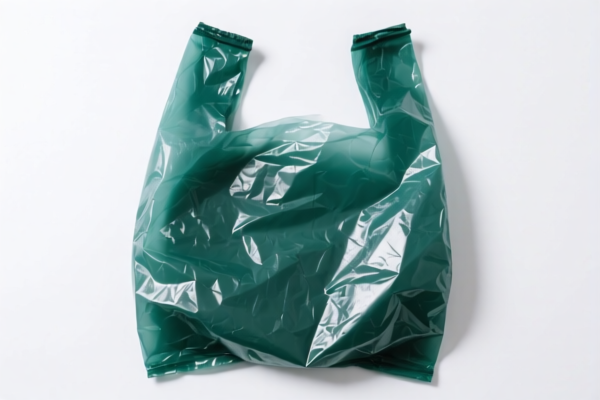


AI Analysis
🎯 Plastic Bags | HS Code Classification & Customs Clearance Guide 2026 | Expert-Level Tariff Breakdown
🌐 HS Code Reference & Customs Strategy | 2026 Updated Tariff Rules | Professional Import Compliance
📦 One: Product Definition & Classification – What Exactly Is a “Plastic Bag”?
A plastic bag is a flexible, lightweight container typically made from polyethylene or other plastic films, used for carrying goods, shopping, packaging, or storage. In international trade, its classification hinges on two key factors:
- ✅ Material: Must be plastic film (e.g., polyethylene, polypropylene)
- ✅ Form & Function: Must be bag-shaped, used as a shopping bag, bottle bag, or similar container
⚠️ Critical Distinction:
- If it's just a plastic sheet without a defined bag shape → may fall under 3920 (flat plastic sheets)
- If it's a functional bag with handles or open top → must be classified as a bag under 4202 or 3923
📊 Two: HS Code Classification Details (2026 Official Tariff Matrix)
| HS Code | Product Description | Applicable Use Case | Material Match | Shape & Purpose |
|---|---|---|---|---|
4202.22.15.00 |
Plastic bags with outer surface of plastic film | Handbags, tote bags, retail shopping bags | ✅ Yes (plastic surface) | ✅ Bag shape, hand-carry use |
3923.21.00.30 |
Plastic bags or pouches, not closed by stitching or sealing | Flexible pouches, open-ended bags, non-sealed containers | ✅ Plastic/ethylene polymer | ✅ Bag-like form, no closure specified |
4202.92.97.00 |
Other bags, of plastic sheeting, for shopping, bottles, or similar containers | General-purpose plastic bags, common in retail | ✅ Plastic sheeting | ✅ Bag shape, common container use |
🔍 Key Insight:
- All three codes apply to plastic bags, but differ in material precision, closure type, and intended use.
- The absence of closure (e.g., no stitching, zip, or seal) allows use of "other" category under 3923.21.00.30.
💰 Three: 2026 Updated Tariff Breakdown (US Market | China Origin)
✅ Target Country: United States (US)
✅ Origin: China (CN)
✅ Effective Date: November 10, 2025 (inclusive)
🎯 1. 4202.22.15.00 – Plastic Bags with Plastic Surface
| Item | Detail |
|---|---|
| Base Duty | 16.0% (ad valorem) |
| Section 301 (USITC) Additional Duty | 0.0% |
| Section 122 (IEEPA) Additional Duty | 10.0% |
| Total Effective Duty | 26.0% |
| Tax Calculation | CIF Value × 26.0% |
| De Minimis Exemption | ✅ Yes (under 1% threshold) |
| Legal Basis Path | IEEPA:9903.01.25 → Section 122: 10% → HS: 4202.22.15.00 |
📌 Explanation:
- The 10% IEEPA tariff applies under the International Emergency Economic Powers Act for products from China.
- No Section 301 (USITC) additional duty — likely due to no specific trade action against this subcategory.
- Lowest tax among the three — ideal for plastic bags with clear surface material.
🎯 2. 3923.21.00.30 – Other Plastic Bags (No Closure Specified)
| Item | Detail |
|---|---|
| Base Duty | 3.0% |
| Section 301 (USITC) Additional Duty | 25.0% |
| Section 122 (IEEPA) Additional Duty | 10.0% |
| Total Effective Duty | 38.0% |
| Tax Calculation | CIF Value × 38.0% |
| De Minimis Exemption | ❌ No (exceeds 1% threshold) |
| Legal Basis Path | USITC:9903.88.01 → Section 301: 25% → IEEPA:9903.01.25 → HS: 3923.21.00.30 |
📌 Explanation:
- 25% USITC tariff applies under Section 301 — a punitive measure targeting China-origin goods with "unfair trade practices".
- 10% IEEPA tariff — applies to all China-origin goods under emergency economic powers.
- No de minimis relief — even small shipments face full duty.
- High-risk code — avoid if closure is unclear.
🎯 3. 4202.92.97.00 – Other Plastic Bags (Shopping/Bottle Bags)
| Item | Detail |
|---|---|
| Base Duty | 17.6% |
| Section 301 (USITC) Additional Duty | 25.0% |
| Section 122 (IEEPA) Additional Duty | 10.0% |
| Total Effective Duty | 52.6% |
| Tax Calculation | CIF Value × 52.6% |
| De Minimis Exemption | ❌ No |
| Legal Basis Path | USITC:9903.88.01 → Section 301: 25% → IEEPA:9903.01.25 → HS: 4202.92.97.00 |
📌 Explanation:
- Highest tariff rate — due to double 301 + IEEPA levies.
- Applies to common retail plastic bags (e.g., grocery bags, bottle carriers).
- No de minimis — full duty on every shipment.
- Most expensive option — use only if clearly fits "shopping/bottle bag" description.
🛠️ Four: Customs Clearance Best Practices (Pro Tips to Avoid Penalties)
✅ 1. Documentation Checklist (Mandatory)
| Document | Required? | Purpose |
|---|---|---|
| ✅ Product Specification Sheet | ✔️ | Material type, thickness, size, closure method |
| ✅ Product Photos (with label) | ✔️ | Show material, shape, handles, closure |
| ✅ Commercial Invoice | ✔️ | Must state: “Plastic Shopping Bag, Made of Polyethylene” |
| ✅ Packing List | ✔️ | Quantity, weight, packaging method |
| ✅ Certificate of Origin (CO) | ✔️ | Prove China origin (for tariff calculation) |
| ✅ Third-Party Test Report | ✔️ | ISO, REACH, RoHS (if applicable) |
✅ 2.申报技巧 (Declaration Strategy) – The Golden Rule
🔥 “Material First, Shape Second, Closure Last – Match the Code Exactly!”
| Scenario | Correct HS Code | Wrong Code | Risk |
|---|---|---|---|
| Bag with plastic outer surface, no closure | 4202.22.15.00 |
3923.21.00.30 |
Underpay tax → audit risk |
| Bag with no closure, but used for shopping | 3923.21.00.30 |
4202.92.97.00 |
Overpay 14.6% → lost profit |
| Bag clearly used for bottles or shopping | 4202.92.97.00 |
4202.22.15.00 |
Underpay → penalties |
✅ 3. Special Cases & Solutions
| Case | Recommended Action |
|---|---|
| Bag with drawstring or zipper | Use 4202.22.15.00 if plastic surface, otherwise 4202.92.97.00 |
| Bag with no closure, but clear plastic film | Use 3923.21.00.30 – only if no functional use |
| Bulk bags (e.g., 1000 pcs) | Declare as "Plastic Bags, Non-Closed, for Retail Use" |
| Custom-printed bags | Include "Custom Logo, Polyethylene, Hand-Carry" in description |
| Bags with handles (tote-style) | Must use 4202.22.15.00 or 4202.92.97.00 — not 3923 |
🌍 Five: Global Market Tariff Comparison (2026)
| Country | Recommended HS Code | Base Duty | Additional Taxes | Notes |
|---|---|---|---|---|
| 🇺🇸 USA | 4202.22.15.00 |
16.0% | +10% IEEPA | Total: 26.0% |
| 🇨🇳 China | 4202.22.15.00 |
5.0% | None | No extra tariffs |
| 🇪🇺 EU | 4202.92.97.00 |
0% | None | CE compliant |
| 🇦🇺 Australia | 4202.22.15.00 |
5.0% | None | RCM required |
| 🇯🇵 Japan | 4202.22.15.00 |
0% | None | PSE certification |
📌 Insight:
- USA has the highest tariffs — especially for China-origin plastic bags.
- China, EU, Australia, Japan have low or zero tariffs — ideal for re-export.
🚨 Six: Common Mistakes & How to Avoid Them (Real-World Pitfalls)
❌ Mistake 1: Using 3923.21.00.30 for a shopping bag with handles
👉 Result: Incorrect classification → 38% duty instead of 26% → overpayment
❌ Mistake 2: Declaring a bottle bag as 4202.22.15.00 without proof of plastic surface
👉 Result: Customs may reclassify → 52.6% duty → severe penalty
❌ Mistake 3: Not specifying closure method in invoice
👉 Result: Customs assumes "closed" → higher duty code → audit or delay
✅ Best Practice:
Use precise language:
"Plastic Shopping Bag, Made of Polyethylene Film, No Closure, 10 x 15 cm, 100 pcs per pack, For Retail Use"
🎯 Seven: Final Verdict – Choose Wisely, Pay Less, Ship Faster
✅ Best Code for Low Tax:
4202.22.15.00— only if the outer surface is clearly plastic
✅ Best Code for Uncertainty:3923.21.00.30— if closure is unknown, but not for shopping/bottle bags
❌ Avoid:4202.92.97.00unless clearly used for shopping or bottles🔥 Pro Tip:
- Pre-apply for an Advance Ruling (Pre-Review) from U.S. Customs to lock in the correct HS Code.
- Use a professional customs broker with plastic goods expertise.
📌 Key Takeaway: Accuracy = Savings
💡 “One wrong HS Code can cost you 26% more in tariffs!”
💡 “Clear material description = lower tax, faster clearance, zero penalties.”
📣 Act Now!
📞 Contact a licensed customs broker + Submit product photos + Request HS Code pre-ruling
🚀 Ensure your plastic bags clear U.S. customs smoothly — without surprises!
✨ Professional Customs, Precise Classification, Profit Protection!
💼 Your shipment’s success starts with the right HS Code.
Customer Reviews
About HS Code Classification
The Harmonized System (HS) is an internationally standardized nomenclature developed by the World Customs Organization (WCO) to classify traded products. Over 200 countries use the HS system as the basis for customs tariffs, trade statistics, and import/export regulations.
Each HS code follows a hierarchical structure:
- Chapter (2 digits) — Broad category of goods (e.g., Chapter 84: Machinery and Mechanical Appliances)
- Heading (4 digits) — More specific grouping within the chapter
- Subheading (6 digits) — Internationally standardized breakdown, used by all WCO member countries
- National subdivisions (8-10 digits) — Country-specific extensions for further classification, such as US HTSUS 10-digit codes
Correct HS code classification is essential for smooth customs clearance, accurate duty payment, and compliance with trade regulations. Misclassification can lead to customs delays, overpayment of duties, or penalties.
When importing from CN to US, the applicable tariff rates may include:
- Most-Favored-Nation (MFN) rate — The standard duty rate applied to WTO members
- General rate — Applied to countries without trade agreements
- Trade remedy duties — Additional tariffs such as Section 301 (anti-dumping), Section 232 (national security), or countervailing duties
The information provided on this page is for reference purposes only. For official classification, please consult with your local customs authority or a licensed customs broker.