塑料装饰
CN → US| HS Code | Tariff Rate | Origin | Destination | Doc |
|---|---|---|---|---|
| 3924901050 | 13.3% | CN | US | Official Doc |
| 3924902000 | 13.4% | CN | US | Official Doc |
| 3926904000 | 12.8% | CN | US | Official Doc |
| 9403708020 | 35.0% | CN | US | Official Doc |
| 9403708031 | 35.0% | CN | US | Official Doc |
Product Images
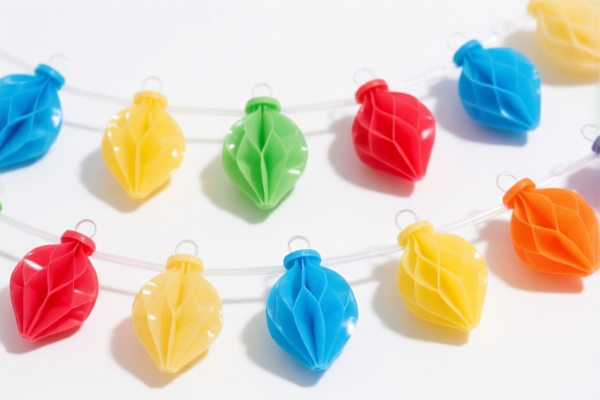
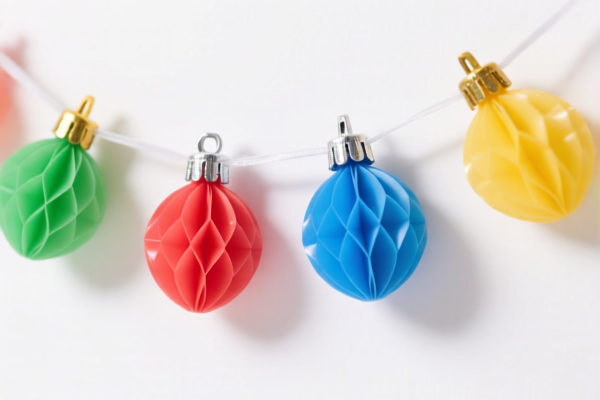
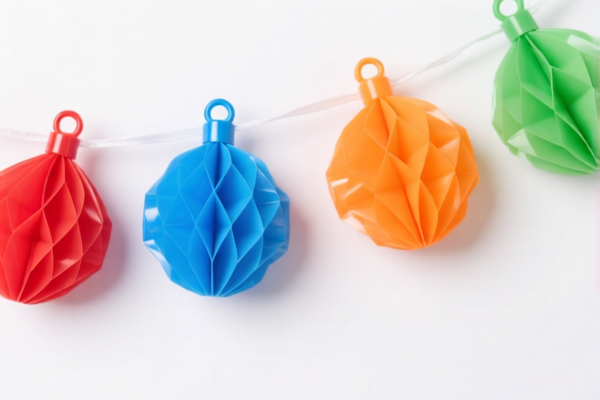
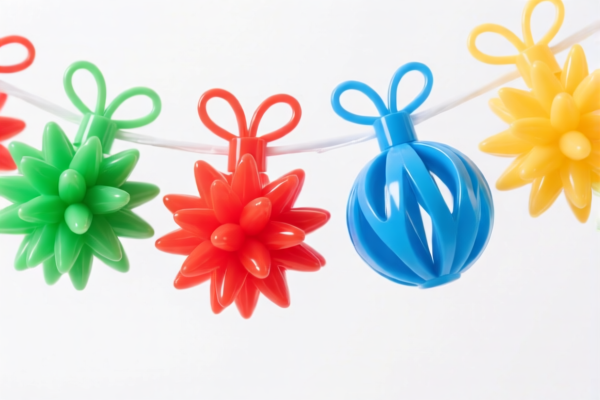
AI Analysis
🏺 Plastic Decorative Articles (塑料装饰饰品/用品)
🌐 HS Code Reference & Customs Clearance Guide | 2026 Latest Tariff Analysis | Professional Clearance Strategy
📌 1. Product Definition & Classification: What Exactly is "Plastic Decor"?
"Plastic Decor" is a broad category in international trade, primarily falling under Chapter 39 (Plastics and Articles Thereof). In the context of US imports from China, these items are generally classified based on their specific form and function: whether they are purely ornamental (Chapter 3926) or functional household/office items used for decoration (Chapter 3924).
Key Distinction Points: * Purely Ornamental: Items like figurines, statues, wall plaques, and decorative ornaments with no practical utility other than appearance. → Group 1 (HS 3926.40) * Functional/Office Decor: Items like plastic desk organizers, office decorations, or home decor items that serve a minor functional purpose or are categorized under household/other plastics. → Group 2 & 3 (HS 3924.90, 3926.90)
⚠️ Critical Note:
- The classification heavily depends on the primary use. If it's a "statue," it's 3926.40. If it's a "desk ornament" that might also hold pens, it might be contested between 3926 and 3924.
- All items below are subject to significant US tariffs due to "Section 301" and "Section 122" (IEEPA) duties.
📦 2. HS Code Classification Details (2026 Latest Tariff Authority)
The following codes are derived strictly from the provided data. Please note that 122-Clause Tariffs (IEEPA) are a significant component of the total tax rate for these goods.
| HS Code | Product Description | Scope & Usage | Tax Detail Breakdown |
|---|---|---|---|
3926.40.00.90 |
Plastic ornamental articles, other than plastic statues and sculpture | Pure decorative items (e.g., plastic wreaths, ornaments, decorative trim) | Base: 5.3% Addl: 0.0% 122-Clause: 10% Total: 15.3% |
3926.40.00.10 |
Plastic ornamental articles, other than plastic statues and sculpture | Specifically identified decorative products based on description inference | Base: 5.3% Addl: 0.0% 122-Clause: 10% Total: 15.3% |
3924.90.10.50 |
Plastic articles for office decoration / Furniture decor | Items classified under "Furniture decorative articles" (e.g., decorative plastic parts for furniture) | Base: 3.3% Addl: 0.0% 122-Clause: 10% Total: 13.3% |
3924.90.20.00 |
Plastic articles for home/other decoration | Items classified under "Household or other decorative articles" (e.g., plastic vases, shelves for decor) | Base: 3.4% Addl: 0.0% 122-Clause: 10% Total: 13.4% |
3926.90.40.00 |
Other plastic articles, for other decorative purposes | Miscellaneous plastic decorative items not elsewhere specified | Base: 2.8% Addl: 0.0% 122-Clause: 10% Total: 12.8% |
🔍 Key Insight:
-3926.40is the most common for general "ornaments."
-3924.90applies if the item is considered a "household article" or "office article" with a decorative element.
-3926.90is the catch-all for other plastic decor.
- All rates include the mandatory 10% IEEPA (122-Clause) tariff for Chinese-origin goods.
💰 3. 2026 Latest Tariff Rate Explanation (Detailed Breakdown)
✅ Applicable Country: United States (US)
✅ Origin: China (CN)
✅ Effective Time: Ongoing (Including Section 301 and IEEPA)
🎯 1. 3926.40.00.90 & 3926.40.00.10 —— Plastic Ornamental Articles
| Item | Detail |
|---|---|
| Base Tariff | 5.3% (Ad Valorem) |
| Section 301 (Trades) | 0.0% (Exempt or not applicable per data) |
| Section 122 (IEEPA) | +10.0% (Specific surcharge on Chinese plastics) |
| Total Effective Rate | 15.3% |
| Calculation | CIF Value × 15.3% |
| De Minimis Exemption | ❌ Not Eligible (Typically, IEEPA duties apply regardless of value in many contexts, but strictly speaking, de minimis usually applies to Section 301, NOT IEEPA/Section 122. Note: Policy varies, but high risk for 122). |
📌 Explanation:
- The 5.3% is the standard Most Favored Nation (MFN) rate.
- The 10% is the critical "122-Clause" tariff imposed under the International Emergency Economic Powers Act (IEEPA). This is non-negotiable for most Chinese plastic decor imports.
- Total 15.3% is moderate compared to electronics, but still significant for low-margin decor items.
🎯 2. 3924.90.10.50 & 3924.90.20.00 —— Office/Home Decor Articles
| Item | Detail |
|---|---|
| Base Tariff | 3.3% - 3.4% |
| Section 301 | 0.0% |
| Section 122 (IEEPA) | +10.0% |
| Total Effective Rate | 13.3% - 13.4% |
| Calculation | CIF Value × 13.3% or 13.4% |
📌 Explanation:
- These items have a lower base rate (3.3-3.4%) than pure ornaments (5.3%).
- However, the 10% IEEPA surcharge remains constant, making the total difference only ~2% compared to3926.40.
- Strategy Tip: If your item can be argued as "Household Article" (3924) rather than "Ornament" (3926), you save ~2% on the base tariff.
🎯 3. 3926.90.40.00 —— Other Plastic Decorative Articles
| Item | Detail |
|---|---|
| Base Tariff | 2.8% |
| Section 301 | 0.0% |
| Section 122 (IEEPA) | +10.0% |
| Total Effective Rate | 12.8% |
| Calculation | CIF Value × 12.8% |
📌 Explanation:
- This is the lowest total tariff (12.8%) in the dataset.
- Use this code only if the item does not fit neatly into "Ornaments" (3926.40) or "Household/Furniture" (3924.90).
- Risk: High risk of customs re-classification if the item is clearly an "ornament."
🛠️ 4. Customs Clearance Practical Advice (Battle-Tested)
✅ 1. Preparation Checklist (Non-Negotiable)
| Document | Required | Purpose |
|---|---|---|
| Product Photos | ✔️ | Must show clear decorative features, no functional parts (unless declaring as office decor). |
| Material Specification | ✔️ | Must explicitly state "100% Plastic" or specific polymer type (e.g., PVC, ABS, PP). |
| Commercial Invoice | ✔️ | Must include: "Plastic Decorative Ornament, Model XXX, Made in China." |
| Packing List | ✔️ | Accurate weight and dimensions. |
| Country of Origin Certificate | ✔️ | Proof of China origin is mandatory for 122-Clause assessment. |
✅ 2. Classification Strategy (The "How-To")
🔥 Golden Rule: "Define by Primary Function. If it's just for looks, it's 3926. If it holds stuff, it might be 3924."
| Scenario | Recommended HS Code | Why? |
|---|---|---|
| Plastic Christmas Balls, Figurines, Wall Plaques | 3926.40.00.90 / .10 |
Clearly "Ornamental Articles." |
| Plastic Desk Organizer with Decorative Pattern | 3924.90.10.50 |
Functional (Office) + Decorative. |
| Plastic Vase, Planter, Decorative Bowl | 3924.90.20.00 |
Household Article / Decor. |
| Abstract Plastic Sculpture (Non-Statue) | 3926.90.40.00 |
Other plastic decorative article. |
⚠️ Avoid:
- Do NOT misclassify a simple plastic statue as "Office Decor" to save 2%. CBP (Customs and Border Protection) often audits this.
- Do NOT use generic terms like "Plastic Goods." Be specific: "Plastic Decorative Ornament."
✅ 3. Special Handling: The 122-Clause (IEEPA) Tariff
| Issue | Solution |
|---|---|
| High Tariff (10% Extra) | This is mandatory. Factor it into your landing cost. No exemption for small parcels unless specific de minimis rules apply (check current CBP guidance for IEEPA). |
| Origin Evasion Risk | Do NOT try to reroute through Vietnam/Malaysia without substantial transformation. CBP has strict rules of origin for plastics. |
| Valuation | Ensure CIF value includes freight and insurance accurately. Tariffs are calculated on CIF. |
🌍 5. Global Market Comparison (2026)
| Market | HS Code Focus | Base Rate | Special Tariffs (China) | Total Est. |
|---|---|---|---|---|
| 🇺🇸 USA | 3926.40 / 3924.90 |
2.8% - 5.3% | +10% (IEEPA/122) | 12.8% - 15.3% |
| 🇨🇳 China (Import) | 3926.40 |
~5% | 0% | ~5% |
| 🇪🇺 EU | 3926.40 |
4% | No IEEPA | ~4% |
| 🇬🇧 UK | 3926.40 |
4% | No IEEPA | ~4% |
📌 Conclusion:
- The US market is significantly more expensive for plastic decor due to the 10% IEEPA (122-Clause) surcharge.
- Competitors in EU/UK do not face this surcharge.
- Strategy: Price accordingly. If margin is thin, consider alternative sourcing or design modifications to fit lower-base-rate categories (like3926.90).
📌 6. Common Mistakes & Pitfalls (Blood & Tears Lessons)
❌ Mistake 1: Declaring "Plastic Statue" as "Household Article"
👉 Result: Customs re-classification + Back Taxes + Penalties.
Fix: Be honest. Statues are 3926.
❌ Mistake 2: Ignoring the 122-Clause (IEEPA) Tariff
👉 Result: Underpayment of duty. CBP will demand the extra 10% + interest.
Fix: Always add 10% to your cost model for US imports from China.
❌ Mistake 3: Vague Description "Plastic Gift"
👉 Result: Customs delays, potential audit.
Fix: Use specific terms: "Plastic Decorative Ornament, PVC, for Holiday Decoration."
❌ Mistake 4: Splitting Shipment to Avoid De Minimis (if applicable)
👉 Result: Even if de minimis applies to Section 301, it may NOT apply to IEEPA/122. Check latest CBP memos.
Fix: Assume tax applies for IEEPA items unless proven otherwise.
✅ Correct Practice:
"Plastic Decorative Ornament, ABS Plastic, 10cm, Color: White, Model: DEC-001, HS 3926.40.00.90"
🎯 7. Conclusion: Precise Classification Saves Money
🎯 Key Takeaway:
🔹 Base Tariff: 2.8% - 5.3%
🔹 122-Clause (IEEPA): +10% (Fixed for China)
🔹 Total: 12.8% - 15.3%
🔹 Best Code for Lowest Rate:3926.90.40.00(12.8%) – if applicable.
🔹 Most Common Code:3926.40.00.90(15.3%).
📌 Pro Tip:
If your plastic decor contains metal parts, glass, or fabric, the HS Code may change entirely (e.g., to Chapter 70, 95, or 63). Ensure the principal material is indeed plastic (>50% by weight).
📣 Immediate Action:
📞 Consult a licensed customs broker for a Pre-Ruling (ISF/Entry) if importing high volume.
🚀 Calculate Landed Cost: Include 15.3% for standard decor.
💼 Profit Margin Check: If your margin is <20%, the 15.3% duty is a major factor. Optimize packaging and supplier costs.
✨ Precision in Classification. Savings in Duties. Success in Trade!
💼 Every cent counts. Get it right the first time.
Customer Reviews
About HS Code Classification
The Harmonized System (HS) is an internationally standardized nomenclature developed by the World Customs Organization (WCO) to classify traded products. Over 200 countries use the HS system as the basis for customs tariffs, trade statistics, and import/export regulations.
Each HS code follows a hierarchical structure:
- Chapter (2 digits) — Broad category of goods (e.g., Chapter 84: Machinery and Mechanical Appliances)
- Heading (4 digits) — More specific grouping within the chapter
- Subheading (6 digits) — Internationally standardized breakdown, used by all WCO member countries
- National subdivisions (8-10 digits) — Country-specific extensions for further classification, such as US HTSUS 10-digit codes
Correct HS code classification is essential for smooth customs clearance, accurate duty payment, and compliance with trade regulations. Misclassification can lead to customs delays, overpayment of duties, or penalties.
When importing from CN to US, the applicable tariff rates may include:
- Most-Favored-Nation (MFN) rate — The standard duty rate applied to WTO members
- General rate — Applied to countries without trade agreements
- Trade remedy duties — Additional tariffs such as Section 301 (anti-dumping), Section 232 (national security), or countervailing duties
The information provided on this page is for reference purposes only. For official classification, please consult with your local customs authority or a licensed customs broker.