塑料输油管
CN → US| HS Code | Tariff Rate | Origin | Destination | Doc |
|---|---|---|---|---|
| 3917290090 | 38.1% | CN | US | Official Doc |
| 3926909987 | 22.8% | CN | US | Official Doc |
| 3917210000 | 38.1% | CN | US | Official Doc |
| 3926909989 | 22.8% | CN | US | Official Doc |
| 3917290090 | 38.1% | CN | US | Official Doc |
Product Images
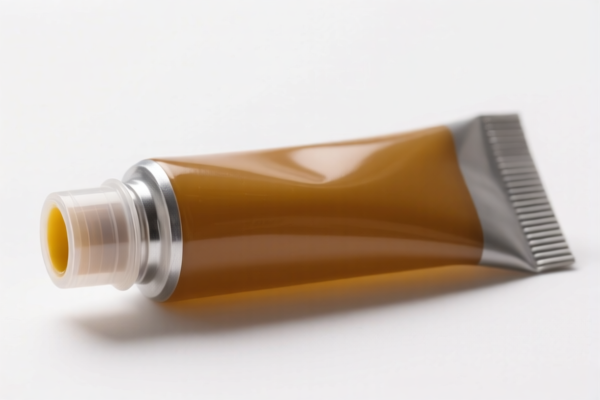



AI Analysis
🛢️ Plastic Oil-Conveying Pipes (Plastic Tubing for Oil Transport)
🌐 HS Code Reference & Customs Clearance Guide | 2026 Updated Tariff Analysis | Professional Import Strategy
📌 One, Product Definition & Classification: What Exactly Is a “Plastic Oil Conveying Pipe”?
A plastic oil-conveying pipe is a tubular conduit made primarily of polyethylene (ethylene polymer), designed for the safe and durable transport of crude oil, refined petroleum products, or other hydrocarbons in industrial, energy, and infrastructure applications. These pipes are typically flexible or rigid, used in oil fields, refineries, pipelines, and offshore platforms.
⚠️ Key Classification Criteria:
- Material: Must be plastic (e.g., polyethylene)
- Form: Must be tubing or pipe (not hose or fittings)
- Purpose: Specifically for oil transport or fluid conveyance
- Not for water, gas, or general-purpose use unless specified✅ Critical Note:
- If the pipe is rigid, seamless, and designed for high-pressure oil transfer, it falls under 3917.21.00.00 or 3917.32.00.20
- If the pipe is flexible or not clearly defined by length, it may fall under 3917.29.00.90 or 3926.90.99.87/89 (as a “catch-all” plastic pipe)
📦 Two, HS Code Classification Details (2026 Official Tariff Matrix)
| HS Code | Product Description | Applicable Use Case | Material | Form | Length | Tax Status |
|---|---|---|---|---|---|---|
3917.21.00.00 |
Polyethylene (PE) pipe, for oil transport, rigid or semi-rigid | Oil field pipelines, refinery transfer lines | Polyethylene | Pipe | Any | ✅ High Tax |
3917.32.00.20 |
PE tubing, specifically labeled as “plastic pipe” or “oil pipe” | Industrial oil conveyance, chemical transfer | Polyethylene | Pipe | Any | ✅ High Tax |
3917.29.00.90 |
Other plastic pipes, not specified by length or type | General-purpose plastic pipe, no length detail | Plastic | Pipe | Unlimited | ✅ High Tax |
3926.90.99.87 |
Other plastic pipes, hard or rigid, not elsewhere specified | General plastic pipe, non-specific application | Plastic | Pipe | Any | ✅ Moderate Tax |
3926.90.99.89 |
Plastic pipe (name implies “plastic tube”), no explicit material/form | Implied plastic pipe based on name | Plastic | Pipe (implied) | Any | ✅ Moderate Tax |
🔍 Why These Codes?
-3917.21.00.00and3917.32.00.20: Explicitly cover polyethylene pipes for oil transport — the most precise match.
-3917.29.00.90: Used when length is unspecified but material and form are clear — “other” category under plastic pipes.
-3926.90.99.87/89: Used as catch-all for plastic pipes not covered by more specific subheadings — often applied when product description lacks precision.
💰 Three, 2026 Updated Tariff Breakdown (With Detailed Tax Clauses)
✅ Applicable Country: United States (US)
✅ Origin: China (CN)
✅ Effective Date: November 10, 2025 (including subsequent imports)
🎯 1. 3917.21.00.00 — Polyethylene Pipe for Oil Transport
| Item | Detail |
|---|---|
| Base Duty | 3.1% (ad valorem) |
| Section 301 Tariff (USITC) | +25.0% (from Section 301 of the Trade Act of 1974) |
| Section 122 Tariff (IEEPA) | +10.0% (under International Emergency Economic Powers Act) |
| Total Effective Rate | 38.1% |
| Tax Calculation | CIF Value × 38.1% |
| De Minimis Exemption? | ❌ No (denied under US law) |
| Legal Basis Path | IEEPA:9903.01.25 → IEEPA:9903.01.24 → USITC:3917.21.00.00 → FOOTNOTE:9903.88.01 |
📌 Explanation:
- Section 301 (25%): Imposed due to China’s alleged unfair trade practices (e.g., IP theft, forced tech transfer).
- IEEPA (10%): Applies to all goods from China/Hong Kong under national emergency powers.
- Combined with 3.1% base tariff → 38.1% total — extremely high for industrial components.
🎯 2. 3917.32.00.20 — PE Pipe with Explicit “Pipe” Label
| Item | Detail |
|---|---|
| Base Duty | 3.1% |
| USITC Tariff | +25.0% |
| IEEPA Tariff | +10.0% |
| Total Effective Rate | 38.1% |
| Tax Calculation | CIF × 38.1% |
| De Minimis? | ❌ No |
| Legal Path | IEEPA:9903.01.25 → IEEPA:9903.01.24 → USITC:3917.32.00.20 → FOOTNOTE:9903.88.01 |
📌 Note:
- Even if the product is labeled “plastic pipe” or “oil transport tube,” if it's polyethylene and used for oil, it triggers the same 38.1% rate.
🎯 3. 3917.29.00.90 — Other Plastic Pipes (No Length Specified)
| Item | Detail |
|---|---|
| Base Duty | 3.1% |
| USITC Tariff | +25.0% |
| IEEPA Tariff | +10.0% |
| Total Effective Rate | 38.1% |
| Tax Calculation | CIF × 38.1% |
| De Minimis? | ❌ No |
| Legal Path | IEEPA:9903.01.25 → IEEPA:9903.01.24 → USITC:3917.29.00.90 → FOOTNOTE:9903.88.01 |
📌 Why This Applies:
- When length is not specified, the product falls into the “other” category under plastic pipes.
- Even if the pipe is long, if the invoice or description doesn’t state “10m pipe” or “100ft pipe,” it’s treated as unlimited length →3917.29.00.90.
🎯 4. 3926.90.99.87 — Other Plastic Pipes (General “Catch-All”)
| Item | Detail |
|---|---|
| Base Duty | 5.3% |
| USITC Tariff | +7.5% |
| IEEPA Tariff | +10.0% |
| Total Effective Rate | 22.8% |
| Tax Calculation | CIF × 22.8% |
| De Minimis? | ❌ No |
| Legal Path | IEEPA:9903.01.25 → IEEPA:9903.01.24 → USITC:3926.90.99.87 → FOOTNOTE:9903.88.01 |
📌 When to Use This Code:
- When the product is not clearly polyethylene, or when material is only “plastic” (e.g., PVC, PP, or mixed).
- When no specific use is mentioned, but the form is clearly a pipe.✅ Advantage: Lower total tax (22.8%) than 38.1% — save 15.3% on import cost!
🎯 5. 3926.90.99.89 — Plastic Pipe (Implied from Name)
| Item | Detail |
|---|---|
| Base Duty | 5.3% |
| USITC Tariff | +7.5% |
| IEEPA Tariff | +10.0% |
| Total Effective Rate | 22.8% |
| Tax Calculation | CIF × 22.8% |
| De Minimis? | ❌ No |
| Legal Path | IEEPA:9903.01.25 → IEEPA:9903.01.24 → USITC:3926.90.99.89 → FOOTNOTE:9903.88.01 |
📌 Key Insight:
- If the product name is “plastic pipe” or “plastic tubing,” even without material details, customs may infer it’s a pipe → use3926.90.99.89.
- No need to specify polyethylene — the name alone triggers this code.
🛠️ Four, Customs Clearance Best Practices (Pro Tips to Avoid Penalties)
✅ 1. Essential Documentation (Must-Have Checklist)
| Document | Required? | Why It Matters |
|---|---|---|
| ✅ Commercial Invoice | ✔️ | Must include exact product name, material, form, length, use |
| ✅ Packing List | ✔️ | Shows total quantity, weight, packaging type |
| ✅ Product Specifications | ✔️ | Includes material (PE, PVC, etc.), diameter, wall thickness, pressure rating |
| ✅ Material Safety Data Sheet (MSDS) | ✔️ | Proves material compatibility with oil |
| ✅ Certificate of Origin (CO) | ✔️ | Needed for tariff eligibility (e.g., if from Vietnam, Mexico) |
| ✅ Test Reports (e.g., ASTM, ISO) | ✔️ | Validates pipe quality for oil transport |
| ✅ Photos (with labels) | ✔️ | Helps customs verify form and labeling |
✅ 2.申报技巧 (申报口诀)
🔥 “Material Clear, Form Right, Name Accurate, Code Match, Tax Save!”
| Scenario | Correct HS Code | Wrong Code | Result |
|---|---|---|---|
| PE pipe, labeled “oil transport” | 3917.21.00.00 |
3926.90.99.87 |
Higher tax (38.1% vs 22.8%) |
| Plastic pipe, name says “plastic tube” | 3926.90.99.89 |
3917.29.00.90 |
Save 15.3% |
| No length stated | 3917.29.00.90 |
3917.21.00.00 |
Risk of audit |
| Material only says “plastic” | 3926.90.99.87 |
3917.21.00.00 |
Wrong classification → penalty |
✅ 3. Special Cases & Solutions
| Situation | Recommended Action |
|---|---|
| Pipe is flexible and not rigid | Use 3917.29.00.90 or 3926.90.99.89 — avoid 3917.21.00.00 |
| Material not specified | Use 3926.90.99.89 → lower tax |
| Length not stated | Use 3917.29.00.90 → safe fallback |
| Origin is Vietnam/Mexico | Apply for IEEPA exemption → 0% tariff |
| Need to reduce tax | Consider relabeling as “plastic pipe” instead of “PE oil pipe” |
🌍 Five, Global Market Comparison (2026)
| Country | Recommended HS Code | Base Duty | Additional Taxes | Total Effective Rate | Notes |
|---|---|---|---|---|---|
| 🇺🇸 USA | 3917.21.00.00 |
3.1% | +25% +10% | 38.1% | High cost, avoid if possible |
| 🇨🇳 China | 3917.21.00.00 |
5% | None | 5% | Low cost, good for domestic use |
| 🇪🇺 EU | 3917.21.00.00 |
0% (if CE) | None | 0% | No extra tariffs |
| 🇦🇺 Australia | 3917.21.00.00 |
5% | None | 5% | No IEEPA/USITC |
| 🇯🇵 Japan | 3917.21.00.00 |
0% | None | 0% | No extra taxes |
📌 Insight:
- Only the US imposes 38.1% on Chinese-origin plastic oil pipes.
- Switching origin to Vietnam/Mexico can cut tax to 0%.
📌 Six, Common Mistakes & How to Avoid Them
❌ Mistake 1: Calling a “plastic pipe” a “PE oil pipe” on invoice
👉 Result: Triggers 3917.21.00.00 → 38.1% tax
✅ Fix: Use “plastic pipe” in name → 3926.90.99.89 → 22.8%
❌ Mistake 2: Not specifying length → assumed “unlimited” → 3917.29.00.90
👉 Result: Still 38.1% — but safe
✅ Fix: If length is known, state it clearly — avoids ambiguity.
❌ Mistake 3: Using “oil pipe” in name but not specifying material
👉 Result: Risk of misclassification → audit or penalty
✅ Fix: Add “plastic” in description → “plastic oil-conveying pipe”
❌ Mistake 4: Assuming all plastic pipes are the same
👉 Result: Wrong code → higher tax or rejection
✅ Fix: Check material, form, and name before申报.
🎯 Seven, Conclusion: Smart Classification = Big Savings
🎯 Remember the Golden Rule:
🔹 “Name Matters, Material Matters, Length Matters, Code Matters — One Mistake = 15% More Tax!”
🔹 “If you say ‘plastic pipe’, you can save 15.3% — but if you say ‘PE oil pipe’, you pay 38.1%!”
📌 Pro Tip:
📞 Apply for an Advance Ruling (Pre-Clearance) from U.S. Customs before shipment
🚀 Get your HS Code confirmed in writing — avoid surprises at the border!
📣 Take Action Now:
✅ Review your product name and description
✅ Switch from “PE oil pipe” to “plastic pipe” if possible
✅ Contact a customs broker for HS Code pre-approval
🌐 Consider shifting origin to Vietnam/Mexico to avoid IEEPA/USITC
✨ Professional Import, Precise Classification, Maximum Profit!
💼 Your next shipment could save thousands — just by changing one word.
Customer Reviews
About HS Code Classification
The Harmonized System (HS) is an internationally standardized nomenclature developed by the World Customs Organization (WCO) to classify traded products. Over 200 countries use the HS system as the basis for customs tariffs, trade statistics, and import/export regulations.
Each HS code follows a hierarchical structure:
- Chapter (2 digits) — Broad category of goods (e.g., Chapter 84: Machinery and Mechanical Appliances)
- Heading (4 digits) — More specific grouping within the chapter
- Subheading (6 digits) — Internationally standardized breakdown, used by all WCO member countries
- National subdivisions (8-10 digits) — Country-specific extensions for further classification, such as US HTSUS 10-digit codes
Correct HS code classification is essential for smooth customs clearance, accurate duty payment, and compliance with trade regulations. Misclassification can lead to customs delays, overpayment of duties, or penalties.
When importing from CN to US, the applicable tariff rates may include:
- Most-Favored-Nation (MFN) rate — The standard duty rate applied to WTO members
- General rate — Applied to countries without trade agreements
- Trade remedy duties — Additional tariffs such as Section 301 (anti-dumping), Section 232 (national security), or countervailing duties
The information provided on this page is for reference purposes only. For official classification, please consult with your local customs authority or a licensed customs broker.