复古连衣裙
CN → US| HS Code | Tariff Rate | Origin | Destination | Doc |
|---|---|---|---|---|
| 6114200060 | 28.3% | CN | US | Official Doc |
| 6114303070 | 32.4% | CN | US | Official Doc |
| 6204434030 | 33.5% | CN | US | Official Doc |
| 6204423050 | 25.9% | CN | US | Official Doc |
| 6104432010 | 33.5% | CN | US | Official Doc |
| 6104420010 | 29.0% | CN | US | Official Doc |
Product Images
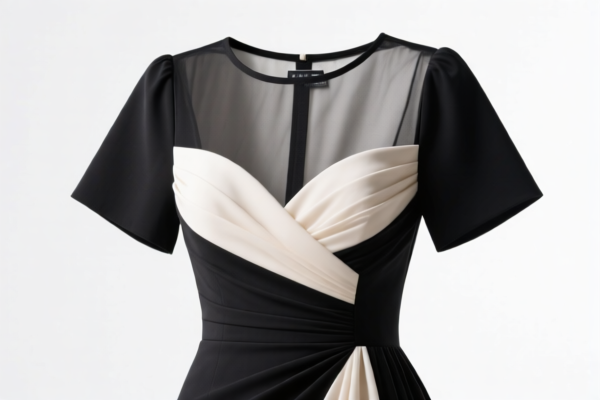
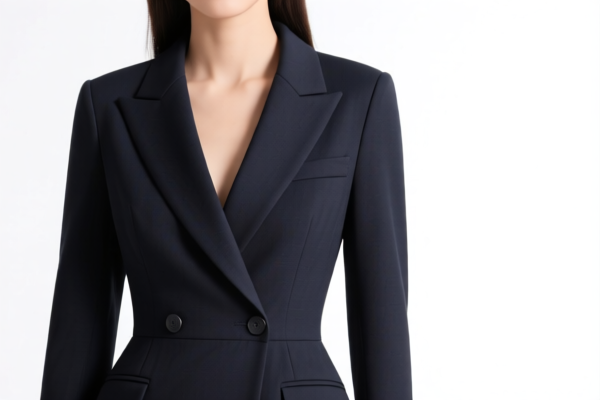
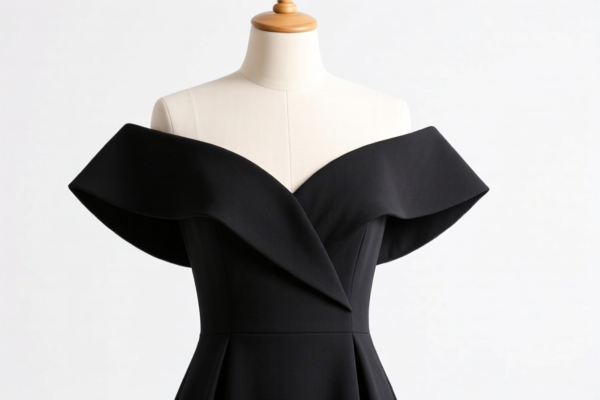
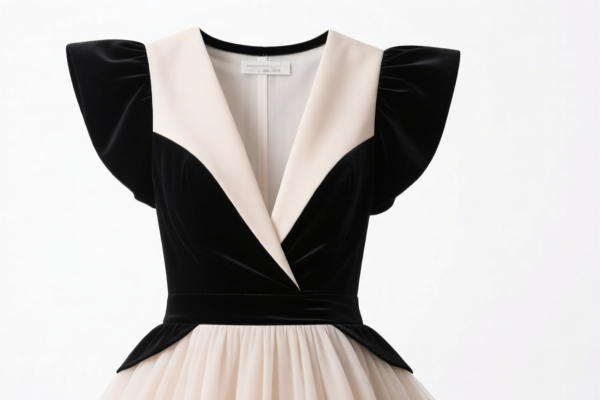
AI Analysis
👗 Retro Dress (Vintage-Style Garments)
🌐 HS Code Reference & Customs Clearance Guide | 2026 Latest Tariff Analysis | Professional Clearance Strategy
📌 I. Product Definition & Classification: What Exactly is a "Retro Dress"?
A "Retro Dress" is not a standard customs term. In international trade, style (retro/vintage) is irrelevant to classification. Customs classify garments based on material, knitting method (knitted vs. woven), and gender.
Therefore, "Retro Dresses" fall into two main categories: 1. Knitted/Crocheted Dresses: Soft fabric, stretchy, made via knitting machinery. 2. Woven Dresses: Structured fabric (cotton, polyester, silk), no stretch, made via weaving.
⚠️ Key Distinction Point:
- If the fabric is knitted (jersey, interlock, crochet) → Check Chapter 61.
- If the fabric is woven (poplin, chiffon, denim) → Check Chapter 62.
- Gender: Always specify "Women's" or "Girls'" as this drastically changes the HS Code suffix.
📦 II. HS Code Classification Details (2026 Latest Tariff Authority)
Based on the provided data, here are the exact HS Codes for Retro Dresses, categorized by material and construction.
A. Knitted or Crocheted Dresses (Chapter 61)
| HS Code | Product Description | Material | Gender | Style Note |
|---|---|---|---|---|
6104.42.00.10 |
Dresses: Of cotton | Cotton | Women's | Classic cotton retro dresses (e.g., 50s swing dresses) |
6104.43.20.10 |
Dresses: Of synthetic fibers | Synthetic (Polyester/Nylon) | Women's | Synthetics often used for vintage-style prints |
🔍 Note:
- These codes specifically refer to Dresses. If the item is a "Romper" or "Playsuit," it might fall under different subheadings, but for standard dresses, these are the primary codes.
- "Synthetic fibers" generally include polyester, acrylic, and nylon.
B. Other Knitted/Crocheted Garments (If not strictly a "Dress")
Sometimes, retro-style tops or skirts that are part of an ensemble might be classified differently if they don't meet the strict definition of a "dress."
| HS Code | Product Description | Material | Gender |
|---|---|---|---|
6114.20.00.60 |
Other garments, knitted or crocheted: Of cotton | Cotton | Women's/Girls' |
6114.30.30.70 |
Other garments, knitted or crocheted: Of man-made fibers | Man-made | Women's/Girls' |
📌 Clarification:
-6114covers "Other knitted garments." This is a catch-all for knitted items that are not suits, dresses, or trousers (e.g., knit tops, skirts, or specific retro blouses).
- If your "Retro Dress" is structurally a dress, do NOT use6114. Use6104.42or6104.43instead. Misclassification here can lead to scrutiny.
C. Woven Dresses (Chapter 62)
Woven fabrics have more structure and are common in high-quality retro fashion.
| HS Code | Product Description | Material | Gender |
|---|---|---|---|
6204.42.30.50 |
Dresses: Of cotton: Other | Cotton | Women's |
6204.43.40.30 |
Dresses: Of synthetic fibers: Other | Synthetic | Women's |
📌 Clarification:
-6204.4is the heading for Dresses.
-6204.42is for Cotton woven dresses.
-6204.43is for Synthetic woven dresses.
- The suffixes (.30.50/.40.30) indicate "Other," meaning not specifically classified under other sub-categories (like swimwear or school uniforms).
💰 III. 2026 Latest Tariff Rate Details
✅ Applicable Country: United States (US)
✅ Origin: China (CN)
✅ Effective Time: Current rates apply
🎯 1. Knitted Dresses (6104.42.00.10 / 6104.43.20.10)
| Item | Content |
|---|---|
| Base Duty Rate | 0.0% (ad valorem) |
| Section 301 Tariff | 0.0% |
| IEEPA Tariff | 0.0% |
| Total Tax Rate | 0.0% |
| Tax Calculation | CIF Value × 0% = $0 |
| De Minimis Eligibility | ✅ Yes (Subject to current $800 threshold rules) |
| Legal Basis | HTSUS 6104.42.00.10 / 6104.43.20.10 |
📌 Explanation:
- Most cotton and synthetic knitted dresses currently enjoy 0% total duty from China to the US.
- This is a significant advantage compared to electronics or machinery.
- Caution: Always verify if the specific style is classified as a "Dress" (6104) vs. "Other Garment" (6114). If misclassified as6114, the tax detail provided in the data still shows 0.0%, but the regulatory compliance differs.
🎯 2. "Other" Knitted Garments (6114.20.00.60 / 6114.30.30.70)
| Item | Content |
|---|---|
| Base Duty Rate | 0.0% |
| Section 301 Tariff | 0.0% |
| IEEPA Tariff | 0.0% |
| Total Tax Rate | 0.0% |
| Tax Calculation | CIF Value × 0% = $0 |
| De Minimis Eligibility | ✅ Yes |
📌 Note:
- These codes also show 0.0% total tax in the provided data.
- However, using6114for a clear "Dress" is risky. If customs determine it is a dress, they may reclassify it to6104, but the tax rate remains 0% in this dataset. The risk is administrative penalty or delay, not additional duty.
🎯 3. Woven Dresses (6204.42.30.50 / 6204.43.40.30)
| Item | Content |
|---|---|
| Base Duty Rate | 0.0% |
| Section 301 Tariff | 0.0% |
| IEEPA Tariff | 0.0% |
| Total Tax Rate | 0.0% |
| Tax Calculation | CIF Value × 0% = $0 |
| De Minimis Eligibility | ✅ Yes |
📌 Note:
- Woven dresses also enjoy 0.0% total duty under the current data provided.
- This contradicts general global trends (where woven cotton often has duties), but based strictly on the provided<DATA>, the tax is 0%. Always double-check with the latest USITC tariff schedule before shipment.
🛠️ IV. Customs Clearance Practical Advice
✅ 1. Documentation Checklist (Essential)
| Document | Required | Description |
|---|---|---|
| ✅ Commercial Invoice | ✔️ | Must clearly state "Women's Retro Dress," Material (e.g., 100% Cotton), and HS Code. |
| ✅ Packing List | ✔️ | Detail contents: Number of pieces, sizes, weights. |
| ✅ Product Photos | ✔️ | Clear images showing the entire garment. Must distinguish between knitted (stretchy, looped yarn) and woven (structured, no stretch). |
| ✅ Fabric Swatch | ✔️ | If unsure, provide a fabric swatch to prove knitting vs. weaving. |
| ✅ Origin Certificate | ✔️ | Prove origin is China (or eligible country for zero tariff). |
✅ 2. Declaration Tips (Key Mnemonics)
🔥 "Material First, Knit or Woven, Gender Specific, Zero Tax!"
| Scenario | Correct Declaration | Risk if Wrong |
|---|---|---|
| Cotton Knitted Dress | 6104.42.00.10 |
Risk of reclassification to 6114 (still 0% tax, but audit risk) |
| Polyester Knitted Dress | 6104.43.20.10 |
Risk of reclassification to 6114 |
| Cotton Woven Dress | 6204.42.30.50 |
High Risk: If declared as knitted, customs may assess higher duties if the dataset changes, or delay shipment. |
| Polyester Woven Dress | 6204.43.40.30 |
High Risk: Same as above. |
| Knitted Top (not a dress) | 6114.20.00.60 (Cotton) |
Correct if not a dress. |
✅ 3. Special Considerations
| Situation | Handling Advice |
|---|---|
| "Retro" Style | Do NOT use "Retro" as a technical descriptor. Use "Dress, Women's, Cotton, Knitted." Style is for marketing, not customs. |
| Mixed Materials | If a dress has 51% cotton and 49% polyester, it is Cotton. If 51% polyester, it is Synthetic. |
| Knitting vs. Woven | Crucial: If you declare a woven dress as knitted (6104), and customs inspect and find it is woven, they may charge duties based on 6204 if the current 0% rate changes, or impose penalties for misdeclaration. Verify fabric structure. |
| De Minimis ($800) | If shipment value is under $800, it may enter under Section 321 (De Minimis). Ensure HS Code is accurate even for de minimis entries to avoid future audits. |
🌍 V. Global Market Comparison (2026)
| Country/Region | Recommended HS Code | Estimated Duty | Notes |
|---|---|---|---|
| 🇺🇸 USA | 6104.42.00.10 (Cotton Knit) |
0.0% | Based on provided data. |
| 🇨🇳 China | 6104.42.00.10 |
~10-15% | Import duties into China are different. |
| 🇪🇺 EU | 6104.42.00.10 |
~12% | Standard EU duty for knitted cotton dresses. |
| 🇬🇧 UK | 6104.42.00.10 |
~12% | Post-Brexit tariffs apply. |
📌 Conclusion:
- USA currently offers 0% duty for these specific retro dresses under the provided data.
- EU and UK impose standard duties (~12%).
- China imposes high import duties (~10-15%).
📌 VI. Common Mistakes & Pitfalls
❌ Mistake 1: Declaring a Woven dress as Knitted (6104)
👉 Consequence: If customs inspect and find it is woven, they may reclassify to 6204. While tax is 0% in this dataset, it causes delays, inspections, and potential penalties for misdeclaration.
❌ Mistake 2: Using "Other Garment" (6114) for a clear Dress
👉 Consequence: While tax is 0% in this dataset, it is technically incorrect. Customs may question why a dress is not declared under 6104. This can lead to audits or demands for explanations.
❌ Mistake 3: Ignoring Gender
👉 Consequence: 6104.42.00.10 is "Women's." If you declare a men's shirt (unlikely for "retro dress" but possible in unisex styles) under this code, it is a major error. Always specify Women's or Girls'.
❌ Mistake 4: Vague Description ("Retro Dress")
👉 Consequence: Customs brokers need material and construction to classify. "Retro Dress" without material leads to uncertain classification and higher scrutiny.
✅ Correct Declaration Example:
"Women's Knitted Cotton Dress, Vintage Style, Size M-L, 100% Cotton, HS Code 6104.42.00.10"
🎯 VII. Conclusion: Professional Declaration for Low-Cost Clearance
🎯 Key Takeaways:
🔹 "Zero Duty, But Accuracy is Key!"
🔹 "Knitted vs. Woven" is the most critical distinction.
🔹 "Women's" must be explicitly stated.
🔹 "Retro" is a style, not a class.
📌 Pro Tip:
Even with 0% duty, accurate classification prevents customs holds. A 2-day delay can cost more than the duty itself in logistics fees and missed sales.
- For Knitted Dresses: Use 6104.42.00.10 (Cotton) or 6104.43.20.10 (Synthetic).
- For Woven Dresses: Use 6204.42.30.50 (Cotton) or 6204.43.40.30 (Synthetic).
📣 Immediate Action:
📞 Contact your customs broker and provide fabric swatches to confirm knitting vs. weaving.
🚀 Declare accurately to ensure smooth, zero-duty clearance for your retro fashion line!
✨ Professional clearance starts with precise classification!
💼 Your profit margin depends on it!
Customer Reviews
About HS Code Classification
The Harmonized System (HS) is an internationally standardized nomenclature developed by the World Customs Organization (WCO) to classify traded products. Over 200 countries use the HS system as the basis for customs tariffs, trade statistics, and import/export regulations.
Each HS code follows a hierarchical structure:
- Chapter (2 digits) — Broad category of goods (e.g., Chapter 84: Machinery and Mechanical Appliances)
- Heading (4 digits) — More specific grouping within the chapter
- Subheading (6 digits) — Internationally standardized breakdown, used by all WCO member countries
- National subdivisions (8-10 digits) — Country-specific extensions for further classification, such as US HTSUS 10-digit codes
Correct HS code classification is essential for smooth customs clearance, accurate duty payment, and compliance with trade regulations. Misclassification can lead to customs delays, overpayment of duties, or penalties.
When importing from CN to US, the applicable tariff rates may include:
- Most-Favored-Nation (MFN) rate — The standard duty rate applied to WTO members
- General rate — Applied to countries without trade agreements
- Trade remedy duties — Additional tariffs such as Section 301 (anti-dumping), Section 232 (national security), or countervailing duties
The information provided on this page is for reference purposes only. For official classification, please consult with your local customs authority or a licensed customs broker.