复合无纺布鞋材
CN → US| HS Code | Tariff Rate | Origin | Destination | Doc |
|---|---|---|---|---|
| 6406109060 | 22.0% | CN | US | Official Doc |
| 6406106000 | 17.5% | CN | US | Official Doc |
| 5603130010 | 35.0% | CN | US | Official Doc |
| 5603143000 | 35.0% | CN | US | Official Doc |
| 3926909989 | 22.8% | CN | US | Official Doc |
| 3926905900 | 37.4% | CN | US | Official Doc |
Product Images
AI Analysis
🥿 Composite Non-Woven Footwear Materials
🌐 HS Code Reference & Customs Clearance Guide | 2026 Updated Tariff Analysis | Professional Import Strategy
📌 One, Product Definition & Classification: What Exactly Is "Composite Non-Woven Footwear Material"?
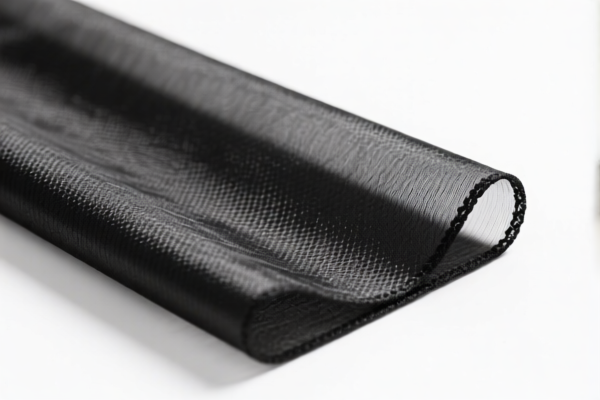
Composite non-woven footwear materials are advanced textile components used in shoe manufacturing, made by bonding multiple layers of non-woven fabric (often with synthetic fibers) using mechanical, thermal, or chemical processes. These materials are not traditional woven or knitted fabrics, but rather engineered structures with enhanced durability, breathability, and water resistance—ideal for midsoles, insoles, uppers, and lining.
⚠️ Key Distinction:
- If the material is a layered, bonded non-woven structure used specifically in footwear → likely falls under 5603.13.00.10 / 5603.14.30.00
- If the material contains significant plastic/synthetic resin content and resembles molded plastic parts → may be classified as 3926.90.99.89
- If it's a non-metallic synthetic component used in shoe construction → could fall under 6406.10.60.00
📦 Two, HS Code Classification Breakdown (2026 Updated Tariff Authority)
| HS Code | Product Description | Application Context | Composite/Plastic Content? |
|---|---|---|---|
5603.13.00.10 |
Composite non-woven fabric for footwear; layered, bonded structure, non-woven base | Shoe uppers, linings, insoles, midsole components | ✅ Yes (non-woven base) |
5603.14.30.00 |
Composite non-woven material with laminated structure, used in footwear | Technical footwear, sport shoes, industrial safety shoes | ✅ Yes (layered non-woven) |
3926.90.99.89 |
Composite non-woven material, primarily plastic/synthetic resin-based, classified as other plastic articles | Molded shoe parts, waterproof membranes, synthetic leather alternatives | ✅ Yes (plastic-rich) |
6406.10.60.00 |
Non-metallic synthetic material parts for footwear, including composite non-woven components | Shoe components like insoles, midsoles, heel counters | ✅ Yes (synthetic, non-metal) |
🔍 Critical Insight:
- 5603.13.00.10 & 5603.14.30.00 are for textile-based composites with non-woven structure — not plastic
- 3926.90.99.89 applies when the material is dominated by plastic/resin — even if it looks like fabric
- 6406.10.60.00 is for non-metallic synthetic parts used in shoes — often after shaping or molding
💰 Three, 2026 Latest Tariff Breakdown (With附加 Taxes & Legal Basis)
✅ Applicable Country: United States (US)
✅ Origin: China (CN)
✅ Effective Date: November 10, 2025 (including future imports)
🎯 1. 5603.13.00.10 — Composite Non-Woven Footwear Material (Textile-Based)
| Item | Detail |
|---|---|
| Base Duty | 0% (ad valorem) |
| USITC Additional Duty | +25% (under Section 301 of the Trade Act) |
| IEEPA Additional Duty | +10% (International Emergency Economic Powers Act, targeting China/HK) |
| Total Duty Rate | 35.0% |
| Tax Calculation | CIF Value × 35% |
| De Minimis Exemption? | ❌ No (denied under U.S. de minimis rules) |
| Legal Basis Path | IEEPA:9903.01.25 → IEEPA:9903.01.24 → USITC:5603.13.00.10 → FOOTNOTE:9903.88.01 |
📌 Explanation:
- USITC 25% comes from Section 301 tariffs on Chinese goods deemed to have unfair trade practices.
- IEEPA 10% is a national emergency tariff under the IEEPA, applied to all Chinese-origin goods since 2025.
- Total 35% — one of the highest tariff burdens for non-woven materials in footwear.
🎯 2. 5603.14.30.00 — Composite Non-Woven Material with Laminated Structure (Footwear Use)
| Item | Detail |
|---|---|
| Base Duty | 0% |
| USITC Additional Duty | +25% |
| IEEPA Additional Duty | +10% |
| Total Duty Rate | 35.0% |
| Tax Calculation | CIF × 35% |
| De Minimis Exemption? | ❌ No |
| Legal Basis Path | IEEPA:9903.01.25 → IEEPA:9903.01.24 → USITC:5603.14.30.00 → FOOTNOTE:9903.88.01 |
📌 Note:
- Same tariff treatment as5603.13.00.10— even if the material has a different layering method, as long as it's non-woven and used in footwear, it's subject to the same 35% rate.
🎯 3. 3926.90.99.89 — Composite Non-Woven Material (Plastic/Synthetic Resin-Based)
| Item | Detail |
|---|---|
| Base Duty | 5.3% |
| USITC Additional Duty | +7.5% |
| IEEPA Additional Duty | +10% |
| Total Duty Rate | 22.8% |
| Tax Calculation | CIF × 22.8% |
| De Minimis Exemption? | ❌ No |
| Legal Basis Path | IEEPA:9903.01.25 → IEEPA:9903.01.24 → USITC:3926.90.99.89 → FOOTNOTE:9903.88.01 |
📌 Explanation:
- This code applies when the material is predominantly plastic or synthetic resin — even if it looks like fabric.
- Base duty is 5.3%, but USITC 7.5% + IEEPA 10% still apply.
- Lower than 35%, but still high — must confirm material composition.
🎯 4. 6406.10.60.00 — Non-Metallic Synthetic Material Parts for Footwear
| Item | Detail |
|---|---|
| Base Duty | 0% |
| USITC Additional Duty | +7.5% |
| IEEPA Additional Duty | +10% |
| Total Duty Rate | 17.5% |
| Tax Calculation | CIF × 17.5% |
| De Minimis Exemption? | ❌ No |
| Legal Basis Path | IEEPA:9903.01.25 → IEEPA:9903.01.24 → USITC:6406.10.60.00 → FOOTNOTE:9903.88.01 |
📌 Key Point:
- This code is for finished or semi-finished parts used in shoes (e.g., molded insoles, heel counters).
- Lowest tariff among the four — only 17.5% — but only if the item is clearly a part, not raw material.
🛠️ Four, Customs Clearance Best Practices (Real-World Tips)
✅ 1. Required Documentation (Must-Have List)
| Document | Required? | Notes |
|---|---|---|
| ✅ Product Specifications | ✔️ | Include fiber composition, layer structure, thickness, weight |
| ✅ Material Test Reports | ✔️ | Tensile strength, water resistance, flame retardancy |
| ✅ Product Photos (with labels) | ✔️ | Show surface texture, layering, and markings |
| ✅ Technical Drawings / Structure Diagrams | ✔️ | Prove whether it's non-woven or plastic-based |
| ✅ Commercial Invoice | ✔️ | Clearly state: "Composite Non-Woven Footwear Material" |
| ✅ Certificate of Origin (CO) | ✔️ | If from Vietnam/Mexico, may qualify for lower tariffs |
| ✅ Packing List | ✔️ | Show if material is shipped as raw rolls or cut parts |
✅ 2.申报技巧(Key Rules to Remember)
🔥 "Material First, Form Second — Don’t Guess, Prove!"
| Scenario | Correct HS Code | Common Mistake |
|---|---|---|
| Raw non-woven fabric, layered, used in shoe uppers | 5603.13.00.10 or 5603.14.30.00 |
Misclassified as plastic → 35% vs 22.8% |
| Molded insole with plastic base, even if textured like fabric | 3926.90.99.89 |
Misclassified as non-woven → 22.8% vs 35% |
| Cut, shaped, or assembled part (e.g., heel counter) | 6406.10.60.00 |
Misclassified as raw material → 35% vs 17.5% |
| Mixed material (non-woven + plastic coating) | Analyze composition | Declare based on dominant material |
✅ 3. Special Cases & Solutions
| Case | Recommended Action |
|---|---|
| Material contains 60% plastic, 40% non-woven | Use 3926.90.99.89 — plastic is dominant |
| Material is layered non-woven but has waterproof coating | Still 5603.14.30.00 — if non-woven is structural |
| Shipped as rolls vs. cut parts | Rolls → 5603.13.00.10 or 5603.14.30.00; Cut parts → 6406.10.60.00 |
| Used in luxury or technical footwear (e.g., hiking, running) | Provide product use case — may help with classification |
| Origin is Vietnam/Mexico | Apply for IEEPA exemption — can reduce to 0% |
🌍 Five, Global Market Comparison (2026 Update)
| Country/Region | Recommended HS Code | Tariff | Certification | Notes |
|---|---|---|---|---|
| 🇺🇸 United States | 5603.13.00.10 / 5603.14.30.00 |
35.0% | None (but must prove origin) | High risk — no de minimis |
| 🇨🇳 China | 5603.13.00.10 |
5% | CCC | No extra tariffs |
| 🇪🇺 European Union | 5603.13.00.10 |
0% (if CE) | CE + REACH | No IEEPA/USITC |
| 🇦🇺 Australia | 5603.13.00.10 |
5% | RCM | No extra tariffs |
| 🇯🇵 Japan | 5603.13.00.10 |
0% | PSE | No附加税 |
📌 Takeaway:
- The U.S. is the only market with 35%+ tariffs on Chinese composite non-woven footwear materials.
- Vietnam/Mexico origin can avoid IEEPA/USITC tariffs — consider shifting production.
📌 Six, Common Mistakes & How to Avoid Them (Real-World Pitfalls)
❌ Mistake 1: Declaring a plastic-coated non-woven as 5603.14.30.00
👉 Result: 35% tariff — but if plastic dominates, should be 3926.90.99.89 → 22.8% → Save 12.2%!
❌ Mistake 2: Shipping cut insoles as raw fabric
👉 Result: Declared as 5603.13.00.10 → 35% — but should be 6406.10.60.00 → 17.5% → Save 17.5%!
❌ Mistake 3: No technical drawings — only "non-woven fabric" in invoice
👉 Result: Customs delays, audit, or reclassification → fines + penalties
❌ Mistake 4: Using "footwear material" without specifying structure
👉 Result: Misclassification risk — always describe layering, bonding method, and composition
✅ Correct Declaration Example:
"Composite Non-Woven Footwear Material, 3-layer bonded structure (non-woven base + adhesive + top layer), used in athletic shoe uppers, 500gsm, 1.2m width, China origin"
🎯 Seven, Final Verdict: Precision Pays Off!
🎯 Remember the Golden Rules:
🔹 "If it's layered non-woven → 35% in US"
🔹 "If it's plastic-heavy → 22.8% (use 3926)"
🔹 "If it's a part → 17.5% (use 6406)"
🔹 "Don't guess — prove with docs!"
📌 Pro Tip:
✅ Apply for an Advance Ruling (Pre-Clearance) with U.S. Customs — get a binding HS Code decision before shipment.
✅ Shift production to Vietnam/Mexico — can avoid IEEPA & USITC tariffs entirely.
📣 Act Now!
📞 Contact a customs broker with expertise in textile & footwear
🚀 Submit product samples + technical docs for HS Code pre-approval
💼 Reduce risk, cut costs, and ship with confidence!
✨ Smart Classification = Smooth Clearance = Profit Protection!
💼 Your next shipment shouldn't be a tax trap — make it a win!
Customer Reviews
About HS Code Classification
The Harmonized System (HS) is an internationally standardized nomenclature developed by the World Customs Organization (WCO) to classify traded products. Over 200 countries use the HS system as the basis for customs tariffs, trade statistics, and import/export regulations.
Each HS code follows a hierarchical structure:
- Chapter (2 digits) — Broad category of goods (e.g., Chapter 84: Machinery and Mechanical Appliances)
- Heading (4 digits) — More specific grouping within the chapter
- Subheading (6 digits) — Internationally standardized breakdown, used by all WCO member countries
- National subdivisions (8-10 digits) — Country-specific extensions for further classification, such as US HTSUS 10-digit codes
Correct HS code classification is essential for smooth customs clearance, accurate duty payment, and compliance with trade regulations. Misclassification can lead to customs delays, overpayment of duties, or penalties.
When importing from CN to US, the applicable tariff rates may include:
- Most-Favored-Nation (MFN) rate — The standard duty rate applied to WTO members
- General rate — Applied to countries without trade agreements
- Trade remedy duties — Additional tariffs such as Section 301 (anti-dumping), Section 232 (national security), or countervailing duties
The information provided on this page is for reference purposes only. For official classification, please consult with your local customs authority or a licensed customs broker.