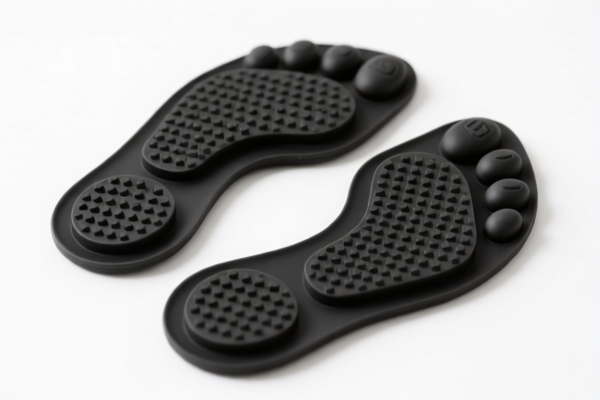
天然橡胶脚垫
CN → US| HS Code | Tariff Rate | Origin | Destination | Doc |
|---|---|---|---|---|
| 4016990500 | 20.9% | CN | US | Official Doc |
| 4016996050 | 37.5% | CN | US | Official Doc |
| 4014905000 | 14.2% | CN | US | Official Doc |
| 4014901000 | 10.0% | CN | US | Official Doc |
| 3926909989 | 22.8% | CN | US | Official Doc |
Product Images


AI Analysis
🛠️ Natural Rubber Floor Pads (Rubber Table脚垫)
🌐 HS Code Classification & Tariff Guide | 2026 Customs Clearance Masterclass | Expert-Level Compliance Strategy
📌 One Product, Five Possible HS Codes — Know Which One Applies to You!
📦 一、Product Definition & Classification: What Exactly Is a "Natural Rubber Foot Pad"?
A natural rubber foot pad is a small, cushioning component typically made from vulcanized natural rubber, designed to be attached to the bottom of furniture legs (e.g., tables, chairs, cabinets) to:
- Prevent floor scratches
- Reduce vibration and noise
- Provide stability on uneven surfaces
- Protect delicate flooring (wood, tile, laminate)
⚠️ Critical Distinction:
- If it's pure rubber, not used in medical/hygiene applications, and not part of a vehicle or mechanical system → it falls under rubber制品 (rubber articles)
- If it’s used in medical devices or hygiene products → it would fall under Chapter 4014.90.50.00 with different rules
- If it’s used as a shock absorber in machinery or vehicles → may be classified differently (e.g., 4016.99.05.00)✅ This guide focuses on non-medical, non-vehicle, household-use rubber foot pads — the most common type exported globally.
🔍 二、HS Code Breakdown (2026 Official Tariff Table)
✅ All codes are valid for U.S. import from China (CN)
✅ Effective from November 10, 2025 (including subsequent imports)
| HS Code | Product Description | Key Use Case | Tax Rate | Notes |
|---|---|---|---|---|
4016.99.05.00 |
Rubber foot pads used for household furniture; vulcanized rubber; not for vehicles | General home/office furniture protection | 20.9% | Most common for standard table/cabinet pads |
4016.99.60.50 |
Rubber foot pads, non-mechanical, non-vehicle, but not classified as "other" | Similar use, but more specific classification | 37.5% | Higher tax due to additional trade measures |
4014.90.50.00 |
Rubber parts (e.g., washers, gaskets, pads), not for medical/hygiene use | Industrial or household rubber components | 14.2% | Lower tariff, but must prove non-medical use |
4014.90.10.00 |
Rubber articles for general household use, including protective pads | Broadly covers everyday rubber items | 10.0% | Lowest rate — ideal if you can qualify |
3926.90.99.89 |
Other articles made from elastic polymers or plastics (non-rubber) | If made from synthetic elastomers or plastic-like materials | 22.8% | Applies only if not pure natural rubber |
📌 Important:
- Only one code applies per shipment — choose based on material, function, and intended use
- Misclassification leads to penalties, delays, or seizure
💰 三、Tariff Breakdown by HS Code (Detailed & Compliant)
🎯 1. 4016.99.05.00 — Household Rubber Foot Pads (Most Common)
| Item | Detail |
|---|---|
| Base Duty | 3.4% (ad valorem) |
| Additional Duty (Section 301) | +7.5% (from USITC) |
| Section 122 Duty (IEEPA) | +10% (targeted at China) |
| Total Effective Tariff | 20.9% |
| Tax Calculation | CIF Value × 20.9% |
| De Minimis Threshold | ❌ Not applicable (denied for China-origin goods) |
| Legal Basis Path | IEEPA:9903.01.25 → USITC:4016.99.05.00 → FOOTNOTE:9903.88.01 |
📌 Why This Code?
- Applies to vulcanized rubber pads used for furniture protection
- Not for medical, industrial machinery, or vehicle use
- Most accurate for standard rubber table/cabinet feet
🎯 2. 4016.99.60.50 — Rubber Foot Pads (Non-Mechanical, Non-Vehicle)
| Item | Detail |
|---|---|
| Base Duty | 2.5% |
| Additional Duty (Section 301) | +25.0% |
| Section 122 Duty (IEEPA) | +10% |
| Total Effective Tariff | 37.5% |
| Tax Calculation | CIF × 37.5% |
| De Minimis Threshold | ❌ Not eligible |
| Legal Basis Path | IEEPA:9903.01.24 → USITC:4016.99.60.50 → FOOTNOTE:9903.88.01 |
📌 Why This Code?
- Used when the product is not clearly defined as “household”
- Often triggered when documentation lacks clear use case
- Higher tariff due to Section 301 being applied at 25% — very punitive
🎯 3. 4014.90.50.00 — Rubber Parts (Non-Medical, Non-Hygiene)
| Item | Detail |
|---|---|
| Base Duty | 4.2% |
| Additional Duty (Section 301) | 0.0% |
| Section 122 Duty (IEEPA) | +10% |
| Total Effective Tariff | 14.2% |
| Tax Calculation | CIF × 14.2% |
| De Minimis Threshold | ❌ Not eligible |
| Legal Basis Path | IEEPA:9903.01.25 → 4014.90.50.00 → FOOTNOTE:9903.88.01 |
📌 Why This Code?
- Applies to rubber components like washers, gaskets, pads
- Must prove not used in medical/hygiene products
- Lower base rate, but only if you can prove non-medical use
🎯 4. 4014.90.10.00 — Rubber Articles for General Household Use
| Item | Detail |
|---|---|
| Base Duty | 0.0% |
| Additional Duty (Section 301) | 0.0% |
| Section 122 Duty (IEEPA) | +10% |
| Total Effective Tariff | 10.0% |
| Tax Calculation | CIF × 10.0% |
| De Minimis Threshold | ❌ Not eligible |
| Legal Basis Path | IEEPA:9903.01.25 → 4014.90.10.00 → FOOTNOTE:9903.88.01 |
📌 Why This Code?
- Lowest tariff for household rubber items
- Applies to broad “household” rubber articles
- Must clearly state: "for general household use, not medical, not industrial"
- Best option if you can qualify
🎯 5. 3926.90.99.89 — Other Articles from Elastic Polymers/Plastics
| Item | Detail |
|---|---|
| Base Duty | 5.3% |
| Additional Duty (Section 301) | +7.5% |
| Section 122 Duty (IEEPA) | +10% |
| Total Effective Tariff | 22.8% |
| Tax Calculation | CIF × 22.8% |
| De Minimis Threshold | ❌ Not eligible |
| Legal Basis Path | IEEPA:9903.01.25 → 3926.90.99.89 → FOOTNOTE:9903.88.01 |
📌 Why This Code?
- Only applies if the pad is not made from natural rubber, but synthetic elastomers or plastic-like materials
- Not applicable for genuine natural rubber
- If you claim this, you must provide material test reports proving it’s not natural rubber
🛠️ 四、Customs Clearance Best Practices (Pro Tips to Avoid Penalties)
✅ 1. Essential Documentation (Must-Have List)
| Document | Required? | Why It Matters |
|---|---|---|
| ✅ Product Specification Sheet | ✔️ | Shows material (natural rubber), dimensions, use case |
| ✅ Material Test Report (e.g., IR, FTIR) | ✔️ | Proves it’s natural rubber, not synthetic |
| ✅ High-Resolution Product Photos | ✔️ | Shows shape, size, attachment method |
| ✅ Commercial Invoice | ✔️ | Must state: "Natural Rubber Foot Pads for Furniture Use" |
| ✅ Packing List | ✔️ | Shows quantity per box, total weight |
| ✅ Certificate of Origin (CO) | ✔️ | Critical for tariff eligibility |
✅ Declaration of Use (for 4014.90.10.00) |
✔️ | Explicitly state: "Not for medical, hygiene, or vehicle use" |
✅ 2.申报技巧(Key Rules of Thumb)
🔥 "Use Case Defines the Code — Not the Material!"
| Scenario | Correct HS Code | Why |
|---|---|---|
| Standard rubber pad for table/chair | 4016.99.05.00 or 4014.90.10.00 |
Best fit for household use |
| Pad used in industrial machine | 4016.99.60.50 |
Higher risk of 301 tariff |
| Pad made from synthetic rubber | 3926.90.99.89 |
Only if not natural rubber |
| Pad used in medical equipment | Not covered here | Requires different classification |
❌ Never say: “rubber pad” without context
✅ Always say: "Natural Rubber Table Foot Pad, for Household Furniture, Non-Medical Use"
✅ 3. Special Cases & Solutions
| Situation | Recommended Action |
|---|---|
| Pad has adhesive backing | Still qualifies under 4016.99.05.00 — no issue |
| Pad is colored or printed | No impact — as long as material is natural rubber |
| Exported from Vietnam/Mexico | Can apply for IEEPA exemption → 0% tariff |
| Bulk shipment with mixed types | Must classify per type — cannot group under one code |
| Custom-designed pads | Provide design drawings + usage proof to support classification |
🌍 五、Global Market Tariff Comparison (2026)
| Country | Recommended HS Code | Tariff | Certification | Notes |
|---|---|---|---|---|
| 🇺🇸 USA | 4014.90.10.00 |
10.0% (if qualified) | None | IEEPA 10% applies |
| 🇨🇳 China | 4014.90.10.00 |
5% | CCC | No additional tariffs |
| 🇪🇺 EU | 4014.90.10.00 |
0% | CE | No extra duties |
| 🇦🇺 Australia | 4014.90.10.00 |
5% | RCM | No 301/IEEPA |
| 🇯🇵 Japan | 4014.90.10.00 |
0% | PSE | No extra taxes |
📌 Insight:
- The USA has the highest effective tariff due to IEEPA + Section 301
- China-origin goods are penalized — even with low base duty
- Vietnam/Mexico origin = potential 0% tariff in U.S.
🚨 六、Common Mistakes & How to Avoid Them
❌ Mistake 1: Using 4016.99.05.00 for a pad made from synthetic rubber
👉 Result: Misclassification → penalty + seizure
❌ Mistake 2: Not declaring "non-medical use" for 4014.90.10.00
👉 Result: Customs may reclassify to 4016.99.60.50 → 37.5% tax
❌ Mistake 3: Saying "rubber pad" without context on invoice
👉 Result: Delayed clearance, request for clarification
❌ Mistake 4: Using 3926.90.99.89 for natural rubber
👉 Result: Wrong code → higher tax + legal risk
✅ Correct Declaration Example:
"Natural Rubber Foot Pads, 10mm diameter, for household furniture (tables, chairs), non-medical, non-vehicle use, vulcanized rubber, 100% natural"
🎯 七、Final Verdict: Choose Wisely, Pay Less, Ship Faster!
🔹 Best HS Code for Most Cases:
4014.90.10.00→ 10.0% total tariff
🔹 Most Common Code:4016.99.05.00→ 20.9%
🔹 Avoid:4016.99.60.50→ 37.5% unless absolutely necessary📌 Pro Tip:
- Apply for Advance Ruling (Pre-Review) if shipping large volumes
- Use Vietnam/Mexico as manufacturing origin to bypass IEEPA
- Always include a “Declaration of Use” in your invoice
📣 Call to Action: Protect Your Profit Margin!
📞 Contact a licensed U.S. Customs Broker + Request HS Code Pre-Approval
🚀 Get your product classified correctly BEFORE shipment
💼 Save thousands in unexpected tariffs — and avoid delays
✨ Professional Clearance Starts with Accurate Classification!
💼 Your next shipment shouldn’t be a gamble — it should be a strategy.
✅ Remember:
"One wrong code = 20% extra tax. One right code = 10% savings. Choose wisely!"
Customer Reviews
About HS Code Classification
The Harmonized System (HS) is an internationally standardized nomenclature developed by the World Customs Organization (WCO) to classify traded products. Over 200 countries use the HS system as the basis for customs tariffs, trade statistics, and import/export regulations.
Each HS code follows a hierarchical structure:
- Chapter (2 digits) — Broad category of goods (e.g., Chapter 84: Machinery and Mechanical Appliances)
- Heading (4 digits) — More specific grouping within the chapter
- Subheading (6 digits) — Internationally standardized breakdown, used by all WCO member countries
- National subdivisions (8-10 digits) — Country-specific extensions for further classification, such as US HTSUS 10-digit codes
Correct HS code classification is essential for smooth customs clearance, accurate duty payment, and compliance with trade regulations. Misclassification can lead to customs delays, overpayment of duties, or penalties.
When importing from CN to US, the applicable tariff rates may include:
- Most-Favored-Nation (MFN) rate — The standard duty rate applied to WTO members
- General rate — Applied to countries without trade agreements
- Trade remedy duties — Additional tariffs such as Section 301 (anti-dumping), Section 232 (national security), or countervailing duties
The information provided on this page is for reference purposes only. For official classification, please consult with your local customs authority or a licensed customs broker.