天然牛皮毯
CN → US| HS Code | Tariff Rate | Origin | Destination | Doc |
|---|---|---|---|---|
| 4302196000 | 38.5% | CN | US | Official Doc |
| 4302197500 | 36.7% | CN | US | Official Doc |
| 4205008000 | 35.0% | CN | US | Official Doc |
| 4205004000 | 36.8% | CN | US | Official Doc |
| 4104415000 | 13.3% | CN | US | Official Doc |
| 4104495000 | 13.3% | CN | US | Official Doc |
Product Images
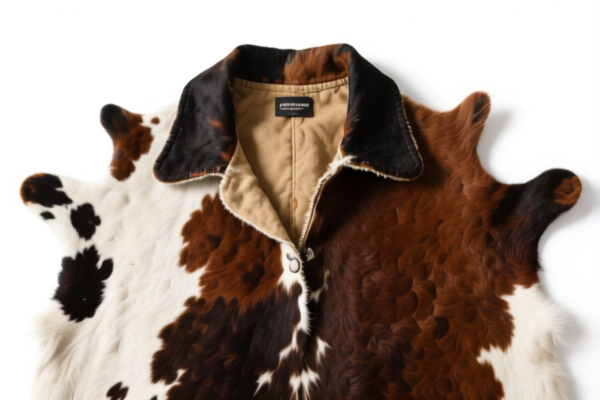
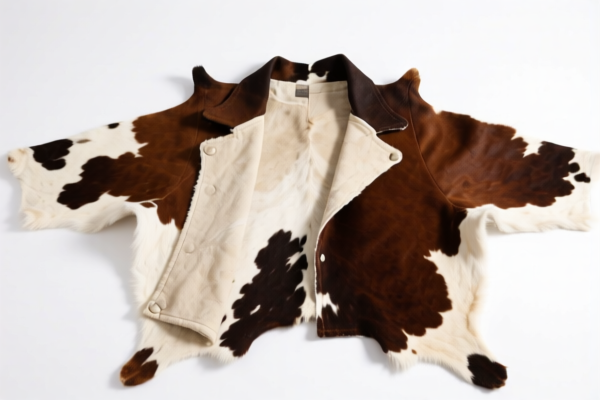
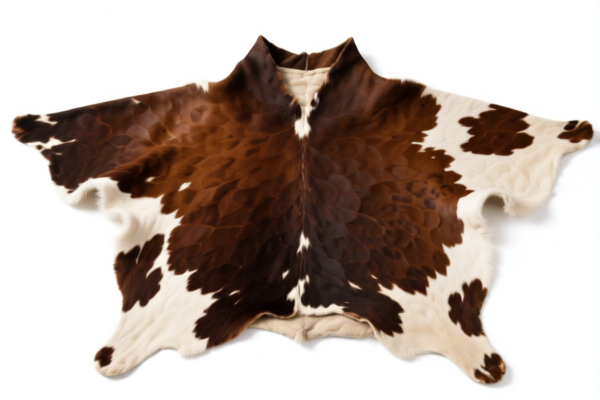
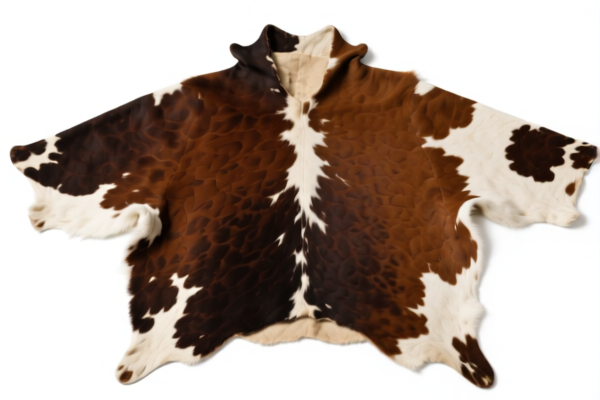
AI Analysis
🧥 Cowhide Blanket (Natural Cowhide Blanket)
🌐 HS Code Reference & Customs Clearance Guide | 2026 Latest Tariff Analysis | Professional-Level Strategy
📌 I. Product Definition & Classification: Do You Really Understand "Cowhide Blanket"?
A "Cowhide Blanket" refers to a product made from natural cowhide leather or tanned fur skins, processed into a blanket-like shape. In international trade, the classification depends heavily on the processing level and material state:
- Tanned Fur/Skin (毛皮类): If the hide is dyed, tanned, or processed specifically as fur/pelt, it falls under Chapter 43.
- Processed Leather (皮革制品): If it is plain tanned leather used for general accessories, it may fall under Chapter 41 (Leather) or Chapter 42 (Articles of Leather).
- Manufactured Article: If it is sewn into a specific final article (like a bag or jacket), it falls under Chapter 42.
⚠️ Key Distinction:
- If the material is considered "Fur" or "Shearling" (dyed/finished pelt) → Chapter 43 (Higher Tariff, US Trade War Impact).
- If the material is considered "Leather" (plain tanned leather sheet/fur-like but classified as leather) → Chapter 41 (Lower Base Tariff, Different US Trade War Impact).
- If it is a finished accessory (e.g., keychain, wallet made of leather scraps) → Chapter 42.
📦 2. HS Code Classification Details (2026 Latest Tariff Authority Comparison)
Based on the provided data, here are the five possible HS Codes for "Natural Cowhide Blanket" depending on the specific processing and customs interpretation:
| HS Code | Product Description | Applicable Scenario | Tariff Impact (US/CN) |
|---|---|---|---|
4302.19.75.00 |
Tanned fur/skin, dyed or finished, not further manufactured | High Risk: Classified as "Fur/Pelt". Common for dyed/processed cowhide blankets. | 🚨 High Tariff (36.7%) |
4205.00.80.00 |
Other leather articles (accessories) | Accessories: If considered a general leather accessory/item not specific to clothing. | 🚨 High Tariff (35.0%) |
4104.41.50.00 |
Cowhide leather, blanket shape, processed | Low Risk: Classified as "Processed Leather". If considered unmanufactured leather sheet. | ✅ Lower Tariff (13.3%) |
4104.49.50.00 |
Cowhide, blanket shape, unprocessed leather article | Low Risk: Classified as "Other Leather Articles". Similar to above, depends on customs view of "leather" vs "fur". | ✅ Lower Tariff (13.3%) |
4302.19.75.00 |
Cowhide, blanket shape, fits fur classification logic | High Risk: Reiteration of Chapter 43 logic. If customs views it as "fur", this applies. | 🚨 High Tariff (36.7%) |
🔍 Key Reminder:
- Chapter 43 (Fur) items are subject to Section 301 & IEEPA surcharges, leading to the 36.7% total tax.
- Chapter 41/42 (Leather/Articles) items have different surcharge structures.4205is hit with 25% + 10% (35%).4104is hit with only 10% (13.3%).
- Classification is Critical: A slight difference in how the leather is processed (e.g., dyed vs. plain) or described (e.g., "fur pelt" vs. "leather sheet") can change the tax by ~23-35%!
💰 3. 2026 Latest Tariff Rate Details (Including Additional Taxes, Policy Add-ons)
✅ Applicable Country: United States (US)
✅ Origin: China (CN)
✅ Effective Date: 2025/2026 (Current Trade War Policies)
🎯 1. 4302.19.75.00 — Tanned Fur/Skin (Dyed/Finished)
| Item | Content |
|---|---|
| Base Tariff | 1.7% (ad valorem) |
| Section 301 Surcharge | +25.0% (USITC Footnote 9903.88.01 or similar) |
| IEEPA Surcharge | +10.0% (Targeting China/HK products) |
| Total Tariff | 36.7% |
| Tax Calculation | CIF Value × 36.7% |
| De Minimis Exemption | ❌ Not Allowed (deny_de_minimis) |
| Legal Basis Path | IEEPA:9903.01.25 → USITC:4302.19.75.00 → FOOTNOTE:Surcharge |
📌 Explanation:
- The 25% is the standard Section 301 tariff for many Chinese goods.
- The 10% is the additional IEEPA tariff.
- Total 36.7% is extremely high. This classification is dangerous for cost control.
🎯 2. 4205.00.80.00 — Other Leather Articles
| Item | Content |
|---|---|
| Base Tariff | 0.0% |
| Section 301 Surcharge | +25.0% |
| IEEPA Surcharge | +10.0% |
| Total Tariff | 35.0% |
| Tax Calculation | CIF Value × 35.0% |
| De Minimis Exemption | ❌ Not Allowed |
| Legal Basis Path | IEEPA:9901.25 → USITC:4205.00.80.00 → FOOTNOTE:Surcharge |
📌 Note:
- Similar to Chapter 43, this falls under high-tariff categories for Chinese leather goods.
- The 0% base is offset by the 35% surcharges.
🎯 3. 4104.41.50.00 & 4104.49.50.00 — Processed/Other Leather Articles
| Item | Content |
|---|---|
| Base Tariff | 3.3% |
| Section 301 Surcharge | 0.0% |
| IEEPA Surcharge | +10.0% |
| Total Tariff | 13.3% |
| Tax Calculation | CIF Value × 13.3% |
| De Minimis Exemption | ❌ Not Allowed (Check specific IEEPA list) |
| Legal Basis Path | IEEPA:9903.01.24 → USITC:4104.xx.xx → FOOTNOTE:10% |
📌 Important:
- Significant Savings: These codes have a 0% Section 301 surcharge.
- Why? Some processed leather items may be exempt from the 25% tariff or classified differently under IEEPA.
- Total 13.3% is much lower than 35-36.7%.
- Strategy: Argue that the product is "Leather" (Chapter 41) and not "Fur" (Chapter 43), and emphasize the processing status to avoid the 25% surcharge.
🛠️ 4. Customs Clearance Practical Advice (Pitfall Avoidance Guide)
✅ 1. Preparation Checklist (All Required)
| Document | Required | Explanation |
|---|---|---|
| ✅ Product Specifications | ✔️ | Material: Natural Cowhide. Shape: Blanket. Processing: Dyed/Tanned/Plain. |
| ✅ Photos | ✔️ | Clear images showing texture, edge, and any labels. Must look like "leather" not "fur pelt". |
| ✅ Commercial Invoice | ✔️ | Description: "Natural Cowhide Leather Blanket" (Avoid "Fur Blanket" if possible). |
| ✅ Packing List | ✔️ | Weight, dimensions, and quantity. |
| ✅ Origin Certificate (CO) | ✔️ | If non-China origin, claim lower tariffs. |
✅ 2. Declaration Strategy (Key Mantra)
🔥 "Call it Leather, Not Fur; Avoid the 25% Surcharge!"
| Scenario | Correct Declaration | Error |
|---|---|---|
| Product is dyed/finished cowhide | Try for 4104.41.50.00 / 4104.49.50.00 |
Declare as "Fur Blanket" → 4302.19.75.00 (36.7%) |
| Product is plain tanned leather | Declare as "Leather Article" → 4205.00.80.00 or 4104 |
Declare as "Fur" → Higher Tariff |
| Product is a finished accessory | 4205.00.80.00 |
Splitting into parts → Complication |
✅ 3. Special Situation Handling
| Situation | Handling Advice |
|---|---|
| Customs Questions "Fur" vs. "Leather" | Provide scientific proof that the material is bovine leather (Chapter 41), not shearling/fur (Chapter 43). Cite HS Notes. |
| Dyed vs. Plain | If dyed, customs may lean towards Chapter 43. Try to emphasize "Leather Processing" not "Fur Tanning". |
| Pre-Ruling | Apply for Advance Ruling from US Customs. This is crucial to lock in the 13.3% tariff and avoid 36.7%. |
🌍 5. Global Market Comparison (2026 Latest)
| Country/Region | Recommended HS Code | Tariff (China Origin) | Certification | Note |
|---|---|---|---|---|
| 🇺🇸 USA | 4104.41.50.00 / 4104.49.50.00 |
13.3% (Ideal) | None | If misclassified as 4302, it’s 36.7%. |
| 🇺🇸 USA | 4302.19.75.00 |
36.7% (Bad) | None | High risk due to Section 301 + IEEPA. |
| 🇨🇳 China | 4104.41.50.00 |
5-10% | N/A | Domestic trade. |
| 🇪🇺 EU | 4104.41.50.00 |
0-6% | CE (if accessory) | No trade war tariffs. |
📌 Conclusion:
- USA is the critical market. The difference between 13.3% and 36.7% is massive.
- Strategy: Push for Chapter 41 (Leather) classification. Avoid Chapter 43 (Fur) unless absolutely necessary.
📌 6. Common Mistakes & Pitfalls (Lessons Learned)
❌ Mistake 1: Using the word "Fur" in the product name.
👉 Result: Customs auto-classifies as Chapter 43 → 36.7% Tax.
❌ Mistake 2: Not providing material proof.
👉 Result: Customs assumes worst case (Fur) → Delay + High Tariff.
❌ Mistake 3: Assuming all leather goods have 25% Section 301.
👉 Result: Missing the opportunity for 4104 codes with 0% Section 301.
✅ Correct Approach:
"Natural Cowhide Leather Blanket, Tanned Leather Sheet, HS 4104.41.50.00"
🎯 7. Conclusion: Professional Declaration, Save Costs!
🎯 Remember:
🔹 "Leather vs. Fur is the battle. 13.3% vs. 36.7% is the prize."
🔹 "Get an Advance Ruling. Don't guess. Save money."
📌 Tips:
- If your cowhide blanket is originating from Vietnam, Mexico, or Thailand, you may qualify for IEEPA Exemption → 0-5% Tariff.
- Apply for Pre-Ruling with US Customs (CBP) to confirm if your specific product qualifies as Chapter 41.
📣 Immediate Action:
📞 Consult a professional customs broker.
📄 Submit material samples and photos.
🚀 Declare as Leather (4104) to save 23%+ in taxes!
✨ Professional Clearance Starts with Accurate Classification!
💼 Every Dollar Saved is Profit Earned!
Customer Reviews
About HS Code Classification
The Harmonized System (HS) is an internationally standardized nomenclature developed by the World Customs Organization (WCO) to classify traded products. Over 200 countries use the HS system as the basis for customs tariffs, trade statistics, and import/export regulations.
Each HS code follows a hierarchical structure:
- Chapter (2 digits) — Broad category of goods (e.g., Chapter 84: Machinery and Mechanical Appliances)
- Heading (4 digits) — More specific grouping within the chapter
- Subheading (6 digits) — Internationally standardized breakdown, used by all WCO member countries
- National subdivisions (8-10 digits) — Country-specific extensions for further classification, such as US HTSUS 10-digit codes
Correct HS code classification is essential for smooth customs clearance, accurate duty payment, and compliance with trade regulations. Misclassification can lead to customs delays, overpayment of duties, or penalties.
When importing from CN to US, the applicable tariff rates may include:
- Most-Favored-Nation (MFN) rate — The standard duty rate applied to WTO members
- General rate — Applied to countries without trade agreements
- Trade remedy duties — Additional tariffs such as Section 301 (anti-dumping), Section 232 (national security), or countervailing duties
The information provided on this page is for reference purposes only. For official classification, please consult with your local customs authority or a licensed customs broker.