夹克服装部件
CN → US| HS Code | Tariff Rate | Origin | Destination | Doc |
|---|---|---|---|---|
| 6217909035 | 32.1% | CN | US | Official Doc |
| 6117909055 | 32.1% | CN | US | Official Doc |
| 6217909045 | 32.1% | CN | US | Official Doc |
| 6117909040 | 32.1% | CN | US | Official Doc |
| 6217909030 | 32.1% | CN | US | Official Doc |
Product Images
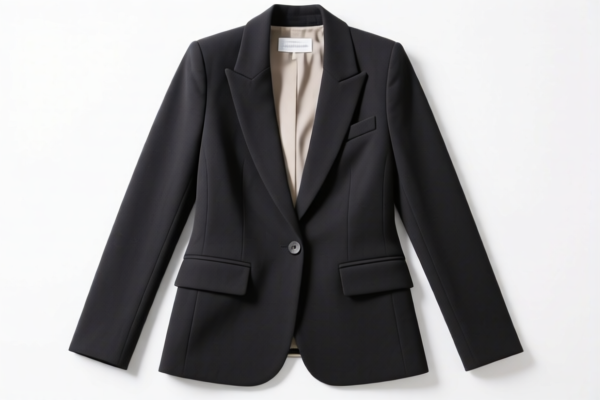
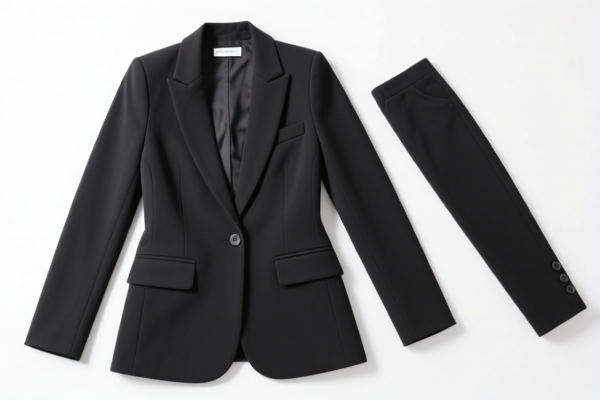
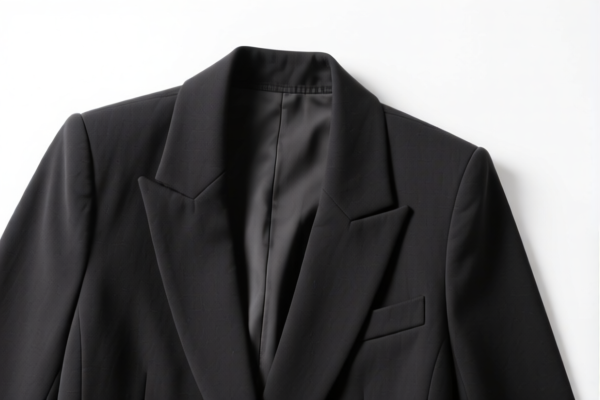
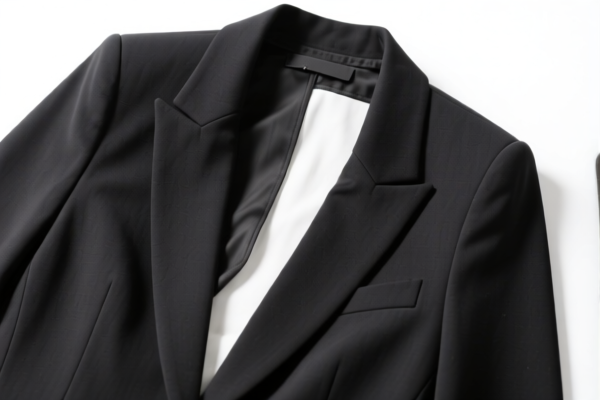
AI Analysis
🧥 Jacket Parts (Apparel Components)
🌐 HS Code Reference & Customs Clearance Guide | 2026 Latest Tariff Analysis | Professional通关 Strategy
📌 1. Product Definition & Classification: Do You Truly Understand "Jacket Parts"?
Jacket parts refer to the various components that make up a complete jacket, such as sleeves, collars, pockets, plackets, cuffs, or other cut pieces intended for assembly. In international trade, these items are generally classified under Heading 6217 (Other made-up clothing accessories) or Heading 6117 (Other made-up clothing accessories, knitted or crocheted), depending on the material and whether they are considered "parts of garments."
⚠️ Key Distinction Point:
- If the part is specifically for woven jackets (e.g., polyester, nylon, cotton woven) → It typically falls under Chapter 62 (Apparel, not knitted/crocheted).
- If the part is specifically for knitted/crocheted jackets → It falls under Chapter 61 (Knitted/Crocheted Apparel).
- Sub-heading 90.90 is generally used for "Parts of garments" that do not have a more specific heading (like buttons or zippers, which have their own codes).
📦 2. HS Code Classification Details (2026 Latest Tariff Authority Reference)
Based on the provided data, the following HS Codes are relevant for Jacket Parts. Note that all listed codes share the same total tax rate structure due to current trade policies.
| HS Code | Product Description | Material Inference | Application Scenario | Key Characteristic |
|---|---|---|---|---|
6217.90.90.35 |
Jacket Parts | Synthetic/Filament Fiber | Woven jacket components (e.g., synthetic sleeves, collars) | Specific synthetic material match |
6117.90.90.55 |
Jacket Parts | Default/Other | Jacket components, general outerwear parts | General "default" match for jacket parts |
6217.90.90.45 |
Jacket Parts | Other/Unknown | Jacket components, no material conflict | "Catch-all" category for accessories/parts |
6117.90.90.40 |
Jacket Parts | Cotton/Other Compatible | Knitted jacket components (e.g., cotton cuffs, pockets) | Matches knitted/jacket part form |
6217.90.90.30 |
Jacket Parts | Wool/Fine Animal Hair | Woven jacket components (e.g., wool collars, linings) | Specific wool/fine animal hair material |
🔍 Important Note:
- All these codes are classified as "Other made-up clothing accessories" (Parts of garments).
- They are not complete garments (which would be 6201/6202 or 6101/6102).
- The distinction between 6217 (Woven) and 6117 (Knitted) is critical and depends on the fabric construction (woven vs. knitted) and material composition (wool vs. synthetic vs. cotton).
💰 3. 2026 Latest Tariff Rate Details (Including Surtaxes & Policy Add-ons)
✅ Applicable Country: United States (US)
✅ Origin: China (CN)
✅ Effective Date: Current (Includes subsequent imports under Section 301 & IEEPA)
🎯 1. All Listed HS Codes (6217.90.90.35, 6117.90.90.55, 6217.90.90.45, 6117.90.90.40, 6217.90.90.30)
| Item | Content |
|---|---|
| Base Tariff Rate | 14.6% (Ad Valorem) |
| Additional Tariff (Section 301) | +7.5% |
| Section 122 Tariff | +10% |
| Total Tax Rate | 32.1% |
| Tax Calculation | CIF Value × 32.1% |
| De Minimis Exemption | ❌ Not Eligible (Denied) |
| Legal Basis Path | Base Rate (HTSUS) → Section 301 (7.5%) → Section 122 (10%) |
📌 Explanation:
- Base Tariff (14.6%): This is the standard US Most Favored Nation (MFN) rate for "Other made-up clothing accessories" under Heading 6217/6117.
- Additional Tariff (7.5%): Imposed under Section 301 of the Trade Act of 1974 on products from China. This is a long-standing surtax for many textile/apparel parts.
- Section 122 Tariff (10%): Imposed under Section 122 of the Trade Act of 1974, typically for national security or balance of payments reasons, applied to specific apparel imports from China.
- Total (32.1%): The sum of all three components. This is a high tariff for apparel parts, significantly impacting profitability.
🛠️ 4. Customs Clearance Practical Advice (Battle-Tested Pitfall Guide)
✅ 1. Required Documentation Checklist (Non-Negotiable)
| Document | Must Provide | Description |
|---|---|---|
| ✅ Product Specification Sheet | ✔️ | Must clearly state: Woven vs. Knitted, Material (e.g., 100% Polyester, Cotton), and intended use (e.g., "Jacket Sleeve," "Collar," "Pocket Bag"). |
| ✅ Material Composition Label | ✔️ | Proof of fabric type (Wool, Cotton, Synthetic) is critical for distinguishing between 6217 and 6117. |
| ✅ Product Photos (Clear & Detailed) | ✔️ | Show the item as a part, not assembled into a full garment. Highlight labels, seams, and construction. |
| ✅ Commercial Invoice | ✔️ | Must explicitly state "Jacket Parts" or "Apparel Components," NOT "Jacket." Mislabeling as "Jacket" could lead to incorrect classification (higher base rate) or rejection. |
| ✅ Packing List | ✔️ | Detail the contents to prove these are loose components, not packaged complete jackets. |
✅ 2. Declaration Tips (Key Mantra)
🔥 “Parts Not Garments, Material Defines Class!”
| Situation | Correct Declaration | Incorrect Practice |
|---|---|---|
| Woven Jacket Parts (Synthetic) | 6217.90.90.35 |
Classifying as Knitted (6117) → Risk of Re-classification |
| Knitted Jacket Parts (Cotton) | 6117.90.90.40 |
Classifying as Woven (6217) → Risk of Re-classification |
| General Jacket Parts (No Material Conflict) | 6217.90.90.45 |
Using vague terms like "Clothing Accessories" without material detail |
| Wool Jacket Parts | 6217.90.90.30 |
Classifying as Synthetic → High Risk of Penalties |
📌 Critical Reminder:
- Do NOT declare these as "Jackets" (Heading 6201/6101). The base tariff for complete jackets is often higher, and the surtax structure may differ.
- Do NOT assume "Parts" automatically qualify for lower rates. The Section 301 and 122 surtaxes apply to these parts just as they do to many other apparel items.
✅ 3. Special Handling Scenarios
| Scenario | Handling Advice |
|---|---|
| Mixed Material Parts | If a part contains both woven and knitted sections, consult a customs broker. It may be classified based on the "essential character" or the dominant material. |
| OEM Components | Provide the original design specs and bill of materials (BOM) to prove these are components, not finished goods. |
| Lining/Fabric Panels | If sold as loose fabric panels intended for jackets, ensure they are not cut to the final shape of a garment part (e.g., a full sleeve shape). If pre-cut, they are "parts." |
| Avoiding De Minimis | Since the total tax is 32.1% and not eligible for de minimis (Section 321), ensure all shipments are properly declared with full duties paid. |
🌍 5. Global Market Clearance Comparison (2026 Latest)
| Country/Region | Recommended HS Code (Example) | Tariff Rate | Certification Requirement | Notes |
|---|---|---|---|---|
| 🇺🇸 USA | 6217.90.90.35 / 6117.90.90.40 |
32.1% | None Specific | High Tariff: Includes Base + Sec 301 + Sec 122. |
| 🇨🇳 China | 6217.90.90.35 / 6117.90.90.40 |
8%-15% (Varies) | CCC (if applicable) | Lower base rates, no US-style surtaxes. |
| 🇪🇺 EU | 6217.90.90 / 6117.90.90 |
12% - 17% | CE (if applicable) | Standard EU customs duty, no Section 301/122 equivalent. |
| 🇬🇧 UK | 6217.90.90 / 6117.90.90 |
12% - 17% | None | Post-Brexit tariffs similar to EU. |
| 🇨🇦 Canada | 6217.90.90 / 6117.90.90 |
12% - 17% | None | Similar to EU rates. |
📌 Conclusion:
- The USA imposes the highest effective tariff on these goods due to the combination of base rates and multiple surtaxes (Section 301 + Section 122).
- China, EU, and other major markets do not have the same layered surtax structure, making US exports significantly more expensive in terms of tariff burden.
- Strategic Advice: For US-bound goods, consider supply chain diversification (e.g., manufacturing in Vietnam, Bangladesh, or Mexico) to avoid Section 301 and 122 tariffs, provided the origin rules are met.
📌 6. Common Errors & Pitfall Guide (Lessons Learned)
❌ Error 1: Declaring "Jacket Parts" as "Jackets"
👉 Consequence: Incorrect HS Code (e.g., 6201.92.00), potential overpayment of duties, or misclassification penalties.
❌ Error 2: Ignoring Material Composition
👉 Consequence: Misclassifying Woven vs. Knitted. This leads to using the wrong sub-heading (6217 vs. 6117), which may have different regulatory requirements or inspection priorities.
❌ Error 3: Assuming De Minimis Exemption Applies
👉 Consequence: Since these items are subject to Section 301 and 122, they are explicitly excluded from the $800 de minimis threshold. Small shipments will still incur full duties.
❌ Error 4: Vague Description "Clothing Accessories"
👉 Consequence: Customs may reject the declaration for lack of specificity, leading to delays, audits, or forced re-classification with penalties.
✅ Correct Practice:
"Jacket Parts, Woven, 100% Polyester, Pre-cut Sleeves, for Assembly into Outerwear, Not Included in Section 321 De Minimis"
🎯 7. Conclusion: Precise Classification, Cost Control, and Compliance!
🎯 Remember the Mantra:
🔹 "Parts, Not Garments, Material Dictates Code!"
🔹 "32.1% Total Tariff in the USA: Base + 301 + 122 – No De Minimis!"
🔹 "Woven = 6217, Knitted = 6117 – Don't Mix Them Up!"
📌 Pro Tip:
If your jacket parts are originating from Vietnam, Bangladesh, or Mexico, you may be eligible for lower tariffs or FTAA (Free Trade Area of the Americas) benefits, avoiding Section 301 and 122 surtaxes.
Recommendation: Apply for an Advance Ruling (Ruling Letter) from U.S. Customs and Border Protection (CBP) if you are uncertain about the classification of new product lines.
📣 Immediate Action:
📞 Consult a Licensed Customs Broker + Provide Material Specs + Verify Origin
🚀 Ensure Smooth Clearance, Minimize Duties, Maximize Profit!
✨ Professional Customs Clearance Starts with Accurate Classification!
💼 Every Cent Saved in Tariffs is Pure Profit!
Customer Reviews
About HS Code Classification
The Harmonized System (HS) is an internationally standardized nomenclature developed by the World Customs Organization (WCO) to classify traded products. Over 200 countries use the HS system as the basis for customs tariffs, trade statistics, and import/export regulations.
Each HS code follows a hierarchical structure:
- Chapter (2 digits) — Broad category of goods (e.g., Chapter 84: Machinery and Mechanical Appliances)
- Heading (4 digits) — More specific grouping within the chapter
- Subheading (6 digits) — Internationally standardized breakdown, used by all WCO member countries
- National subdivisions (8-10 digits) — Country-specific extensions for further classification, such as US HTSUS 10-digit codes
Correct HS code classification is essential for smooth customs clearance, accurate duty payment, and compliance with trade regulations. Misclassification can lead to customs delays, overpayment of duties, or penalties.
When importing from CN to US, the applicable tariff rates may include:
- Most-Favored-Nation (MFN) rate — The standard duty rate applied to WTO members
- General rate — Applied to countries without trade agreements
- Trade remedy duties — Additional tariffs such as Section 301 (anti-dumping), Section 232 (national security), or countervailing duties
The information provided on this page is for reference purposes only. For official classification, please consult with your local customs authority or a licensed customs broker.