女士背包
CN → US| HS Code | Tariff Rate | Origin | Destination | Doc |
|---|---|---|---|---|
| 4202923120 | 52.6% | CN | US | Official Doc |
| 4202923900 | 52.6% | CN | US | Official Doc |
| 4202228980 | 52.6% | CN | US | Official Doc |
Product Images
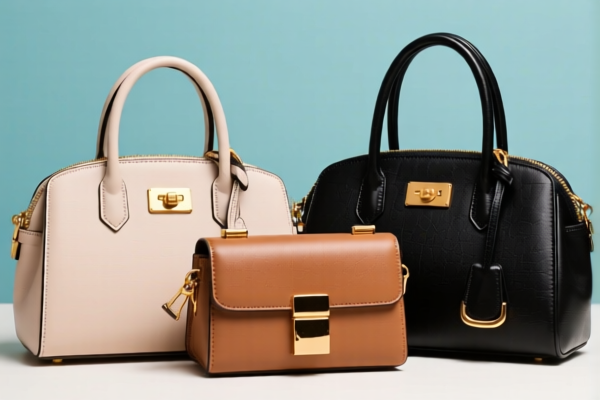
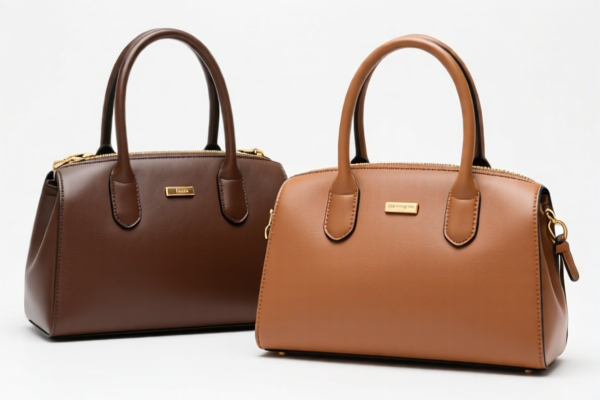
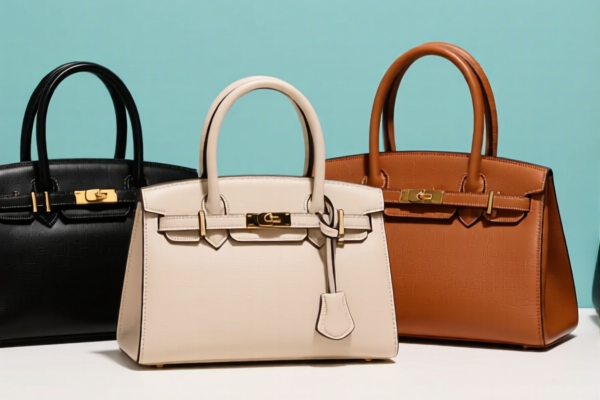
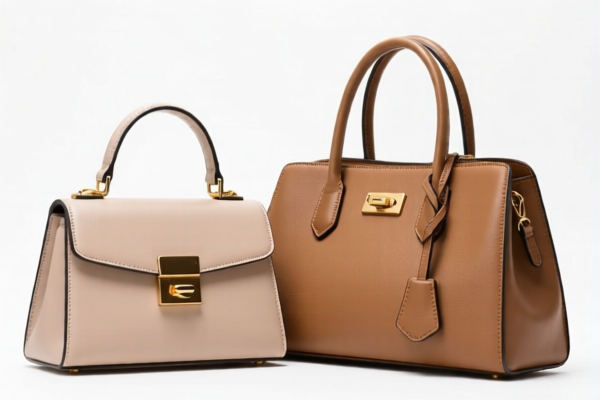
AI Analysis
👜 Women's Backpacks & Bags (Luggage, Travel Bags, Satchels & Handbags)
🌐 HS Code Reference & Customs Clearance Guide | 2026 Latest Tariff Analysis | Professional Clearance Strategy
📌 I. Product Definition & Classification: Do You Really Understand "Women's Bags"?
Women's backpacks and bags are critical accessories in the global fashion and travel industry. In international trade, they are primarily classified under Chapter 42 (Articles of Leather; Saddle Harness; Travel Goods, Handbags...). The classification hinges on three core factors:
- Purpose: Is it for travel, sports, daily use, or professional carrying?
- Shape/Form: Backpack, handbag, satchel, wallet, or other?
- Material: The external surface material is the primary determinant (Leather, Textiles, Plastic Sheet, etc.).
⚠️ Key Classification Distinction:
- If the bag is primarily a Backpack (two straps, worn on back) → Look at 4202.92 (Backpacks).
- If the bag is primarily a Handbag/Satchel (handheld or shoulder strap) → Look at 4202.22 (Handbags).
- Material is King: Since the input "Women's Backpack" does not specify material, we infer based on common market scenarios (Textile/Synthetic). If it were Leather, the code would change entirely (e.g., 4202.11/4202.21).
📦 II. HS Code Classification Details (2026 Latest Tariff Authority Match)
Based on the provided data, here are the three most likely HS Codes for Women's Backpacks/Bags made of Textile/Synthetic Materials:
| HS Code | Product Description | Application Scenario | Material Inference |
|---|---|---|---|
4202.92.31.20 |
Backpacks of a kind used for travel, sports, or similar purposes (Textile Surface) | Specific Match: Backpacks designed for travel/sports. | ✅ Textile/Synthetic Fiber |
4202.92.39.00 |
Other backpacks, of a kind used for travel, sports, etc. (Textile Surface) | General Match: "Other" category for backpacks not specifically listed elsewhere. | ✅ Textile/Synthetic Fiber |
4202.22.89.80 |
Satchels, handbags, shopping bags, wallets, purses, etc. (Textile Surface) | Broad Match: If classified as a "Women's Bag" rather than a strict backpack, this "Other" fallback applies. | ✅ Textile/Synthetic Fiber |
🔍 Key Reminder:
- All three codes above share the same total tax rate due to the specific trade policy applied to China-origin goods. - The difference lies in the specific description: Is it a backpack (4202.92) or a handbag (4202.22)? For a "Backpack,"4202.92is technically more accurate, but4202.22is sometimes used if the bag is multi-purpose or ambiguous.
💰 III. 2026 Latest Tariff Rate Breakdown (Including Surcharges & Policies)
✅ Applicable Country: United States (US)
✅ Country of Origin: China (CN)
✅ Effective Date: Including imports after November 10, 2025
For all three HS Codes (4202.92.31.20, 4202.92.39.00, 4202.22.89.80), the tariff structure is identical in terms of percentage:
🎯 1. Unified Tariff Structure for Textile Bags
| Item | Detail |
|---|---|
| Base Tariff Rate | 17.6% (Standard MFN Rate for Textile Bags) |
| Section 301 Surtax | +25.0% (Additional duty under USITC Footnote 9903.88.01) |
| Section 122 Tariff | +10.0% (Specific duty under IEEPA/Section 122 provisions) |
| Total Effective Tax Rate | 52.6% |
| Tax Calculation | CIF Value × 52.6% |
| De Minimis Exemption Eligible? | ❌ NO (deny_de_minimis) |
| Legal Authority Path | IEEPA:9903.01.25 → IEEPA:9903.01.24 → USITC:4202.92/22 → FOOTNOTE:9903.88.01 |
📌 Explanation:
- Base 17.6%: The standard duty for bags of textile materials.
- 301 Tariff 25%: The major trade war tariff applied to most Chinese goods, including bags.
- 122 Tariff 10%: A specific additional surcharge mentioned in the data, likely linked to recent executive orders or specific trade enforcement actions.
- Total 52.6%: This is an extremely high cost. For a $100 backpack, you pay $52.60 in duties alone.
- No De Minimis: Unlike small parcels (under $800) which might be exempt, this classification explicitly denies de minimis exemption, meaning every single item is subject to full duty clearance.
🛠️ IV. Customs Clearance Practical Advice (实战避坑指南)
✅ 1. Required Documentation Checklist (Missing Items = Delay)
| Document | Must Provide | Explanation |
|---|---|---|
| ✅ Product Specification Sheet | ✔️ | Must detail: Material composition (e.g., 100% Polyester), Dimensions, Weight, Capacity. |
| ✅ Material Declaration | ✔️ | Crucial to confirm "Textile Surface." If leather is found, HS Code changes, and duty may vary. |
| ✅ Product Photos | ✔️ | Clear images showing: Straps, pockets, zippers, logo, and label content. |
| ✅ Commercial Invoice | ✔️ | Must describe item as "Women's Backpack, Textile Material" not just "Bag." |
| ✅ Packing List | ✔️ | Show unit quantity and total weight. |
| ✅ Origin Certificate | ❌ (Not Useful for Duty Reduction) | Since origin is China and tariff is high, CO won't reduce the 52.6% rate significantly. |
✅ 2. Declaration Strategy (Key Mantra)
🔥 “Material First, Purpose Second, Backpack vs. Handbag, Be Precise!”
| Scenario | Correct Declaration | Common Mistake |
|---|---|---|
| Textile Backpack | 4202.92.31.20 / 4202.92.39.00 |
Declaring as 4202.11 (Leather) → Customs Audit/Fine |
| Multi-use Bag | 4202.22.89.80 |
Declaring as 4202.92 (Backpack) if it has no back straps |
| Mixed Material | Declare External Surface Material | Ignoring the lining or inner pockets; focus is on exterior |
✅ 3. Special Situation Handling
| Situation | Handling Advice |
|---|---|
| OEM Private Label | Ensure the invoice reflects the actual buyer. Avoid "Sample" or "Gift" labels if it's commercial. |
| Leather Trims | If the bag has significant leather trims (>50% value?), it might still be classified as textile if the surface is textile, but be prepared for scrutiny. |
| Smart Backpacks | If it has embedded electronics (USB ports, batteries), additional FCC/CPSC compliance is required, but HS Code remains 4202 unless electronics are the main function. |
🌍 V. Global Market Comparison (2026 Latest)
| Country/Region | Recommended HS Code | Tariff Rate | Certification | Note |
|---|---|---|---|---|
| 🇺🇸 USA | 4202.92.31.20 etc. |
52.6% | None Specific | High Cost! Plan pricing accordingly. |
| 🇨🇳 China | 4202.92 |
~10% | CCC (if applicable) | Export from China has lower domestic duty. |
| 🇪🇺 EU | 4202.92 |
4% | REACH/RoHS | Low duty, but VAT (19-25%) applies. |
| 🇬🇧 UK | 4202.92 |
12% | UKCA | Post-Brexit tariff structure. |
| 🇨🇦 Canada | 4202.92 |
17.5% | None | MFN rate; possible CUSMA exemption if Canadian/Mexican made. |
📌 Conclusion:
- USA is the most expensive market for Chinese textile bags due to the 52.6% combined tariff.
- EU and UK are more cost-effective, but face higher VAT and stricter environmental regulations (REACH).
📌 VI. Common Errors & Pitfalls (Blood Lessons)
❌ Error 1: Declaring a Backpack as "Handbag" (4202.22) to avoid scrutiny
👉 Consequence: Customs may reject the declaration if the product clearly has backpack straps. Delay + Inspection.
❌ Error 2: Ignoring the 122 Tariff
👉 Consequence: Under-declaring duty by 10%. Results in seizure, heavy fines, and blacklisting.
❌ Error 3: Using "Luggage" as a generic term
👉 Consequence: Ambiguity leads to customs officer discretion, potentially leading to a higher code or audit.
❌ Error 4: Assuming De Minimis ($800) applies
👉 Consequence: It does not apply (deny_de_minimis). Every shipment, no matter how small, is liable for 52.6% duty.
✅ Correct Practice:
"Women's Backpack, 20L, 100% Nylon Exterior, Water Resistant, Model XYZ, Made in China"
🎯 VII. Conclusion: Professional Declaration, Cost Control, Efficiency!
🎯 Remember the Mantra:
🔹 “52.6% Tax is Real, Don’t Skip It!”
🔹 “Textile Surface Determines Code, Backpack vs. Handbag Matters.”
🔹 “No De Minimis, Plan Your Pricing!”
📌 Pro Tip:
If your bags are produced in Vietnam, Cambodia, or Bangladesh, you may avoid the 301 Tariff (25%), reducing the total tax significantly.
- Vietnam Origin: Base 17.6% + 122%? (Check specific FTAs) → Potential savings of 25%.
- Recommendation: Consider supply chain diversification if targeting the US market heavily.
- Pre-Ruling: Apply for an Advance Ruling from US Customs to confirm the exact HS Code and duty liability before shipping.
📣 Immediate Action:
📞 Contact a Customs Broker + Provide Material Specs + Apply for Pre-Ruling
🚀 Ensure Smooth Customs Clearance, Avoid Seizure, Protect Profit Margins!
✨ Professional Clearance Starts with Accurate Classification!
💼 Every Cent of Duty Must Be Calculated Precisely!
Customer Reviews
About HS Code Classification
The Harmonized System (HS) is an internationally standardized nomenclature developed by the World Customs Organization (WCO) to classify traded products. Over 200 countries use the HS system as the basis for customs tariffs, trade statistics, and import/export regulations.
Each HS code follows a hierarchical structure:
- Chapter (2 digits) — Broad category of goods (e.g., Chapter 84: Machinery and Mechanical Appliances)
- Heading (4 digits) — More specific grouping within the chapter
- Subheading (6 digits) — Internationally standardized breakdown, used by all WCO member countries
- National subdivisions (8-10 digits) — Country-specific extensions for further classification, such as US HTSUS 10-digit codes
Correct HS code classification is essential for smooth customs clearance, accurate duty payment, and compliance with trade regulations. Misclassification can lead to customs delays, overpayment of duties, or penalties.
When importing from CN to US, the applicable tariff rates may include:
- Most-Favored-Nation (MFN) rate — The standard duty rate applied to WTO members
- General rate — Applied to countries without trade agreements
- Trade remedy duties — Additional tariffs such as Section 301 (anti-dumping), Section 232 (national security), or countervailing duties
The information provided on this page is for reference purposes only. For official classification, please consult with your local customs authority or a licensed customs broker.