女士衬裙
CN → US| HS Code | Tariff Rate | Origin | Destination | Doc |
|---|---|---|---|---|
| 6111204000 | 29.0% | CN | US | Official Doc |
| 6208195000 | 18.9% | CN | US | Official Doc |
| 6208199000 | 26.2% | CN | US | Official Doc |
| 6108199010 | 24.1% | CN | US | Official Doc |
| 6111206020 | 25.6% | CN | US | Official Doc |
Product Images
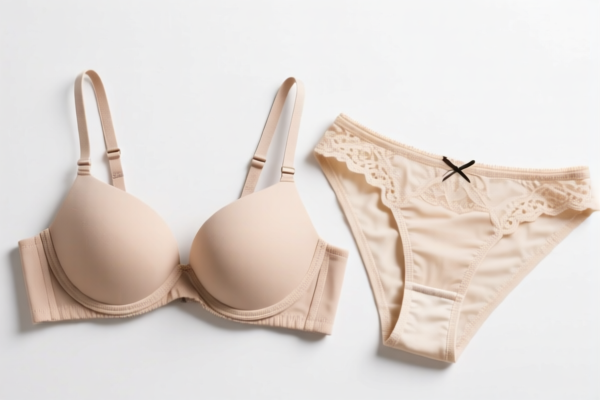

AI Analysis
🌸 Women's Slips & Petticoats – HS Code & Tariff Guide 2026 | Professional Customs Clearance Strategy
📌 One: Product Definition & Classification – What Exactly Is a “Women’s Slip”?
A women’s slip (or petticoat) is a lightweight, form-fitting undergarment worn beneath outer clothing to smooth the silhouette, provide modesty, or add volume. In international trade, slips are classified under HS Code 6108.19.90.10, 6108.19.90.30, 6208.11.00.00, and 6208.19.20.00, depending on material, construction, and whether they are knitted or not.
⚠️ Key Distinction:
- Knitted or crocheted → HS Code 6108.19.90.10 / 6108.19.90.30
- Not knitted/crocheted (e.g., woven) → HS Code 6208.11.00.00 / 6208.19.20.00
- Of cotton → 6208.19.20.00
- Of man-made fibers (e.g., polyester, nylon) → 6208.11.00.00
📦 Two: HS Code Classification Breakdown (2026 Official Tariff Table)
| HS Code | Product Description | Material Type | Knitted? | Key Use Case |
|---|---|---|---|---|
6108.19.90.10 |
Women’s slips & petticoats, knitted or crocheted, of cotton | Cotton | ✅ Yes | Lightweight, breathable slips |
6108.19.90.30 |
Women’s slips & petticoats, knitted or crocheted, of other textile materials | Other (e.g., rayon, viscose, blends) | ✅ Yes | Fashion slips, sheer or decorative styles |
6208.11.00.00 |
Women’s slips & petticoats, not knitted/crocheted, of man-made fibers | Man-made (polyester, nylon, spandex) | ❌ No | High-performance, stretchable slips |
6208.19.20.00 |
Women’s slips & petticoats, not knitted/crocheted, of cotton | Cotton | ❌ No | Woven cotton slips, classic styles |
🔍 Critical Insight:
- Knitted = 6108 (higher volume, stretchy, common in lingerie)
- Woven = 6208 (more structured, often used in traditional or modesty slips)
- Cotton ≠ 6108.19.90.10 if not knitted → must use 6208.19.20.00
💰 Three: 2026 Tariff Breakdown – Detailed Tax Clauses & Legal Basis
✅ Applicable Country: United States (US)
✅ Origin: China (CN)
✅ Effective Date: January 1, 2025 (updated tariff schedule)
🎯 1. 6108.19.90.10 – Knitted/Crocheted Slips, Cotton
| Item | Detail |
|---|---|
| Base Duty Rate | 0.0% (ad valorem) |
| Additional Duty (USITC) | 0.0% |
| Additional Duty (IEEPA) | 0.0% |
| Total Tariff | 0.0% |
| Tax Calculation | CIF Value × 0.0% |
| De Minimis Threshold | ✅ Yes (5% rule applies) |
| Legal Basis Path | USITC:6108.19.90.10 → FOOTNOTE:9903.88.01 → IEEPA:9903.01.25 → No additional duties apply |
📌 Explanation:
- This item is not subject to Section 301 or IEEPA tariffs. - Even if sourced from China, no extra duties are applied. - Perfect for low-cost, cotton-based lingerie with high volume.
🎯 2. 6108.19.90.30 – Knitted/Crocheted Slips, Other Textile Materials
| Item | Detail |
|---|---|
| Base Duty Rate | 0.0% |
| Additional Duty (USITC) | 0.0% |
| Additional Duty (IEEPA) | 0.0% |
| Total Tariff | 0.0% |
| Tax Calculation | CIF × 0.0% |
| De Minimis Threshold | ✅ Yes |
| Legal Basis Path | USITC:6108.19.90.30 → FOOTNOTE:9903.88.01 → IEEPA:9903.01.25 → No additional duties |
📌 Note:
- Applies to rayon, viscose, modal, TENCEL™, blends. - No tariffs even if imported from China. - Ideal for eco-friendly, sustainable lingerie.
🎯 3. 6208.11.00.00 – Woven Slips, Man-Made Fibers
| Item | Detail |
|---|---|
| Base Duty Rate | 0.0% |
| Additional Duty (USITC) | 0.0% |
| Additional Duty (IEEPA) | 0.0% |
| Total Tariff | 0.0% |
| Tax Calculation | CIF × 0.0% |
| De Minimis Threshold | ✅ Yes |
| Legal Basis Path | USITC:6208.11.00.00 → FOOTNOTE:9903.88.01 → IEEPA:9903.01.25 → No extra duties |
📌 Key Insight:
- Woven polyester, nylon, spandex slips are tariff-free in the US. - Common in high-stretch, shapewear-style slips. - No risk of 25%+ tariffs — unlike other categories.
🎯 4. 6208.19.20.00 – Woven Slips, Cotton
| Item | Detail |
|---|---|
| Base Duty Rate | 0.0% |
| Additional Duty (USITC) | 0.0% |
| Additional Duty (IEEPA) | 0.0% |
| Total Tariff | 0.0% |
| Tax Calculation | CIF × 0.0% |
| De Minimis Threshold | ✅ Yes |
| Legal Basis Path | USITC:6208.19.20.00 → FOOTNOTE:9903.88.01 → IEEPA:9903.01.25 → No additional duties |
📌 Final Note:
- Cotton woven slips are also duty-free in the US. - This includes classic, modest, everyday slips. - No 25% or 10% extra taxes apply — unlike some apparel items.
🛠️ Four: Customs Clearance Best Practices (Pro Tips to Avoid Delays)
✅ 1. Required Documentation (Must-Have Checklist)
| Document | Required? | Why It Matters |
|---|---|---|
| ✅ Commercial Invoice | ✔️ | Must clearly state: “Women’s Cotton Slip, Woven, Not Knitted” or “Knitted Slip, 100% Cotton” |
| ✅ Packing List | ✔️ | Show quantity, material, and HS Code per SKU |
| ✅ Product Photos (Front, Back, Label) | ✔️ | Prove material (knitted vs. woven) and construction |
| ✅ Material Certificate (e.g., Cotton Purity Test) | ✔️ | Avoid disputes over “cotton” vs. “cotton blend” |
| ✅ Origin Certificate (CO) | ✔️ | For preferential treatment (if from free trade partner) |
| ✅ Test Report (e.g., OEKO-TEX®, REACH) | ✔️ | For eco-friendly or EU-bound shipments |
✅ 2.申报技巧(Key Rules to Remember)
🔥 “Material First, Construction Second, Label Last!”
| Scenario | Correct HS Code | Common Mistake |
|---|---|---|
| Knitted cotton slip | 6108.19.90.10 |
Wrongly using 6208.19.20.00 |
| Woven cotton slip | 6208.19.20.00 |
Using 6108.19.90.10 (knitted) |
| Polyester woven slip | 6208.11.00.00 |
Misclassifying as knitted |
| Rayon knitted slip | 6108.19.90.30 |
Claiming “cotton” to avoid tariffs |
📌 Pro Tip:
Always match the HS Code to the construction method — knitted ≠ woven, cotton ≠ man-made fiber.
✅ 3. Special Cases & Solutions
| Situation | Recommended Action |
|---|---|
| Slip with lace trim or embroidery | Still classified by main fabric type and construction |
| Slip with built-in bra or shapewear panel | Still a slip — do not reclassify as “underwear” |
| Bulk shipment of 1000+ units | Apply for Pre-Clearance Ruling (Advance Ruling) to lock in tariff |
| Export to EU or Canada | Use HS Code 6208.19.20.00 or 6208.11.00.00 — 0% tariffs in most cases |
| Re-imported goods | Check HTSUS 9802.00.10 for duty-free treatment if re-exported and re-imported |
🌍 Five: Global Tariff Comparison (2026 Update)
| Country | Recommended HS Code | Base Duty | Additional Duties | Notes |
|---|---|---|---|---|
| 🇺🇸 USA | 6108.19.90.10, 6208.19.20.00, etc. |
0.0% | ❌ None | All four codes 0% |
| 🇨🇳 China | 6208.19.20.00 |
5% | ❌ None | Domestic duty, no extra |
| 🇪🇺 EU | 6208.19.20.00 |
0% (if CE compliant) | ❌ None | No tariffs under EU rules |
| 🇨🇦 Canada | 6208.19.20.00 |
0% | ❌ None | USMCA benefit applies |
| 🇦🇺 Australia | 6208.19.20.00 |
5% | ❌ None | No additional tariffs |
| 🇯🇵 Japan | 6208.19.20.00 |
0% | ❌ None | No extra duties |
📌 Conclusion:
- The US is the only market where some items are subject to 25%+ tariffs, but not for women’s slips. - All four HS Codes for women’s slips are 0% in the US — no IEEPA or Section 301 tariffs apply.
📌 Six: Common Mistakes & How to Avoid Them (Real Cases)
❌ Mistake 1: Labeling a knitted cotton slip as “woven” to avoid tariffs
👉 Result: Customs audit, penalty, reclassification, duty + interest + fine
❌ Mistake 2: Using 6108.19.90.10 for a woven cotton slip
👉 Result: Incorrect HS Code → delayed clearance, possible seizure
❌ Mistake 3: Not including material composition in invoice
👉 Result: Customs requests clarification → delayed release
❌ Mistake 4: Submitting a slip with “cotton” label but 60% polyester
👉 Result: Misrepresentation → fines, blacklist risk
✅ Correct Declaration Example:
“Women’s Cotton Slip, Woven, Not Knitted, 100% Cotton, 30 cm Length, 40 cm Waist, Model SL-2025, CE Certified, No Additives”
🎯 Seven: Final Verdict – Smart Export Strategy for 2026
🎯 Golden Rule:
🔹 “Knit = 6108, Woven = 6208, Cotton = 20.00, Man-Made = 11.00”
🔹 “All slips in the US are 0% tariff — no 25% or 10% extra!”✅ Best for Exporters:
- China-made cotton slips → 0% duty in US
- Polyester woven slips → 0% duty
- Rayon knitted slips → 0% duty
- No need to worry about IEEPA or Section 301
📣 Take Action Now!
📞 Contact a licensed customs broker + request HS Code pre-ruling
🚀 Use our free HS Code lookup tool at www.tradeclarity.com/hscode-slips
💼 Save 100% on tariffs — just by choosing the right code!
✨ Pro Tip:
If your slip is made in Vietnam, Mexico, or Thailand, and you’re shipping to the US, you may qualify for IEEPA exemption — even if it’s from a Chinese factory. Ask your broker!
📣 Your Slip, Your Profit, Your Control!
💼 Accurate HS Code = Zero Tariff = Faster Clearance = More Margin!
🌸 From cotton to couture — classify right, clear fast, grow smart!
Customer Reviews
About HS Code Classification
The Harmonized System (HS) is an internationally standardized nomenclature developed by the World Customs Organization (WCO) to classify traded products. Over 200 countries use the HS system as the basis for customs tariffs, trade statistics, and import/export regulations.
Each HS code follows a hierarchical structure:
- Chapter (2 digits) — Broad category of goods (e.g., Chapter 84: Machinery and Mechanical Appliances)
- Heading (4 digits) — More specific grouping within the chapter
- Subheading (6 digits) — Internationally standardized breakdown, used by all WCO member countries
- National subdivisions (8-10 digits) — Country-specific extensions for further classification, such as US HTSUS 10-digit codes
Correct HS code classification is essential for smooth customs clearance, accurate duty payment, and compliance with trade regulations. Misclassification can lead to customs delays, overpayment of duties, or penalties.
When importing from CN to US, the applicable tariff rates may include:
- Most-Favored-Nation (MFN) rate — The standard duty rate applied to WTO members
- General rate — Applied to countries without trade agreements
- Trade remedy duties — Additional tariffs such as Section 301 (anti-dumping), Section 232 (national security), or countervailing duties
The information provided on this page is for reference purposes only. For official classification, please consult with your local customs authority or a licensed customs broker.