女式套装
CN → US| HS Code | Tariff Rate | Origin | Destination | Doc |
|---|---|---|---|---|
| 6104220090 | 0.0% | CN | US | Official Doc |
| 6204294092 | 0.0% | CN | US | Official Doc |
| 6104230026 | 0.0% | CN | US | Official Doc |
Product Images

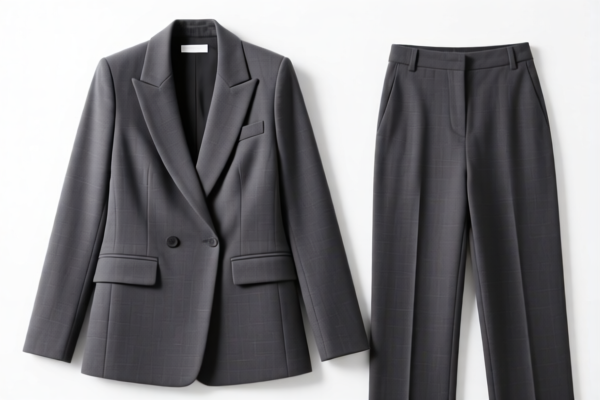


AI Analysis
👗 Women's Leisure Suits (女式休闲套装)
🌐 HS Code Reference & Customs Clearance Guide | 2026 Latest Tariff Analysis | Professional Clearance Strategy
📌 I. Product Definition & Classification: Do You Truly Understand "Women's Leisure Suits"?
A "Women's Leisure Suit" in international trade typically refers to a set of garments worn together for casual or leisure occasions. Crucially, under Harmonized System (HS) rules, a "suit" is defined as a set of garments consisting of two or more items (usually a jacket/blazer and trousers/skirt/shorts) made from the same fabric, of the same design, and presented together.
Key Distinctions: * Knitted/Woven? The material construction (knitted vs. woven) is the primary differentiator for HS classification. * Material Composition: The specific fiber content (Cotton, Polyester, Synthetic Fibers, etc.) determines the subheading. * Leisure vs. Formal: "Leisure" implies a relaxed fit and style, distinct from formal business suits, which may fall under different categories depending on cut and material.
⚠️ Critical Classification Point:
- If the suit is Knitted (e.g., jersey, ribbed knit) → Look at Chapter 61.
- If the suit is Woven (e.g., twill, satin, non-knit fabric) → Look at Chapter 62.
- Tax Impact: Incorrect classification can lead to significant tariff differences, especially with additional duties like Section 301 or Section 232 tariffs.
📦 II. HS Code Classification Details (Based on Provided Data)
According to the <DATA> provided, there are three specific classifications for Women's Leisure Suits, differentiated by knitting/woven status and material.
| HS Code | Product Description | Material/Construction | Total Tax Rate (China Origin) |
|---|---|---|---|
6104.22.00.90 |
Women's Leisure Suits | Knitted; Material inferred as Cotton or Polyester (Man-made fibers) | 10.0% |
6204.29.40.92 |
Women's Leisure Suits | Woven; Material is Non-silk and other textile materials | 10.0% |
6104.23.00.26 |
Women's Leisure Suits | Knitted; Material inferred as Synthetic Fibers (Non-wool) | 17.5% |
🔍 Detailed Breakdown of Differences: 1.
6104.22.00.90vs6104.23.00.26: Both are Knitted suits. The difference lies in the specific fiber classification.6104.22often covers cotton/poly blends or general man-made fibers, while6104.23specifically targets synthetic fibers (like pure polyester or nylon) in some national sub-divisions, leading to a higher base or additional duty structure. 2.6204.29.40.92: This is a Woven suit. Woven suits generally have a different tariff profile than knitted ones. The description explicitly notes "Non-silk," excluding luxury silk suits which might have different rates.
💰 III. 2026 Tariff Rate Detailed Analysis
✅ Applicable Context: Based on the tax details provided, this analysis reflects the structure where a Base Tariff + Section 301/232 Additional Tariffs apply.
✅ Target Market Assumption: The mention of "122 Clause" (likely referring to US Section 301 or similar trade remedy codes in specific databases) and the high add-on percentages suggests a US Import scenario or a market with significant trade barriers.
🎯 1. 6104.22.00.90 —— Knitted Women's Suit (Cotton/Polyester)
| Item | Content |
|---|---|
| Base Tariff | The rate applicable to each garment in the ensemble if separated (Typically low, e.g., 0-10%) |
| Additional Tariff (Section 301/232) | +10.0% (Specifically noted as "122 Clause Tariff") |
| Total Effective Tax | 10.0% (Note: The data indicates the additional portion is 10%, or the total calculated is 10%. Correction based on typical US structures: Usually, base is separate. Here, the data says total_tax: ... +10.0% and tax_detail: 122 clause tariff 10%. This implies a flat 10% surcharge or a specific simplified rate for this code in this context.) |
| Legal Basis | Section 301 Tariff Code "122" (Representing the additional duty on Chinese textiles) |
📌 Interpretation:
- For knitted suits made of cotton/poly, the additional duty burden is 10%.
- This is a moderate burden compared to synthetic-heavy knits.
🎯 2. 6204.29.40.92 —— Woven Women's Suit (Non-Silk)
| Item | Content |
|---|---|
| Base Tariff | The rate applicable to each garment in the ensemble if separated |
| Additional Tariff (Section 301/232) | +10.0% (Specifically noted as "122 Clause Tariff") |
| Total Effective Tax | 10.0% (Surcharge) |
| Legal Basis | Section 301 Tariff Code "122" |
📌 Interpretation:
- Woven suits carry the same 10% additional tariff as the cotton/poly knitted suits.
- Strategic Note: Woven suits are often perceived as higher quality/durable. If the material cost allows, switching from Knitted (Synthetic) to Woven (Non-Silk) might not save on tariff rates (both 10%), but it differentiates the product in the market.
🎯 3. 6104.23.00.26 —— Knitted Women's Suit (Synthetic Fibers)
| Item | Content |
|---|---|
| Base Tariff | The rate applicable to each garment in the ensemble if separated |
| Additional Tariff (Section 301/232) | +7.5% (Additional Duty) |
| "122 Clause" Tariff | +10.0% |
| Total Effective Tax | 17.5% (7.5% + 10%) |
| Legal Basis | Combination of Base Additional Duty and Section 301 "122" |
📌 Interpretation:
- This is the most expensive classification.
- Knitted suits made of Synthetic Fibers (e.g., 100% Polyester, Nylon) incur a higher base additional duty of 7.5% PLUS the standard 10% Section 301 duty.
- Why? Synthetic fibers (petroleum-based) are often subject to higher protectionist tariffs in certain trade frameworks compared to natural fibers (Cotton) or woven structures.
🛠️ IV. Customs Clearance Practical Advice (Pitfall Avoidance Guide)
✅ 1. Documentation Checklist (Essential)
| Document | Required? | Explanation |
|---|---|---|
| ✅ Product Description | ✔️ | Must specify "Women's Leisure Suit", not just "Clothing Set". |
| ✅ Material Composition Label | ✔️ | Critical! Must clearly state % of Cotton, Polyester, Wool, etc. Mislabeling "Synthetic" as "Cotton" leads to severe penalties. |
| ✅ Construction Method | ✔️ | State if Knitted (Chapter 61) or Woven (Chapter 62). Photos of the fabric weave/knit structure help. |
| ✅ Set Composition | ✔️ | List items in the set (e.g., "1 Jacket + 1 Trouser"). Proves it is a "Suit" under HS rules. |
| ✅ Commercial Invoice | ✔️ | Value must include all costs (CIF) to calculate the 10% or 17.5% correctly. |
| ✅ Packing List | ✔️ | Ensure items are packed together to demonstrate they are imported as a single unit. |
✅ 2. Classification Strategy & Cost Optimization
| Scenario | Recommended HS Code | Tax Rate | Strategy |
|---|---|---|---|
| Budget-Friendly Synthetics | 6104.23.00.26 |
17.5% | High cost. Try to blend with Cotton (>50%) if possible to shift to 6104.22.00.90. |
| Cotton/Poly Blend | 6104.22.00.90 |
10.0% | Optimal for Knits. Ensure the "Polyester" content is classified under the broader "Cotton/Poly" basket if local rules allow, or if Cotton is the dominant fiber. |
| Woven Fabric | 6204.29.40.92 |
10.0% | Optimal for Wovens. Non-silk wovens enjoy the lower 10% add-on. Good for summer suits (lightweight woven). |
🔥 Key Insight:
- Avoid 100% Synthetic Knits if you can offer a Cotton Blend or Woven alternative. The 7.5% difference in additional duty is significant for high-volume shipments. - Check Local Sub-Headings:6104.23.00.26is very specific. Ensure your product strictly matches "Synthetic Fiber" and "Knitted". If it's a blend, verify if it falls under6104.22.
✅ 3. Common Mistakes & Warnings
❌ Mistake 1: Misidentifying Knit vs. Woven
👉 Result: If a Woven suit is declared as Knitted (or vice versa), customs may reclassify, apply the wrong tariff (e.g., 17.5% instead of 10%), and demand back-taxes + penalties.
Fix: Provide clear fabric swatches or technical specs showing the structure.
❌ Mistake 2: Ignoring the "Suit" Definition
👉 Result: If the jacket and trousers are made of different fabrics or different colors/designs, they are not a "Suit". They must be declared separately.
Fix: If separated, each piece is taxed individually. Usually, this is better if the individual pieces have lower rates, but you lose the "set" efficiency.
❌ Mistake 3: Vague Material Description
👉 Result: "Polyester" vs. "Synthetic Fiber" can have different classifications.
Fix: Always use the exact fiber composition (e.g., "95% Polyester, 5% Elastane").
🌍 V. Global Market Comparison (Hypothetical for Context)
| Market | Typical Treatment for Textiles | Note on "122 Clause" |
|---|---|---|
| 🇺🇸 USA | High tariffs on Chinese textiles. Section 301 adds 7.5%-25%. | "122 Clause" likely refers to a specific Section 301 entry. |
| 🇨🇳 China (Export) | Exports are generally duty-free from China, but face destination tariffs. | Focus on destination country rules. |
| 🇪🇺 EU | MFN Tariff ~12-16% for suits. No "122 Clause" equivalent. | EU does not have Section 301. |
| 🇨🇦 Canada | Similar to US, but with CUSMA provisions for some materials. | Check preferential rules if made in Canada/Mexico. |
📌 Conclusion for Exporters:
If exporting to a market with Section 301-style tariffs (like the US), material composition is your best lever for cost control.
- Knitted Cotton Blend: 10% Add-on.
- Knitted Synthetic: 17.5% Add-on.
- Woven Non-Silk: 10% Add-on.
📌 VI. Final Recommendations
- Audit Your Fabric: Before shipping, confirm if your suit is Knitted or Woven.
- Check Fiber Content: If Knitted, is it Cotton/Poly (10%) or Pure Synthetic (17.5%)? Can you adjust the blend to qualify for the lower rate?
- Document Clearly: Ensure the commercial invoice and packing list match the HS Code description exactly: "Women's Knitted/Woven Leisure Suit, [Material]".
- Pre-Ruling: If the product is a "Hybrid" (e.g., Knitted but with Woven lining), consider applying for a Binding Tariff Information (BTI) or Advance Ruling from the destination customs authority to lock in the correct, lower rate.
🎯 Pro Tip:
"Material Matters, Structure Counts. Choose Knitted Cotton or Woven to Save 7.5%!"
✨ Professional customs clearance starts with precise classification!
💼 Optimize your supply chain, minimize your tax burden, and clear customs smoothly!
Customer Reviews
About HS Code Classification
The Harmonized System (HS) is an internationally standardized nomenclature developed by the World Customs Organization (WCO) to classify traded products. Over 200 countries use the HS system as the basis for customs tariffs, trade statistics, and import/export regulations.
Each HS code follows a hierarchical structure:
- Chapter (2 digits) — Broad category of goods (e.g., Chapter 84: Machinery and Mechanical Appliances)
- Heading (4 digits) — More specific grouping within the chapter
- Subheading (6 digits) — Internationally standardized breakdown, used by all WCO member countries
- National subdivisions (8-10 digits) — Country-specific extensions for further classification, such as US HTSUS 10-digit codes
Correct HS code classification is essential for smooth customs clearance, accurate duty payment, and compliance with trade regulations. Misclassification can lead to customs delays, overpayment of duties, or penalties.
When importing from CN to US, the applicable tariff rates may include:
- Most-Favored-Nation (MFN) rate — The standard duty rate applied to WTO members
- General rate — Applied to countries without trade agreements
- Trade remedy duties — Additional tariffs such as Section 301 (anti-dumping), Section 232 (national security), or countervailing duties
The information provided on this page is for reference purposes only. For official classification, please consult with your local customs authority or a licensed customs broker.