女童人造纤维针织服装
CN → US| HS Code | Tariff Rate | Origin | Destination | Doc |
|---|---|---|---|---|
| 6102302020 | 45.7% | CN | US | Official Doc |
| 6110202025 | 34.0% | CN | US | Official Doc |
| 6111203000 | 32.4% | CN | US | Official Doc |
| 6110202049 | 34.0% | CN | US | Official Doc |
| 6104320000 | 32.4% | CN | US | Official Doc |
Product Images
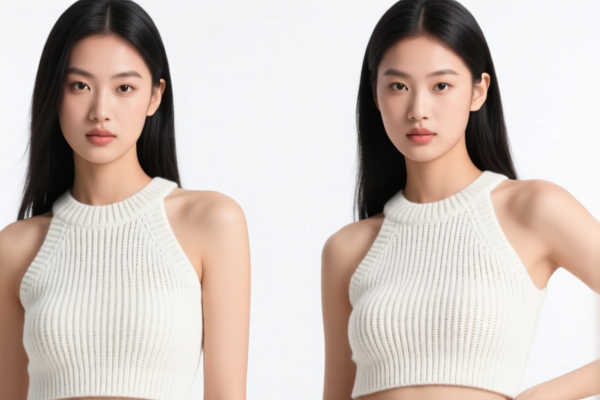
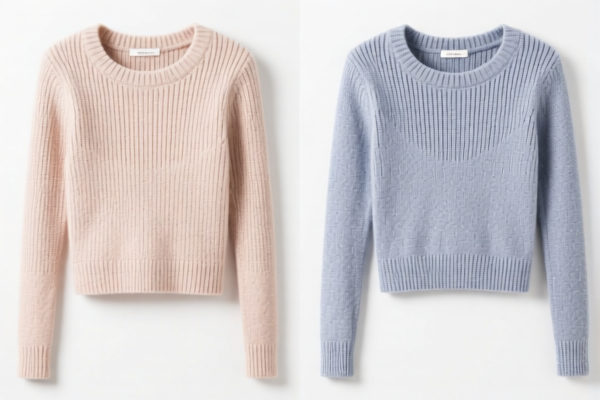
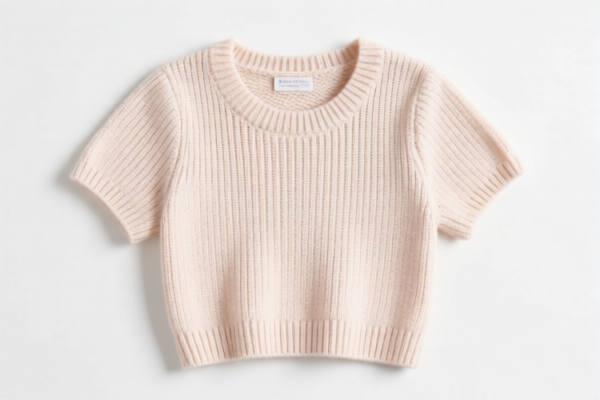
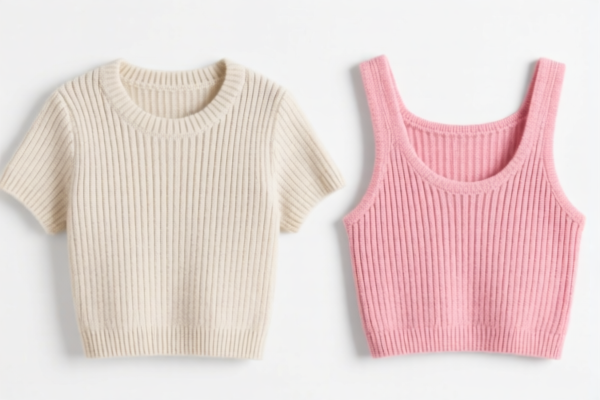
AI Analysis
👗 Girl’s Artificial Fiber Knitted Apparel: HS Code Classification & US Customs Clearance Guide (2026)
🌐 HS Code Reference & Customs Clearance Strategy | 2026 Latest Tariff Analysis | Expert-Level Compliance Guide
📌 I. Product Definition & Classification: Do You Really Understand "Girl's Knitted Apparel"?
"Girl’s artificial fiber knitted apparel" refers to knitted or crocheted garments for girls (typically under 14 years old), made from man-made fibers (such as polyester, nylon, acrylic, etc.). In international trade, the classification depends heavily on the garment type (coat/jacket vs. pullover/sweater vs. dress/pant) and material composition.
Based on the provided data <DATA>, the following HS Codes are identified for clearance purposes:
⚠️ Key Distinction Point:
- Outerwear (Coats/Jackets) vs. General Knitwear (Sweaters/Pullovers): Different HS chapters often apply based on structure and function.
- Material Specifics: While the general prompt says "Artificial Fiber," the specific data points include both Artificial Fiber and Cotton. Note: Cotton is a natural fiber, but the data provided lists "Cotton" items under these HS codes, possibly due to specific blends or classification nuances in certain databases. However, strictly speaking, HS 6102.30 is for Artificial Fibers, while HS 6110/6111/6104 often cover Cotton or Artificial. We will analyze based on the provided HS codes and descriptions.
📦 II. HS Code Classification Details (2026 Latest Tariff Authority Reference)
| HS Code | Product Description | Application Scenario | Material Note |
|---|---|---|---|
6102.30.20.20 |
Women’s/Girl’s Coats, Anoraks, Snow Suits, etc., of Artificial Fibers | Outerwear, windbreakers, heavy knitted jackets for girls | ✅ Artificial Fiber (Synthetic) |
6110.20.20.25 |
Girls’ Knitted/Sweaters of Cotton | Pullovers, cardigans, light sweaters | ⚠️ Cotton (Data lists Cotton, though prompt said Artificial Fiber) |
6111.20.30.00 |
Girls’ Knitted/Crocheted Cotton Garments | Infant/Toddler knitted items, light outer layers | ⚠️ Cotton |
6110.20.20.49 |
Girls’ Knitted/Sweaters of Cotton | Other knitted pullovers, cardigans | ⚠️ Cotton |
6104.32.00.00 |
Girls’ Suits, Ensembles, Suits, Blazer-Type Dresses, Dresses, Skirts, Divided Skirts, Trousers, Bib & Brace Trousers, Drawers, Shorts... of Cotton, Knitted or Crocheted | Bottoms, dresses, full outfits | ⚠️ Cotton |
🔍 Critical Reminder:
- HS 6102.30 specifically targets Artificial Fibers for coats/jackets.
- HS 6110, 6111, 6104 in the provided data are labeled as Cotton. If your product is indeed Artificial Fiber, these codes may be incorrect for pure synthetic materials unless they are blends or the database uses "Cotton" as a proxy for general knitwear.
- Always verify material content: If the product is 100% Polyester/Nylon, it must fall under 6102.30 (for coats) or 6104/6109/6110 sub-headings for Artificial Fibers, not Cotton. The provided data seems to mix material types. For "Artificial Fiber" specifically,6102.30.20.20is the primary match.
💰 III. 2026 Latest Tariff Rate Breakdown (Including Additional Duties & Policy Surcharges)
✅ Applicable Country: United States (US)
✅ Country of Origin: China (CN)
✅ Effective Date: Ongoing (Post-2018 Trade War & 122 Clause)
🎯 1. 6102.30.20.20 —— Girls’ Coats/Jackets of Artificial Fibers
| Item | Content |
|---|---|
| Base Tariff Rate | 28.2% (Ad Valorem) |
| Section 301 Surcharge | +7.5% (List 4B or relevant trade war tariff) |
| Section 122 Surcharge | +10% (For parcels valued under $800, De Minimis) |
| Total Tax Rate | 45.7% |
| Tax Calculation | CIF Value × 45.7% |
| De Minimis Exemption Eligibility | ❌ Not Eligible (Due to 301 & 122 clauses applying to textile/apparel from China) |
| Legal Basis Path | HTS:6102.30.20.20 → USITC Footnote 4B → Section 122 (19 U.S.C. 1304) |
📌 Explanation:
- 28.2% Base: Standard MFN rate for women’s/girl’s artificial fiber coats.
- 7.5% Section 301: Tariff imposed on Chinese textiles/apparel under the Trade Act of 1974.
- 10% Section 122: Applies to de minimis shipments (packages < $800) imported into the US from China. This is a critical cost factor for e-commerce.
- Total 45.7%: This is a very high effective tax rate. Must be calculated into landed cost.
🎯 2. 6110.20.20.25 / 6110.20.20.49 —— Girls’ Cotton Knitted Sweaters (Note: Data Specifies Cotton)
| Item | Content |
|---|---|
| Base Tariff Rate | 16.5% |
| Section 301 Surcharge | +7.5% |
| Section 122 Surcharge | +10% |
| Total Tax Rate | 34.0% |
| Tax Calculation | CIF Value × 34.0% |
| De Minimis Exemption Eligibility | ❌ Not Eligible |
📌 Note: If your product is Artificial Fiber, do NOT use these codes if they are strictly for Cotton. If it is a blend, classification becomes complex. For pure artificial fiber sweaters, check HS 6110.20 (Artificial Fiber) sub-rates, which may differ. The data provided shows Cotton at 34.0%.
🎯 3. 6111.20.30.00 / 6104.32.00.00 —— Other Cotton Knitted Items
| Item | Content |
|---|---|
| Base Tariff Rate | 14.9% - 14.9% |
| Section 301 Surcharge | +7.5% |
| Section 122 Surcharge | +10% |
| Total Tax Rate | 32.4% |
| Tax Calculation | CIF Value × 32.4% |
📌 Note: Similar to above, these are Cotton based. Ensure material accuracy.
🛠️ IV. Customs Clearance Practical Advice (Battle-Tested Pitfall Avoidance Guide)
✅ 1. Documentation Checklist (Non-Negotiable)
| Document | Required | Explanation |
|---|---|---|
| ✅ Product Specification Sheet | ✔️ | Must clearly state: Material composition (e.g., 100% Polyester), Age Group (Girls, size range), Type (Coat/Sweater/Dress). |
| ✅ Tech Pack / Construction Diagram | ✔️ | Shows knitted structure, closures (zipper/buttons), cuffs/hem types to justify "Knitted" classification. |
| ✅ Product Photos (Labeled) | ✔️ | Front, back, label close-up (showing fiber content), size tag. |
| ✅ Commercial Invoice | ✔️ | Must match HS Code description exactly. Avoid generic terms like "Clothes." Use "Girls' Artificial Fiber Knitted Jacket." |
| ✅ Packing List | ✔️ | Detail item counts, weights, dimensions. Critical for Section 122 de minimis calculation. |
| ✅ Certificate of Origin (CO) | ✔️ | Proves China origin. Necessary for assessing 301 duties. |
✅ 2. Declaration Tips (Key Mantra)
🔥 "Material First, Type Second, Age Third!"
| Scenario | Correct Declaration | Wrong Practice |
|---|---|---|
| Artificial Fiber Coat | 6102.30.20.20 - "Girls' Knitted Artificial Fiber Jacket" |
Mislabeling as "Cotton Sweater" → Audit Risk |
| Cotton Sweater | 6110.20.20.25 - "Girls' Knitted Cotton Pullover" |
Mixing materials in description |
| De Minimis Package | Clearly declare all items in one entry if under $800 | Splitting one order into multiple packages to evade $800 threshold → Fraud Risk |
| Artificial vs. Natural | Specify "Polyester/Nylon" clearly | Vague term "Synthetic Fiber" → Customs may reclassify to higher duty |
✅ 3. Special Situation Handling
| Situation | Handling Advice |
|---|---|
| Mixed Material (e.g., 80% Cotton, 20% Polyester) | Classify based on principal material. If cotton > 50%, may fall under Cotton HS codes (if data allows). If synthetic > 50%, use Artificial Fiber codes. |
| Garment with Non-Textile Elements (e.g., Plastic Buttons, Metal Zippers) | Still classified under Textile HS (Chapter 61). Do not separate components. |
| OEM/White Label Goods | Provide authorization letter if brand is registered. Helps avoid anti-dumping investigations if applicable. |
| Age Misclassification (Adult vs. Girl) | "Girls" usually <14. "Women's" codes have different rates. Misclassifying adult clothes as girls' clothes can lead to penalties. Ensure size tags match "Girls" category. |
🌍 V. Global Market Customs Comparison (2026 Update)
| Country/Region | Recommended HS Code (Artificial Fiber Knit) | Tariff Estimate | Certification | Notes |
|---|---|---|---|---|
| 🇺🇸 USA | 6102.30.20.20 (Coats) / 6110 (Sweaters - Check Material) |
32.4% - 45.7% | None specific, but CBP strict on origin | High tariffs due to 301 & 122. |
| 🇨🇳 China | 6102.30 / 6110 |
~14-16% | None for import | Base rate only. |
| 🇪🇺 EU | 6102.30 / 6104 |
12% - 16% | CE (if labeled), REACH | No Section 301 equivalent, but high base rates. |
| 🇬🇧 UK | 6102.30 / 6104 |
12% - 16% | UKCA | Post-Brexit rules apply. |
| 🇨🇦 Canada | 6102.30 |
17.5% | None | No major surcharges like US. |
📌 Conclusion:
- USA is the most expensive market for Chinese textile imports due to layered tariffs (Base + 301 + 122).
- E-commerce sellers using de minimis (Section 122) must account for the 10% surcharge on every single package.
- Accuracy in material description is vital. Mislabeling "Artificial Fiber" as "Cotton" to seek lower rates (32.4% vs 45.7%) is a common audit trigger.
📌 VI. Common Mistakes & Pitfall Guide (Lessons from Experience)
❌ Mistake 1: Calling all knitted girls' clothes "Sweaters" to avoid "Coat" classification.
👉 Consequence: If it has a full-length zipper and heavy fabric, it's a Coat (6102). Misclassification leads to back taxes + penalties (45.7% vs lower rates).
❌ Mistake 2: Ignoring the Section 122 (10%) surcharge for de minimis shipments.
👉 Consequence: Profit margin erosion. If you don't factor in the extra 10%, your landed cost is underestimated.
❌ Mistake 3: Using "Synthetic" without specifying "Artificial Fiber" in legal terms.
👉 Consequence: Customs may hold the package for material verification, causing delays.
❌ Mistake 4: Mixing Artificial Fiber and Cotton items in one declaration without proper breakdown.
👉 Consequence: If the shipment contains both, they must be classified separately. Mixed declarations can lead to partial rejection or full audit.
✅ Correct Practice:
"Girls' Knitted Synthetic Fiber Jacket, 100% Polyester, Size 6-12, Art. #XYZ, China Origin"
🎯 VII. Conclusion: Professional Declaration, Cost Control, Risk Mitigation
🎯 Remember the Mantra:
🔹 "Material Dictates Code, Type Dictates Rate, Origin Dictates Surcharge."
🔹 "Coats (6102) are more expensive than Sweaters (6110) in the US due to base rates. Always check the 122 clause for small parcels."
🔹 "Don't risk the 45.7% effective rate by misclassifying. Be precise, be compliant."
📌 Pro Tip:
If you are shipping large volumes (not de minimis), consider applying for a Section 301 Exclusion if available for specific textile categories, or explore transshipment through third countries (with legitimate value addition) to mitigate 301 tariffs.
For de minimis, ensure your commercial invoice clearly states the value and material to avoid disputes with CBP.
📣 Immediate Action:
📞 Consult a licensed US Customs Broker.
📦 Submit a Binding Ruling Request to CBP if your product classification is ambiguous.
🚀 Optimize your supply chain to absorb or pass on the 32.4%-45.7% tariff burden efficiently.
✨ Precise Classification Starts with Accurate Data!
💼 Every Percent Saved in Tariffs is Pure Profit!
Customer Reviews
About HS Code Classification
The Harmonized System (HS) is an internationally standardized nomenclature developed by the World Customs Organization (WCO) to classify traded products. Over 200 countries use the HS system as the basis for customs tariffs, trade statistics, and import/export regulations.
Each HS code follows a hierarchical structure:
- Chapter (2 digits) — Broad category of goods (e.g., Chapter 84: Machinery and Mechanical Appliances)
- Heading (4 digits) — More specific grouping within the chapter
- Subheading (6 digits) — Internationally standardized breakdown, used by all WCO member countries
- National subdivisions (8-10 digits) — Country-specific extensions for further classification, such as US HTSUS 10-digit codes
Correct HS code classification is essential for smooth customs clearance, accurate duty payment, and compliance with trade regulations. Misclassification can lead to customs delays, overpayment of duties, or penalties.
When importing from CN to US, the applicable tariff rates may include:
- Most-Favored-Nation (MFN) rate — The standard duty rate applied to WTO members
- General rate — Applied to countries without trade agreements
- Trade remedy duties — Additional tariffs such as Section 301 (anti-dumping), Section 232 (national security), or countervailing duties
The information provided on this page is for reference purposes only. For official classification, please consult with your local customs authority or a licensed customs broker.