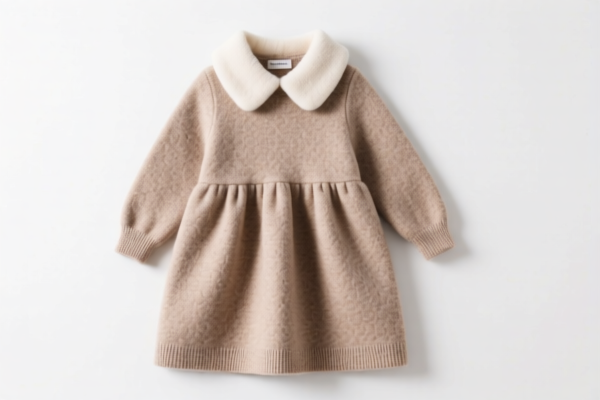
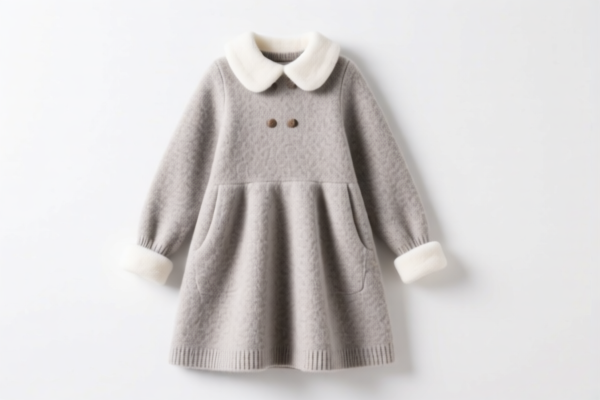
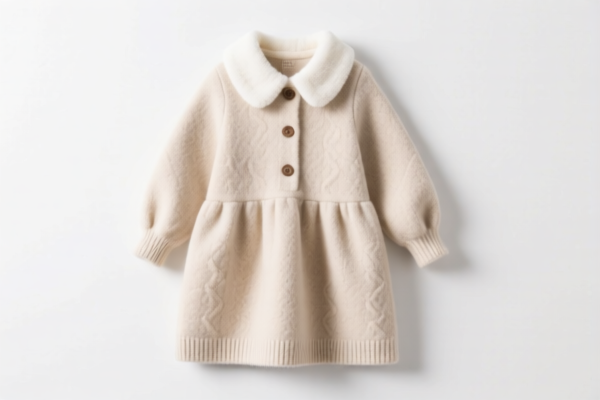
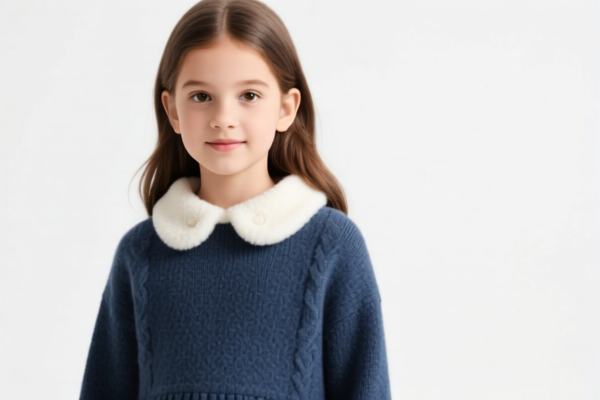
女童冬季连衣裙
CN → US| HS Code | Tariff Rate | Origin | Destination | Doc |
|---|---|---|---|---|
| 6104420020 | 29.0% | CN | US | Official Doc |
| 6114200046 | 28.3% | CN | US | Official Doc |
| 6114303054 | 32.4% | CN | US | Official Doc |
| 6110202049 | 34.0% | CN | US | Official Doc |
| 6110303025 | 49.5% | CN | US | Official Doc |
Product Images
AI Analysis
🧥 Girls' Winter Dresses & Knit Outerwear (女童冬季连衣裙/外套)
🌐 HS Code Reference & Customs Clearance Guide | 2026 Latest Tariff Analysis | Professional Strategy for Children's Apparel
📌 I. Product Definition & Classification: Decoding "Winter Dresses" for Girls
Girls' winter wear, often described as "dresses" in casual trade terms, frequently falls under broader categories in the Harmonized System (HS) depending on the actual structure and knitted vs. woven nature. Unlike simple summer dresses, winter garments often include linings, padding, or heavier knits that might trigger different subheadings such as "jumpsuits," "overalls," or "sweaters."
Key Distinction Logic:
- If it is a single piece (One-piece): Is it a dress (skirt portion) or a jumpsuit/coverall (pants/trousers attached)?
- If it is a Jacket/Coat: Is it a sweater-type (knitted/crocheted, open front) or a woven coat?
- Material Inference: Since the input "Girls' Winter Dress" lacks explicit material data, the analysis below uses common sense inference:
- Cotton inference: Common for casual knitwear.
- Synthetic/Man-made inference: Common for padded coats or performance outerwear.
⚠️ Critical Note:
- If the garment has legs/pants attached (even if it looks like a dress with a long skirt), it may be classified as a jumpsuit/overalls rather than a dress.
- If it is a knitted cardigan worn over a dress, it is classified as a sweater, not a dress.
📦 II. HS Code Classification Details (Based on Provided Data Analysis)
| HS Code | Product Description & Inference | Key Matching Criteria | Total Tax Rate |
|---|---|---|---|
6104.42.00.20 |
Dresses, Girls', Knitted/Crocheted, Man-Made Fibers | ✅ Form: Dress/One-piece. ✅ Usage: Girls. ✅ Material: Inferred synthetic/man-made (common for structured winter dresses). |
29.0% |
6114.20.00.46 |
Other Apparel, Knitted/Crocheted, Cotton, Other | ✅ Form: Similar to jumpsuits/overalls or loose knitwear. ✅ Usage: Girls. ✅ Material: Inferred Cotton (common for comfort knitwear). |
28.3% |
6114.30.30.54 |
Other Apparel, Knitted/Crocheted, Man-Made Fibers | ✅ Form: Hooded Jacket/Coat (treated as "other knitwear"). ✅ Usage: Girls. ✅ Material: Inferred Synthetic/Man-made (common for padded outerwear). |
32.4% |
6110.20.20.49 |
Sweaters, Cardigans, Cotton, Girls' | ✅ Form: Jacket/Sweater (if the "dress" is actually a cardigan set). ✅ Usage: Girls. ✅ Material: Inferred Cotton. |
34.0% |
6110.30.30.25 |
Sweaters, Cardigans, Man-Made Fibers, Girls' | ✅ Form: Pullover/Hooded Top. ✅ Usage: Girls. ✅ Material: Inferred Synthetic (common for technical winter wear). |
49.5% |
🔍 Explanation of Inferences:
-6104.42.00.20: Matches "Dress" form. If the item is purely a dress with no pants, this is the most direct classification.
-6114.20.00.46: Matches "Jumpsuit/Overall" form. If the winter garment has leg coverings (even long skirts that act like pants in some classifications), this applies. Cotton is inferred for comfort.
-6114.30.30.54: Matches "Hooded Jacket." Often, "winter dresses" in trade listings are actually hooded parkas or coats. Man-made fibers are inferred for durability/warmth.
-6110.20.20.49&6110.30.30.25: If the item is a set (dress + cardigan) or the cardigan is declared separately, it falls under Sweaters. Cotton vs. Synthetic determines the subheading.
💰 III. 2026 Latest Tariff Rate Breakdown (US Market - China Origin)
✅ Applicable Country: United States (US)
✅ Origin: China (CN)
✅ Effective Date: From November 10, 2025 (and subsequent imports)
🎯 1. 6104.42.00.20 – Dresses, Knitted, Man-Made Fibers
| Item | Content |
|---|---|
| Base Duty | 11.5% (Ad valorem) |
| Section 301 Duty | +7.5% (Additional tariff on Chinese goods) |
| IEEPA Duty (Section 122) | +10% (Specific tariff for certain apparel/textiles) |
| Total Tax Rate | 29.0% |
| Calculation | CIF Value × 29.0% |
| De Minimis Exemption | ❌ Not Eligible (deny_de_minimis applies to apparel from China) |
| Legal Basis | USITC:6104.42.00.20 → Section 301 → IEEPA:9903.01.25 |
📌 Why 29.0%?
- The base duty for knit dresses is moderate (11.5%).
- The 7.5% Section 301 is standard for many textiles.
- The 10% IEEPA is a specific surcharge often applied to apparel to protect domestic manufacturing.
- Total: 29.0%. This is a medium-high tariff for apparel.
🎯 2. 6114.20.00.46 – Other Knitted Apparel, Cotton
| Item | Content |
|---|---|
| Base Duty | 10.8% |
| Section 301 Duty | +7.5% |
| IEEPA Duty | +10% |
| Total Tax Rate | 28.3% |
| Calculation | CIF Value × 28.3% |
| De Minimis Exemption | ❌ Not Eligible |
📌 Why 28.3%?
- Cotton knitwear has a slightly lower base duty (10.8%) than synthetic dresses.
- However, the additional tariffs are fixed, resulting in a total of 28.3%.
- Optimization Tip: If you can prove it is 100% Cotton and fits the "Other Knitted" category, this is one of the lowest cost options in the list.
🎯 3. 6114.30.30.54 – Other Knitted Apparel, Man-Made Fibers
| Item | Content |
|---|---|
| Base Duty | 14.9% |
| Section 301 Duty | +7.5% |
| IEEPA Duty | +10% |
| Total Tax Rate | 32.4% |
| Calculation | CIF Value × 32.4% |
| De Minimis Exemption | ❌ Not Eligible |
📌 Why 32.4%?
- Synthetic/knit outerwear has a higher base duty (14.9%).
- Suitable for hooded jackets or padded coats marketed as "winter dresses."
🎯 4. 6110.20.20.49 – Sweaters/Cardigans, Cotton
| Item | Content |
|---|---|
| Base Duty | 16.5% |
| Section 301 Duty | +7.5% |
| IEEPA Duty | +10% |
| Total Tax Rate | 34.0% |
| Calculation | CIF Value × 34.0% |
📌 Why 34.0%?
- Sweaters (even if part of a dress set) are taxed higher at the base level (16.5%).
- Best for cardigan dresses or two-piece sets declared as sweaters.
🎯 5. 6110.30.30.25 – Sweaters/Cardigans, Man-Made Fibers
| Item | Content |
|---|---|
| Base Duty | 32.0% |
| Section 301 Duty | +7.5% |
| IEEPA Duty | +10% |
| Total Tax Rate | 49.5% |
| Calculation | CIF Value × 49.5% |
| De Minimis Exemption | ❌ Not Eligible |
📌 Why 49.5%?
- Highest Tax Bracket!
- Synthetic sweaters have a very high base duty (32.0%).
- Avoid this classification unless the product is strictly a synthetic pullover sweater. Do not misclassify a dress as a synthetic sweater.
🛠️ IV. Customs Clearance Practical Advice (Anti-Pitfall Guide)
✅ 1. Essential Documentation Checklist
| Document | Required | Purpose |
|---|---|---|
| Product Description | ✔️ | Must specify: "Girls' Winter Dress/Jacket," Material (e.g., 100% Cotton, Polyester), Knitted/Woven. |
| Tech Pack / Spec Sheet | ✔️ | Shows construction: Is it a dress? Does it have pants? Does it have a hood? |
| Material Composition Label | ✔️ | Crucial for determining Base Duty (Cotton vs. Synthetic). |
| Photos (Front/Back/Inside) | ✔️ | To verify "Dress" vs. "Jumpsuit" vs. "Jacket." |
| Commercial Invoice | ✔️ | Must match HS Code exactly. |
| Packing List | ✔️ | Weight and dimensions for CIF calculation. |
✅ 2. Classification Strategy (Key Rules)
🔥 "Form First, Material Second, Set Third!"
| Scenario | Correct HS Code | Risk of Misclassification |
|---|---|---|
| One-piece dress (skirt only) | 6104.42.00.20 (Synthetic) or 6104.43... (Cotton) |
Low. Most accurate if it is truly a dress. |
| Jumpsuit/Overall (with legs) | 6114.20.00.46 (Cotton) |
High if called "dress." Customs may reclassify and increase tax. |
| Hooded Jacket/Coat | 6114.30.30.54 (Synthetic) |
High if called "dress." Must declare as "Jacket" or "Coat." |
| Cardigan + Dress Set | 6110.20.20.49 (Cotton Sweater) |
Medium. If declared as a set, the sweater part dominates. |
| Synthetic Pullover | 6110.30.30.25 |
Avoid. Extremely high tax (49.5%). Only use for actual sweaters. |
✅ 3. Special Handling Tips
| Situation | Recommendation |
|---|---|
| "Winter Dress" is actually a Padded Jacket | Declare as 6114.30.30.54 (Other Knitted Apparel). Do NOT call it a dress. |
| Material is Unclear | Assume Cotton if it looks soft/comfy → 6114.20.00.46 (28.3%). Assume Synthetic if it looks shiny/padded → 6104.42.00.20 (29.0%). |
| Set Items (Dress + Cardigan) | Declare the Sweater (6110.20.20.49) if the cardigan is outerwear. The base duty is higher, but it avoids "dress" classification errors. |
| De Minimis (Section 321) | ❌ DO NOT USE. Apparel from China is explicitly excluded from the $800 de minimis exemption. All shipments must go through formal entry. |
🌍 V. Global Market Comparison (2026)
| Region | Recommended HS Code | Est. Total Tax (China Origin) | Notes |
|---|---|---|---|
| 🇺🇸 USA | 6104.42.00.20 |
29.0% | High tariffs due to IEEPA + Section 301. |
| 🇨🇳 China | 6104.42.00.20 |
15-20% (Import Duty) | Lower base duty, no Section 301. |
| 🇪🇺 EU | 6104.42.00 |
12% - 17% | Standard EU duty for knitted dresses. |
| 🇬🇧 UK | 6104.42.00 |
12% - 17% | Post-Brexit tariffs similar to EU. |
| 🇯🇵 Japan | 6104.42.00 |
13% - 16% | Moderate tariffs. |
📌 Conclusion:
- The US market is the most expensive due to layered tariffs (Base + 301 + IEEPA).
- Cotton knitwear (6114.20.00.46) offers the lowest total tax (28.3%) among the listed options.
- Synthetic Sweaters (6110.30.30.25) are the most expensive (49.5%). Avoid unless necessary.
📌 VI. Common Mistakes & Pitfalls (Lessons Learned)
❌ Mistake 1: Calling a Hooded Jacket a "Dress"
👉 Result: Customs may reject it as incorrect description, leading to delay + reclassification to 6114.30.30.54 (32.4%) or higher penalties.
✅ Fix: Accurately describe as "Girls' Hooded Knitted Jacket."
❌ Mistake 2: Ignoring Material Composition
👉 Result: Misclassifying Synthetic as Cotton (or vice versa) leads to underpayment/overpayment.
✅ Fix: Always check the care label. "Polyester" = Synthetic. "Cotton" = Cotton.
❌ Mistake 3: Assuming De Minimis Applies
👉 Result: Shipments blocked or seized because apparel from China is not eligible for the $800 exemption.
✅ Fix: Plan for formal entry and calculate full duties upfront.
❌ Mistake 4: Using 6110.30.30.25 for a Dress
👉 Result: 49.5% Tax instead of 29-32%. Massive cost increase.
✅ Fix: Only use Sweater codes for actual sweaters/cardigans.
🎯 VII. Conclusion: Smart Classification Saves Money
🎯 Golden Rules for Girls' Winter Wear:
🔹 "Dress = 6104" (29.0%)
🔹 "Jumpsuit/Cotton Knit = 6114.20" (28.3%) 🏆 Lowest Cost
🔹 "Hooded Jacket = 6114.30" (32.4%)
🔹 "Synthetic Sweater = 6110.30" (49.5%) ❌ Highest Cost - Avoid
📌 Pro Tip:
If your product is a knitted cotton jumpsuit/overall, use 6114.20.00.46 for the lowest tax rate (28.3%).
If it is a synthetic dress, use 6104.42.00.20 (29.0%).
Always verify material and form before shipping!
📣 Immediate Action:
📞 Confirm Material: Cotton or Synthetic?
📞 Confirm Form: Dress, Jumpsuit, or Jacket?
📞 Calculate Duty: Use the rates above to estimate landed cost.
🚀 Ensure Formal Entry: No de minimis for China apparel.
✨ Professional clearance starts with accurate classification!
💼 Every percentage point in duty impacts your profit margin.
Customer Reviews
About HS Code Classification
The Harmonized System (HS) is an internationally standardized nomenclature developed by the World Customs Organization (WCO) to classify traded products. Over 200 countries use the HS system as the basis for customs tariffs, trade statistics, and import/export regulations.
Each HS code follows a hierarchical structure:
- Chapter (2 digits) — Broad category of goods (e.g., Chapter 84: Machinery and Mechanical Appliances)
- Heading (4 digits) — More specific grouping within the chapter
- Subheading (6 digits) — Internationally standardized breakdown, used by all WCO member countries
- National subdivisions (8-10 digits) — Country-specific extensions for further classification, such as US HTSUS 10-digit codes
Correct HS code classification is essential for smooth customs clearance, accurate duty payment, and compliance with trade regulations. Misclassification can lead to customs delays, overpayment of duties, or penalties.
When importing from CN to US, the applicable tariff rates may include:
- Most-Favored-Nation (MFN) rate — The standard duty rate applied to WTO members
- General rate — Applied to countries without trade agreements
- Trade remedy duties — Additional tariffs such as Section 301 (anti-dumping), Section 232 (national security), or countervailing duties
The information provided on this page is for reference purposes only. For official classification, please consult with your local customs authority or a licensed customs broker.