女童夏季背带裤
CN → US| HS Code | Tariff Rate | Origin | Destination | Doc |
|---|---|---|---|---|
| 6204630350 | 32.4% | CN | US | Official Doc |
| 6204620550 | 26.4% | CN | US | Official Doc |
| 6104621030 | 27.8% | CN | US | Official Doc |
| 6104621010 | 27.8% | CN | US | Official Doc |
| 6111301000 | 45.7% | CN | US | Official Doc |
Product Images
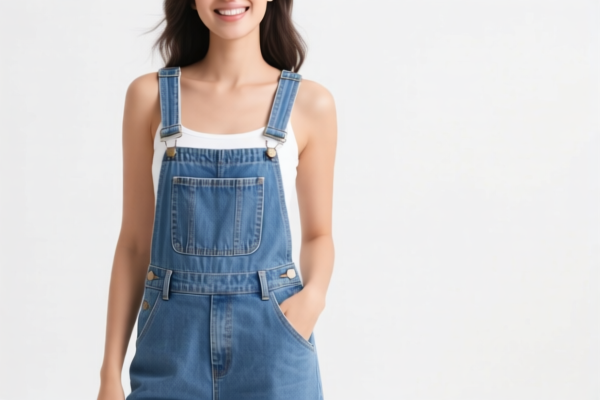
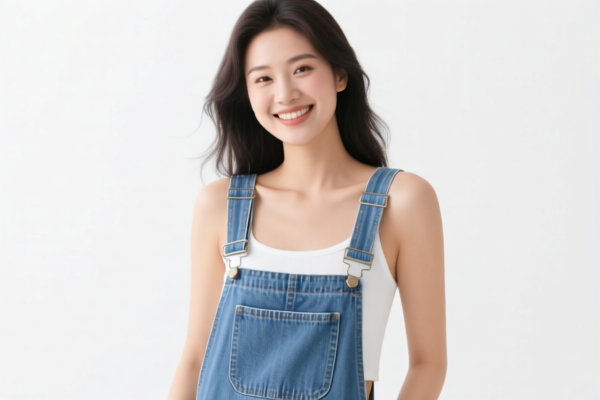
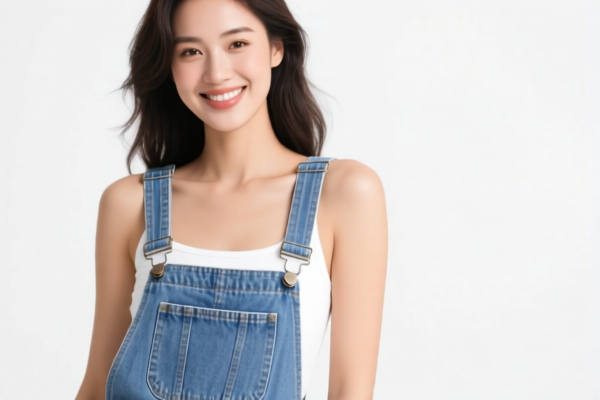
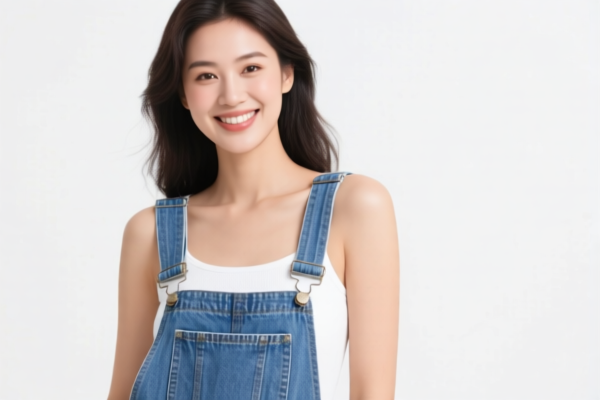
AI Analysis
👗 Girls' Summer Overalls (女童夏季背带裤)
🌐 HS Code Reference & Customs Clearance Guide | 2026 Latest Tariff Analysis | Professional Level Strategy
📌 I. Product Definition & Classification: Do You Really Understand "Girls' Summer Overalls"?
Girls' summer overalls are casual or semi-formal wear designed for female children, characterized by a bib-and-strap construction, typically made from lightweight, breathable fabrics suitable for warm weather. In international trade, the classification depends heavily on the material composition (Cotton vs. Synthetic Fibers) and the knitted vs. woven structure.
Key Distinctions: - Woven (Chapter 62): Made from non-knitted fabrics (e.g., denim, cotton twill, synthetic blends). Typically more durable, structured. - Knitted (Chapter 61): Made from knitted fabrics (e.g., jersey, ribbed knit). Typically more stretchy, comfortable, and often includes thermal properties if "warm" (though less common for pure "summer" items unless for AC environments).
⚠️ Critical Classification Point:
- If the overall is Woven → Chapter 62
- If the Overall is Knitted → Chapter 61
- Material Matters: Cotton vs. Synthetic fibers significantly impacts the base tariff rate.
📦 II. HS Code Classification Details (2026 Latest Tariff Authority Comparison)
Based on the provided data, here are the valid HS Codes for Girls' Summer Overalls, categorized by material and structure:
| HS Code | Product Description | Material Inference | Structure | Total Tax Rate |
|---|---|---|---|---|
6204.63.03.50 |
Girls' Trousers, Trousers with Braces (Overalls) | Synthetic Fibers | Woven | 32.4% |
6204.62.05.50 |
Girls' Trousers, Trousers with Braces (Overalls) | Cotton | Woven | 26.4% |
6104.62.10.30 |
Girls' Trousers, Trousers with Braces (Overalls) | Cotton | Knitted | 27.8% |
6104.62.10.10 |
Girls' Warm Bib Overalls (Winter/Thermal variant) | Cotton/Warm Material | Knitted | 27.8% |
6111.30.10.00 |
Knitted Baby Garments & Clothing Accessories (Includes Overalls) | Fibers (Unspecified) | Knitted | 45.7% |
🔍 Important Notes:
-6204.6xSeries: Applies to Woven overalls. The distinction between6204.62(Cotton) and6204.63(Synthetic) is crucial for base tariff calculation. -6104.62Series: Applies to Knitted overalls for girls aged ≤14 years. -6111.30: Applies to Knitted baby garments (typically for infants). If the product is specifically marketed as "baby" or for very young children, this code may apply, but it carries the highest tax rate (45.7%). Avoid using this unless the product is explicitly for infants.
💰 III. 2026 Latest Tariff Rate Breakdown (Including Additional Taxes & Policy Surcharges)
✅ Applicable Country: United States (US)
✅ Origin: China (CN)
✅ Effective Date: November 10, 2025 onwards (including subsequent imports)
🎯 1. 6204.63.03.50 —— Girls' Synthetic Woven Overalls
| Item | Content |
|---|---|
| Base Tariff | 14.9% |
| Section 301 Additional Tariff | +7.5% |
| Section 122 Tariff | +10% |
| Total Tax Rate | 32.4% |
| Tax Calculation | CIF Value × 32.4% |
| De Minimis Eligibility | ❌ No (Subject to high duties) |
| Legal Basis Path | Section 301 + Section 122 → HTSUS:6204.63.03.50 |
📌 Explanation:
- Base Tariff (14.9%): Standard MFN rate for woven synthetic overalls. - Section 301 (7.5%): Trade war-related additional duty on Chinese goods. - Section 122 (10%): Specific additional duty on certain textile/apparel imports from China. - Total (32.4%): High cost. Ensure the material is correctly identified as Synthetic (e.g., polyester, nylon).
🎯 2. 6204.62.05.50 —— Girls' Cotton Woven Overalls
| Item | Content |
|---|---|
| Base Tariff | 8.9% |
| Section 301 Additional Tariff | +7.5% |
| Section 122 Tariff | +10% |
| Total Tax Rate | 26.4% |
| Tax Calculation | CIF Value × 26.4% |
| De Minimis Eligibility | ❌ No |
| Legal Basis Path | Section 301 + Section 122 → HTSUS:6204.62.05.50 |
📌 Explanation:
- Base Tariff (8.9%): Lower than synthetic due to cotton's favorable base rate. - Total (26.4%): Best option for woven overalls. If your summer overalls are cotton-based, this is the most cost-effective classification. - Caution: Do not misdeclare synthetic as cotton. Customs will test fibers.
🎯 3. 6104.62.10.30 —— Girls' Cotton Knitted Overalls
| Item | Content |
|---|---|
| Base Tariff | 10.3% |
| Section 301 Additional Tariff | +7.5% |
| Section 122 Tariff | +10% |
| Total Tax Rate | 27.8% |
| Tax Calculation | CIF Value × 27.8% |
| De Minimis Eligibility | ❌ No |
| Legal Basis Path | Section 301 + Section 122 → HTSUS:6104.62.10.30 |
📌 Explanation:
- Base Tariff (10.3%): Slightly higher than woven cotton but lower than synthetic woven. - Total (27.8%): Competitive if the product is knitted. Knitted fabrics are softer and more common for children's summer wear.
🎯 4. 6104.62.10.10 —— Girls' Warm Bib Overalls (Knitted)
| Item | Content |
|---|---|
| Base Tariff | 10.3% |
| Section 301 Additional Tariff | +7.5% |
| Section 122 Tariff | +10% |
| Total Tax Rate | 27.8% |
| Tax Calculation | CIF Value × 27.8% |
| De Minimis Eligibility | ❌ No |
| Legal Basis Path | Section 301 + Section 122 → HTSUS:6104.62.10.10 |
📌 Explanation:
- This code is for Warm overalls. If your product is truly for Summer, do NOT use this code, as it implies thermal lining. Misdeclaration can lead to penalties. Use6104.62.10.30instead for non-warm knitted overalls.
🎯 5. 6111.30.10.00 —— Knitted Baby Garments (Including Overalls)
| Item | Content |
|---|---|
| Base Tariff | 28.2% |
| Section 301 Additional Tariff | +7.5% |
| Section 122 Tariff | +10% |
| Total Tax Rate | 45.7% |
| Tax Calculation | CIF Value × 45.7% |
| De Minimis Eligibility | ❌ No |
| Legal Basis Path | Section 301 + Section 122 → HTSUS:6111.30.10.00 |
📌 Explanation:
- Highest Tax Rate (45.7%). This code is reserved for Baby garments (typically for infants under 2 years).
- Avoid: Unless your product is explicitly marketed as "Baby Overalls" for infants, DO NOT use this code. Using it for older children's summer overalls is a misclassification risk and financially disadvantageous.
🛠️ IV. Customs Clearance Practical Advice (Battle-Tested Pitfall Guide)
✅ 1. Required Documentation Checklist (Non-Negotiable)
| Document | Mandatory? | Description |
|---|---|---|
| ✅ Product Spec Sheet | ✔️ | Must include fabric composition (e.g., 100% Cotton, 100% Polyester), knit vs. woven structure, age range. |
| ✅ Fabric Swatch / Lab Test | ✔️ | Critical to prove material (Cotton vs. Synthetic) and structure (Knitted vs. Woven). |
| ✅ Product Photos | ✔️ | Clear images showing the bib, straps, and any thermal lining (if applicable). |
| ✅ Commercial Invoice | ✔️ | Must state "Girls' Overalls" and specify material and construction. |
| ✅ Packing List | ✔️ | Details of quantities and weights. |
✅ 2. Declaration Tips (Key Mnemonics)
🔥 "Woven vs. Knitted, Cotton vs. Synth, Baby vs. Girl – Get it Wrong, Pay More!"
| Scenario | Correct Declaration | Wrong Practice |
|---|---|---|
| Summer Overalls, Cotton, Woven | 6204.62.05.50 (26.4%) |
Declaring as Synthetic → 32.4% |
| Summer Overalls, Synth, Woven | 6204.63.03.50 (32.4%) |
Declaring as Cotton → 26.4% (Risk of Penalty) |
| Summer Overalls, Cotton, Knitted | 6104.62.10.30 (27.8%) |
Declaring as Woven → 26.4% (Risk of Penalty) |
| Baby Overalls (Knitted) | 6111.30.10.00 (45.7%) |
Declaring as "Girl's" → 27.8% (Risk of Penalty) |
| Warm Overalls (Knitted) | 6104.62.10.10 (27.8%) |
Declaring as "Summer" → 27.8% (Correct Rate, but misdescription) |
✅ 3. Special Case Handling
| Case | Handling Advice |
|---|---|
| Mixed Material | If the fabric is a blend (e.g., 80% Cotton, 20% Polyester), classification depends on the major fiber. Test to confirm. |
| "Summer" vs. "Warm" | If the garment has any thermal lining, fleece, or thick padding, it is not a "Summer" item. Use 6104.62.10.10 (if knitted) or the appropriate woven code. Misdeclaring warm items as "summer" can lead to audits. |
| Age Range | If the product is for infants (<2 years), consider 6111.30.10.00 but be aware of the 45.7% tax. For children 2-14 years, use 6104 or 6204. |
| OEM/Private Label | Ensure the brand name and product name on the invoice match the physical product. Discrepancies can cause delays. |
🌍 V. Global Customs Clearance Comparison (2026 Latest)
| Country/Region | Recommended HS Code | Tariff (China Origin) | Certification Requirements | Notes |
|---|---|---|---|---|
| 🇺🇸 USA | 6204.62.05.50 (Cotton Woven) |
26.4% | CPC (Children's Product Certificate) for ages ≤12 | Highest complexity due to Section 301 & 122 |
| 🇨🇳 China | 6204.62.05.50 |
5% | CCC (if applicable) | No additional duties |
| 🇪🇺 EU | 6204.63.99 (Synthetic Woven) |
0% - 12% | CE, REACH, CPSR (if textile) | Varies by material; no Section 301 |
| 🇬🇧 UK | 6204.62.00 (Cotton Woven) |
12% | UKCA, CPSR | Post-Brexit rules apply |
| 🇨🇦 Canada | 6204.63.20 (Synthetic Woven) |
0% (if CUSMA eligible) | CPSR | Check for preferential agreements |
📌 Conclusion:
- USA is the most costly market due to additional duties (301 + 122).
- Material Accuracy is Key: Declaring Cotton when it's Synthetic (or vice versa) leads to underpayment (penalty) or overpayment (lost profit).
- Knitted vs. Woven: Ensure the physical structure matches the HS code. Knitted goods have different mechanical properties.
📌 VI. Common Mistakes & Pitfall Guide (Blood & Tears Lessons)
❌ Mistake 1: Declaring Synthetic Overalls as Cotton
👉 Consequence: Underpayment of 6% (32.4% vs 26.4%) → Penalties + Back Duties!
❌ Mistake 2: Using 6111.30.10.00 (Baby Code) for Children's Overalls
👉 Consequence: Overpayment of ~18% (45.7% vs 27.8%) → Unnecessary Cost!
❌ Mistake 3: Misidentifying Knitted as Woven
👉 Consequence: Customs may reject declaration or request lab tests → Delays + Storage Fees!
❌ Mistake 4: Failing to provide Fabric Test Reports
👉 Consequence: Customs cannot verify material → Holdup for Inspection!
✅ Correct Practice:
"Girls' Summer Overalls, Woven, 100% Cotton, Ages 4-8, CPC Certified, Model XYZ"
🎯 VII. Conclusion: Professional Declaration, Save Time, Cut Costs!
🎯 Remember the Mnemonic:
🔹 "Woven Cotton Best (26.4%), Synthetic Woven High (32.4%), Knitted Cotton Mid (27.8%), Baby Code Worst (45.7%)."
🔹 "Material & Structure Decide, Misdeclare Leads to Tears!"
📌 Pro Tip:
If your overalls are made from recycled materials or sustainable fibers, check for any potential green trade incentives in specific markets (e.g., EU GSP schemes).
Recommend Applying for Advance Ruling to confirm HS Code before shipment.
📣 Immediate Action:
📞 Contact a Professional Customs Broker + Provide Fabric Swatch + Apply for HS Code Pre-Ruling
🚀 Let your Girls' Overalls Clear Customs Smoothly, Maximize Profit!
✨ Professional Customs Clearance Starts with Accurate Classification!
💼 Every Penny Counts!
Customer Reviews
About HS Code Classification
The Harmonized System (HS) is an internationally standardized nomenclature developed by the World Customs Organization (WCO) to classify traded products. Over 200 countries use the HS system as the basis for customs tariffs, trade statistics, and import/export regulations.
Each HS code follows a hierarchical structure:
- Chapter (2 digits) — Broad category of goods (e.g., Chapter 84: Machinery and Mechanical Appliances)
- Heading (4 digits) — More specific grouping within the chapter
- Subheading (6 digits) — Internationally standardized breakdown, used by all WCO member countries
- National subdivisions (8-10 digits) — Country-specific extensions for further classification, such as US HTSUS 10-digit codes
Correct HS code classification is essential for smooth customs clearance, accurate duty payment, and compliance with trade regulations. Misclassification can lead to customs delays, overpayment of duties, or penalties.
When importing from CN to US, the applicable tariff rates may include:
- Most-Favored-Nation (MFN) rate — The standard duty rate applied to WTO members
- General rate — Applied to countries without trade agreements
- Trade remedy duties — Additional tariffs such as Section 301 (anti-dumping), Section 232 (national security), or countervailing duties
The information provided on this page is for reference purposes only. For official classification, please consult with your local customs authority or a licensed customs broker.