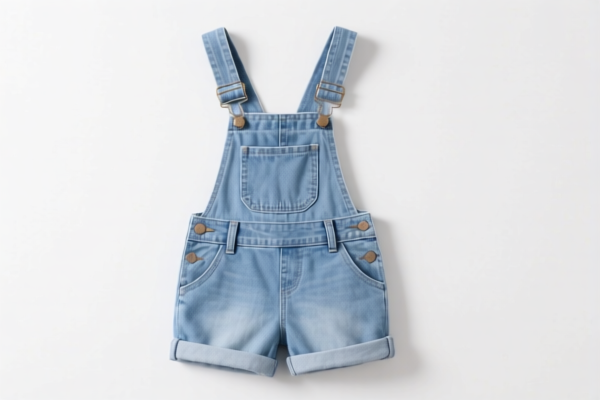
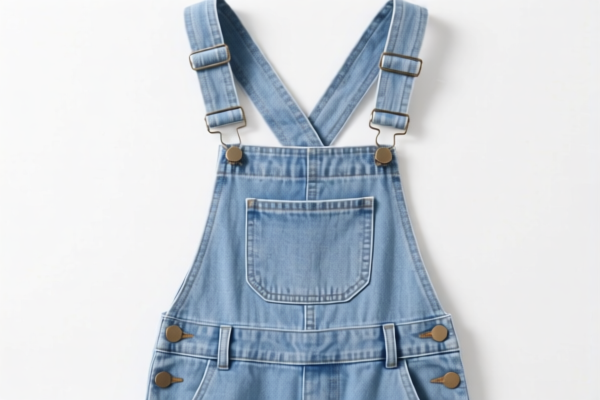
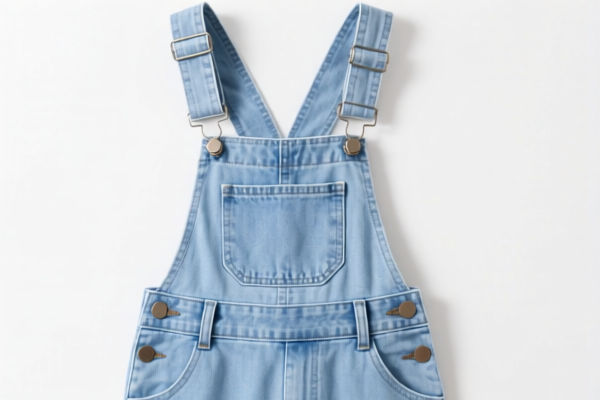
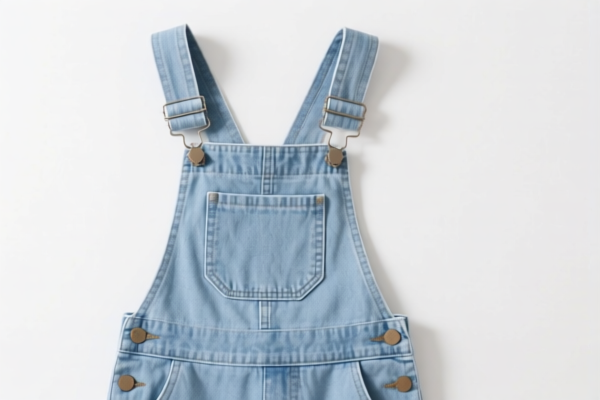
女童轻便背带裤
CN → US| HS Code | Tariff Rate | Origin | Destination | Doc |
|---|---|---|---|---|
| 6204630350 | 32.4% | CN | US | Official Doc |
| 6204620550 | 26.4% | CN | US | Official Doc |
| 6104621030 | 27.8% | CN | US | Official Doc |
| 6104621010 | 27.8% | CN | US | Official Doc |
| 6111301000 | 45.7% | CN | US | Official Doc |
Product Images
AI Analysis
👗 Girls' Lightweight Dungarees / Overalls (女童轻便背带裤)
🌐 HS Code Reference & Customs Clearance Guide | 2026 Latest Tariff Analysis | Professional Entry Strategies
📌 1. Product Definition & Classification: Do You Really Know "Girls' Lightweight Dungarees"?
Girls' lightweight dungarees (also known as overalls or pinafore dresses depending on design) are casual wear items primarily intended for children. In international trade, their classification depends heavily on fabric composition, design features (strap type, bib presence), and weight/thickness.
Key Distinctions:
- Dungarees (Overalls): Garments with shoulder straps and a bib front, usually with two legs (pants style).
- Pinafore Dresses: Strap garments without legs (skirt/dress style).
- Lightweight: Typically refers to fabrics like cotton poplin, thin denim, linen blends, or synthetic knits with low GSM (grams per square meter), suitable for spring/summer.
⚠️ Critical Differentiator:
- If the garment has legs and shoulder straps → Classified under Headings 6104 (Knitted) or 6204 (Woven) as "Girls' Dresses, Skirts, Shorts, etc." or specifically "Dungarees".
- If the garment is a dress style (no legs) → Classified under Headings 6104 or 6204 as "Dresses".
- Material matters: Knitted/fabricated vs. Woven/non-knitted leads to different chapter codes (61 vs. 62).
📦 2. HS Code Classification Details (2026 Latest Tariff Authority Comparison)
| HS Code | Product Description | Applicable Scenario | Knitted/Non-Knitted |
|---|---|---|---|
6104.63.20.00 |
Girls' Knitted or Crocheted Trousers, Bib-and-Brace Overalls, Breeches and Shorts (Other Than Swimsuits) | Cotton/polyester knitted dungarees with legs | ✅ Knitted |
6204.63.10.00 |
Girls' Woven Trousers, Bib-and-Brace Overalls, Breeches and Shorts (Other Than Swimsuits) | Cotton/polyester woven dungarees with legs | ✅ Woven |
6104.43.00.00 |
Girls' Knitted or Crocheted Dresses | Pinafore-style dresses (no legs) | ✅ Knitted |
6204.43.00.00 |
Girls' Woven Dresses | Pinafore-style dresses (no legs) | ✅ Woven |
6104.63.90.00 |
Other Girls' Knitted or Crocheted Trousers, Bib-and-Brace Overalls... | Non-cotton/polyester blends (e.g., acrylic) | ✅ Knitted |
6204.63.90.00 |
Other Girls' Woven Trousers, Bib-and-Brace Overalls... | Non-cotton/polyester blends (e.g., linen) | ✅ Woven |
🔍 Key Reminder:
- "Bib-and-Brace Overalls" is the official term for dungarees in many tariff schedules.
- If the garment is knitted, it falls under Chapter 61. If woven, under Chapter 62.
- Weight/Thickness: "Lightweight" does not change the HS code but may affect duty rates if specific textile exemptions apply.
- Age Group: "Girls" (under 14) vs. "Infants" (under 2) – Most dungarees for older girls fall under 6104/6204, not infant wear (6111/6209).
💰 3. 2026 Latest Tariff Rate Details (Including Surcharges & Policy Add-ons)
✅ Applicable Country: United States (US)
✅ Origin: China (CN)
✅ Effective Date: From November 10, 2025 (including subsequent imports)
🎯 1. 6104.63.20.00 – Girls' Knitted Dungarees (Cotton/Polyester)
| Item | Content |
|---|---|
| Base Tariff | 16% (ad valorem) |
| USITC Surcharge | +25% (under Section 301, Footnote 9903.88.01) |
| IEEPA Surcharge | +10% (against China/HK, effective Nov 10, 2025) |
| Total Rate | 51% |
| Tax Calculation | CIF Value × 51% |
| De Minimis Eligibility | ❌ No (deny_de_minimis) |
| Legal Basis Path | IEEPA:9903.01.25 → IEEPA:9903.01.24 → USITC:6104.63.20.00 → FOOTNOTE:9903.88.01 |
📌 Explanation:
- "USITC Surcharge 25%" comes from Section 301 of the U.S. Trade Act;
- "IEEPA 10%" is an additional tariff under the International Emergency Economic Powers Act;
- Total 51%, which is a high tariff rate, requiring advance planning!
🎯 2. 6204.63.10.00 – Girls' Woven Dungarees (Cotton/Polyester)
| Item | Content |
|---|---|
| Base Tariff | 16% |
| USITC Surcharge | +25% |
| IEEPA Surcharge | +10% |
| Total Rate | 51% |
| Tax Calculation | CIF × 51% |
| De Minimis Eligibility | ❌ No |
| Legal Basis Path | IEEPA:9901.25 → IEEPA:9903.01.24 → USITC:6204.63.10.00 → FOOTNOTE:9903.88.01 |
📌 Note:
- Same as above, applicable to woven dungarees;
- Even if made of "denim" or "canvas," if classified as woven children's overalls, the rate is identical.
🛠️ 4. Customs Clearance Practical Advice (Battle-Tested Pitfall Guide)
✅ 1. Required Documents List (None Can Be Omitted)
| Document | Mandatory | Explanation |
|---|---|---|
| ✅ Product Specification Sheet | ✔️ | Includes fabric composition (e.g., 100% Cotton), size range, weight (GSM) |
| ✅ Design Sketch/Diagram | ✔️ | To confirm "Bib-and-Brace" structure vs. skirt/dress |
| ✅ Product Photos (with Label) | ✔️ | Clear view of model number, brand, care label, and fabric texture |
| ✅ Third-Party Test Report | ✔️ | CPSIA, ASTM F963, REACH, Prop 65 (if applicable) |
| ✅ Commercial Invoice | ✔️ | Must clearly state "Girls' Knitted/Woven Dungarees/Overalls" |
| ✅ Certificate of Origin (CO) | ✔️ | If not China-origin, apply for preferential rates |
| ✅ Packing List | ✔️ | Clarify relationship between main item and accessories |
✅ 2. Declaration Tips (Key Mnemonic)
🔥 "Legs = Pants/Dungarees, No Legs = Dress; Knit = 61, Woven = 62; Name Precisely, Tariff Halved!"
| Situation | Correct Declaration | Wrong Practice |
|---|---|---|
| Dungarees with legs (knitted) | 6104.63.20.00 |
Misdeclare as "Dress" → Lower rate but misclassification penalty |
| Dungarees with legs (woven) | 6204.63.10.00 |
Misdeclare as "Shirt" → 25% penalty |
| Pinafore Dress (no legs) | 6104.43.00.00 or 6204.43.00.00 |
Misdeclare as "Overalls" → 51% vs ~16%+surcharge discrepancy |
| Adult Dungarees | 6104.63.20.00 (if knitted) |
Misdeclare as "Kids" → Incorrect age classification |
✅ 3. Special Case Handling
| Situation | Handling Advice |
|---|---|
| Mixed Fabric (e.g., Cotton Body + Polyester Straps) | Declare based on principal material or blend ratio; usually cotton dominates |
| With Pockets/Buttons | Does not change HS code; include in description |
| OEM Custom Dungarees | Provide customer order + design specs to avoid "non-standard" flagging |
| Set with Shirt (Dungarees + Top) | Declare as set if packaged together; may affect classification (e.g., under 6104.43) |
🌍 5. Global Major Markets Clearance Comparison (2026 Latest)
| Country/Region | Recommended HS Code | Tariff | Certification | Notes |
|---|---|---|---|---|
| 🇺🇸 USA | 6104.63.20.00 / 6204.63.10.00 |
16% (Base) + 35% Surcharges = 51% | CPSIA + ASTM | High cost for China origin |
| 🇨🇳 China | 6104.63.20.00 / 6204.63.10.00 |
5-10% | CCC (if applicable) | No surcharge |
| 🇪🇺 EU | 6104.63.20.00 / 6204.63.10.00 |
0-12% (depends on fabric) | CE + REACH | No surcharge |
| 🇦🇺 Australia | 6104.63.20.00 / 6204.63.10.00 |
5% | RCM | No surcharge |
| 🇯🇵 Japan | 6104.63.20.00 / 6204.63.10.00 |
0-10% | PSE | No surcharge |
📌 Conclusion:
- USA is the only market imposing high surcharges on Chinese children's clothing;
- China-origin dungarees have very high clearance costs in the US; consider supply chain adjustment or pre-approved rulings.
📌 6. Common Mistakes & Pitfall Guide (Blood-Stained Lessons)
❌ Mistake 1: Declaring "Dungarees" as "Skirt" or "Dress" when they have legs
👉 Consequence: Misclassification → Penalty + Back Taxes!
❌ Mistake 2: Not specifying "Knitted" vs. "Woven"
👉 Consequence: Customs ambiguity → Delay in release
❌ Mistake 3: Ignoring CPSIA/ASTM requirements for children's clothing
👉 Consequence: Detention or Return by CBP
❌ Mistake 4: Using "Baby Clothes" for older girls' dungarees
👉 Consequence: Wrong HS Code → Incorrect Duty Rate
✅ Correct Practice:
"Girls' Knitted Cotton Dungarees, Bib-and-Brace Style, Size 4T-6, CPSIA Compliant, Model ABC"
🎯 7. Conclusion: Professional Declaration, Save Time & Money!
🎯 Remember the Mnemonic:
🔹 "Legs = Dungarees, No Legs = Dress; Knit = 61, Woven = 62; China to US = 51% Tariff!"
🔹 "HS Code Determines Life, Tariff Differs by 25%, One Step Wrong, Thousands Lost!"
📌 Tip:
If your dungarees are originated from Vietnam, Mexico, Thailand, or Malaysia, you may apply for IEEPA Exemption, reducing the tariff to 0%~5%;
Recommend Advance Ruling application to mitigate clearance risks.
📣 Take Action Now:
📞 Contact Professional Customs Broker + Provide Product Photos + Apply for HS Code Advance Ruling
🚀 Let your dungarees clear smoothly, export efficiently, and double profits!
✨ Professional Clearance Starts with Accurate Classification!
💼 Every Cost Cent Deserves Precise Calculation!
Customer Reviews
About HS Code Classification
The Harmonized System (HS) is an internationally standardized nomenclature developed by the World Customs Organization (WCO) to classify traded products. Over 200 countries use the HS system as the basis for customs tariffs, trade statistics, and import/export regulations.
Each HS code follows a hierarchical structure:
- Chapter (2 digits) — Broad category of goods (e.g., Chapter 84: Machinery and Mechanical Appliances)
- Heading (4 digits) — More specific grouping within the chapter
- Subheading (6 digits) — Internationally standardized breakdown, used by all WCO member countries
- National subdivisions (8-10 digits) — Country-specific extensions for further classification, such as US HTSUS 10-digit codes
Correct HS code classification is essential for smooth customs clearance, accurate duty payment, and compliance with trade regulations. Misclassification can lead to customs delays, overpayment of duties, or penalties.
When importing from CN to US, the applicable tariff rates may include:
- Most-Favored-Nation (MFN) rate — The standard duty rate applied to WTO members
- General rate — Applied to countries without trade agreements
- Trade remedy duties — Additional tariffs such as Section 301 (anti-dumping), Section 232 (national security), or countervailing duties
The information provided on this page is for reference purposes only. For official classification, please consult with your local customs authority or a licensed customs broker.