女童风格服装
CN → US| HS Code | Tariff Rate | Origin | Destination | Doc |
|---|---|---|---|---|
| 6111206070 | 25.6% | CN | US | Official Doc |
| 6109100045 | 34.0% | CN | US | Official Doc |
| 6209303040 | 33.5% | CN | US | Official Doc |
| 6109100065 | 34.0% | CN | US | Official Doc |
| 6110202077 | 34.0% | CN | US | Official Doc |
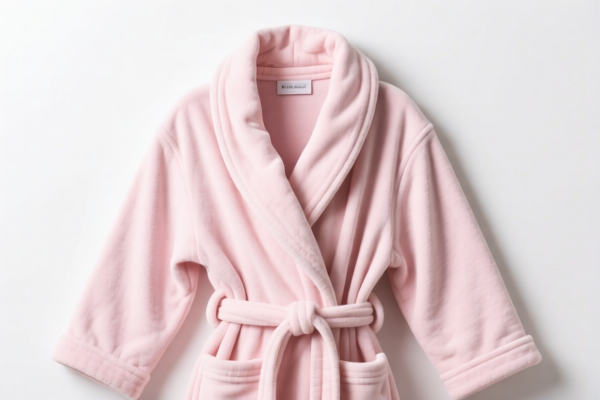
Product Images



AI Analysis
👧🏻 Girls' Apparel (女童风格服装)
🌐 HS Code Reference & Customs Clearance Guide | 2026 Latest Tariff Analysis | Professional Strategy for Textile Imports
📌 1. Product Definition & Classification: What Exactly Are "Girls' Style Clothes"?
"Girls' style apparel" refers to clothing items specifically designed, sized, or marketed for female children. In international trade, these goods fall under Chapter 61 (Knitted or Crocheted) and Chapter 62 (Non-knitted) of the Harmonized System.
However, classification is not determined by the label "Girls" alone. It depends on: 1. Material Composition (Cotton, Polyester, Synthetic, etc.) 2. Manufacturing Process (Knitted vs. Woven) 3. Specific Type (Infant wear, Tops, Sweaters, Dresses) 4. Age Group (Infant < 2 years vs. Child)
⚠️ Key Distinction:
- Infant Wear (6111/6209): For babies/toddlers. Often has lower duty rates but strict "infant" definition. - Children's Outerwear/Tops (6109/6110/6204/6206): For older children. Subject to higher base duties and significant trade war tariffs.
📦 2. HS Code Classification Matrix (Based on Provided Data)
The following table maps the provided HS Codes to their specific product characteristics and tax implications. Note that all items listed are subject to additional US tariffs due to China origin (Section 301 + IEEPA).
| HS Code | Product Description & Inference | Material/Type | Tax Rate Breakdown |
|---|---|---|---|
| 6111.20.60.70 | Baby/Infant Apparel: Girls' clothing matching the form/purpose of infant wear. | Infants/Toddlers | 25.6% |
| 6109.10.00.45 | Knitted T-shirts/Tanks: Girls' tops, inferred as Cotton or Polyester knit. | Cotton/Poly Knit | 34.0% |
| 6109.10.00.65 | Knitted Tops (Vest-style): Girls' vests/tanks, inferred as Cotton. | Cotton Knit | 34.0% |
| 6110.20.20.77 | Knitted Sweaters/Cardigans: Gender-neutral "Men/Women/Children" catch-all for knit tops. | Mixed Knit | 34.0% |
| 6209.30.30.40 | Non-Knitted Synthetic Wear: Girls' clothing inferred as synthetic fibers, no specific conflict. | Synthetic (Non-knit) | 33.5% |
🔍 Critical Insight:
- 6111 (Infant wear) has the lowest total duty (25.6%). If the item is small enough to be classified as infant wear (typically < 2 years), use this code. - 6109/6110/6209 (Older children's wear) face a uniformly high burden (33.5% - 34.0%). - Material Matters: Knitted (61xx) and Non-knitted (62xx) are split chapters. Always verify if the item is knitted (stretched loops) or woven (woven threads).
💰 3. 2026 Tariff Rate Detail (China → USA)
✅ Applicable Country: United States (US)
✅ Origin: China (CN)
✅ Effective Date: Tariffs include Base Duty + Section 301 + IEEPA (122 Clause)
🎯 A. The "Low-Tax" Infant Category: 6111.20.60.70
| Item | Detail |
|---|---|
| Base Duty | 8.1% |
| Section 301 (Trade War) | 7.5% |
| IEEPA (Section 122) | 10% |
| Total Tax Rate | 25.6% |
| Calculation | CIF Value × 25.6% |
| De Minimis Eligibility | ❌ No (High value threshold usually applies; check current $800 rule changes) |
📌 Why it's lower: Infant clothing often enjoys preferential treatment or lower base duties due to humanitarian/special category considerations. However, the Section 122 tariff applies regardless.
🎯 B. The "High-Tax" General Children’s Category: 6109.10, 6110.20, 6209.30
(Applies to codes: 6109.10.00.45, 6109.10.00.65, 6110.20.20.77, 6209.30.30.40)
| Item | Detail |
|---|---|
| Base Duty | 16.0% – 16.5% (Varies by specific fiber/sub-heading) |
| Section 301 (Trade War) | 7.5% |
| IEEPA (Section 122) | 10% |
| Total Tax Rate | 33.5% – 34.0% |
| Calculation | CIF Value × 33.5%~34.0% |
| De Minimis Eligibility | ❌ No |
📌 Breakdown of Base Duties: - 6109.10 (T-shirts): 16.5% Base - 6110.20 (Sweaters): 16.5% Base - 6209.30 (Synthetic Non-knit): 16.0% Base
Note: The 7.5% Section 301 and 10% IEEPA are fixed add-ons for Chinese textiles in 2026. This makes the effective tax burden nearly constant across most non-infant children's wear.
🛠️ 4. Customs Clearance Practical Advice (Avoid Pitfalls)
✅ 1. Required Documentation
| Document | Requirement | Why? |
|---|---|---|
| Commercial Invoice | Must state "Girls' Clothing" + Material % (e.g., 100% Cotton) | Determines Base Duty rate. |
| Product Photos | Clear shots of neck, cuffs, labels, and seams. | Customs verifies if it's "Knitted" (61) or "Woven" (62). |
| Care Label | Must match invoice material description. | Mismatch → Seizure or Fine. |
| Age Specification | Explicitly state "For Infants" or "For Children 5-7". | Crucial for 6111 (Infant) vs. General Children's codes. |
✅ 2. Classification Strategy (Key Tips)
🔥 "Material First, Age Second, Form Third!"
| Scenario | Correct HS Code Strategy | Risk if Wrong |
|---|---|---|
| Item is a Baby Bodysuit | Use 6111.20.60.70 | Using 6109 leads to ~8.4% extra tax. |
| Item is a Cotton T-Shirt | Use 6109.10 (if knitted) | Using 6209 (woven) → Incorrect classification, penalty. |
| Item is a Polyester Dress | Use 6204 or 6209 depending on age | Confusing knitted vs. woven → Entry Refused. |
| Unisex/Gender-Neutral | Use 6110.20.20.77 (Catch-all) | Trying to force "Girls" code on unisex item may trigger review. |
✅ 3. Special Considerations for 2026
- Section 122 Tariff (10%): This applies to all Chinese textiles. Do not assume exemptions. It is currently permanent unless policy changes.
- Section 301 Tariff (7.5%): Apply to most apparel from China. Check if your supplier qualifies for exclusions (rare for apparel, but verify).
- De Minimis ($800): While the US has a $800 de minimis threshold, textiles are often scrutinized. If you ship multiple small packages to avoid scrutiny, Customs may aggregate them. High-value shipments MUST use formal entry.
🌍 5. Global Market Comparison (Quick Reference)
| Market | HS Code Family | Est. Total Duty (China) | Notes |
|---|---|---|---|
| 🇺🇸 USA | 61xx / 62xx | 25.6% – 34.0% | Highest burden due to Section 122 + 301. |
| 🇨🇳 China | 61xx / 62xx | 8% – 15% | Low duty, but imports into China are different. |
| 🇪🇺 EU | 61xx / 62xx | 12% – 15% | No Section 301/122. VAT applies separately. |
| 🇬🇧 UK | 61xx / 62xx | 12% – 15% | Post-Brexit rules apply. |
📌 Conclusion:
- The US market is the most expensive for Chinese children's apparel due to layered tariffs. - Infant wear (6111) is the only relatively "cheaper" path (25.6% vs 34.0%). - Strategy: If possible, classify items as infant wear (if size permits) to save ~8-9%.
📌 6. Common Errors & Pitfalls
❌ Error 1: Labeling a 10-year-old's dress as "Infant Wear" to get 25.6% tax.
👉 Consequence: Customs rejects entry, imposes fines, and charges the correct 34% tax + penalties.
❌ Error 2: Mixing Knitted (61) and Woven (62) in one HS Code.
👉 Consequence: Entry suspension. You must separate them.
❌ Error 3: Ignoring the "122 Clause".
👉 Consequence: Underpayment of 10%. Customs will audit and backcharge with interest.
❌ Error 4: Vague Description ("Girls Clothes").
👉 Consequence: Customs assigns highest default duty. Always specify material and type.
✅ Correct Declaration Example:
"Girls' Cotton Knitted T-Shirt, Size 4T, Not Infant Wear. HS 6109.10.00.45. Country of Origin: China."
🎯 7. Final Recommendation: Optimize Your Costs
🎯 Key Takeaway:
🔹 "Infant = Cheaper (25.6%) | Child = Expensive (34.0%)"
🔹 "Knitted (61) vs Woven (62) – Know the Difference!"
🔹 "Always Include Material % on Invoice!"
📌 Action Plan:
1. Verify Material: Is it 100% Cotton? 100% Polyester?
2. Check Size: Can it legally be called "Infant"? If yes, use 6111.
3. Calculate Total Cost: CIF + 25.6%~34.0% Duty + Inland Freight.
4. Consult Broker: For large shipments, request a Binding Ruling from CBP to lock in the HS Code.
📣 Ready to Ship?
📞 Engage a licensed Customs Broker.
📄 Prepare detailed tech packs.
🚀 Clear Customs Efficiently, Protect Your Margins!
✨ Precision in Classification Saves 34% of Your Potential Profit!
💼 Textiles are Complex – Don't Guess, Verify!
Customer Reviews
About HS Code Classification
The Harmonized System (HS) is an internationally standardized nomenclature developed by the World Customs Organization (WCO) to classify traded products. Over 200 countries use the HS system as the basis for customs tariffs, trade statistics, and import/export regulations.
Each HS code follows a hierarchical structure:
- Chapter (2 digits) — Broad category of goods (e.g., Chapter 84: Machinery and Mechanical Appliances)
- Heading (4 digits) — More specific grouping within the chapter
- Subheading (6 digits) — Internationally standardized breakdown, used by all WCO member countries
- National subdivisions (8-10 digits) — Country-specific extensions for further classification, such as US HTSUS 10-digit codes
Correct HS code classification is essential for smooth customs clearance, accurate duty payment, and compliance with trade regulations. Misclassification can lead to customs delays, overpayment of duties, or penalties.
When importing from CN to US, the applicable tariff rates may include:
- Most-Favored-Nation (MFN) rate — The standard duty rate applied to WTO members
- General rate — Applied to countries without trade agreements
- Trade remedy duties — Additional tariffs such as Section 301 (anti-dumping), Section 232 (national security), or countervailing duties
The information provided on this page is for reference purposes only. For official classification, please consult with your local customs authority or a licensed customs broker.