女童风衣
CN → US| HS Code | Tariff Rate | Origin | Destination | Doc |
|---|---|---|---|---|
| 6202302020 | 26.4% | CN | US | Official Doc |
| 6202402010 | 45.2% | CN | US | Official Doc |
| 6104332000 | 45.7% | CN | US | Official Doc |
| 6104320000 | 32.4% | CN | US | Official Doc |
| 6204335020 | 44.8% | CN | US | Official Doc |
| 6204322040 | 26.9% | CN | US | Official Doc |
Product Images
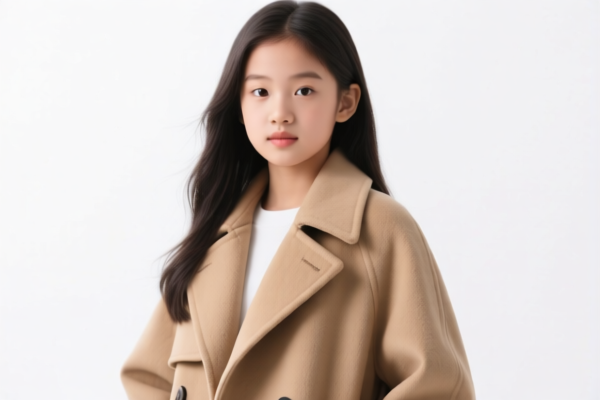
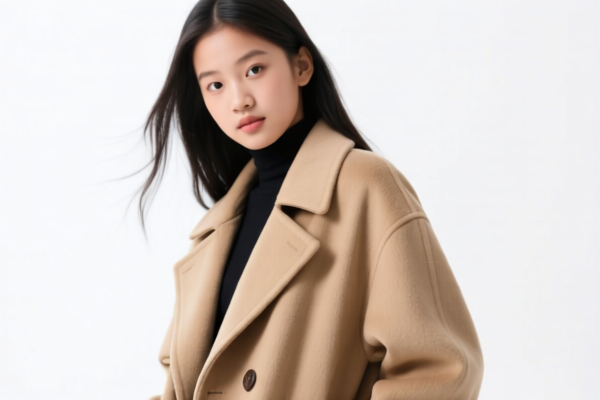
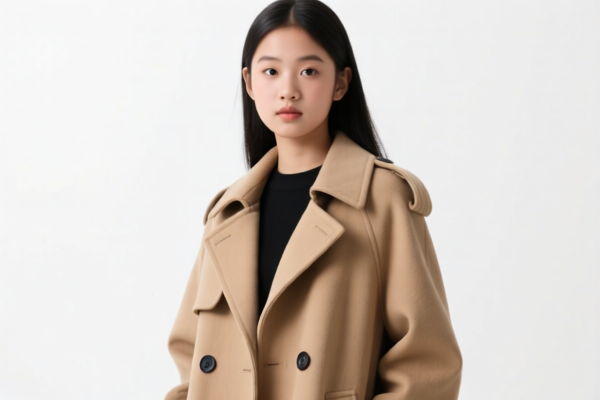
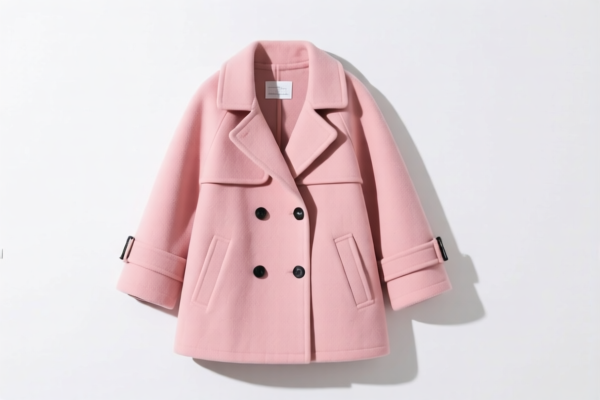
AI Analysis
👗 Girls' Trench Coats (Women's/Children's Outerwear)
🌐 HS Code Reference & Customs Clearance Guide | 2026 Latest Tariff Analysis | Professional Compliance Strategy
📌 1. Product Definition & Classification: Do You Really Understand "Girls' Trench Coats"?
Girls' trench coats are outerwear designed specifically for children (typically under 14 years), featuring windproof and water-resistant characteristics. In international trade, classification depends heavily on gender specification, material composition, and manufacturing method (knitted vs. woven).
Key Distinction Points:
- Gender Specificity: "Girls'" items often fall under Heading 6202 (Women's or Girls' Woven Outerwear) or 6104 (Women's or Girls' Knitted Outerwear), distinct from unisex or boys' items.
- Material: Determines whether it falls under synthetic fibers (Chapter 61/62 subheadings for synthetics) or other textiles (cotton, etc.).
- Manufacturing:
- Woven (非针织/钩编) → Generally Chapter 62
- Knitted (针织/钩编) → Generally Chapter 61
⚠️ Critical Warning:
Misclassifying based on material alone can lead to significant tax discrepancies due to varying base rates and Section 301/IEEPA applicability.
📦 2. HS Code Classification Details (2026 Latest Tariff Authority Mapping)
Based on the provided data, here are the four possible HS Code classifications for "Girls' Trench Coats," categorized by material and structure.
| HS Code | Product Description (Summary) | Material Inference | Manufacturing Type | Total Tax Rate |
|---|---|---|---|---|
| 6202.40.20.10 | Girls' Trench Coat; matched for use and form | Artificial Fiber or Fabric | Woven (Implied by Ch. 62) | 45.2% |
| 6204.33.50.20 | Girls' Trench Coat; matched for use and form | Synthetic Fiber (Inferred) | Woven (Implied by Ch. 62) | 44.8% |
| 6104.33.20.00 | Girls' Trench Coat; matched for form and use | Synthetic Fiber or Fabric | Knitted (Implied by Ch. 61) | 45.7% |
| 6202.30.20.50 | Trench Coat; matched for use and form | Cotton, Polyester, or Other Fabrics | Woven (Implied by Ch. 62) | 26.4% |
🔍 Analysis:
- Headings 6202 & 6204: Refer to Woven outerwear. 6202 is typically for "Women's/Girls' Anoraks, Windbreakers..." while 6204 is for "Suit-Ensembles, Suits, Jackets..." but often used for structured woven coats depending on national subheading definitions.
- Heading 6104: Refers to Knitted outerwear. If the trench coat is made of knitted synthetic fabric, this code applies.
- Material Variance: The tax rate varies significantly based on whether the material is classified as "Artificial," "Synthetic," or "Cotton/Polyester blends" (as seen in 6202.30).
💰 3. 2026 Latest Tariff Rate Breakdown (Including Additional Taxes & Policies)
✅ Applicable Country: United States (US)
✅ Origin: China (CN)
✅ Effective Date: Current (Post-2025 adjustments including Section 301 and IEEPA)
🎯 1. 6202.40.20.10 — Girls' Trench Coat (Artificial Fiber)
| Item | Details |
|---|---|
| Base Tariff | 27.7% |
| Additional Tariff (Section 301) | +7.5% |
| 122 Section Tariff (IEEPA/Specific) | +10.0% |
| Total Tax Rate | 45.2% |
| De Minimis Exemption? | ❌ NO (Deny De Minimis for apparel from CN) |
| Legal Path | HTSUS 6202.40.20.10 → Section 301 Footnote → IEEPA Authority |
📌 Explanation:
- 27.7% Base: High base duty for artificial fiber outerwear for girls.
- 7.5% Add'l: Standard Section 301 tariff on apparel.
- 10% Add'l: Specific "122 Section" tariff (often related to recent executive orders or specific trade remedy actions on textiles/apparel).
- Total 45.2% is a high-cost classification.
🎯 2. 6204.33.50.20 — Girls' Trench Coat (Synthetic Fiber)
| Item | Details |
|---|---|
| Base Tariff | 27.3% |
| Additional Tariff (Section 301) | +7.5% |
| 122 Section Tariff (IEEPA/Specific) | +10.0% |
| Total Tax Rate | 44.8% |
| De Minimis Exemption? | ❌ NO |
| Legal Path | HTSUS 6204.33.50.20 → Section 301 Footnote → IEEPA Authority |
📌 Note:
- Slightly lower base rate (27.3% vs 27.7%) compared to artificial fiber.
- Still subject to the full suite of punitive tariffs.
- Total 44.8% remains prohibitive for low-margin goods.
🎯 3. 6104.33.20.00 — Girls' Trench Coat (Knitted Synthetic)
| Item | Details |
|---|---|
| Base Tariff | 28.2% |
| Additional Tariff (Section 301) | +7.5% |
| 122 Section Tariff (IEEPA/Specific) | +10.0% |
| Total Tax Rate | 45.7% |
| De Minimis Exemption? | ❌ NO |
| Legal Path | HTSUS 6104.33.20.00 → Section 301 Footnote → IEEPA Authority |
📌 Critical Distinction:
- This is the highest tax rate (45.7%).
- Why? Knitted outerwear (Chapter 61) often has higher base duties than woven (Chapter 62) for certain subheadings.
- Action: Verify manufacturing process. If it is knitted, expect the highest duty. If woven, consider switching to Chapter 62 codes if structurally possible.
🎯 4. 6202.30.20.50 — Trench Coat (Cotton/Polyester/Other)
| Item | Details |
|---|---|
| Base Tariff | 8.9% |
| Additional Tariff (Section 301) | +7.5% |
| 122 Section Tariff (IEEPA/Specific) | +10.0% |
| Total Tax Rate | 26.4% |
| De Minimis Exemption? | ❌ NO |
| Legal Path | HTSUS 6202.30.20.50 → Section 301 Footnote → IEEPA Authority |
📌 Strategic Opportunity:
- Significantly Lower Total Tax (26.4%) compared to synthetic/artificial fiber codes.
- Base Tariff is Only 8.9%: This suggests the material is classified as Cotton or a blend that benefits from lower base duties.
- Recommendation: If the product is made of Cotton or specific polyester blends that fit this subheading, this is the most cost-effective classification. Ensure material composition is accurately declared as "Cotton" or qualifying blend to justify this code.
🛠️ 4. Customs Clearance Practical Advice (Avoid Pitfalls)
✅ 1. Preparation Checklist (Non-Negotiable)
| Document | Required | Notes |
|---|---|---|
| ✅ Product Composition Statement | ✔️ | Must specify % of Cotton, Polyester, Nylon, etc. Crucial for distinguishing between 45% vs 26% tax brackets. |
| ✅ Manufacturing Process Info | ✔️ | Confirm: Woven vs. Knitted. This determines Chapter 61 vs 62. |
| ✅ Technical Photo (Full & Detail) | ✔️ | Show fabric texture (to prove woven/knitted), buttons, lining, and labels. |
| ✅ Commercial Invoice | ✔️ | Clearly state "Girls' Trench Coat," not just "Coat." Mislabeling can trigger customs audits. |
| ✅ Packing List | ✔️ | Item weight and dimensions must match HS Code documentation. |
| ✅ Labeling (Care & Content) | ✔️ | US CPSC requires fiber content and country of origin labels on garments. |
✅ 2. Classification Strategy (Key Logic)
🔥 “Material First, Structure Second, Label Exact!”
| Scenario | Correct HS Code | Wrong Practice | Consequence |
|---|---|---|---|
| Knitted Synthetic Coat | 6104.33.20.00 |
Misclassify as Woven (6202) | Penalties for misdeclaration + Higher Duty if caught later? (Actually 45.7% vs 44.8% is close, but structure is key) |
| Artificial Fiber Woven | 6202.40.20.10 |
Claim as Cotton | Base tax jumps from 8.9% to 27.7% → Huge Tax Difference! |
| Cotton/Poly Blend Woven | 6202.30.20.50 |
Claim as 100% Nylon | Wrong code, high risk of audit, back taxes + interest. |
| Unisex Coat | Check "Unisex" Rules | Use Girls' Code | May be classified as Boys' or Unisex, changing the heading entirely (e.g., 6203 for boys/women). |
✅ 3. Special Cases & Optimization
| Situation | Recommendation |
|---|---|
| Optimizing Tax Rate | If the coat can be made with Cotton or qualifies for 6202.30, use it. The savings are ~19% (45.7% → 26.4%). |
| OEM/ODM Goods | Provide customer design sheets to prove "Girls'" specific cut and sizing. Generic items may be reclassified. |
| De Minimis (Section 321) | ⚠️ Apparel from China is generally EXCLUDED from De Minimis exemption. Do not attempt to ship via small packages to avoid duties. Expect full duties at border. |
| 122 Section Tariff | This 10% addition is mandatory for these codes. Ensure your profit margin accounts for this fixed cost. |
🌍 5. Global Market Comparison (2026 Latest)
| Country/Region | Recommended HS Code | Approx. Duty (China Origin) | Certification Requirements | Notes |
|---|---|---|---|---|
| 🇺🇸 USA | 6202.30.20.50 (Best Case) |
26.4% | CPSC (CPC), Flammability | Highest penalties. 6104 is worst (45.7%). |
| 🇪🇺 EU | 6202.42.90 (Typical) |
~12% | CE (General Product Safety) | No Section 301/IEEPA. Lower base duties. |
| 🇨🇦 Canada | 6202.93.90 |
~17.5% | General | MFN rates apply. |
| 🇬🇧 UK | 6202.42.90 |
~12% | General | Post-Brexit rules. |
📌 Conclusion:
- The US market is extremely harsh on Chinese apparel due to Section 301 and IEEPA tariffs.
- Material choice is critical. Switching from "Artificial/Synthetic" to "Cotton/Polyester" codes can save nearly 20% in total duty.
- Knitted goods are the most expensive to classify. Avoid if possible, or ensure accurate reporting.
📌 6. Common Errors & Pitfalls (Blood Lessons)
❌ Error 1: Claiming "Synthetic" for a Cotton Coat
👉 Result: Base tax 8.9% becomes 27.7%+ → Overpayment of ~19%.
❌ Error 2: Misidentifying Knitted as Woven
👉 Result: 6104 (45.7%) vs 6202 (44.8%). While close, structural misclassification leads to customs holds and fines.
❌ Error 3: Ignoring "Girls'" Specificity
👉 Result: If labeled "Girls'" but pattern fits adults, customs may reclassify as Adult Women's, changing HS Code entirely.
✅ Correct Practice:
"Girls' Woven Trench Coat, Cotton/Polyester Blend, Model XYZ, CPSIA Compliant"
🎯 7. Conclusion: Precision Classification Saves Profits!
🎯 Remember the Motto:
🔹 “Material Dictates Base Rate, Section 301 Adds 7.5%, 122 Section Adds 10%!”
🔹 “Cotton Codes Save ~20%, Knitted Codes Cost the Most!”
🔹 “No De Minimis for China Apparel. Plan for Full Duty!”
📌 Pro Tip:
If your current supplier uses "Artificial Fiber" (
6202.40), negotiate for Cotton-blend fabrics (6202.30) to unlock the 26.4% total duty rate. The material cost difference is often offset by the 19% tax savings.
📣 Immediate Action:
📞 Verify Fabric Composition with your factory today.
📄 Request a Pre-Ruling from US CBP if the product is high-volume.
🚀 Optimize Your Supply Chain to leverage the lower tax bracket for Cotton-based trench coats!
✨ Professional Clearance Starts with Precise Classification!
💼 Your Cost is Calculated in Every Thread!
Customer Reviews
About HS Code Classification
The Harmonized System (HS) is an internationally standardized nomenclature developed by the World Customs Organization (WCO) to classify traded products. Over 200 countries use the HS system as the basis for customs tariffs, trade statistics, and import/export regulations.
Each HS code follows a hierarchical structure:
- Chapter (2 digits) — Broad category of goods (e.g., Chapter 84: Machinery and Mechanical Appliances)
- Heading (4 digits) — More specific grouping within the chapter
- Subheading (6 digits) — Internationally standardized breakdown, used by all WCO member countries
- National subdivisions (8-10 digits) — Country-specific extensions for further classification, such as US HTSUS 10-digit codes
Correct HS code classification is essential for smooth customs clearance, accurate duty payment, and compliance with trade regulations. Misclassification can lead to customs delays, overpayment of duties, or penalties.
When importing from CN to US, the applicable tariff rates may include:
- Most-Favored-Nation (MFN) rate — The standard duty rate applied to WTO members
- General rate — Applied to countries without trade agreements
- Trade remedy duties — Additional tariffs such as Section 301 (anti-dumping), Section 232 (national security), or countervailing duties
The information provided on this page is for reference purposes only. For official classification, please consult with your local customs authority or a licensed customs broker.