定制丝绸面料手提包
CN → US| HS Code | Tariff Rate | Origin | Destination | Doc |
|---|---|---|---|---|
| 4202227000 | 42.0% | CN | US | Official Doc |
| 5007906090 | 38.9% | CN | US | Official Doc |
| 4202224010 | 42.4% | CN | US | Official Doc |
| 4202228930 | 52.6% | CN | US | Official Doc |
| 6305900000 | 23.7% | CN | US | Official Doc |
Product Images
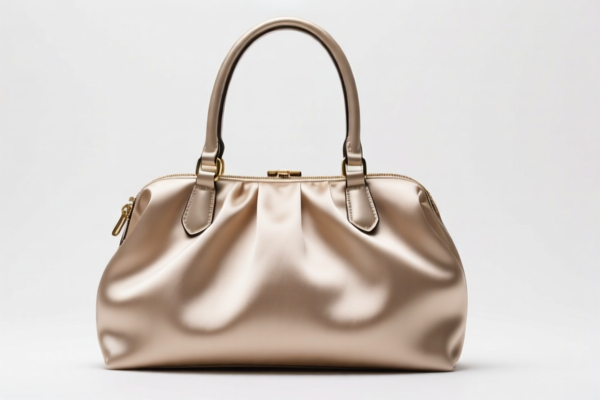
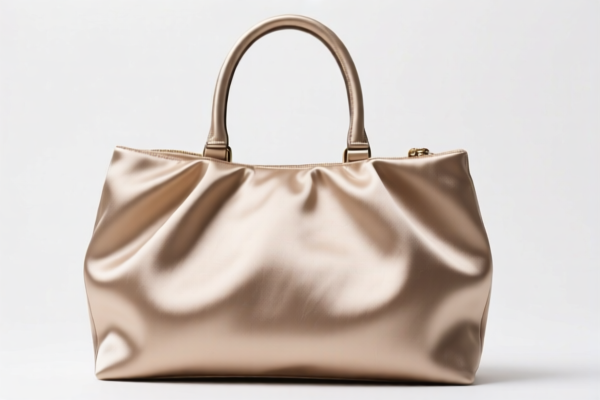
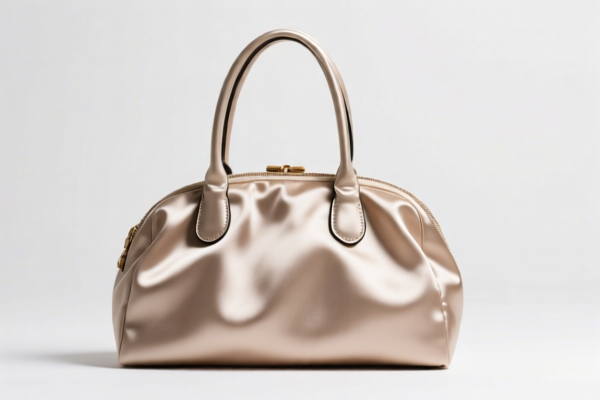

AI Analysis
🧣 Custom Silk Handbags: HS Code Classification & US Customs Clearance Guide (2026)
🌐 HS Code Reference & Clearance Strategy | 2026 Latest Tariff Analysis | Professional Compliance Guide
📌 I. Product Definition & Classification: What Exactly is a "Custom Silk Handbag"?
A Custom Silk Handbag is a luxury or fashion accessory designed for carrying personal items. In international trade, its classification depends heavily on its primary material and functional form.
Key Distinction Points: * Material: Primarily silk (natural fiber) vs. other textiles (cotton, synthetic). * Form: Handheld, shoulder bag, or clutch (Classified under Chapter 42 as Articles of Bed/Luggage). * Customization: "Custom" does not change the HS code but may affect labeling, origin, and value assessment.
⚠️ Critical Classification Logic:
- If the bag's external surface is primarily silk (textile material) → Classified under 4202.22.xxxx (Handbags with outer surface of textile materials).
- If the bag is merely a "piece of silk fabric" intended for bag-making → Classified under 5007.90.xxxx (Woven silk fabric).
- Note: Cotton-based bags can be used as a reference for structural similarity but require specific subheading adjustments.
📦 II. HS Code Classification Details (2026 Latest Tariff Authority Comparison)
Based on the provided data, here are the valid HS Codes for custom silk handbags and similar textile bags:
| HS Code | Product Description | Applicable Scenario | Material Composition |
|---|---|---|---|
| 4202.22.70.00 | Silk Casual Bag (Handbag Form) | Fashion handbags, shoulder bags made of silk | ✅ Silk |
| 5007.90.60.90 | Silk Fabric Bag (Raw Material/半成品) | Silk woven fabric intended for bag production; finished bags where classification focuses on textile content | ✅ Silk (Textile) |
| 4202.22.40.10 | Silk Casual Bag (Textile Surface) | Handbags with outer surface of textile materials (silk), tote style | ✅ Silk (Textile) |
| 4202.22.40.20 | Textile-Surface Handbag (Cotton Reference) | Handbags with outer surface of textile materials, made of cotton; Analogous to Silk for structural classification | ✅ Cotton (Analogous) |
| 4202.22.89.30 | Textile-Surface Handbag (Cotton General) | Outer surface of textile material, made of cotton; Analogous to Silk | ✅ Cotton (Analogous) |
🔍 Key Insight:
- Primary Classification:4202.22.70.00is the most direct match for finished silk handbags.
- Alternative/Analogous: If the bag is made of cotton but structurally identical,4202.22.40.10or4202.22.40.20may be referenced, but silk-specific codes are preferred for accuracy.
- Fabric vs. Bag:5007.90.60.90is for fabric, not finished bags. Misclassifying a finished bag as fabric can lead to audits and penalties.
💰 III. 2026 Latest Tariff Rate Breakdown (Including Additional Duties)
✅ Applicable Country: United States (US)
✅ Country of Origin: China (CN)
✅ Effective Date: November 10, 2025 (and subsequent imports)
🎯 1. 4202.22.70.00 —— Silk Casual Bag (Primary Match)
| Item | Content |
|---|---|
| Base Duty Rate | 7.0% (ad valorem) |
| USITC Additional Duty (Section 301) | +25.0% |
| IEEPA Additional Duty (122 Clause) | +10.0% |
| Total Effective Rate | 42.0% |
| Tax Calculation | CIF Value × 42.0% |
| De Minimis Eligibility | ❌ Not Eligible (Deny De Minimis) |
| Legal Basis Path | IEEPA:9903.01.25 → USITC:4202.22.70.00 → FOOTNOTE:122 |
📌 Explanation:
- 7.0% Base: Standard MFN rate for textile handbags.
- 25% Section 301: Additional tariff on Chinese goods under Trade Act Section 301.
- 10% IEEPA: Additional tariff under International Emergency Economic Powers Act (122 Clause).
- Total 42.0%: High tariff burden. Must be factored into pricing strategy.
🎯 2. 5007.90.60.90 —— Silk Fabric (If misclassified or raw material)
| Item | Content |
|---|---|
| Base Duty Rate | 3.9% |
| USITC Additional Duty (Section 301) | +25.0% |
| IEEPA Additional Duty (122 Clause) | +10.0% |
| Total Effective Rate | 38.9% |
| Tax Calculation | CIF Value × 38.9% |
| De Minimis Eligibility | ❌ Not Eligible |
| Legal Basis Path | IEEPA:9903.01.24 → USITC:5007.90.60.90 → FOOTNOTE:122 |
📌 Note:
- Lower base rate (3.9%) compared to finished bags (7.0%), but still subject to full additional duties.
- Risk: Customs may reject this classification for a finished bag, leading to reclassification and penalties.
🎯 3. 4202.22.40.10 & 4202.22.40.20 —— Textile-Surface Handbags (Silk/Cotton Analogous)
| Item | Content |
|---|---|
| Base Duty Rate | 7.4% |
| USITC Additional Duty (Section 301) | +25.0% |
| IEEPA Additional Duty (122 Clause) | +10.0% |
| Total Effective Rate | 42.4% |
| Tax Calculation | CIF Value × 42.4% |
| De Minimis Eligibility | ❌ Not Eligible |
| Legal Basis Path | IEEPA:9903.01.25 → USITC:4202.22.40.xxxx → FOOTNOTE:122 |
📌 Note:
- Slightly higher base rate (7.4%) due to specific textile subheading.
- Suitable if the bag’s external surface is explicitly defined as "textile material" rather than "silk" specifically.
🎯 4. 4202.22.89.30 —— Cotton Textile Handbag (Analogous Only)
| Item | Content |
|---|---|
| Base Duty Rate | 17.6% |
| USITC Additional Duty (Section 301) | +25.0% |
| IEEPA Additional Duty (122 Clause) | +10.0% |
| Total Effective Rate | 52.6% |
| Tax Calculation | CIF Value × 52.6% |
| De Minimis Eligibility | ❌ Not Eligible |
| Legal Basis Path | IEEPA:9903.01.25 → USITC:4202.22.89.30 → FOOTNOTE:122 |
📌 Warning:
- Highest Total Rate (52.6%) due to high base duty (17.6%).
- Do NOT use for silk bags. This is for cotton bags and serves only as an analogous reference for structure. Misclassification will result in severe penalties.
🛠️ IV. Practical Clearance Advice (Avoiding Pitfalls)
✅ 1. Documentation Checklist (Essential)
| Document | Required? | Description |
|---|---|---|
| ✅ Product Specification Sheet | ✔️ | Details material (100% Silk), dimensions, hardware, lining. |
| ✅ Material Composition Certificate | ✔️ | Must confirm Silk content for accurate HS code 4202.22.70.00. |
| ✅ Commercial Invoice | ✔️ | Clearly state "Silk Handbag" and correct HS Code. |
| ✅ Packing List | ✔️ | Itemized list with weights and dimensions. |
| ✅ Brand Authorization (if applicable) | ✔️ | To avoid counterfeit claims. |
| ✅ Customs Broker Declaration | ✔️ | Professional entry filed by licensed broker. |
✅ 2. Classification Strategy (Key Rules)
🔥 "Silk Defined, Base Rate 7%, Add 35% Total, Never Misclassify!"
| Scenario | Correct Classification | Incorrect Action | Consequence |
|---|---|---|---|
| Finished Silk Handbag | 4202.22.70.00 (42.0%) |
Misclassify as 5007.90.60.90 |
Rejection, penalty, 38.9% but risk of audit |
| Silk Bag with Cotton Lining | 4202.22.70.00 |
Split shipment | Delay, additional duties on lining |
| Cotton Bag (Analogous) | 4202.22.40.10 (42.4%) |
Claim Silk | Fraudulent misclassification |
| Raw Silk Fabric | 5007.90.60.90 (38.9%) |
Declare as Bag | Underpayment of duty, penalty |
✅ 3. Special Handling Tips
| Situation | Recommendation |
|---|---|
| Custom Embroidery/Logo | Ensure embroidery does not change the primary material classification. Still 4202.22.70.00. |
| Mixed Materials | If exterior is silk but trim is leather, declare based on external surface (silk). |
| Samples vs. Bulk | Both subject to same duties. No de minimis exemption for China-origin goods. |
| Value Declaration | High-value custom bags may attract scrutiny. Ensure invoice reflects arm’s length transaction. |
🌍 V. Global Market Comparison (2026)
| Country/Region | Recommended HS Code | Total Duty (China Origin) | Certification | Notes |
|---|---|---|---|---|
| 🇺🇸 USA | 4202.22.70.00 |
42.0% | None Specific | High duty due to 301 + IEEPA |
| 🇨🇳 China | 4202.22.70.00 |
5-10% (Variable) | CCC (if applicable) | Lower duty, domestic consumption |
| 🇪🇺 EU | 4202.22.70.00 |
12% (Standard) | CE (if functional) | No 301/IEEPA equivalent |
| 🇬🇧 UK | 4202.22.70.00 |
12% | UKCA | Post-Brexit alignment with EU |
| 🇦🇺 Australia | 4202.22.70.00 |
5% | GME (if applicable) | No major additional duties |
📌 Conclusion:
- USA has the highest duty burden (42.0%) for silk handbags from China.
- EU and Australia offer more favorable rates for similar goods.
- Strategy: Consider supply chain diversification (e.g., manufacturing in Vietnam or Mexico) to avoid US additional duties.
📌 VI. Common Mistakes & Pitfalls (Lessons Learned)
❌ Mistake 1: Classifying finished silk bags as "Silk Fabric" (5007.90.60.90)
👉 Consequence: Lower base rate (3.9%) seems attractive, but Customs may reclassify, leading to back taxes + penalties.
❌ Mistake 2: Using Cotton Bag HS Codes for Silk Bags
👉 Consequence: If declared as 4202.22.89.30 (52.6%), you overpay; if declared as 4202.22.40.10 (42.4%) for silk, it’s acceptable but not precise.
❌ Mistake 3: Ignoring the 122 Clause (IEEPA 10%)
👉 Consequence: Underestimating total duty by 10%, leading to budget shortfalls and cash flow issues.
❌ Mistake 4: Declaring "Custom Bag" without Material Breakdown
👉 Consequence: Customs may assign a higher default rate or request additional documentation, causing delays.
✅ Correct Practice:
"Silk Handbag, Outer Surface: 100% Silk, Lining: Polyester, Hardware: Metal, HS Code: 4202.22.70.00, Duty: 42.0%"
🎯 VII. Conclusion: Precision in Classification, Profit in Clearance
🎯 Remember the Formula:
🔹 Silk Bag = 4202.22.70.00
🔹 Base 7% + 301 25% + IEEPA 10% = 42.0%
🔹 No De Minimis for China
🔹 Customization Doesn’t Change HS Code, But Material Does
📌 Pro Tip:
If your silk handbags are originating from Vietnam, Cambodia, or Mexico, you may qualify for exemptions from IEEPA/301 duties, reducing total duty to 0%~10%.
Action: Apply for Advance Ruling before shipment to confirm classification and duty liability.
📣 Immediate Action:
📞 Consult a Licensed Customs Broker
📄 Prepare Material Certificates & Product Photos
🚀 Optimize Supply Chain to Reduce Duty Burden
✨ Professional Clearance Starts with Accurate Classification!
💼 Your Profit Margin Depends on Your Duty Strategy!
Customer Reviews
About HS Code Classification
The Harmonized System (HS) is an internationally standardized nomenclature developed by the World Customs Organization (WCO) to classify traded products. Over 200 countries use the HS system as the basis for customs tariffs, trade statistics, and import/export regulations.
Each HS code follows a hierarchical structure:
- Chapter (2 digits) — Broad category of goods (e.g., Chapter 84: Machinery and Mechanical Appliances)
- Heading (4 digits) — More specific grouping within the chapter
- Subheading (6 digits) — Internationally standardized breakdown, used by all WCO member countries
- National subdivisions (8-10 digits) — Country-specific extensions for further classification, such as US HTSUS 10-digit codes
Correct HS code classification is essential for smooth customs clearance, accurate duty payment, and compliance with trade regulations. Misclassification can lead to customs delays, overpayment of duties, or penalties.
When importing from CN to US, the applicable tariff rates may include:
- Most-Favored-Nation (MFN) rate — The standard duty rate applied to WTO members
- General rate — Applied to countries without trade agreements
- Trade remedy duties — Additional tariffs such as Section 301 (anti-dumping), Section 232 (national security), or countervailing duties
The information provided on this page is for reference purposes only. For official classification, please consult with your local customs authority or a licensed customs broker.