定制木制皮划艇桨
CN → US| HS Code | Tariff Rate | Origin | Destination | Doc |
|---|---|---|---|---|
| 4417008010 | 40.1% | CN | US | Official Doc |
| 4417008090 | 40.1% | CN | US | Official Doc |
| 9506290080 | 17.5% | CN | US | Official Doc |
| 9506996080 | 21.5% | CN | US | Official Doc |
Product Images
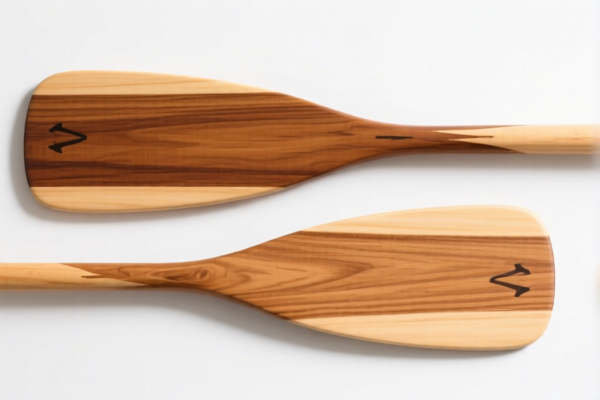
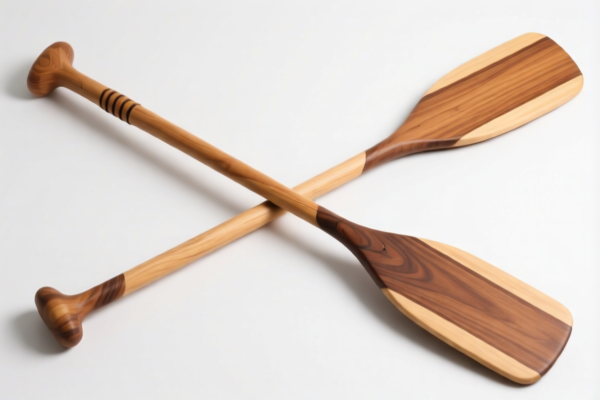
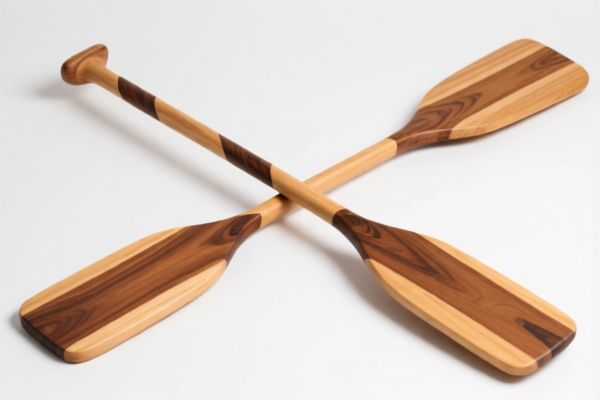
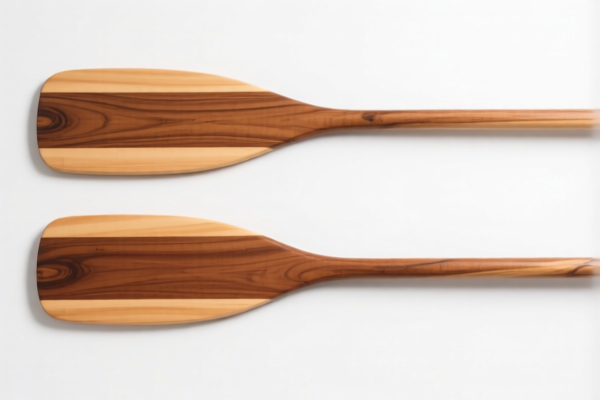
AI Analysis
🛶 Custom Wooden Kayak Paddles: The Ultimate Classification & Duty Breakdown Guide (2026)
🌐 HS Code Reference & Customs Clearance Guide | Latest Tariff Analysis | Strategic Clearance Strategy
📌 I. Product Definition & Classification: What Exactly is a "Custom Wooden Kayak Paddle"?
A custom wooden kayak paddle is not just a piece of wood; it is a specialized piece of sporting equipment or a tool, depending on its specific design and intended use classification in international trade. In the context of customs, it falls primarily under Chapter 95 (Toys, Games, and Sports Equipment) or Chapter 44 (Wood and Articles of Wood).
Key Distinctions: * Sporting Equipment (Chapter 95): If the paddle is explicitly designed for recreational or competitive kayaking/canoeing. * Wooden Tool/Implement (Chapter 44): If the classification leans towards it being a manual tool or implement due to its simple construction without complex sporting attachments.
⚠️ Critical Warning:
- Misclassification can lead to massive duty discrepancies (from 17.5% to 40.1% or even higher with additional levies).
- The presence of "Custom" implies higher value and potentially stricter scrutiny on origin and material composition.
📦 II. HS Code Classification Matrix (Based on Provided Data)
Based on the provided data, there are 4 unique HS Codes (with one repeated) applicable to custom wooden kayak paddles. Below is the detailed breakdown.
| HS Code | Summary Description | Material | Total Tax Rate | Tax Breakdown |
|---|---|---|---|---|
| 9506.29.00.80 | Water sports equipment parts/accessories; used for kayak paddles. | Wood | 17.5% | Base: 0.0% Additional: 7.5% Section 122: 10% |
| 9506.99.60.80 | Sports equipment; meets sports apparatus classification. | Wood | 21.5% | Base: 4.0% Additional: 7.5% Section 122: 10% Note: Steel/Al/Cu items have +50% |
| 4417.00.80.10 | Wooden tools category; shape is paddle. | Wood | 40.1% | Base: 5.1% Additional: 25.0% Section 122: 10% |
| 4417.00.80.90 | Other wooden tools/instruments; shape is paddle. | Wood | 40.1% | Base: 5.1% Additional: 25.0% Section 122: 10% |
🔍 Key Observation:
- 9506.29.00.80 is the most favorable rate at 17.5%.
- 4417.00.80.xx carries the highest burden at 40.1%.
- The difference is driven by whether the item is classified as "Sports Equipment" (Ch. 95) or "Wooden Tools" (Ch. 44).
💰 III. Detailed Tariff Structure & Legal Basis (2026 Analysis)
✅ Applicable Country: United States (US)
✅ Origin: China (CN) (Implied by Section 122 and Additional Tariffs)
✅ Effective Date: Current 2026 Regulations
🎯 1. Category A: Sports Equipment (Chapter 95)
HS Codes: 9506.29.00.80 & 9506.99.60.80
A.1. 9506.29.00.80 – Specific Water Sports Accessory
- Base Tariff: 0.0%
- Why? Specific provision for certain water sports equipment often enjoys lower base rates.
- Additional Tariff (Trade War/Section 301 equivalent): +7.5%
- Reason: Generic additional levy on Chinese goods.
- Section 122 Tariff: +10.0%
- Reason: Specific punitive tariff on Chinese imports.
- ✅ TOTAL RATE: 17.5%
A.2. 9506.99.60.80 – Other Sports Equipment
- Base Tariff: 4.0%
- Why? General sports equipment category has a base duty.
- Additional Tariff: +7.5%
- Section 122 Tariff: +10.0%
- Total Rate: 21.5%
- ⚠️ Special Note: The data mentions "Steel, Aluminum, Copper products add 50%." Since the paddle is Wood, this 50% does NOT apply, but the base rate is still higher than
9506.29.00.80.
🎯 2. Category B: Wooden Tools/Implements (Chapter 44)
HS Codes: 4417.00.80.10 & 4417.00.80.90
B.1. 4417.00.80.10 / 4417.00.80.90
- Base Tariff: 5.1%
- Why? Wood articles/tools generally have a standard base duty.
- Additional Tariff: +25.0%
- Reason: This is a significantly higher "Additional Tariff" compared to the sports category (7.5%).
- Section 122 Tariff: +10.0%
- ✅ TOTAL RATE: 40.1%
📌 Explanation:
- Classifying a kayak paddle as a "Tool" (Ch. 44) instead of "Sports Equipment" (Ch. 95) results in a 22.6% to 18.6% higher total tax burden.
- This is a critical cost driver. Customs officers may classify it as a tool if the "sporting" features are not explicitly declared or if the design is rudimentary.
🛠️ IV. Customs Clearance Practical Advice (Avoid Pitfalls)
✅ 1. Documentation Checklist (Must-Haves)
| Document | Required? | Description |
|---|---|---|
| Commercial Invoice | ✅ | Must clearly state "Custom Wooden Kayak Paddle" and HS Code. |
| Product Description | ✅ | Detailed: "Handcrafted wooden paddle for recreational kayaking, model XYZ." |
| Material Composition | ✅ | Confirm 100% Wood (or specify wood types like ash, maple). Avoid mentioning metal fittings prominently if possible. |
| Usage Declaration | ✅ | Explicitly state: "Used for Sports/Recreation (Kayaking)." DO NOT write "For paddling water" or "Tool." |
| Photos | ✅ | High-res images showing the product shape, brand, and any sports-related branding. |
| Origin Certificate | ✅ | To prove Country of Origin (China). |
✅ 2. Classification Strategy: How to Fight for 17.5%
🎯 Goal: Classify under 9506.29.00.80 (17.5%) instead of 4417 (40.1%).
| Strategy | Action | Why It Works |
|---|---|---|
| Naming | Use "Kayak Paddle" not "Wooden Oar" or "Wooden Implement." | "Kayak Paddle" links directly to Chapter 95 (Sports). |
| Marketing | Market as "Sporting Goods" or "Water Sports Equipment." | Aligns with HS Note 1 to Chapter 95. |
| Packaging | Include instruction manuals for kayaking, safety gear, or sports branding. | Proves sporting intent. |
| Avoid | Do NOT classify as "Tool," "Handle," or "Stick." | These terms trigger Chapter 44 (Tools/Wood) classification. |
🔥 Pro Tip:
If the paddle has metal ferrules (connectors) or adjustable blades, ensure they are minor components. If the main value is wood, it supports Ch. 95 or Ch. 44. If metal parts dominate, risk of Ch. 73/76 increases, but data doesn't show those. Stick to Wood.
✅ 3. Special Scenarios
| Scenario | Risk | Mitigation |
|---|---|---|
| Paddle with Metal Fittings | Could be viewed as "Mixed Material." | Ensure wood is the principal material. Declare "Wooden Paddle with minor metal fittings." |
| OEM/White Label | Risk of misclassification by customs broker. | Provide clear specs showing it's for sports use. |
| Sample vs. Bulk | Samples may be duty-free if value < $800 (de minimis). | For values > $800, full duty applies. Check if de minimis applies. |
🌍 V. Market Comparison & Cost Impact
| Market | Recommended HS | Total Tax | Notes |
|---|---|---|---|
| 🇺🇸 USA (China Origin) | 9506.29.00.80 |
17.5% | Best option. Avoid 4417 (40.1%). |
| 🇺🇸 USA (China Origin) | 4417.00.80.10 |
40.1% | High risk. Avoid unless no sports classification is possible. |
| 🇨🇳 China (Import) | N/A | Data Not Provided | Focus is on US Export/Import duties. |
| 🇪🇺 EU | N/A | Data Not Provided | EU duties may vary; check local rules. |
📌 Conclusion for USA:
- Savings Potential: By correctly classifying as9506.29.00.80(17.5%) instead of4417.00.80(40.1%), you save 22.6% of the declared value in taxes.
- Example: On a $10,000 shipment:
- Wrong Code (4417): $4,010 Tax
- Right Code (9506): $1,750 Tax
- Savings: $2,260!
📌 VI. Common Mistakes & Pitfalls (Learn from Others)
❌ Mistake 1: Labeling as "Wooden Stick" or "Tool"
👉 Consequence: Customs assigns HS 4417 → 40.1% Tax → Massive cost increase.
❌ Mistake 2: Ignoring Section 122 (10%)
👉 Consequence: Underpaying taxes → Penalties, audits, and back-taxes.
❌ Mistake 3: Vague Description "Wooden Paddle"
👉 Consequence: Customs may guess the code. Always specify "Kayak/Canoe Sports Paddle."
✅ Correct Declaration:
"Custom Wooden Kayak Paddle for Sports/Recreation, 100% Wood Construction, Model XYZ, Used in Water Sports."
🎯 VII. Conclusion: Maximize Profit, Minimize Duty
🎯 Remember the Golden Rule:
🔹 "Sports First, Wood Second: 17.5% beats 40.1%!"
🔹 "Classify as Sports Equipment (9506), not as Wood Tool (4417)."
📌 Action Items:
1. Confirm HS Code: Ensure your broker uses 9506.29.00.80.
2. Review Documentation: Update invoices to emphasize "Sports/Kayaking" usage.
3. Audit Samples: If you have metal parts, ensure they don't change the essential character.
4. Consult Expert: If unsure, request a Binding Ruling from US Customs.
📣 Ready to Ship?
📞 Engage a licensed customs broker today.
🚀 Optimize your supply chain with precise HS coding.
💰 Keep your margins healthy and your cargo moving!
✨ Smart Classification Saves Money!
💼 Every percentage point matters in international trade.
Customer Reviews
About HS Code Classification
The Harmonized System (HS) is an internationally standardized nomenclature developed by the World Customs Organization (WCO) to classify traded products. Over 200 countries use the HS system as the basis for customs tariffs, trade statistics, and import/export regulations.
Each HS code follows a hierarchical structure:
- Chapter (2 digits) — Broad category of goods (e.g., Chapter 84: Machinery and Mechanical Appliances)
- Heading (4 digits) — More specific grouping within the chapter
- Subheading (6 digits) — Internationally standardized breakdown, used by all WCO member countries
- National subdivisions (8-10 digits) — Country-specific extensions for further classification, such as US HTSUS 10-digit codes
Correct HS code classification is essential for smooth customs clearance, accurate duty payment, and compliance with trade regulations. Misclassification can lead to customs delays, overpayment of duties, or penalties.
When importing from CN to US, the applicable tariff rates may include:
- Most-Favored-Nation (MFN) rate — The standard duty rate applied to WTO members
- General rate — Applied to countries without trade agreements
- Trade remedy duties — Additional tariffs such as Section 301 (anti-dumping), Section 232 (national security), or countervailing duties
The information provided on this page is for reference purposes only. For official classification, please consult with your local customs authority or a licensed customs broker.