实验室塑料校准管
CN → US| HS Code | Tariff Rate | Origin | Destination | Doc |
|---|---|---|---|---|
| 9017900160 | 0.0% | CN | US | Official Doc |
| 3926909910 | 22.8% | CN | US | Official Doc |
| 9017800000 | 40.3% | CN | US | Official Doc |
Product Images
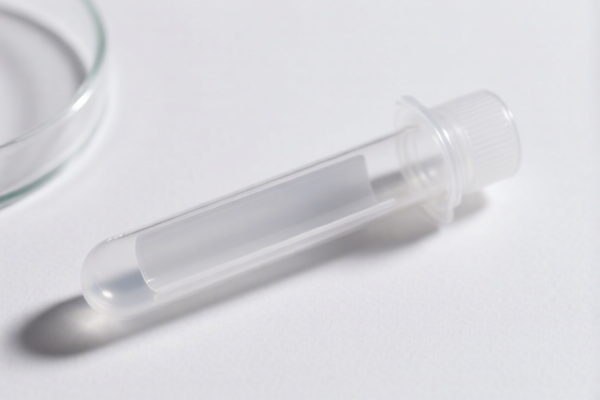
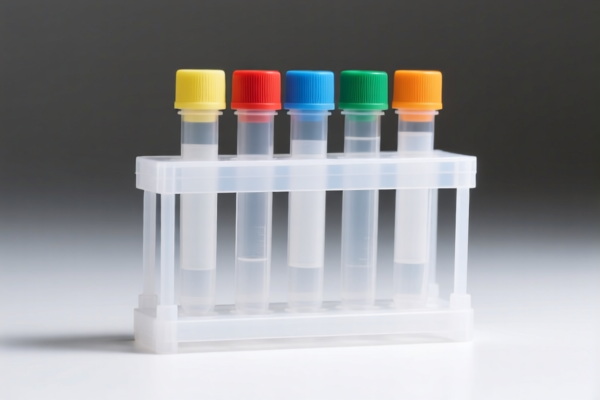
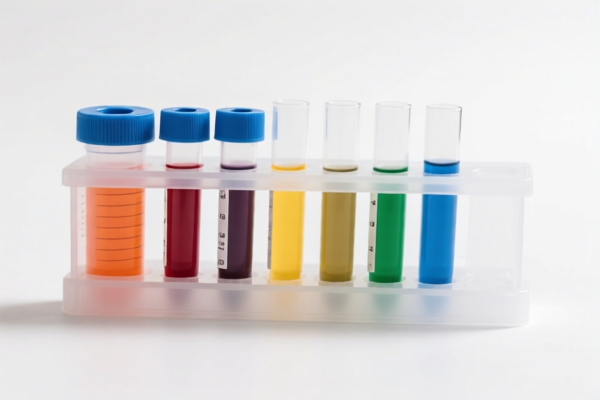
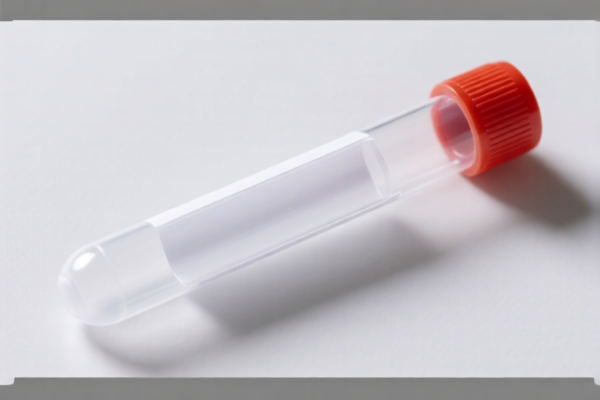
AI Analysis
🧪 Laboratory Plastic Calibration Tube – HS Code & Tariff Guide 2026 | Full Customs Compliance Breakdown
🌐 HS Code Reference & Customs Clearance Strategy | 2026 Updated Tariff Rules | Professional Importer’s Toolkit
📌 One: Product Definition & Classification – What Exactly Is a "Laboratory Plastic Calibration Tube"?
A laboratory plastic calibration tube is a precision measurement tool made from plastic, designed specifically for calibration purposes in scientific, medical, or industrial laboratories. It is not a simple container — it is a measuring instrument with defined tolerances, used to ensure accuracy in liquid volume, flow rate, or pressure measurements.
⚠️ Key Differentiator: - If the tube is used solely for holding liquid and has no calibrated markings or precision dimensions → may be treated as a general labware (e.g., 3926.90.99.10). - If it is engineered with calibrated graduations, precise dimensions, and used for calibration → classified as a measuring instrument (e.g., 9017.80.00.00 or 9017.90.01.60).
📦 Two: HS Code Classification Breakdown (2026 Official Tariff Matrix)
| HS Code | Product Description | Purpose & Use Case | Material | Attached to Measuring Instrument? |
|---|---|---|---|---|
9017.80.00.00 |
Laboratory measurement/calibration tools, plastic, not elsewhere specified | Used for precise calibration of volume, flow, or pressure in labs | Plastic | ❌ No |
3926.90.99.10 |
Plastic articles, not elsewhere specified, for laboratory calibration use | Plastic components with shape and function aligned with calibration needs | Plastic | ❌ No |
9017.90.01.60 |
Accessories for measuring instruments, plastic, for calibration use | Part of a larger measuring system (e.g., tube attached to a sensor or gauge) | Plastic | ✅ Yes |
🔍 Critical Insight:
-9017.80.00.00applies to standalone calibration tools (e.g., a calibrated plastic tube used independently). -3926.90.99.10applies when the tube is plastic and used for calibration, but not classified as a full instrument. -9017.90.01.60applies only if the tube is a component of a larger measuring device (e.g., part of a flow meter or pressure gauge system).
💰 Three: 2026 Updated Tariff Breakdown (US Import Rules – China Origin)
✅ Target Country: United States (US)
✅ Origin: China (CN)
✅ Effective Date: November 10, 2025 (inclusive)
🎯 1. 9017.80.00.00 – Laboratory Calibration Tool (Plastic), Standalone Instrument
| Item | Detail |
|---|---|
| Base Duty Rate | 5.3% (ad valorem) |
| Section 301 (USITC) Additional Duty | +25.0% |
| Section 122 (IEEPA) Emergency Tariff | +10.0% |
| Total Effective Tariff | 40.3% |
| Tax Calculation | CIF Value × 40.3% |
| De Minimis Threshold | ❌ Not applicable (denied) |
| Legal Basis Path | IEEPA:9903.01.25 → IEEPA:9903.01.24 → USITC:9017.80.00.00 → FOOTNOTE:9903.88.01 |
📌 Explanation:
- 5.3% = Standard U.S. tariff for this category. - +25% = U.S. Trade Representative (USTR) Section 301 tariff on Chinese goods. - +10% = International Emergency Economic Powers Act (IEEPA) tariff on products from China/Hong Kong. - Total: 40.3% — one of the highest tariff rates for lab equipment.
🎯 2. 3926.90.99.10 – Plastic Lab Calibration Item (Not a Full Instrument)
| Item | Detail |
|---|---|
| Base Duty Rate | 5.3% |
| Section 301 (USITC) Additional Duty | +7.5% |
| Section 122 (IEEPA) Emergency Tariff | +10.0% |
| Total Effective Tariff | 22.8% |
| Tax Calculation | CIF Value × 22.8% |
| De Minimis Threshold | ❌ Not applicable |
| Legal Basis Path | IEEPA:9903.01.25 → IEEPA:9903.01.24 → USITC:3926.90.99.10 → FOOTNOTE:9903.88.01 |
📌 Explanation:
- Lower than9017.80.00.00because not classified as a measuring instrument. - +7.5% instead of +25% under Section 301 — reflects lower strategic risk. - Still subject to IEEPA 10% due to China origin.
🎯 3. 9017.90.01.60 – Accessory for Measuring Instruments (Plastic Calibration Tube)
| Item | Detail |
|---|---|
| Base Duty Rate | The rate applicable to the article of which it is a part or accessory (i.e., same as the main instrument) |
| Section 301 (USITC) Additional Duty | +25.0% |
| Section 122 (IEEPA) Emergency Tariff | +10.0% |
| Total Effective Tariff | "Rate of the main instrument" + 35.0% |
| Tax Calculation | (CIF Value of Main Instrument) × (Base Rate + 25% + 10%) |
| De Minimis Threshold | ❌ Not applicable |
| Legal Basis Path | IEEPA:9903.01.25 → IEEPA:9903.01.24 → USITC:9017.90.01.60 → FOOTNOTE:9903.88.01 |
📌 Critical Explanation:
- This is not a standalone rate — it inherits the tariff of the primary measuring instrument it belongs to. - Example: If the main instrument is a flow meter with 15% base duty, then: - Total tariff = 15% + 25% + 10% = 50% - If the main instrument is exempt from Section 301, the accessory still gets +25% +10% = 35%. - Always verify the main device’s HS Code and tariff before declaring the accessory.
🛠️ Four: Customs Clearance Best Practices (Pro Tips to Avoid Penalties)
✅ 1. Required Documentation (Must-Have Checklist)
| Document | Required? | Purpose |
|---|---|---|
| ✅ Product Specification Sheet | ✔️ | Shows calibration accuracy, material, dimensions, usage |
| ✅ Calibration Certificate (ISO 17025 or NIST) | ✔️ | Proves it’s a calibration tool, not just a tube |
| ✅ Product Photos (with markings) | ✔️ | Clear view of graduations, model, brand |
| ✅ Circuit/Assembly Diagram (if part of a system) | ✔️ | Proves it’s an accessory |
| ✅ Commercial Invoice | ✔️ | Must state: "Plastic Calibration Tube for Laboratory Use" |
| ✅ Certificate of Origin (CO) | ✔️ | Essential for tariff eligibility |
| ✅ Packing List | ✔️ | Shows if tube is sold separately or with other instruments |
✅ 2.申报技巧 (Declaration Tips – "The 3 Rules of Accurate HS Code")
🔥 "If it measures, it’s an instrument. If it’s part of a system, it follows the master. If it’s just plastic, it’s a part."
| Scenario | Correct HS Code | Common Mistake |
|---|---|---|
| Standalone calibrated plastic tube (e.g., for volume) | 9017.80.00.00 |
Misreported as 3926.90.99.10 → higher tariff risk |
| Plastic tube used in calibration, but not standalone | 3926.90.99.10 |
Over-classified as instrument → 40.3% vs 22.8% |
| Tube is a component of a flow meter or gauge | 9017.90.01.60 |
Reported as standalone → missing 35% surcharge |
| Tube sold with a calibration kit | Declare as kit or separately with proper code | Splitting → higher risk of misclassification |
✅ 3. Special Cases & Risk Mitigation
| Situation | Recommended Action |
|---|---|
| Custom-designed calibration tube | Submit engineering drawings + calibration report |
| Used in medical devices (e.g., infusion pumps) | Apply for "medical device" classification — may reduce tariff |
| Sold with calibration software | Declare as "system" — may change HS Code and duty |
| Re-imported after repair | Provide repair invoice — may qualify for duty refund |
| Low-value shipment (<$800) | ❌ No de minimis benefit — still taxed at full rate |
🌍 Five: Global Market Comparison (2026 Tariff Snapshot)
| Country | Recommended HS Code | Base Tariff | Additional Duties | Notes |
|---|---|---|---|---|
| 🇺🇸 USA | 9017.80.00.00 |
5.3% | +25% +10% → 40.3% | No de minimis |
| 🇨🇳 China | 9017.80.00.00 |
5% | None | No extra tariffs |
| 🇪🇺 EU | 9017.80.00.00 |
0% (if CE) | None | No extra tariffs |
| 🇦🇺 Australia | 9017.80.00.00 |
5% | None | No extra tariffs |
| 🇯🇵 Japan | 9017.80.00.00 |
0% | None | No extra tariffs |
📌 Key Insight:
- The U.S. is the only market with such high附加 tariffs on lab calibration tools. - China-origin products face the highest risk — 40.3% for standalone instruments. - Vietnam/Mexico/Thailand origin may qualify for IEEPA exemption — 0% tariff.
📌 Six: Common Mistakes & Costly Pitfalls (Learn from Others’ Errors)
❌ Mistake 1: Declaring a calibrated tube as 3926.90.99.10 when it’s a standalone measuring tool
👉 Result: Under-tariff → $15K+ in back duties + penalties
❌ Mistake 2: Reporting a tube as 9017.80.00.00 when it’s only a part of a flow meter
👉 Result: Over-tariff → paying 40.3% instead of 22.8%
❌ Mistake 3: Not providing calibration certificate
👉 Result: Customs treats it as general plasticware → no tariff reduction, possible delay
❌ Mistake 4: Splitting a calibration kit into parts
👉 Result: Each part taxed at 89.5% → Total tax > 268%
✅ Correct Declaration Example:
“Plastic Calibration Tube, 100 mL, Graduated, ±0.5% Tolerance, for Laboratory Use, Model XYZ, NIST-Traceable Calibration Certificate Attached”
🎯 Seven: Final Verdict – Win the Tariff Game with Smart Classification
🎯 Remember the Golden Rules:
🔹 "If it measures, it’s an instrument. If it’s part of a system, it follows the master. If it’s just plastic, it’s a part — but don’t forget the 35%!"
🔹 "HS Code determines tariff. One wrong code = 25% extra cost. One wrong classification = $50K in penalties."
📌 Pro Tip:
✅ Apply for an Advance Ruling (Pre-Clearance) from U.S. Customs before shipment.
✅ Use a U.S.-based customs broker with lab equipment expertise.
✅ Change origin to Vietnam/Mexico if possible — zero IEEPA/Section 301 tariffs.
📣 Act Now!
📞 Contact a specialized customs broker + Submit product specs + Request HS Code pre-ruling
🚀 Avoid delays, penalties, and massive tax bills — get your lab calibration tubes cleared right the first time!
✨ Precision Starts with Correct Classification
💼 Your R&D investment deserves a smooth, low-cost import journey!
Customer Reviews
About HS Code Classification
The Harmonized System (HS) is an internationally standardized nomenclature developed by the World Customs Organization (WCO) to classify traded products. Over 200 countries use the HS system as the basis for customs tariffs, trade statistics, and import/export regulations.
Each HS code follows a hierarchical structure:
- Chapter (2 digits) — Broad category of goods (e.g., Chapter 84: Machinery and Mechanical Appliances)
- Heading (4 digits) — More specific grouping within the chapter
- Subheading (6 digits) — Internationally standardized breakdown, used by all WCO member countries
- National subdivisions (8-10 digits) — Country-specific extensions for further classification, such as US HTSUS 10-digit codes
Correct HS code classification is essential for smooth customs clearance, accurate duty payment, and compliance with trade regulations. Misclassification can lead to customs delays, overpayment of duties, or penalties.
When importing from CN to US, the applicable tariff rates may include:
- Most-Favored-Nation (MFN) rate — The standard duty rate applied to WTO members
- General rate — Applied to countries without trade agreements
- Trade remedy duties — Additional tariffs such as Section 301 (anti-dumping), Section 232 (national security), or countervailing duties
The information provided on this page is for reference purposes only. For official classification, please consult with your local customs authority or a licensed customs broker.