家具用粗糙杨木
CN → US| HS Code | Tariff Rate | Origin | Destination | Doc |
|---|---|---|---|---|
| 4407970079 | 35.0% | CN | US | Official Doc |
| 4409102000 | 10.0% | CN | US | Official Doc |
| 4418919105 | 38.2% | CN | US | Official Doc |
| 4409292660 | 35.0% | CN | US | Official Doc |
| 4418999105 | 38.2% | CN | US | Official Doc |
Product Images
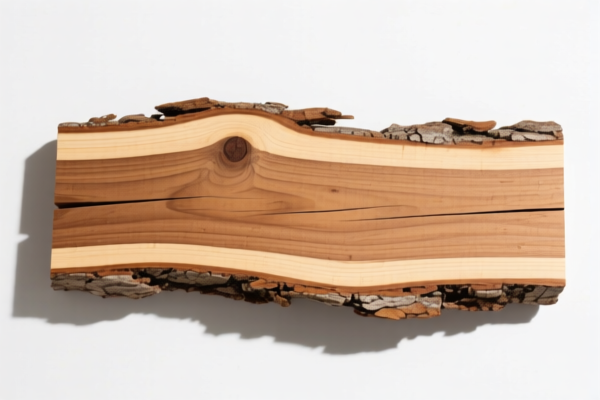
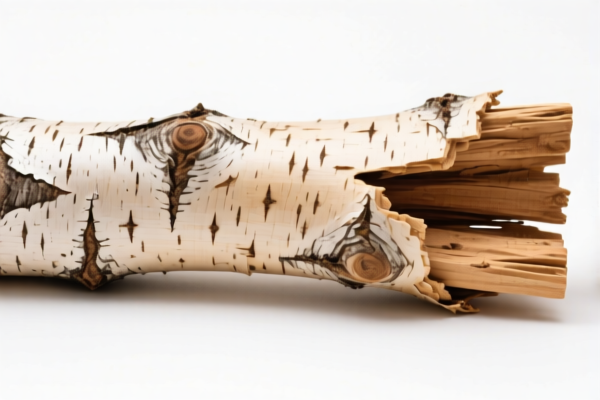
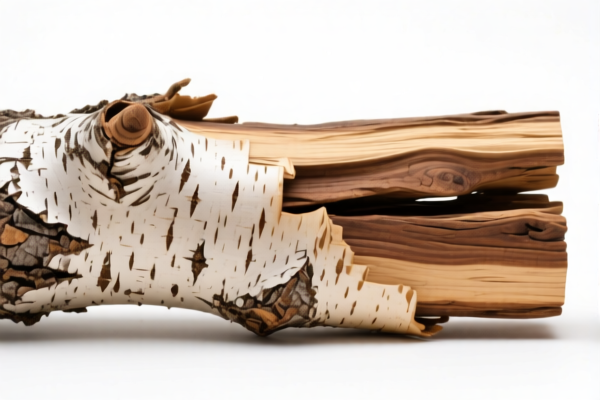
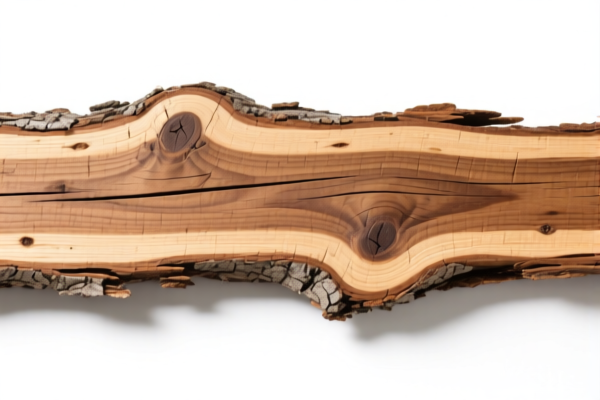
AI Analysis
🌲 Rough Poplar Wood for Furniture (用于家具的粗糙杨木)
🌐 HS Code Reference & Customs Clearance Guide | 2026 Latest Tariff Analysis | Professional Clearance Strategy
📌 I. Product Definition & Classification: What is "Rough Poplar Wood"?
Rough Poplar Wood for furniture refers to timber that has undergone primary processing (such as sawing or planing longitudinally) but has not yet been shaped into finished furniture parts or floorboards. In international trade, the classification of this product depends heavily on its specific form (rough sawn vs. molded/profiled) and specific use (general furniture vs. flooring).
⚠️ Key Distinction Point:
- If the wood is simply roughly sawn longitudinally (straight cuts, unprofiled) → It falls under Chapter 44 Heading 4407.
- If the wood is shaped, molded, or profiled (even if still considered "rough" in some contexts, but intended for flooring/laminate) → It falls under Chapter 44 Heading 4409 or 4418.
- Poplar is a broad-leaved (non-coniferous) wood, which affects the specific HS code suffix.
📦 II. HS Code Classification Details (2026 Latest Tariff Authority Cross-Reference)
Based on the provided data, here are the specific HS Codes for "Rough Poplar Wood for Flooring/Furniture":
| HS Code | Product Description | Application Scenario | Tax Rate (Total) | Key Tax Components |
|---|---|---|---|---|
4407.97.00.79 |
Rough Poplar Wood, Longitudinally Sawed, Unprofiled | General rough lumber, not yet shaped for specific flooring profile | 35.0% | Base: 0%, Section 301: 25%, Section 122: 10% |
4409.10.20.00 |
Wood Continuously Shaped Along Its Length (Poplar), for Flooring | Profiled/Molded wood specifically for flooring applications | 10.0% | Base: 0%, Section 301: 0%, Section 122: 10% |
4418.91.91.05 |
Wooden Construction Materials (Not Flooring), Poplar | Broader construction components, potentially including rough furniture parts not strictly flooring | 38.2% | Base: 3.2%, Section 301: 25%, Section 122: 10% |
4409.29.26.60 |
Wood Continuously Shaped (Non-Coniferous), for Flooring | Broad-leaved (non-poplar specific, but includes poplar) wood for flooring | 35.0% | Base: 0%, Section 301: 25%, Section 122: 10% |
4418.99.91.05 |
Other Wooden Construction Materials, Poplar | Other wooden components for construction/furniture | 38.2% | Base: 3.2%, Section 301: 25%, Section 122: 10% |
🔍 Critical Note:
-4409.10.20.00offers the lowest total tax rate (10%) because it benefits from a 0% Section 301 (Trade War) tariff. This applies specifically to continuously shaped wood (profiled/molded) intended for flooring.
-4407.97.00.79and4409.29.26.60carry a 25% Section 301 tariff, resulting in a higher total rate of 35%.
-4418...codes have a 3.2% Base Duty plus 25% Section 301, totaling 38.2%. These are generally used for broader construction materials.
💰 III. 2026 Latest Tariff Rate Breakdown (Including Additional Taxes & Policy Surcharges)
✅ Applicable Country: United States (US)
✅ Country of Origin: China (CN)
✅ Effective Date: From 2025 onwards (check specific policy updates)
🎯 1. 4407.97.00.79 —— Rough Poplar Wood, Longitudinally Sawed (Unprofiled)
| Item | Content |
|---|---|
| Base Duty Rate | 0% (ad valorem) |
| Section 301 Additional Duty | +25% (USITC Footnote 9903.88.01) |
| Section 122 Duty | +10% (Trade Expansion Act of 1962) |
| Total Duty Rate | 35.0% |
| Tax Calculation | CIF Value × 35% |
| De Minimis Exemption | ❌ Not Applicable (Deny de minimis) |
| Legal Basis Path | USITC:4407.97.00.79 → FOOTNOTE:9903.88.01 (301) → TRADE_EXPANSION:122 |
📌 Explanation:
- This code is for rough sawn timber that has not been shaped into flooring profiles.
- It is subject to both the 25% Section 301 tariff and the 10% Section 122 tariff.
- Total cost impact is high (35%).
🎯 2. 4409.10.20.00 —— Poplar Wood, Continuously Shaped, for Flooring
| Item | Content |
|---|---|
| Base Duty Rate | 0% |
| Section 301 Additional Duty | 0% (Exempted) |
| Section 122 Duty | +10% |
| Total Duty Rate | 10.0% |
| Tax Calculation | CIF Value × 10% |
| De Minimis Exemption | ❌ Not Applicable |
| Legal Basis Path | USITC:4409.10.20.00 → TRADE_EXPANSION:122 |
📌 Important:
- This is the most cost-effective classification if the wood is profiled/shaped for flooring.
- The 25% Section 301 tariff does NOT apply to this specific subheading for flooring wood.
- Total cost impact is low (10%).
🎯 3. 4418.91.91.05 & 4418.99.91.05 —— Wooden Construction Materials (Poplar)
| Item | Content |
|---|---|
| Base Duty Rate | 3.2% |
| Section 301 Additional Duty | +25% |
| Section 122 Duty | +10% |
| Total Duty Rate | 38.2% |
| Tax Calculation | CIF Value × 38.2% |
| De Minimis Exemption | ❌ Not Applicable |
| Legal Basis Path | USITC:4418.91.91.05 → FOOTNOTE:9903.88.01 → TRADE_EXPANSION:122 |
📌 Note:
- These codes apply to other wooden construction materials (e.g., parts for furniture assembly, not raw logs or simple boards).
- They incur the highest total rate (38.2%) due to the base duty + Section 301 + Section 122.
🎯 4. 4409.29.26.60 —— Non-Coniferous Wood, Continuously Shaped, for Flooring
| Item | Content |
|---|---|
| Base Duty Rate | 0% |
| Section 301 Additional Duty | +25% |
| Section 122 Duty | +10% |
| Total Duty Rate | 35.0% |
| Tax Calculation | CIF Value × 35% |
| De Minimis Exemption | ❌ Not Applicable |
| Legal Basis Path | USITC:4409.29.26.60 → FOOTNOTE:9903.88.01 → TRADE_EXPANSION:122 |
📌 Note:
- While this is also for flooring, it is classified under non-coniferous general heading.
- Unlike4409.10.20.00(specifically for Poplar Flooring Wood), this code does incur the 25% Section 301 tariff.
- Result: 35% total duty.
🛠️ IV. Customs Clearance Practical Advice (Real-World Pitfall Avoidance Guide)
✅ 1. Preparation Checklist (Essential Documents)
| Document | Required | Description |
|---|---|---|
| ✅ Product Specification Sheet | ✔️ | Must clearly state: Material (Poplar), Processing (Rough Sawn vs. Profiled), Dimensions |
| ✅ Photos of Product | ✔️ | Show cross-section to prove if it is profiled (for 4409) or flat sawn (for 4407) |
| ✅ Commercial Invoice | ✔️ | Clearly describe as "Rough Poplar Wood for Flooring" or "Rough Poplar Lumber" |
| ✅ Certificate of Origin (CO) | ✔️ | To prove Chinese origin for tariff calculation |
| ✅ ISF Filing (10+2) | ✔️ | Required for US ocean freight; ensure HS Code matches manifest |
✅ 2. Declaration Strategy (Key Tips)
🔥 “Profiled Wood for Flooring = Low Tax; Raw Sawn = High Tax!”
| Scenario | Correct Declaration | Incorrect Declaration | Consequence |
|---|---|---|---|
| Wood is shaped/molded for flooring | 4409.10.20.00 (10%) |
4407.97.00.79 (35%) |
Overpay 25% tax |
| Wood is just rough-sawn boards | 4407.97.00.79 (35%) |
4409.10.20.00 (10%) |
Under-declare → Penalty + Back Tax |
| Wood is for general construction/furniture parts | 4418.91.91.05 (38.2%) |
4409.10.20.00 (10%) |
Misclassification → Seizure/Retrading |
✅ 3. Special Circumstances Handling
| Situation | Handling Advice |
|---|---|
| OEM Furniture Parts | If the wood is cut to specific furniture dimensions but not "continuously shaped" along its length, it may fall under 4418 (38.2%). Consult a broker to see if 4409 applies if it’s pre-profiled. |
| Mixed Shipments | Do not mix 4409 (10%) and 4407 (35%) in one line item. Declare separately to avoid customs confusion. |
| Phytosanitary Certificate | Wood products require a Phytosanitary Certificate from the country of origin to prevent pest introduction. Ensure this is provided. |
🌍 V. Global Market Comparison (2026 Latest)
| Country/Region | Recommended HS Code | Duty Rate (China Origin) | Certification Requirement | Notes |
|---|---|---|---|---|
| 🇺🇸 USA | 4409.10.20.00 |
10% (Lowest) | No specific cert for duty | Best for Flooring Wood |
| 🇺🇸 USA | 4407.97.00.79 |
35% | N/A | High tax for rough sawn |
| 🇪🇺 EU | 4407.97 |
~0-10% | FSC/PEFC recommended | No Section 301/122 |
| 🇨🇳 China | 4407.97 |
~5-10% | N/A | Export from China |
| 🇬🇧 UK | 4407.97 |
~0-5% | N/A | Post-Brexit Tariffs |
📌 Conclusion:
- The US market has the most complex tariff structure for wood due to Section 301 and Section 122.
-4409.10.20.00is the golden key for lowering costs to 10% if the product is profiled for flooring.
-4407.97.00.79is significantly more expensive (35%) due to additional tariffs.
📌 VI. Common Mistakes & Pitfalls (Lessons Learned)
❌ Mistake 1: Classifying profiled flooring wood as rough sawn lumber (4407)
👉 Consequence: Pay 35% instead of 10% → Loss of 25% profit margin
❌ Mistake 2: Classifying rough sawn lumber as profiled flooring wood (4409)
👉 Consequence: Customs rejects declaration → Delay, Inspection, Back Tax, and Penalties
❌ Mistake 3: Ignoring Section 122 (10%)
👉 Consequence: Underestimating total landed cost. Note: Section 122 applies to most wood products from China.
✅ Correct Practice:
“Rough Poplar Wood, Profiled, for Flooring, US § 4409.10.20.00, CIF Value $X, Duty 10%”
🎯 VII. Conclusion: Precise Classification for Cost Efficiency
🎯 Remember the Key Principle:
🔹 “Profiled for Flooring = 10% Tax (Best!)”
🔹 “Rough Sawn = 35% Tax (Expensive)”
🔹 “Construction Parts = 38.2% Tax (Most Expensive)”
🔹 “Check the Shape: Smooth/Profiled vs. Rough/Sawn!”
📌 Pro Tip:
If your product is not yet profiled, consider processing it in China before export to meet the 4409.10.20.00 criteria. This simple change can save you 25% in tariffs.
Alternatively, consult a customs broker for a Pre-Ruling if you are unsure whether your wood qualifies as “continuously shaped.”
📣 Action Required:
📞 Contact a Customs Broker + Provide Photos of Wood Cross-Section + Request HS Code Pre-Ruling
🚀 Minimize Duty, Maximize Profit, Ensure Smooth Clearance!
✨ Professional Clearance Starts with Accurate Classification!
💼 Your Bottom Line Depends on the Last Digit of Your HS Code!
Customer Reviews
About HS Code Classification
The Harmonized System (HS) is an internationally standardized nomenclature developed by the World Customs Organization (WCO) to classify traded products. Over 200 countries use the HS system as the basis for customs tariffs, trade statistics, and import/export regulations.
Each HS code follows a hierarchical structure:
- Chapter (2 digits) — Broad category of goods (e.g., Chapter 84: Machinery and Mechanical Appliances)
- Heading (4 digits) — More specific grouping within the chapter
- Subheading (6 digits) — Internationally standardized breakdown, used by all WCO member countries
- National subdivisions (8-10 digits) — Country-specific extensions for further classification, such as US HTSUS 10-digit codes
Correct HS code classification is essential for smooth customs clearance, accurate duty payment, and compliance with trade regulations. Misclassification can lead to customs delays, overpayment of duties, or penalties.
When importing from CN to US, the applicable tariff rates may include:
- Most-Favored-Nation (MFN) rate — The standard duty rate applied to WTO members
- General rate — Applied to countries without trade agreements
- Trade remedy duties — Additional tariffs such as Section 301 (anti-dumping), Section 232 (national security), or countervailing duties
The information provided on this page is for reference purposes only. For official classification, please consult with your local customs authority or a licensed customs broker.