尼龙手提包
CN → US| HS Code | Tariff Rate | Origin | Destination | Doc |
|---|---|---|---|---|
| 4202224030 | 42.4% | CN | US | Official Doc |
| 4202228100 | 52.6% | CN | US | Official Doc |
| 4202923131 | 52.6% | CN | US | Official Doc |
| 4202923120 | 52.6% | CN | US | Official Doc |
| 3926903300 | 16.5% | CN | US | Official Doc |
Product Images
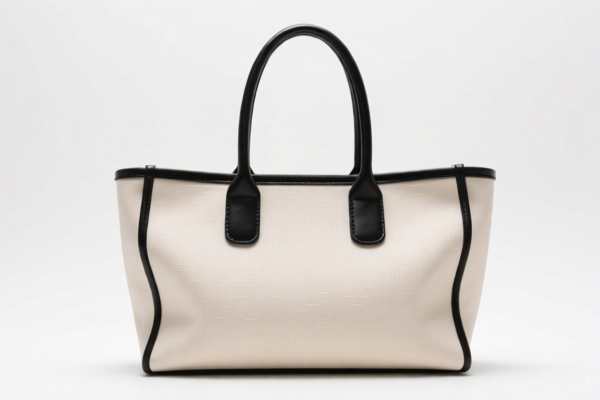
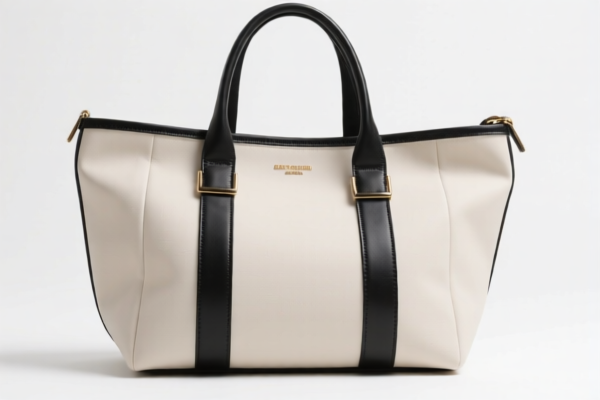
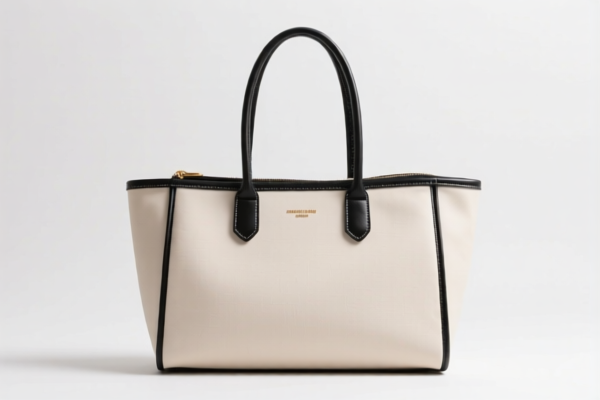
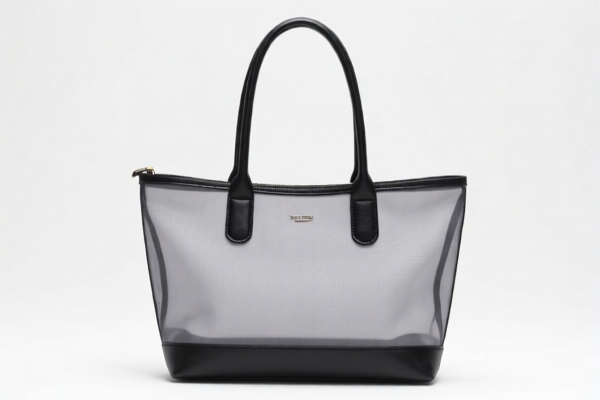
AI Analysis
👜 Nylon Handbags (Nylon Tote Bags & Backpacks)
🌐 HS Code Reference & Customs Clearance Guide | 2026 Latest Tariff Analysis | Professional Clearance Strategy
📌 I. Product Definition & Classification: Do You Really Understand "Nylon Bags"?
Nylon bags, falling under the category of Articles of Apparel and Travel Goods, are ubiquitous in global trade. However, their classification hinges on two critical factors: 1. Shape/Function: Is it a handbag, a backpack, or a packaging bag? 2. Material: Nylon is classified as man-made textile materials (Chapter 63) or plastic/synthetic fiber articles (Chapter 42/39), depending on construction.
⚠️ Key Distinction Points:
- Handbags/Backpacks (Wearable/Carry-on): Typically fall under Chapter 42 (Articles of leather or of composition leather).
- Packaging Bags (e.g., Grain, Flour, Feed): Fall under Chapter 63 (Other made-up textile articles).
- Plastic/Synthetic Fiber Articles: If the bag is primarily defined by its plastic coating or synthetic fiber nature without textile structure, it may fall under Chapter 39 or 42.
📦 II. HS Code Classification Matrix (2026 Latest Tariff Authority Comparison)
Based on the provided data, here are the specific HS Codes for Nylon Bags, categorized by function and material logic:
| HS Code | Product Description | Application Scenario | Key Logic/Summary |
|---|---|---|---|
4202.22.40.30 |
Handbags with outer surface of synthetic fibers | Fashion handbags, totes | "Nylon is synthetic fiber; Bag meets shape requirements" |
4202.22.81.00 |
Other handbags with outer surface of synthetic fibers | Premium/Other handbags | "Handbag shape; Nylon is synthetic fiber" |
4202.92.31.20 |
Backpacks with outer surface of synthetic fibers | Sports backpacks, school bags | "Nylon is synthetic fiber; Bag meets backpack shape" |
4202.92.31.31 |
Other bags with outer surface of synthetic fibers | Generic synthetic bags | "Purpose is bag; Material is man-made fiber" |
6305.33.00.80 |
Sack bags, of man-made fibers | Industrial packaging, bulk goods | "Bag shape; Nylon is man-made textile material" |
6305.39.00.00 |
Other sacks & bags, of man-made fibers | Specialized packaging bags | "Nylon is man-made textile; Bag shape meets sack criteria" |
3926.90.33.00 |
Other articles of plastics and articles of other materials of headings 3901 to 3914 | Plastic-coated nylon bags, synthetic fiber articles | "Material is plastic/synthetic fiber; Fits plastic product scope" |
🔍 Critical Reminder:
- Chapter 42 (4202.xxxx) is for personal use bags (handbags, backpacks).
- Chapter 63 (6305.xxxx) is primarily for packaging sacks/bags (e.g., for agriculture, industrial use).
- Chapter 39 (3926.90.33.00) applies if the item is classified as a general "plastic article" due to specific manufacturing methods or content, often carrying lower tariffs in this specific dataset.
💰 III. 2026 Latest Tariff Rate Breakdown (Including Surcharges, Policy Add-ons)
✅ Applicable Country: United States (US)
✅ Origin: China (CN)
✅ Effective Time: 2025-2026 Current Rates
🎯 1. The "High Tariff" Category: Chapter 42 (Personal Use Bags)
HS Codes: 4202.22.40.30, 4202.22.81.00, 4202.92.31.20, 4202.92.31.31
| Item | Content |
|---|---|
| Base Tariff | 7.4% (for 4202.22.40.30) / 17.6% (for 4202.22.81.00 & 4202.92 series) |
| Section 301 Surcharge (USITC) | +25.0% (Mandatory for most Chinese origin textiles/apparel) |
| IEEPA Section 122 Surcharge | +10.0% (Specific policy add-on mentioned in data) |
| Total Tax Rate | 42.4% (for 4202.22.40.30) 52.6% (for 4202.22.81.00, 4202.92.31.20, 4202.92.31.31) |
| Calculation | CIF Value × Total Rate |
| De Minimis Exemption | ❌ Not Eligible (High tariff items usually excluded from de minimis benefits) |
| Legal Basis Path | USITC:4202.xxxx → Section 301: Footnote 9903.xxxx → IEEPA:122 Clause |
📌 Explanation:
- Section 301 (25%): Applied to textiles and apparel imports from China.
- IEEPA 122 (10%): A specific administrative surcharge noted in the dataset.
- Base Rate Variance:4202.22.40.30(7.4%) is cheaper than4202.22.81.00(17.6%) due to subheading nuances (specific vs. other).
🎯 2. The "Medium Tariff" Category: Chapter 63 (Packaging/Textile Bags)
HS Codes: 6305.33.00.80, 6305.39.00.00
| Item | Content |
|---|---|
| Base Tariff | 8.4% |
| Section 301 Surcharge (USITC) | +7.5% (Note: Lower than standard textile rates, possibly due to specific textile exemption or classification as "other made-up articles") |
| IEEPA Section 122 Surcharge | +10.0% |
| Total Tax Rate | 25.9% |
| Calculation | CIF Value × 25.9% |
| De Minimis Exemption | ❌ Not Eligible |
| Legal Basis Path | USITC:6305.3x → Section 301: Footnote 9903.xxxx → IEEPA:122 Clause |
📌 Explanation:
- These are classified as sacks or bags (Chapter 63), not personal handbags.
- The 7.5% surcharge is significantly lower than the 25% applied to Chapter 42 handbags.
- Crucial: Do NOT classify fashion handbags as "sacks" to avoid this. It is customs fraud if the item is clearly a personal handbag.
🎯 3. The "Low Tariff" Category: Chapter 39 (Plastic/Synthetic Articles)
HS Code: 3926.90.33.00
| Item | Content |
|---|---|
| Base Tariff | 6.5% |
| Section 301 Surcharge (USITC) | +0.0% (Noted as 0.0% in data, possibly exempt or specific subheading) |
| IEEPA Section 122 Surcharge | +10.0% |
| Total Tax Rate | 16.5% |
| Calculation | CIF Value × 16.5% |
| De Minimis Exemption | ❌ Not Eligible |
| Legal Basis Path | USITC:3926.90.33 → IEEPA:122 Clause |
📌 Explanation:
- This is the most cost-effective option in the dataset.
- Applicable if the bag is considered an article of plastic (e.g., heavily coated nylon, or classified under "other plastic articles").
- Warning: Misclassification risk is high. Must justify why it is not a textile bag (Chapter 42/63).
🛠️ IV. Customs Clearance Practical Advice (Real-World Pitfall Avoidance)
✅ 1. Material Declaration Checklist (Must Provide)
| Document | Mandatory? | Description |
|---|---|---|
| ✅ Product Specification Sheet | ✔️ | Detail the nylon type (e.g., 600D Nylon, Ripstop), coating, lining. |
| ✅ Material Composition Ratio | ✔️ | E.g., "100% Nylon, Coated with PVC". Crucial for Chapter 42 vs. 39 distinction. |
| ✅ Product Photos | ✔️ | Front, back, interior, labels, and shape. Is it a handbag or a sack? |
| ✅ Commercial Invoice | ✔️ | Must explicitly state: "Nylon Handbag" OR "Nylon Packaging Sack" per HS Code. |
| ✅ Origin Certificate | ✔️ | Prove China Origin to apply surcharges correctly. |
| ✅ Structure Diagram | ✔️ | If claiming 3926.90.33.00 (Plastic), show how it qualifies as a plastic article. |
✅ 2. Classification Strategy (Key Rules)
🔥 "Shape Defines Chapter, Material Defines Subheading!"
| Scenario | Correct HS Code | Risk if Wrong |
|---|---|---|
| Fashion Handbag/Backpack (Personal Use) | 4202.22.40.30 (42.4%) 4202.92.31.20 (52.6%) |
If misclassified as 6305 (25.9%), heavy penalty for fraud. |
| Industrial/Agri Packaging Sack | 6305.33.00.80 (25.9%) |
If misclassified as 4202, you overpay ~17% tax. |
| Plastic-Coated/Synthetic Article | 3926.90.33.00 (16.5%) |
If misclassified as 4202, you overpay ~36% tax. High Savings Potential but High Scrutiny. |
✅ 3. Special Cases
| Situation | Handling Advice |
|---|---|
| Nylon Bag with Leather Trim | If leather is a major component, might shift to 4202.1x (Leather). Check data: None provided, but generally leather rules apply. |
| OEM Custom Bags | Provide client orders + design specs. If design is unique, it still follows Chapter 42 if it's a handbag. |
| Sample vs. Bulk | Samples under $800 might qualify for de minimis, but high tariff items (52.6%) are often excluded. Confirm with broker. |
| Coated Nylon | If the coating makes it "plastic-like," argue for 3926.90.33.00 to save 36.1% vs. standard handbag tax. Requires strong justification. |
🌍 V. Global Market Clearance Comparison (2026 Latest)
| Country/Region | Recommended HS Code | Tariff Rate | Certification | Notes |
|---|---|---|---|---|
| 🇺🇸 USA | 4202.22.40.30 |
42.4% | N/A | High tariffs due to Sec 301 + IEEPA. |
| 🇺🇸 USA | 3926.90.33.00 |
16.5% | N/A | Lowest rate. Best for synthetic/coated bags. |
| 🇨🇳 China | 4202.22.40.30 |
8.4% - 17.6% | N/A | Lower base rates. No US surcharges. |
| 🇪🇺 EU | 4202.22.40.30 |
4.5% - 6.5% | CE/RoHS (if plastic) | No Section 301. Standard WTO rates. |
| 🇬🇧 UK | 4202.22.40.30 |
4.5% - 6.5% | N/A | Post-Brexit, aligned with EU rates. |
📌 Conclusion:
- USA is the most expensive market due to dual surcharges (25% + 10%).
- Chapter 39 (3926.90.33.00) is the strategic loophole for US imports, reducing tax from ~42-52% to 16.5%.
- Europe/China are significantly cheaper, with no Section 301 penalties.
📌 VI. Common Errors & Pitfall Guide (Lessons Learned)
❌ Error 1: Classifying a Fashion Handbag as 6305 (Packaging Bag)
👉 Consequence: Customs will reclassify it to 4202, adding ~17% more tax + fines.
❌ Error 2: Classifying a Standard Nylon Backpack as 3926 (Plastic Article) without proof
👉 Consequence: Rejection at border, delay for 2-4 weeks, storage fees.
❌ Error 3: Ignoring IEEPA 122 (10%)
👉 Consequence: Under-declaration. Customs will assess the missing 10% + interest.
❌ Error 4: Using "Bag" as a generic description
👉 Consequence: Customs ambiguity. Must specify "Handbag," "Backpack," or "Sack."
✅ Correct Approach:
"Nylon Handbag, 12"x10", Synthetic Outer Surface, No Leather, Model X, For US Market"
-> Use4202.22.40.30(42.4%) for safety.
OR
"Nylon-Coated Synthetic Bag, Plastic Composition, Industrial Use"
-> Use3926.90.33.00(16.5%) for savings.
🎯 VII. Conclusion: Professional Declaration, Save Costs!
🎯 Remember the Golden Rules:
🔹 "Handbag = Chapter 42 (High Tax)"
🔹 "Sack = Chapter 63 (Medium Tax)"
🔹 "Plastic/Synthetic Article = Chapter 39 (Low Tax)"
🔹 "Section 301 + IEEPA = Double Penalty in USA"🔹 "If you save 36% tax, you need 36% justification evidence!"
🔹 "HS Code determines your profit margin. Get it right, or pay the difference."
📌 Pro Tip:
If your nylon bag is 100% synthetic fiber but lacks textile structure (e.g., heavily coated), consider 3926.90.33.00 for the 16.5% rate.
Action:
📞 Consult a Customs Broker + Provide Material Test Report + Apply for Advance Ruling before shipment.
🚀 Let your nylon bags clear smoothly, minimize tax, and maximize profit!
✨ Professional Clearance Starts with Accurate Classification!
💼 Every Dollar Saved is a Dollar Earned!
Customer Reviews
About HS Code Classification
The Harmonized System (HS) is an internationally standardized nomenclature developed by the World Customs Organization (WCO) to classify traded products. Over 200 countries use the HS system as the basis for customs tariffs, trade statistics, and import/export regulations.
Each HS code follows a hierarchical structure:
- Chapter (2 digits) — Broad category of goods (e.g., Chapter 84: Machinery and Mechanical Appliances)
- Heading (4 digits) — More specific grouping within the chapter
- Subheading (6 digits) — Internationally standardized breakdown, used by all WCO member countries
- National subdivisions (8-10 digits) — Country-specific extensions for further classification, such as US HTSUS 10-digit codes
Correct HS code classification is essential for smooth customs clearance, accurate duty payment, and compliance with trade regulations. Misclassification can lead to customs delays, overpayment of duties, or penalties.
When importing from CN to US, the applicable tariff rates may include:
- Most-Favored-Nation (MFN) rate — The standard duty rate applied to WTO members
- General rate — Applied to countries without trade agreements
- Trade remedy duties — Additional tariffs such as Section 301 (anti-dumping), Section 232 (national security), or countervailing duties
The information provided on this page is for reference purposes only. For official classification, please consult with your local customs authority or a licensed customs broker.