布艺卡包
CN → US| HS Code | Tariff Rate | Origin | Destination | Doc |
|---|---|---|---|---|
| 4202399000 | 55.0% | CN | US | Official Doc |
| 3926903300 | 16.5% | CN | US | Official Doc |
| 3926909989 | 22.8% | CN | US | Official Doc |
| 4820900000 | 35.0% | CN | US | Official Doc |
| 4820300040 | 35.0% | CN | US | Official Doc |
Product Images
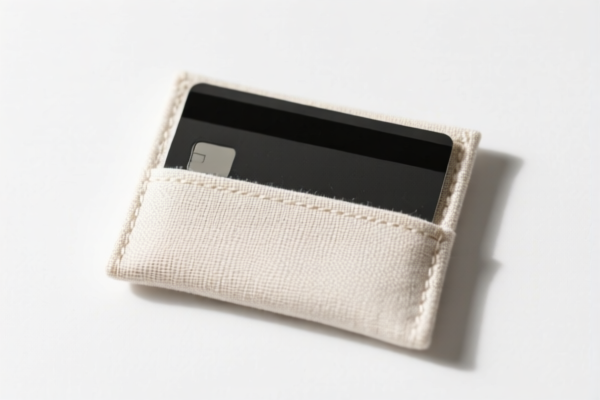
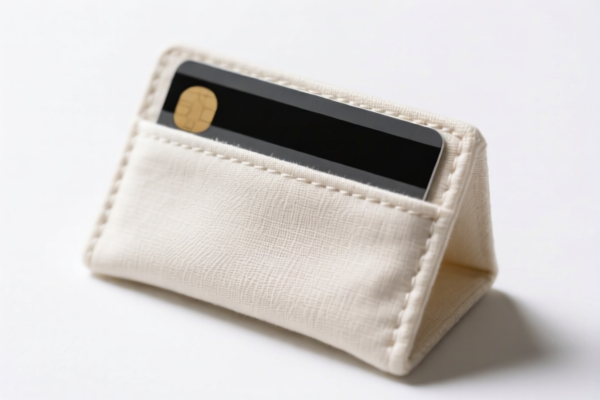
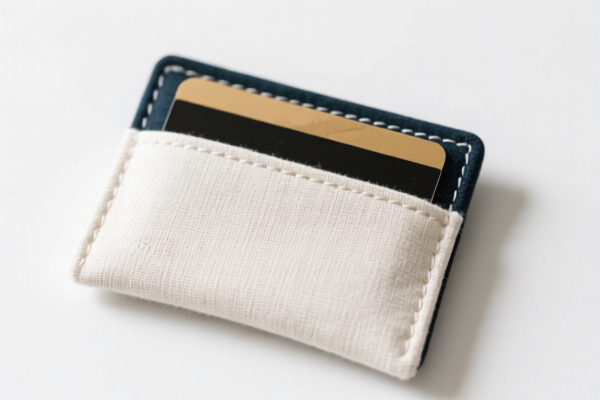
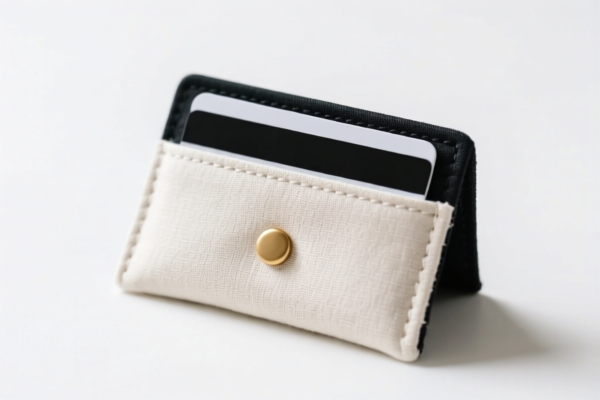
AI Analysis
🎒 Fabric Card Holder (布艺卡包)
🌐 HS Code Reference & Customs Clearance Guide | 2026 Latest Tariff Analysis | Strategic Customs Strategy
📌 I. Product Definition & Classification: Do You Really Understand "Fabric Card Holder"?
A Fabric Card Holder is typically a portable accessory carried in pockets or handbags, designed to store credit cards, IDs, or business cards. Unlike rigid plastic or metal holders, fabric variants often feature textile materials (cotton, linen, synthetic blends) or composite structures (fabric exterior + plastic/leather interior). In international trade, classification depends heavily on the primary material and structural composition.
⚠️ Key Classification Distinction:
- If made primarily of textile/fabric → Likely falls under Chapter 42 (Articles of Leather; similar products); - If made primarily of plastic (even if fabric-lined) → Falls under Chapter 39 (Plastics and Articles Thereof); - If made primarily of paper/cardboard (e.g., promotional paper wallets) → Falls under Chapter 48 (Paper and Paperboard).
📦 II. HS Code Classification Details (2026 Latest Tariff Authority Reference)
| HS Code | Product Description | Applicable Scenario | Primary Material |
|---|---|---|---|
4202.39.90.00 |
Articles of a kind normally carried in pocket or handbag; other | Fabric card holders, textile wallets, mixed-material holders | ✅ Textile/Fabric or Mixed |
3926.90.33.00 |
Other articles of plastics; handbags, purses | Plastic card holders with fabric lining, synthetic material holders | ✅ Plastic (Primary Structure) |
4820.90.00.00 |
Other paper products; book covers, folders | Paper card holders, cardboard document sleeves, paper-based accessories | ✅ Paper/Cardboard |
4820.30.00.40 |
Notebooks, loose-leaf binders, folders; attachments | Paper/cardboard card sleeves, file folder attachments | ✅ Paper/Cardboard |
3926.90.99.89 |
Other plastic articles; other | Composite card holders (plastic/leather/fabric blend) | ✅ Plastic/Composite |
🔍 Critical Reminder:
- GUM (General Rules of Interpretation) Rule 3(b): If the item is a composite (e.g., fabric exterior + plastic interior), classification depends on the essential character (usually the outer material or structural component); - Do not assume "Fabric" = Chapter 42: If the holder has a rigid plastic frame or is primarily plastic, it may still fall under 3926.
💰 III. 2026 Latest Tariff Rate Breakdown (Including Additional Duties, Policy Surcharges)
✅ Applicable Country: United States (US)
✅ Country of Origin: China (CN)
✅ Effective Date: 2025/2026 Import Cycles
🎯 1. 4202.39.90.00 —— Fabric/Textile Card Holder
| Item | Content |
|---|---|
| Base Duty Rate | 20.0% (Ad Valorem) |
| Section 301 Additional Duty | +25.0% (USITC Footnote for China-origin goods) |
| IEEPA Additional Duty | +10.0% (Targeting China/HK products, effective Nov 10, 2025) |
| Total Duty Rate | 55.0% |
| Tax Calculation | CIF Value × 55% |
| De Minimis Exemption | ❌ Not Eligible (High duty rate exceeds threshold) |
| Legal Basis Path | IEEPA:9903.01.25 → USITC:4202.39.90.00 → FOOTNOTE:Section 301 |
📌 Explanation:
- The 20% base rate applies to "articles of a kind normally carried in pockets"; - 25% Section 301 applies to most textile/leather-like articles from China; - 10% IEEPA is an additional surcharge on Chinese-origin consumer goods; - Total 55% is extremely high. Consider material substitution or supply chain relocation.
🎯 2. 3926.90.33.00 —— Plastic Card Holder (with Fabric Lining)
| Item | Content |
|---|---|
| Base Duty Rate | 6.5% (Ad Valorem) |
| Section 301 Additional Duty | 0.0% (Exempt or Not Applicable) |
| IEEPA Additional Duty | +10.0% |
| Total Duty Rate | 16.5% |
| Tax Calculation | CIF Value × 16.5% |
| De Minimis Exemption | ❌ Not Eligible |
| Legal Basis Path | IEEPA:9903.01.24 → USITC:3926.90.33.00 |
📌 Note:
- If the card holder is primarily plastic (even with fabric interior), this code may apply; - 16.5% is significantly lower than 55%; - Key Strategy: If design allows, shift structural material to plastic to reduce tax burden.
🎯 3. 4820.90.00.00 —— Paper/Cardboard Card Holder
| Item | Content |
|---|---|
| Base Duty Rate | 0.0% (Ad Valorem) |
| Section 301 Additional Duty | +25.0% |
| IEEPA Additional Duty | +10.0% |
| Total Duty Rate | 35.0% |
| Tax Calculation | CIF Value × 35% |
| De Minimis Exemption | ❌ Not Eligible |
| Legal Basis Path | IEEPA:9903.01.25 → USITC:4820.90.00.00 |
📌 Note:
- Paper card holders are rare for retail use but possible for promotional items; - 35% is moderate but still significant; - Not suitable for durable consumer goods.
🎯 4. 4820.30.00.40 —— Paper Card Holder (Folder/Attachment Type)
| Item | Content |
|---|---|
| Base Duty Rate | 0.0% (Ad Valorem) |
| Section 301 Additional Duty | +25.0% |
| IEEPA Additional Duty | +10.0% |
| Total Duty Rate | 35.0% |
| Tax Calculation | CIF Value × 35% |
| De Minimis Exemption | ❌ Not Eligible |
| Legal Basis Path | IEEPA:9903.01.25 → USITC:4820.30.00.40 |
📌 Note:
- Similar to above; applies if classified as a "folder attachment" rather than general paper goods; - Same tax burden as4820.90.00.00.
🎯 5. 3926.90.99.89 —— Composite Material Card Holder
| Item | Content |
|---|---|
| Base Duty Rate | 5.3% (Ad Valorem) |
| Section 301 Additional Duty | +7.5% |
| IEEPA Additional Duty | +10.0% |
| Total Duty Rate | 22.8% |
| Tax Calculation | CIF Value × 22.8% |
| De Minimis Exemption | ❌ Not Eligible |
| Legal Basis Path | IEEPA:9903.01.24 → USITC:3926.90.99.89 |
📌 Note:
- Applies to mixed materials (e.g., plastic + leather + fabric) where plastic is essential; - 22.8% is the lowest among high-duty categories if plastic component is significant; - Best Option for Composite Goods: If design allows plastic structural dominance, this code offers savings vs.4202.
🛠️ IV. Customs Clearance Practical Advice (Pitfall Avoidance Guide)
✅ 1. Documentation Checklist (Missing Any Will Cause Delays)
| Document | Required | Explanation |
|---|---|---|
| ✅ Product Specification Sheet | ✔️ | Include materials (fabric type, plastic type, paper weight), dimensions, closure type |
| ✅ Material Composition Breakdown | ✔️ | % by weight of fabric/plastic/paper; critical for HS classification |
| ✅ Product Photos (with Label) | ✔️ | Show front/back, interior, seams, brand tag |
| ✅ Commercial Invoice | ✔️ | Clearly state "Fabric Card Holder" or "Plastic Card Holder" based on classification |
| ✅ Packing List | ✔️ | Unit weight, quantity, carton dimensions |
| ✅ Certificate of Origin (CO) | ✔️ | If non-China origin, may qualify for reduced tariffs |
⚠️ Critical: Do not just write "Card Holder" on the invoice. Specify material composition to avoid customs reclassification penalties.
✅ 2. Declaration Strategy (Key Mnemonic)
🔥 "Material Defines Code, Plastic Saves 30%, Fabric Costs 55%!"
| Scenario | Correct Declaration | Wrong Action |
|---|---|---|
| 100% Fabric/Card Holder | 4202.39.90.00 |
Misdeclare as plastic → 16.5% (Under-declaration risk) |
| Plastic Frame + Fabric Interior | 3926.90.33.00 or 3926.90.99.89 |
Declare as fabric → 55% (Over-taxation) |
| Promotional Paper Card Sleeve | 4820.90.00.00 |
Declare as plastic → Incorrect classification |
| Mixed Material (Plastic/Leather/Fabric) | 3926.90.99.89 |
Declare as fabric → 55% instead of 22.8% |
✅ 3. Special Case Handling
| Scenario | Recommendation |
|---|---|
| OEM Custom Card Holder | Provide design specs + material list to customs broker; request Advance Ruling |
| Fabric with Plastic Coating | If plastic coating is structural, consider 3926 classification |
| Recycled Fabric Card Holder | No tariff benefit, but may qualify for ESG marketing claims |
| Mini-Sampling Bulk Import | Ensure value per unit is above de minimis threshold ($800 for US) to avoid parcel-level scrutiny |
🌍 V. Global Market Comparison (2026 Latest)
| Country/Region | Recommended HS Code | Duty Rate (China Origin) | Certification Required | Notes |
|---|---|---|---|---|
| 🇺🇸 USA | 4202.39.90.00 |
55% | None | Highest duty; consider plastic alternative (3926: 16.5-22.8%) |
| 🇪🇺 EU | 4202.39.90.00 |
4-6% | REACH, OEKO-TEX | No Section 301/IEEPA; low duty |
| 🇬🇧 UK | 4202.39.90.00 |
4-6% | UKCA, REACH | Post-Brexit alignment with EU |
| 🇨🇳 China | 4202.39.90.00 |
20% | CCC (if applicable) | Base duty applies; no additional surcharges |
| 🇦🇺 Australia | 4202.39.90.00 |
5% | None | Low duty; favorable for exports |
📌 Conclusion:
- USA is the most expensive market due to Section 301 + IEEPA; - EU/UK/Australia offer significant duty savings (4-6% vs 55%); - Strategic Recommendation: If targeting US, consider material shift to plastic (3926) or supply chain relocation to Vietnam/Mexico for IEEPA exemption.
📌 VI. Common Mistakes & Pitfalls (Lessons Learned)
❌ Mistake 1: Declaring fabric card holder as "Plastic" to avoid 55% duty
👉 Consequence: Customs audit → Penalty + Back Taxes + Potential Fraud Charges
❌ Mistake 2: Ignoring composite material composition
👉 Consequence: Misclassification → Delayed clearance + Re-export costs
❌ Mistake 3: Using vague terms like "Accessory" on Invoice
👉 Consequence: Customs assigns highest default rate → 55% or higher
❌ Mistake 4: Assuming "De Minimis" applies to high-duty items
👉 Consequence: Package seized or taxed at full rate despite low value
✅ Correct Approach:
"Fabric Card Holder, 100% Cotton Exterior, Plastic Interior Insert, Model XYZ, HS 4202.39.90.00"
🎯 VII. Conclusion: Precision Classification Saves Money!
🎯 Remember:
🔹 "Material Dictates Code, Code Dictates Cost, Misclassification Costs Thousands!"
🔹 "Fabric = 55%, Plastic = 16.5-22.8%, Paper = 35% – Choose Wisely!"
📌 Pro Tip:
If your card holder uses recycled fabric or eco-friendly materials, highlight this in marketing but not in customs declaration unless specifically claimed for duty benefits (none currently available for eco-materials in US).
📣 Immediate Action:
📞 Contact your customs broker + Provide material breakdown + Request HS Code Advance Ruling from CBP
🚀 Optimize your supply chain for US market duty savings or pivot to EU/UK/Australia for lower tariffs.
✨ Professional Customs Clearance Starts with Accurate Classification!
💼 Every percentage point saved is profit retained!
Customer Reviews
About HS Code Classification
The Harmonized System (HS) is an internationally standardized nomenclature developed by the World Customs Organization (WCO) to classify traded products. Over 200 countries use the HS system as the basis for customs tariffs, trade statistics, and import/export regulations.
Each HS code follows a hierarchical structure:
- Chapter (2 digits) — Broad category of goods (e.g., Chapter 84: Machinery and Mechanical Appliances)
- Heading (4 digits) — More specific grouping within the chapter
- Subheading (6 digits) — Internationally standardized breakdown, used by all WCO member countries
- National subdivisions (8-10 digits) — Country-specific extensions for further classification, such as US HTSUS 10-digit codes
Correct HS code classification is essential for smooth customs clearance, accurate duty payment, and compliance with trade regulations. Misclassification can lead to customs delays, overpayment of duties, or penalties.
When importing from CN to US, the applicable tariff rates may include:
- Most-Favored-Nation (MFN) rate — The standard duty rate applied to WTO members
- General rate — Applied to countries without trade agreements
- Trade remedy duties — Additional tariffs such as Section 301 (anti-dumping), Section 232 (national security), or countervailing duties
The information provided on this page is for reference purposes only. For official classification, please consult with your local customs authority or a licensed customs broker.