帆布斜挎包
CN → US| HS Code | Tariff Rate | Origin | Destination | Doc |
|---|---|---|---|---|
| 4202923120 | 52.6% | CN | US | Official Doc |
| 4202921500 | 41.3% | CN | US | Official Doc |
| 4202329300 | 52.6% | CN | US | Official Doc |
| 4202329100 | 52.6% | CN | US | Official Doc |
| 4202929100 | 52.6% | CN | US | Official Doc |
Product Images
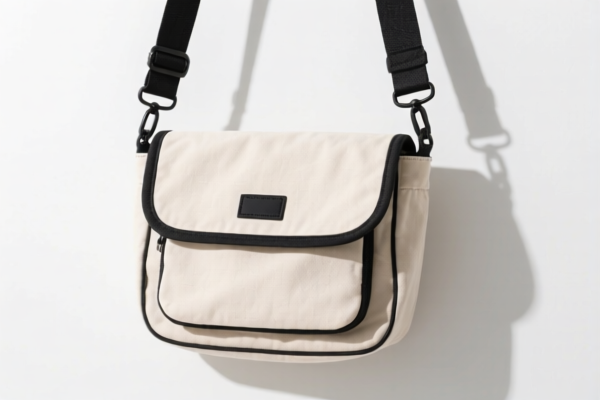
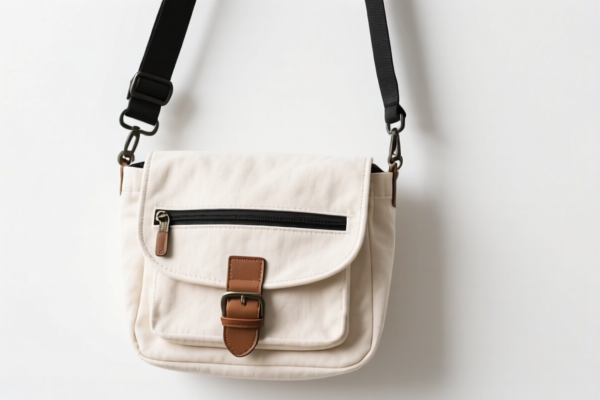
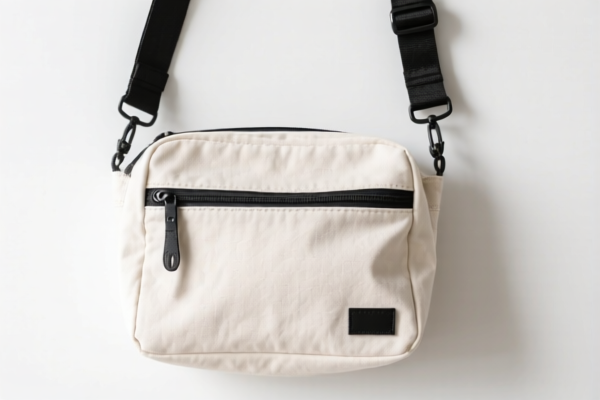
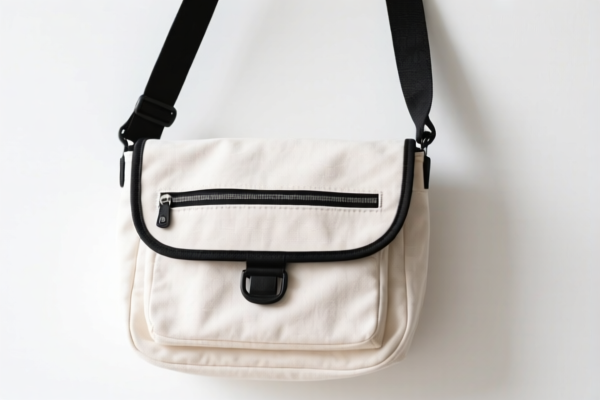
AI Analysis
🎒 Canvas Messenger Bag (帆布斜挎包)
🌐 HS Code Reference & Customs Clearance Guide | 2026 Latest Tariff Analysis | Professional Clearance Strategy
📌 I. Product Definition & Classification: Understanding the "Canvas Messenger Bag"
A canvas messenger bag is a versatile accessory typically used for carrying personal items, documents, or light goods. In international trade, its classification hinges on two critical factors: Material Composition (Is it cotton, synthetic, or mixed?) and Functional Form (Is it a shoulder bag, briefcase, or general container?).
Key Distinctions:
* Cotton-Based Canvas: If the canvas is primarily made of cotton plant fibers, it generally falls under lower base tariff lines (e.g., 4202.92.15).
* Synthetic/Mixed Canvas: If the canvas is made from synthetic fibers (nylon, polyester) or mixed textiles, it often incurs higher base tariffs (e.g., 4202.92.31, 4202.92.91).
* Shape Specifics: The presence of straps for shoulder wear classifies it as a "shoulder bag" or "similar bag," distinct from rigid containers like jewelry boxes.
⚠️ Critical Differentiation Point:
- If the material is 100% Cotton Canvas → Likely4202.92.15.00(Low Base Tax).
- If the material is Synthetic/Mixed → Likely4202.92.31.20or4202.92.91.00(High Base Tax).
- Misclassification as a "container" (e.g., jewelry box) instead of a "bag" can lead to incorrect duty rates, though some cotton variants share similar low-base codes.
📦 II. HS Code Classification Details (2026 Latest Tariff Authority Comparison)
Based on the provided data, here are the applicable HS Codes for Canvas Messenger Bags:
| HS Code | Product Description | Applicable Scenario | Material Basis |
|---|---|---|---|
4202.92.15.00 |
Bags with outer surface of textile materials, of cotton | Cotton-based canvas, shoulder bag form | ✅ Cotton Plant Fiber |
4202.92.31.20 |
Bags with outer surface of textile materials, of man-made fibers | Synthetic/Mixed canvas, shoulder bag form | ✅ Synthetic Fiber |
4202.92.91.00 |
Other bags with outer surface of textile materials | Handbag/Bag form, Mixed/Unknown textile | ✅ Textile Material |
4202.92.60.91 |
Other containers (not retail jewelry boxes), textile surface | Bag form, Cotton-based (alternative classification) | ✅ Cotton |
4202.32.93.00 |
Wallets, purses, containers, textile surface | Small bag/container, Synthetic textile | ✅ Synthetic/Textile |
🔍 Key Reminder:
- Material Verification is Crucial: You must provide a material composition certificate (e.g., "100% Cotton" vs. "65% Polyester/35% Cotton"). This determines whether you fall into the 6.3% base tax bracket or the 17.6% bracket. - "Messenger Bag" vs. "Wallet": If the bag is small and primarily used for money/cards, it might be misclassified as4202.32.93.00. Ensure the description clearly states "Shoulder Bag" or "Messenger Bag" to avoid penalties.
💰 III. 2026 Latest Tariff Rate Breakdown (Including Additional Duties & Policy Surcharges)
✅ Applicable Country: United States (US)
✅ Origin: China (CN)
✅ Effective Time: Current policies including Section 301 & IEEPA surcharges
🎯 1. 4202.92.15.00 —— Cotton Canvas Shoulder Bag (Low Base Tax Scenario)
| Item | Content |
|---|---|
| Base Tariff | 6.3% (Ad Valorem) |
| Section 301 Surcharge | +25.0% |
| Section 122 Tariff | +10.0% |
| Total Effective Rate | 41.3% |
| Tax Calculation | CIF Value × 41.3% |
| De Minimis Eligibility | ❌ No (Standard for textiles/apparel) |
| Legal Basis Path | Base:4202 → Sec301:25% → Sec122:10% |
📌 Explanation:
- This code applies if the canvas is certified as cotton.
- Total 41.3% is still high, but 11.3% lower than synthetic variants.
- The 25% Section 301 duty is the primary driver, added to the already higher base of synthetic fibers.
🎯 2. 4202.92.31.20 —— Synthetic/Mixed Canvas Shoulder Bag (High Base Tax Scenario)
| Item | Content |
|---|---|
| Base Tariff | 17.6% (Ad Valorem) |
| Section 301 Surcharge | +25.0% |
| Section 122 Tariff | +10.0% |
| Total Effective Rate | 52.6% |
| Tax Calculation | CIF Value × 52.6% |
| De Minimis Eligibility | ❌ No |
| Legal Basis Path | Base:4202 → Sec301:25% → Sec122:10% |
📌 Explanation:
- Applies if the canvas contains nylon, polyester, or mixed fibers.
- Total 52.6% represents the highest burden.
- The base tariff (17.6%) is significantly higher than cotton (6.3%).
- Warning: Do not under-declare material content; Customs tests for fiber composition.
🎯 3. 4202.92.91.00 & 4202.32.93.00 —— Other Textile Bags/Containers
| Item | Content |
|---|---|
| Base Tariff | 17.6% (for 4202.92.91.00) / 17.6% (for 4202.32.93.00) |
| Section 301 Surcharge | +25.0% |
| Section 122 Tariff | +10.0% |
| Total Effective Rate | 52.6% |
| Tax Calculation | CIF Value × 52.6% |
| De Minimis Eligibility | ❌ No |
📌 Note:
- These codes apply if the bag does not fit the specific "cotton" or "man-made fiber" sub-headings precisely, or if it is classified as a general container.
- Same high tax rate (52.6%) as synthetic bags.
- Use only if product characteristics strictly differ from standard shoulder bags.
🎯 4. 4202.92.60.91 —— Cotton Canvas Container (Alternative Low Base Scenario)
| Item | Content |
|---|---|
| Base Tariff | 6.3% (Ad Valorem) |
| Section 301 Surcharge | +25.0% |
| Section 122 Tariff | +10.0% |
| Total Effective Rate | 41.3% |
| Tax Calculation | CIF Value × 41.3% |
| De Minimis Eligibility | ❌ No |
📌 Explanation:
- This code is for other containers (not specifically "bags") made of cotton textile.
- If your "messenger bag" is rigid or box-shaped, this might apply.
- Same total rate (41.3%) as cotton shoulder bags.
- Risk: If Customs deems it a "bag" but you declared it a "container," it may cause delays. Use only if the shape is distinctly non-bag-like.
🛠️ IV. Customs Clearance Practical Advice (Battle-Tested Pitfall Guide)
✅ 1. Required Documentation Checklist (Non-Negotiable)
| Document | Must Provide | Description |
|---|---|---|
| ✅ Material Composition Label | ✔️ | Must state exact fiber content (e.g., "100% Cotton" or "80% Polyester/20% Cotton"). |
| ✅ Product Photos | ✔️ | Clear images showing straps, shape, and any logos. |
| ✅ Commercial Invoice | ✔️ | Declare "Canvas Shoulder Bag/Messenger Bag" with accurate HS Code. |
| ✅ Bill of Lading/Air Waybill | ✔️ | Standard shipping docs. |
| ✅ Fiber Test Report | ✔️ | Recommended for high-value shipments to prove cotton vs. synthetic status. |
✅ 2. Declaration Tips (Key Mantras)
🔥 "Material First, Shape Second, No Ambiguity!"
| Scenario | Correct Declaration | Incorrect Action |
|---|---|---|
| 100% Cotton Canvas | 4202.92.15.00 |
Declare as "Synthetic Bag" → Overpay 11.3% |
| Polyester Canvas | 4202.92.31.20 |
Declare as "Cotton Bag" → Underpay & Face Penalty/Fines |
| Mixed Material | 4202.92.91.00 or 4202.92.31.20 |
Vague description "Textile Bag" → Customs Inspection Delay |
| Rigid Canvas Box | 4202.92.60.91 |
Declare as "Soft Bag" → Misclassification |
✅ 3. Special Circumstances Handling
| Situation | Handling Advice |
|---|---|
| OEM/Private Label Bags | Ensure the label matches the invoice. Mismatches can trigger audits. |
| Bag with Metal Hardware | Still classified under 4202 (Textile Bag). Hardware does not change the primary material classification. |
| Canvas + Leather Trim | If leather is minor (<50% surface area), still textile bag. If leather is dominant, re-classify as leather goods (different HS Code & Rates). |
| Promotional Items (Free of Charge) | Must still declare value (transaction value or fair market value) for duty calculation. |
🌍 V. Global Market Comparison (2026 Latest)
| Country/Region | Recommended HS Code | Tariff (China Origin) | Certification | Note |
|---|---|---|---|---|
| 🇺🇸 USA | 4202.92.15.00 (Cotton) / 4202.92.31.20 (Synthetic) |
41.3% (Cotton) / 52.6% (Synthetic) | None Specific | High due to Sec 301 & Sec 122. |
| 🇨🇳 China | 4202.92.15.00 |
~5-10% | None | Lower base, no Section 301. |
| 🇪🇺 EU | 4202.92.15.00 |
~12% | CE (if applicable) | No Section 301. |
| 🇬🇧 UK | 4202.92.15.00 |
~12% | UKCA | Post-Brexit standards. |
📌 Conclusion:
- USA is the most expensive market due to the combination of base tariffs and political surcharges (Section 301 + Section 122).
- Cotton Canvas offers a slight advantage (11.3% savings) over synthetic canvas.
- Supply Chain Strategy: Consider sourcing from non-China origins (e.g., Vietnam, Bangladesh) to avoid Section 301 duties, though Section 122 may still apply depending on current regulations.
📌 VI. Common Errors & Pitfalls (Lessons from Experience)
❌ Error 1: Declaring "Synthetic Bag" as "Cotton Bag" to save tax.
👉 Consequence: Customs lab tests the fabric → Found guilty of misdeclaration → Heavy fines + Blacklisting.
❌ Error 2: Using vague terms like "Bag" without material specification.
👉 Consequence: Customs assigns default high-rate code (often synthetic) → Overpayment + Delay.
❌ Error 3: Ignoring Section 122 Tariff.
👉 Consequence: Forgetting the 10% surcharge → Budget miscalculation → Profit Margin Erosion.
❌ Error 4: Confusing "Messenger Bag" with "Backpack" or "Handbag" incorrectly.
👉 Consequence: While most fall under 4202.92, specific sub-codes matter for material verification. Ensure the shape description matches "Shoulder Bag/Messenger."
✅ Correct Practice:
"Messenger Bag, Canvas Material, 100% Cotton, Single Shoulder Strap, Model XYZ, Made in China"
🎯 VII. Conclusion: Precision Classification Saves Money!
🎯 Remember the Mantra:
🔹 "Cotton Saves 11%, Synthetic Costs More!"
🔹 "Sec 301 + Sec 122 = 35% Surcharge on Top of Base!"
🔹 "Declare Material Accurately, Avoid Audits!"
📌 Pro Tip:
- For high-volume shipments, consider Advance Rulings from US Customs (CBP) to confirm the HS Code and duty rate.
- If your product is partially synthetic, analyze if the cotton content justifies the lower base rate (if >50% cotton).
- Cost-Benefit Analysis: Is the 11.3% tax difference worth switching from synthetic to cotton canvas?
📣 Immediate Action:
📞 Consult a Customs Broker + Verify Material Composition + Apply for Pre-Ruling
🚀 Clear Customs Smoothly, Maximize Profits, Expand Global Reach!
✨ Professional Clearance Starts with Accurate Classification!
💼 Every Percent Matters in Global Trade!
Customer Reviews
About HS Code Classification
The Harmonized System (HS) is an internationally standardized nomenclature developed by the World Customs Organization (WCO) to classify traded products. Over 200 countries use the HS system as the basis for customs tariffs, trade statistics, and import/export regulations.
Each HS code follows a hierarchical structure:
- Chapter (2 digits) — Broad category of goods (e.g., Chapter 84: Machinery and Mechanical Appliances)
- Heading (4 digits) — More specific grouping within the chapter
- Subheading (6 digits) — Internationally standardized breakdown, used by all WCO member countries
- National subdivisions (8-10 digits) — Country-specific extensions for further classification, such as US HTSUS 10-digit codes
Correct HS code classification is essential for smooth customs clearance, accurate duty payment, and compliance with trade regulations. Misclassification can lead to customs delays, overpayment of duties, or penalties.
When importing from CN to US, the applicable tariff rates may include:
- Most-Favored-Nation (MFN) rate — The standard duty rate applied to WTO members
- General rate — Applied to countries without trade agreements
- Trade remedy duties — Additional tariffs such as Section 301 (anti-dumping), Section 232 (national security), or countervailing duties
The information provided on this page is for reference purposes only. For official classification, please consult with your local customs authority or a licensed customs broker.