带尾巴的海豹皮
CN → US| HS Code | Tariff Rate | Origin | Destination | Doc |
|---|---|---|---|---|
| 4301800280 | 17.5% | CN | US | Official Doc |
| 4301900000 | 10.0% | CN | US | Official Doc |
| 4303100060 | 39.0% | CN | US | Official Doc |
| 4303900000 | 35.0% | CN | US | Official Doc |
Product Images
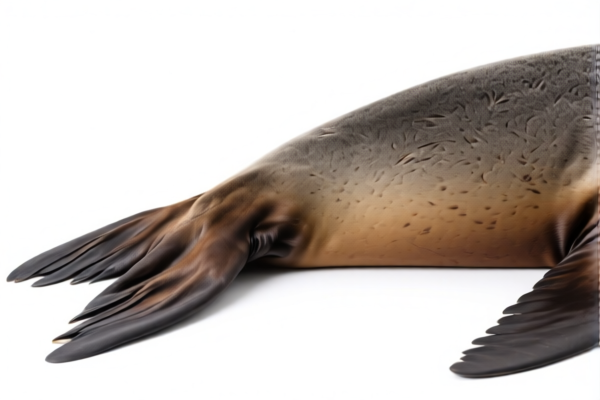
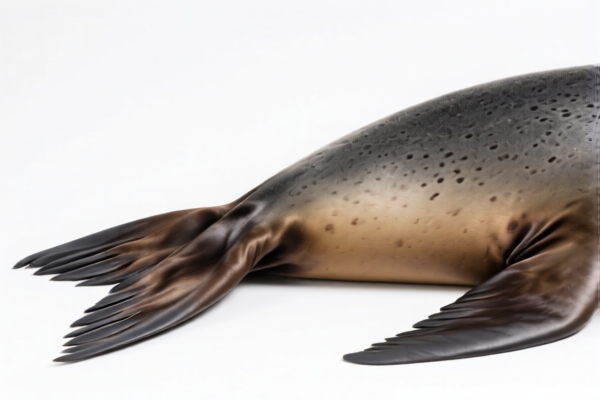
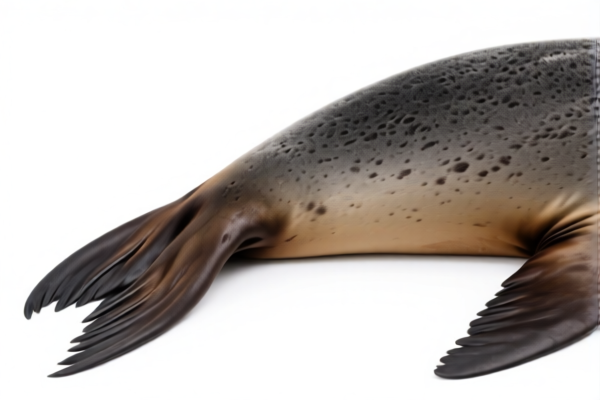
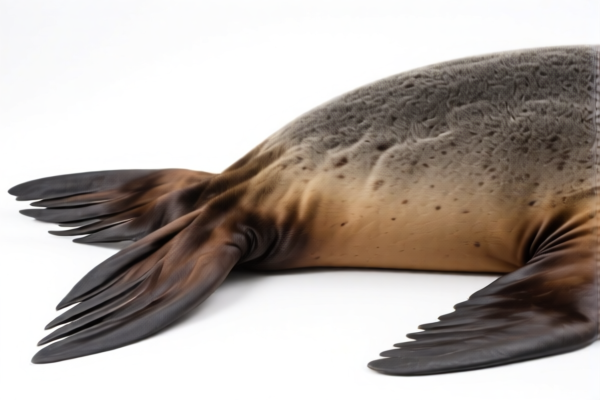
AI Analysis
🦭 Seal Skins with Tails (Customs Classification & Duty Guide)
🌐 HS Code Reference & Customs Clearance Guide | 2026 Latest Tariff Analysis | Professional Entry Strategy
📌 I. Product Definition & Classification: Understanding "Seal Skins with Tails"
In international trade, seal pelts are strictly categorized based on their physical state (raw, assembled, or processed) and the presence of specific anatomical parts (head, tail, paws). "Seal skins with tails" fall under Chapter 43 (Furskins and artificial fur), specifically targeting raw or prepared pelts that retain their natural form, including the tail.
⚠️ Key Distinction Point:
- If the skin is raw/prepared but retains the tail → Classified under 4301.80.02.80 or 4301.90.00.00 depending on exact preparation.
- If the skin is cut into pieces or assembled into garments → Classified under 4303.10.00.60, 4302.19.45.70, or 4303.90.00.00.
- Crucial Logic: The presence of the tail does not automatically mean a lower tax rate. The processing state (raw vs. manufactured) and US Trade Act penalties drive the final cost.
📦 II. HS Code Classification Matrix (2026 Latest Tariff Authority)
| HS Code | Product Description (from Data) | Key Characteristics | Status |
|---|---|---|---|
4301.80.02.80 |
Seal skins with tails, raw/prepared | Raw skin, tail intact, no manufacturing into goods | 🟡 High Duty (See below) |
4301.90.00.00 |
Seal skins with tails (tails included) | Raw/prepared skins, includes head/tail fragments | 🟢 Low Duty (See below) |
4302.19.45.70 |
Seal skins, other fur types, with tails, unassembled | Dyed/prepared, not yet made into garments | 🟠 Very High Duty |
4303.10.00.60 |
Fur制品 made of seal skin (non-mink) | Manufactured goods (e.g., coats, accessories) | 🟠 Highest Duty |
4303.90.00.00 |
Other fur制品 of seal skin | Finished goods, miscellaneous forms | 🟠 High Duty |
🔍 Critical Reminder:
- Raw vs. Finished:4301codes are for raw/prepared pelts.4303codes are for finished products.
- Tail Inclusion: Both4301.80.02.80and4301.90.00.00explicitly mention "tails," but the duty structure differs significantly due to US trade policy nuances.
- Misclassification Risk: Declaring a raw skin as a "garment" (4303) will result in severe penalties. Declaring a garment as a "raw skin" may lead to detention.
💰 III. 2026 Latest Tariff Rate Breakdown (Including Surcharges)
✅ Applicable Country: United States (US)
✅ Origin: China (CN) (Assumed based on "122 Clause" and typical trade context)
✅ Effective Date: 2025/2026 Period
🎯 1. 4301.80.02.80 —— Seal Skins with Tails (Raw/Prepared)
| Item | Detail |
|---|---|
| Base Tariff | 0.0% |
| Section 301 Surcharge | +7.5% |
| Section 122 Surcharge | +10.0% |
| Total Tax Rate | 17.5% |
| Tax Calculation | CIF Value × 17.5% |
| De Minimis Exemption | ❌ Not Applicable (High risk of audit) |
| Legal Basis | 4301.80.02.80 → Section 301: 7.5% + Section 122: 10% |
📌 Explanation:
- Although the base tariff is 0%, the Section 301 (US Trade Act) adds 7.5% for Chinese-origin furs.
- The Section 122 (301/122 Clause) adds an additional 10%, bringing the total to 17.5%.
- Why not lower? While base is 0%, the surcharges are mandatory for Chinese goods.
🎯 2. 4301.90.00.00 —— Seal Skins (Tails Included)
| Item | Detail |
|---|---|
| Base Tariff | 0.0% |
| Section 301 Surcharge | 0.0% |
| Section 122 Surcharge | +10.0% |
| Total Tax Rate | 10.0% |
| Tax Calculation | CIF Value × 10.0% |
| De Minimis Exemption | ❌ Not Applicable |
| Legal Basis | 4301.90.00.00 → Section 122: 10% |
📌 Explanation:
- This is the lowest duty rate for seal skins with tails.
- Base: 0% + Sec 301: 0% + Sec 122: 10% = 10%.
- Why lower than4301.80.02.80? The classification4301.90likely refers to a specific subset of prepared skins where the Section 301 surcharge does not apply or is waived under certain interpretations, leaving only the Section 122 10% charge.
- Strategy: If your product fits this description, prioritize this HS Code to save 7.5% compared to4301.80.02.80.
🎯 3. 4302.19.45.70 —— Dyed/Prepared Seal Skins (Unassembled, with Tails)
| Item | Detail |
|---|---|
| Base Tariff | 2.2% |
| Section 301 Surcharge | +25.0% |
| Section 122 Surcharge | +10.0% |
| Total Tax Rate | 37.2% |
| Tax Calculation | CIF Value × 37.2% |
| De Minimis Exemption | ❌ Not Applicable |
| Legal Basis | 4302.19.45.70 → Base: 2.2% + Sec 301: 25% + Sec 122: 10% |
📌 Explanation:
- This code applies to dyed or further prepared skins that are still unassembled (not yet made into coats).
- The Section 301 surcharge jumps to 25% for "other furskins," significantly increasing costs.
- Warning: Do not declare dyed skins as4301(raw) if they are clearly processed; customs may reclassify and penalize.
🎯 4. 4303.10.00.60 & 4303.90.00.00 —— Finished Fur制品 (Garments/Accessories)
| HS Code | Total Tax | Breakdown |
|---|---|---|
4303.10.00.60 |
39.0% | Base: 4.0% + Sec 301: 25% + Sec 122: 10% |
4303.90.00.00 |
35.0% | Base: 0.0% + Sec 301: 25% + Sec 122: 10% |
📌 Explanation:
- These codes apply to finished goods (e.g., seal fur coats, hats, gloves).
-4303.10(Non-mink fur) has a 4% base tariff, making it the most expensive category.
-4303.90(Other fur制品) has a 0% base tariff but still carries the 25% + 10% surcharges, totaling 35%.
- Key Insight: If you are importing finished goods,4303.90.00.00is cheaper than4303.10.00.60.
🛠️ IV. Customs Clearance Practical Advice (Risk Mitigation)
✅ 1. Documentation Checklist (Essential)
| Document | Required? | Notes |
|---|---|---|
| ✅ Commercial Invoice | ✔️ | Must specify: "Seal Skins, with Tails," Raw/Dyed status, Country of Origin. |
| ✅ Packing List | ✔️ | Itemize count, weight, and dimensions. |
| ✅ Certificate of Origin | ✔️ | Proves origin for Section 301/122 assessment. |
| ✅ Customs Declaration Form (CBP Form 7501) | ✔️ | Accurate HS Code selection is critical. |
| ✅ End-Use Declaration | ✔️ | Clarify if raw, dyed, or finished. |
| ✅ CITES Permit | ⚠️ Highly Recommended | Seal species are often protected. Check if CITES permits are required for import into the US. |
🚨 Critical Note on CITES:
- Many seal species are listed under CITES Appendix II.
- Even if the product is not under CITES, US Customs may request proof of non-CITES status or proper permits to avoid detention.
- Failure to provide CITES permits can lead to seizure and fines.
✅ 2. Classification Strategy (How to Save Money)
| Scenario | Recommended HS Code | Tax Rate | Strategy |
|---|---|---|---|
| Raw seal skins with tails | 4301.90.00.00 |
10.0% | Best for raw pelts. Ensure they are not "dyed" to qualify. |
| Dyed/Prepared skins with tails | 4302.19.45.70 |
37.2% | Higher tax due to 25% Sec 301. Consider if pre-dyeing in US is cheaper. |
| Finished seal fur coats | 4303.90.00.00 |
35.0% | Cheaper than 4303.10 (39%). Use "Other fur制品" classification. |
| Non-mink fur制品 (e.g., fox + seal mix) | 4303.10.00.60 |
39.0% | Most expensive. Avoid if possible. |
🔥 Pro Tip:
- If you are importing raw skins (4301), ensure they are not dyed to avoid the 25% Sec 301 surcharge associated with4302.
- If importing finished goods, use4303.90.00.00instead of4303.10.00.60to save 4%.
✅ 3. Common Mistakes & Pitfalls
❌ Mistake 1: Declaring dyed skins as 4301 (raw)
👉 Result: Customs reclassifies to 4302 → Backpay 37.2% + Penalties.
❌ Mistake 2: Ignoring CITES requirements
👉 Result: Seizure of goods, heavy fines, and potential legal action.
❌ Mistake 3: Misclassifying finished coats as 4301.80.02.80
👉 Result: Under-declaration of value/tax. Customs may apply 39.0% or 35.0% retroactively.
❌ Mistake 4: Assuming "Section 122" is optional
👉 Result: 10% surcharge is mandatory for Chinese-origin furs under current trade laws.
🌍 V. Global Market Comparison (2026)
| Country | HS Code (Raw Skin) | Base Tariff | Sec 301/122 | Total Tax | Notes |
|---|---|---|---|---|---|
| 🇺🇸 USA | 4301.90.00.00 |
0% | +10% (Sec 122) | 10.0% | Lowest for raw skins with tails. |
| 🇨🇳 China | 4301.90.00.00 |
0% | N/A | 0% | No additional surcharges for Chinese imports into China. |
| 🇪🇺 EU | 4301.90.00.00 |
0% | N/A | 0% | No CITES issues if sourced sustainably. |
| 🇬🇧 UK | 4301.90.00.00 |
0% | N/A | 0% | Post-Brexit rules apply. |
📌 Conclusion:
- USA is the most complex market due to Section 301/122 surcharges.
- Raw skins (4301.90.00.00) have the lowest US duty (10%).
- Finished goods (4303.90.00.00) are 35% in the US.
- Always verify CITES status before shipping.
📌 VI. Final Recommendations
- Prioritize
4301.90.00.00for raw seal skins with tails to minimize US duties to 10%. - Use
4303.90.00.00for finished fur制品 to save 4% compared to4303.10.00.60. - Obtain CITES Permits to prevent seizure.
- Consult a Customs Broker to verify if your specific product fits
4301.90.00.00(avoiding the 25% Sec 301) or if it falls under4302(triggering 37.2%). - Document Everything: Invoice, Packing List, CITES, and Origin Certificates must be perfect.
🎯 Remember:
🔹 "Raw is 10%, Dyed is 37%, Finished is 35%. CITES is KEY!"
🔹 "Choose4301.90for raw skins,4303.90for garments. Avoid4303.10if you can."
📣 Next Steps:
📞 Contact a licensed customs broker to pre-classify your shipment.
📄 Request CITES permits from your supplier or local wildlife authority.
🚀 Minimize duty costs with precise classification!
Customer Reviews
About HS Code Classification
The Harmonized System (HS) is an internationally standardized nomenclature developed by the World Customs Organization (WCO) to classify traded products. Over 200 countries use the HS system as the basis for customs tariffs, trade statistics, and import/export regulations.
Each HS code follows a hierarchical structure:
- Chapter (2 digits) — Broad category of goods (e.g., Chapter 84: Machinery and Mechanical Appliances)
- Heading (4 digits) — More specific grouping within the chapter
- Subheading (6 digits) — Internationally standardized breakdown, used by all WCO member countries
- National subdivisions (8-10 digits) — Country-specific extensions for further classification, such as US HTSUS 10-digit codes
Correct HS code classification is essential for smooth customs clearance, accurate duty payment, and compliance with trade regulations. Misclassification can lead to customs delays, overpayment of duties, or penalties.
When importing from CN to US, the applicable tariff rates may include:
- Most-Favored-Nation (MFN) rate — The standard duty rate applied to WTO members
- General rate — Applied to countries without trade agreements
- Trade remedy duties — Additional tariffs such as Section 301 (anti-dumping), Section 232 (national security), or countervailing duties
The information provided on this page is for reference purposes only. For official classification, please consult with your local customs authority or a licensed customs broker.