带金属扣的皮带
CN → US| HS Code | Tariff Rate | Origin | Destination | Doc |
|---|---|---|---|---|
| 4203300000 | 37.7% | CN | US | Official Doc |
| 4203406000 | 35.0% | CN | US | Official Doc |
| 8308100000 | 0.0% | CN | US | Official Doc |
| 9113908000 | 19.3% | CN | US | Official Doc |
| 9017800000 | 40.3% | CN | US | Official Doc |
Product Images
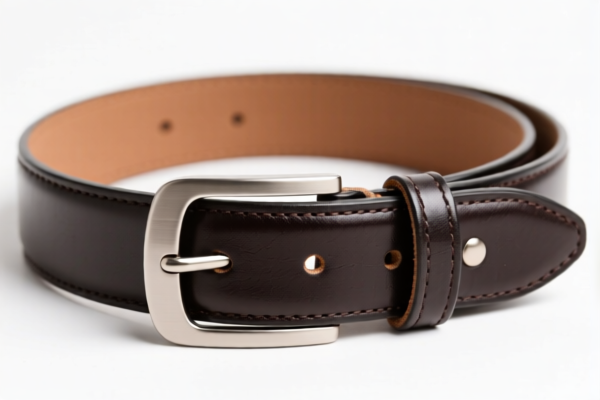
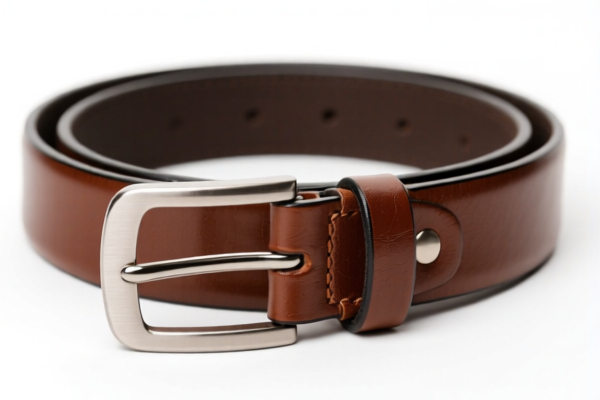
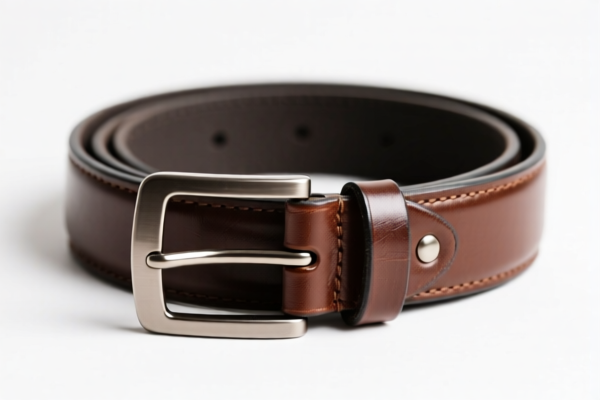
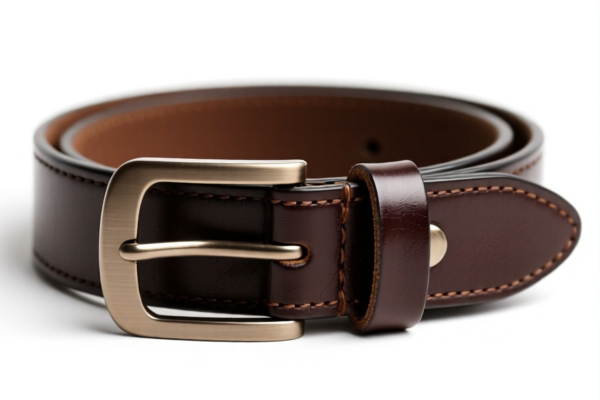
AI Analysis
🎒 Metal-Buckle Belts: HS Code Classification & US Customs Clearance Guide (2026)
🌐 HS Code Reference & Clearance Guide | 2026 Latest Tariff Analysis | Professional Clearance Strategy
📌 Part 1: Product Definition & Classification – Do You Really Understand "Belts"?
A Metal-Buckle Belt is an essential apparel accessory used to secure trousers, skirts, or uniforms. In international trade, its classification depends heavily on two factors: Material Composition and Functional Purpose.
Key Distinctions: * Leather/Composite Leather Belts: Classified under Chapter 42 (Articles of Leather). The buckle material (metal) is considered an accessory, not the primary material defining the code. * Metal Hardware/Buckles: If the item is only the buckle or a loose metal part, it may fall under Chapter 83 (Miscellaneous Metal Articles). * Watch Straps: If the "belt" is actually a watch strap, it falls under Chapter 91. * Measuring Tools: If the belt is a flexible measuring tape, it falls under Chapter 90.
⚠️ Critical Classification Point:
- Most standard fashion belts with metal buckles are classified as Leather Articles (Chapter 42), regardless of the metal buckle.
- Misclassifying a leather belt as "metal hardware" or "measuring tool" leads to severe penalties and delays.
📦 Part 2: HS Code Classification Details (2026 Latest Tariff Authority Comparison)
Based on the provided data, here are the five possible HS Code classifications and the logic for each:
| HS Code | Product Description | Classification Logic | Total Tax Rate |
|---|---|---|---|
4203.30.00.00 |
Buckles of leather or composition leather (Specifically: "Belt buckles of leather") | Logic: The summary states the belt fits the purpose of "belt buckles" and is inferred to be made of leather/synthetic leather. This is a common classification for the buckle part of a leather belt or belts classified under specific subheadings for buckles. | 37.7% |
4203.40.60.00 |
Other accessories of leather or composition leather | Logic: Contains "leather" material characteristics; falls under "apparel accessories." This is the standard code for complete leather belts. | 35.0% |
9113.90.80.00 |
Watch straps (Implied by "watch band accessories") | Logic: Based on common sense inferring leather material, but categorized as a "watch band accessory." Warning: This is likely incorrect for a standard body belt. | 19.3% |
8308.10.00.00 |
Clasps, buckles, etc., of base metal | Logic: Product name explicitly contains "metal," and "rotating buckle" is classified under "hooks, eyes, eyelets." Fits base metal articles. Risk: Only applies if it's just the metal buckle, not the full belt. | 1.1¢/kg + 2.9% + 35.0% |
9017.80.00.00 |
Measuring instruments (e.g., Tapes, Rules) | Logic: Classified as a "hand-operated length measuring instrument." Risk: Only applies if the product is a measuring tape, not a fashion belt. | 40.3% |
🔍 Key Takeaway:
- For a standard leather belt with a metal buckle,4203.40.60.00(35.0%) or4203.30.00.00(37.7%) are the most likely correct codes.
-9113.90.80.00is risky unless it's genuinely a watch strap.
-8308.10.00.00is only for the metal part alone.
-9017.80.00.00is only for measuring tapes.
💰 Part 3: 2026 Latest Tariff Rate Breakdown (Including Surtaxes & Policy Add-ons)
✅ Applicable Country: USA (US)
✅ Country of Origin: China (CN)
✅ Effective Date: From November 10, 2025 (including subsequent imports)
🎯 1. 4203.30.00.00 – Belt Buckles of Leather/Composition Leather
| Item | Details |
|---|---|
| Base Tariff | 2.7% (ad valorem) |
| Section 301 Surtax | +25.0% |
| IEEPA Surtax (122 Clause) | +10.0% |
| Total Rate | 37.7% |
| Tax Calculation | CIF Value × 37.7% |
| De Minimis Eligibility | ❌ No (deny_de_minimis) |
| Legal Basis Path | USITC:4203.30.00.00 → SECTION301:9903.88.01 → IEEPA:9903.01.25 |
📌 Explanation:
- This code applies to leather belt buckles or belts classified under this specific subheading.
- The 37.7% rate includes the base duty (2.7%) plus the aggressive Section 301 (25%) and IEEPA (10%) surcharges.
🎯 2. 4203.40.60.00 – Other Leather Apparel Accessories (Standard Leather Belt)
| Item | Details |
|---|---|
| Base Tariff | 0.0% |
| Section 301 Surtax | +25.0% |
| IEEPA Surtax (122 Clause) | +10.0% |
| Total Rate | 35.0% |
| Tax Calculation | CIF Value × 35.0% |
| De Minimis Eligibility | ❌ No |
| Legal Basis Path | USITC:4203.40.60.00 → SECTION301:9903.88.01 → IEEPA:9903.01.25 |
📌 Note:
- This is the most common code for complete leather belts.
- Even with a 0% base duty, the 35.0% total rate makes it expensive.
- Applies to all leather belts with metal buckles.
🎯 3. 9113.90.80.00 – Watch Straps (If Misclassified or Niche Use)
| Item | Details |
|---|---|
| Base Tariff | 1.8% |
| Section 301 Surtax | +7.5% |
| IEEPA Surtax (122 Clause) | +10.0% |
| Total Rate | 19.3% |
| Tax Calculation | CIF Value × 19.3% |
| De Minimis Eligibility | ❌ No |
| Legal Basis Path | USITC:9113.90.80.00 → SECTION301:9903.75.01 → IEEPA:9903.01.25 |
📌 Warning:
- Only use this if the product is genuinely a watch strap.
- If used for a body belt, this is misclassification and will trigger audits.
🎯 4. 8308.10.00.00 – Metal Clasps/Buckles (Base Metal)
| Item | Details |
|---|---|
| Base Tariff | 1.1¢/kg + 2.9% |
| Section 301 Surtax | +25.0% |
| IEEPA Surtax (122 Clause) | +10.0% |
| Total Rate | 1.1¢/kg + 2.9% + 35.0% |
| Tax Calculation | (Weight × 1.1¢) + (CIF × 2.9%) + (CIF × 25%) + (CIF × 10%) |
| De Minimis Eligibility | ❌ No |
| Legal Basis Path | USITC:8308.10.00.00 → SECTION301:9903.88.01 → IEEPA:9903.01.25 |
📌 Note:
- This code is for loose metal buckles or hardware, not complete belts.
- The tax structure is complex: it combines weight-based (ad valorem per kg) and value-based taxes.
- High risk if applied to a full leather belt.
🎯 5. 9017.80.00.00 – Measuring Instruments (Tapes)
| Item | Details |
|---|---|
| Base Tariff | 5.3% |
| Section 301 Surtax | +25.0% |
| IEEPA Surtax (122 Clause) | +10.0% |
| Total Rate | 40.3% |
| Tax Calculation | CIF Value × 40.3% |
| De Minimis Eligibility | ❌ No |
| Legal Basis Path | USITC:9017.80.00.00 → SECTION301:9903.88.01 → IEEPA:9903.01.25 |
📌 Note:
- Only applies if the belt is a seamstress's measuring tape.
- Highest total rate among the options.
- Do not use for fashion belts.
🛠️ Part 4: Customs Clearance Practical Advice (Battle-Tested Pitfall Guide)
✅ 1. Required Documentation Checklist (Mandatory)
| Document | Must Provide | Notes |
|---|---|---|
| ✅ Product Specification Sheet | ✔️ | Material (Leather type, metal alloy), dimensions, buckle type. |
| ✅ Product Photos | ✔️ | Clear images of the entire belt, buckle detail, and material texture. |
| ✅ Commercial Invoice | ✔️ | Must state: "Leather Belt with Metal Buckle" (not just "Belt" or "Hardware"). |
| ✅ Packing List | ✔️ | Show quantity, weight, and value. |
| ✅ Origin Certificate (CO) | ✔️ | If not from China, may qualify for lower tariffs. |
| ✅ Material Declaration | ✔️ | Explicitly state % of leather vs. metal. |
✅ 2. Declaration Tips (Key Mnemonics)
🔥 "Material First, Function Second, Name Precise, Tax Minimized!"
| Scenario | Correct Declaration | Wrong Practice |
|---|---|---|
| Complete Leather Belt | 4203.40.60.00 |
Misclassifying as 8308 (Metal) → Audit Risk |
| Leather Belt Buckle (Loose) | 4203.30.00.00 |
Calling it "Apparel" → Incorrect |
| Metal Buckle Only (No Leather) | 8308.10.00.00 |
Calling it "Leather Belt" → Fraud Risk |
| Measuring Tape | 9017.80.00.00 |
Calling it "Fashion Belt" → Penalty |
| Watch Strap | 9113.90.80.00 |
Calling it "Body Belt" → Penalty |
✅ 3. Special Case Handling
| Scenario | Handling Advice |
|---|---|
| Mixed Material Belts (Leather + Metal Chain) | If leather is >50% by value/weight, still likely 4203. If metal chain is dominant, consider 8308. |
| OEM Custom Belts | Provide customer PO and design specs. Avoid generic names like "Belt." |
| Low-Value Shipments (< $800) | Note: De Minimis exemption is denied for Chinese-origin goods under IEEPA/Section 301. Taxes apply even for small packages. |
| Complaints/Disputes | If audited, provide material test reports (e.g., FTIR for leather identification) to prove classification. |
🌍 Part 5: Global Market Clearance Comparison (2026 Latest)
| Country/Region | Recommended HS Code | Tariff (China Origin) | Certification | Notes |
|---|---|---|---|---|
| 🇺🇸 USA | 4203.40.60.00 |
35.0% | None | High surtaxes; strict material verification. |
| 🇺🇸 USA | 4203.30.00.00 |
37.7% | None | If classified as buckle-specific. |
| 🇨🇳 China | 4203.30.00.00 / 4203.40.00.00 |
~10-15% | None | Lower tariffs; easier clearance. |
| 🇪🇺 EU | 4203.29.00 |
~10% | REACH (Chemical safety) | No Section 301 surtaxes. |
| 🇬🇧 UK | 4203.29.00 |
~10% | UKCA | Post-Brexit rules apply. |
📌 Conclusion:
- USA is the most expensive market due to Section 301 and IEEPA surcharges.
- EU/UK are more favorable but require REACH/UKCA compliance for leather chemicals.
- Always verify material composition; misclassification in the US leads to high penalties.
📌 Part 6: Common Errors & Pitfalls (Lessons Learned)
❌ Mistake 1: Declaring a leather belt as 8308.10.00.00 (Metal Hardware) to avoid higher leather duties.
👉 Consequence: Customs will identify the leather content and assess back taxes + penalties (often 25%+ of value).
❌ Mistake 2: Using "Belt" as the product name without material specification.
👉 Consequence: Customs may assign the highest default duty or hold the shipment for inspection.
❌ Mistake 3: Assuming De Minimis ($800) applies to Chinese leather belts.
👉 Consequence: Incorrect. IEEPA and Section 301 surcharges do not allow de minimis exemption for China-origin goods.
❌ Mistake 4: Confusing "Buckle" with "Belt."
👉 Consequence: If shipping only buckles, use 8308. If shipping complete belts, use 4203. Mixing them up causes clearance delays.
✅ Correct Approach:
"Leather Belt, Brown, with Metal Pin Buckle, Size 34, Model XYZ, For Men"
🎯 Part 7: Conclusion – Professional Declaration Saves Money!
🎯 Remember the Mnemonic:
🔹 "Leather Belt = 4203, Metal Buckle Only = 8308, Tape = 9017. Check Material, Avoid Fines!"
🔹 "US Tariffs are High, 35% is Standard, De Minimis is Gone, Documentation is Key!"
📌 Pro Tip:
If your belts are originating from Vietnam, Mexico, or Thailand, you may qualify for lower tariffs or exemptions under USMCA or other trade agreements.
Apply for an Advance Ruling (CBP Form 5106) before shipping to ensure correct classification and avoid surprises.
📣 Immediate Action:
📞 Consult a Licensed Customs Broker + Provide Product Photos + Apply for HS Code Pre-Ruling
🚀 Ensure Smooth Clearance, Efficient Export, and Maximized Profits!
✨ Professional Clearance Starts with Accurate Classification!
💼 Every Cent of Tax You Save is Pure Profit!
Customer Reviews
About HS Code Classification
The Harmonized System (HS) is an internationally standardized nomenclature developed by the World Customs Organization (WCO) to classify traded products. Over 200 countries use the HS system as the basis for customs tariffs, trade statistics, and import/export regulations.
Each HS code follows a hierarchical structure:
- Chapter (2 digits) — Broad category of goods (e.g., Chapter 84: Machinery and Mechanical Appliances)
- Heading (4 digits) — More specific grouping within the chapter
- Subheading (6 digits) — Internationally standardized breakdown, used by all WCO member countries
- National subdivisions (8-10 digits) — Country-specific extensions for further classification, such as US HTSUS 10-digit codes
Correct HS code classification is essential for smooth customs clearance, accurate duty payment, and compliance with trade regulations. Misclassification can lead to customs delays, overpayment of duties, or penalties.
When importing from CN to US, the applicable tariff rates may include:
- Most-Favored-Nation (MFN) rate — The standard duty rate applied to WTO members
- General rate — Applied to countries without trade agreements
- Trade remedy duties — Additional tariffs such as Section 301 (anti-dumping), Section 232 (national security), or countervailing duties
The information provided on this page is for reference purposes only. For official classification, please consult with your local customs authority or a licensed customs broker.