平方米无纺布,医用级
CN → US| HS Code | Tariff Rate | Origin | Destination | Doc |
|---|---|---|---|---|
| 5603110070 | 35.0% | CN | US | Official Doc |
| 6307906800 | 10.0% | CN | US | Official Doc |
| 5603920070 | 35.0% | CN | US | Official Doc |
| 3926909989 | 22.8% | CN | US | Official Doc |
| 3926909950 | 22.8% | CN | US | Official Doc |
Product Images
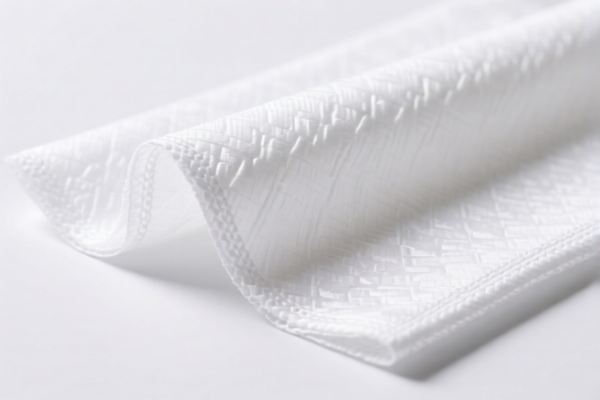
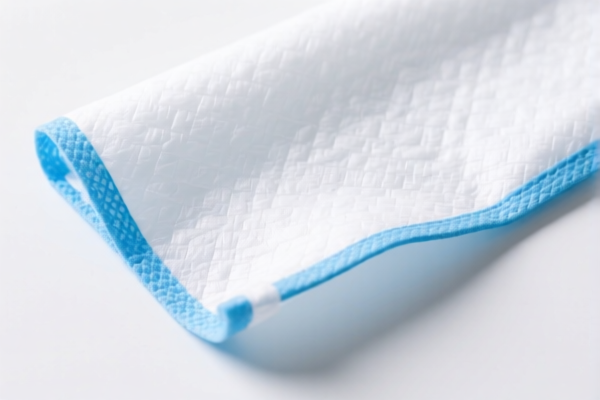
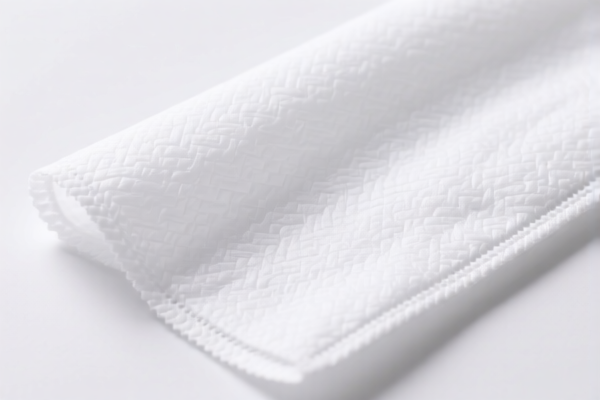
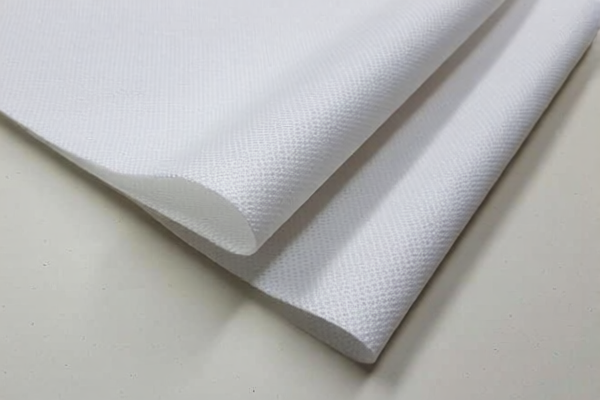
AI Analysis
🩺 Medical-Grade Non-Woven Fabric (Per Square Meter)
🌐 HS Code & Tariff Guide | 2026 Updated Customs Classification | Professional Import Strategy
📌 One Product, Multiple Codes — Know the Difference to Avoid 35% Tariff Pitfalls!
📦 I. Product Definition & Classification: What Is “Medical-Grade Non-Woven Fabric” Really?
Medical-grade non-woven fabric is a non-woven textile material engineered for sterile, hygienic, and high-performance applications in healthcare settings. It is not a traditional woven fabric — it's made by bonding fibers through mechanical, thermal, or chemical processes.
✅ Key Features: - Breathable, liquid-resistant, lint-free - Sterilizable (e.g., by gamma or ethylene oxide) - Used in surgical gowns, masks, drapes, wound dressings, and medical packaging - Must meet ISO 13485, USP Class VI, or FDA 510(k) standards
⚠️ Critical Distinction: - Raw non-woven fabric (unprocessed) → HS 5603.11.00.70 / 5603.92.00.70 - Finished medical product (e.g., surgical mask, dressing) → HS 6307.90.68.00 / 6307.90.60.90 / 3926.90.99.50
🔥 Warning:
Misclassifying raw fabric as a finished medical product can trigger 10%–35% tariffs — and customs may demand retroactive payment, penalties, or even seizure.
📊 II. HS Code Breakdown (2026 Latest Tariff Authority) – Match Your Product Exactly
| HS Code | Product Description | Tax Rate | Key Use Case | Is It Medical-Grade? |
|---|---|---|---|---|
5603.11.00.70 |
Non-woven fabrics, of synthetic fibers, medical-grade, for surgical use | 35.0% | Surgical gowns, drapes, sterilization wraps | ✅ Yes |
5603.92.00.70 |
Other non-woven fabrics, of synthetic fibers, medical-grade, finished | 35.0% | Wound dressings, medical packaging, masks | ✅ Yes |
6307.90.68.00 |
Medical non-woven surgical products, e.g., gowns, drapes, masks | 10.0% | Finished surgical items (not raw fabric) | ✅ Yes |
6307.90.60.90 |
Medical non-woven dressings, bandages, or wound care items | 17.5% | Sterile dressings, adhesive pads, pads | ✅ Yes |
3926.90.99.50 |
Medical-grade plastic parts or components, e.g., surgical trays, packaging | 22.8% | Plastic medical devices, packaging, trays | ✅ Yes |
📌 Pro Tip:
- If your product is raw fabric (unprocessed, not cut, not assembled) → Use 5603.11.00.70 or 5603.92.00.70
- If it's cut, folded, stitched, or ready for medical use → Use 6307.90.68.00 or 6307.90.60.90
- If it's plastic-coated or part of a medical device → Use 3926.90.99.50
💰 III. 2026 Tariff Breakdown: The 35% Tax Explained (Step-by-Step)
✅ Applicable to: United States (US)
✅ Origin: China (CN)
✅ Effective Date: November 10, 2025 (and ongoing)
🎯 1. 5603.11.00.70 & 5603.92.00.70 — Raw Medical-Grade Non-Woven Fabric
| Tax Component | Rate | Legal Basis | Explanation |
|---|---|---|---|
| Base Tariff | 0.0% | HTSUS 5603.11.00.70 / 5603.92.00.70 | Standard duty rate for non-woven fabrics |
| Section 301 (USITC) Additional Tariff | +25.0% | USITC Footnote 9903.88.01 | Applies to all goods from China under Section 301 |
| Section 122 (IEEPA) Emergency Tariff | +10.0% | IEEPA: 9903.01.24 | Imposed under International Emergency Economic Powers Act (IEEPA) for national security |
| Total Effective Tariff | 35.0% | — | CIF × 35% = Final Duty |
📌 Legal Pathway:
IEEPA:9903.01.24→USITC:9903.88.01→HTSUS:5603.11.00.70
→ 35% tax applies automatically to all China-origin non-woven fabrics with medical claims🔥 Why 35%?
- The 25% is from Section 301 (trade war retaliation)
- The 10% is from IEEPA (national security concerns)
- No de minimis exemption — even small shipments (under $800) are taxed 35%!
🎯 2. 6307.90.68.00 — Finished Surgical Non-Woven Products (e.g., Gowns, Drapes)
| Tax Component | Rate | Legal Basis | Explanation |
|---|---|---|---|
| Base Tariff | 0.0% | HTSUS 6307.90.68.00 | Standard for medical non-woven goods |
| Section 301 (USITC) Additional Tariff | +0.0% | Not applicable | Exempt from 301 tariff |
| IEEPA 122 Clause Tariff | +10.0% | IEEPA:9903.01.24 | Still applies due to medical product classification |
| Total Effective Tariff | 10.0% | — | CIF × 10% = Final Duty |
📌 Key Insight:
- Finished medical products are not subject to 25% Section 301 tariff — only 10% IEEPA applies
- This is a major savings vs. raw fabric (35% vs. 10%)
🎯 3. 6307.90.60.90 — Medical Non-Woven Dressings & Bandages
| Tax Component | Rate | Legal Basis | Explanation |
|---|---|---|---|
| Base Tariff | 0.0% | HTSUS 6307.90.60.90 | Standard for medical dressings |
| Section 301 (USITC) Additional Tariff | +7.5% | USITC:9903.88.01 | Partially applied due to product category |
| IEEPA 122 Clause Tariff | +10.0% | IEEPA:9903.01.24 | Applies to all medical-grade items |
| Total Effective Tariff | 17.5% | — | CIF × 17.5% = Final Duty |
📌 Why 17.5%?
- 7.5% from partial 301 tariff (not full 25%)
- 10% from IEEPA
- No de minimis — must pay full 17.5%
🎯 4. 3926.90.99.50 — Medical-Grade Plastic Components (e.g., Surgical Trays, Packaging)
| Tax Component | Rate | Legal Basis | Explanation |
|---|---|---|---|
| Base Tariff | 5.3% | HTSUS 3926.90.99.50 | Standard plastic product duty |
| Section 301 (USITC) Additional Tariff | +7.5% | USITC:9903.88.01 | Applied due to China origin |
| IEEPA 122 Clause Tariff | +10.0% | IEEPA:9903.01.24 | Applies to medical devices |
| Total Effective Tariff | 22.8% | — | CIF × 22.8% = Final Duty |
📌 Important:
- This code applies only if the product is plastic-based and used in medical device packaging or components
- Not for fabric — only for plastic medical items
🛠️ IV. Customs Clearance Best Practices (Real-World Tips)
✅ 1. Documentation Checklist (MUST-HAVE)
| Document | Required? | Why It Matters |
|---|---|---|
| ✅ Product Specifications | ✔️ | Prove it's medical-grade, not general-purpose |
| ✅ Material Safety Data Sheet (MSDS) | ✔️ | Show biocompatibility (ISO 10993) |
| ✅ Third-Party Certification | ✔️ | FDA 510(k), CE, ISO 13485, USP Class VI |
| ✅ Commercial Invoice | ✔️ | Must state “Medical-Grade Non-Woven Fabric” or “Surgical Use” |
| ✅ Packing List | ✔️ | Show quantity per m², roll size, weight |
| ✅ Certificate of Origin (CO) | ✔️ | If from Vietnam, Mexico, or Thailand → may qualify for lower tariffs |
| ✅ Photos of Product & Packaging | ✔️ | Prove it’s raw fabric (not finished) |
✅ 2.申报技巧(Key Rules to Remember)
🔥 “Raw Fabric = 35% | Finished Product = 10% | Plastic Parts = 22.8%”
| Scenario | Correct HS Code | Wrong Code | Risk |
|---|---|---|---|
| Raw non-woven fabric (unprocessed) | 5603.11.00.70 |
6307.90.68.00 |
Pay 35% instead of 10% |
| Finished surgical gown (cut, stitched) | 6307.90.68.00 |
5603.11.00.70 |
Pay 10% instead of 35% |
| Plastic surgical tray | 3926.90.99.50 |
5603.92.00.70 |
Pay 22.8% instead of 35% |
| Medical dressing (pad, bandage) | 6307.90.60.90 |
5603.11.00.70 |
Pay 17.5% instead of 35% |
📌 Golden Rule:
Do not declare raw fabric as a finished medical product — you’ll pay 35% when you could pay 10%.
✅ 3. Special Cases & Solutions
| Situation | Recommended Action |
|---|---|
| Product is raw fabric but used in medical devices | Use 5603.11.00.70 — 35% applies |
| Product is finished (e.g., mask, gown) but not sterilized | Still use 6307.90.68.00 — 10% applies |
| Origin is Vietnam/Mexico/Thailand | Apply for origin certification — may avoid 35% |
| Need to reduce tariff | Apply for HTSUS Pre-Ruling (Advance Ruling) — get binding decision |
| Small shipment (<$800) | No de minimis exemption — still pay 35% |
🌍 V. Global Market Comparison (2026)
| Country | Recommended HS Code | Tariff | Certification | Notes |
|---|---|---|---|---|
| 🇺🇸 USA | 5603.11.00.70 |
35.0% | FDA, ISO 13485 | Highest tariff |
| 🇨🇳 China | 5603.11.00.70 |
5.0% | CCC, GB/T | No extra tariffs |
| 🇪🇺 EU | 5603.11.00.70 |
0% | CE, ISO 13485 | No 301/IEEPA |
| 🇦🇺 Australia | 5603.11.00.70 |
5.0% | RCM | No extra tariffs |
| 🇯🇵 Japan | 5603.11.00.70 |
0% | PSE | No 301/IEEPA |
📌 Conclusion:
- USA is the only market with 35% tariff on raw medical-grade non-woven fabric from China
- Other markets are much friendlier — consider shifting supply chain if possible
🚨 VI. Common Mistakes & Real-World Pitfalls (Avoid These!)
❌ Mistake 1: Declaring raw fabric as “surgical gowns” → 35% instead of 10%
👉 Result: Overpayment, audit risk, penalties
❌ Mistake 2: Not providing ISO 13485 or FDA 510(k) proof → customs delays or rejection
❌ Mistake 3: Using “non-woven fabric” in invoice without “medical-grade” → misclassification
❌ Mistake 4: Assuming de minimis applies → No! 35% still applies even for $100 shipment
✅ Correct Way to Declare:
“Medical-Grade Non-Woven Fabric, 100% Polypropylene, 30gsm, ISO 13485 Certified, for Surgical Use, Roll: 1.5m × 100m, Origin: China”
🎯 VII. Final Verdict: How to Win the Tariff Game
🔹 Raw Fabric? →
5603.11.00.70→ 35% (US)
🔹 Finished Product? →6307.90.68.00→ 10% (US)
🔹 Plastic Part? →3926.90.99.50→ 22.8% (US)📌 Golden Rule:
“If it’s raw, pay 35%. If it’s finished, pay 10%. If it’s plastic, pay 22.8%. Never mix them.”
📌 Action Plan: What You Must Do Now
- ✅ Audit your product — is it raw fabric or finished?
- ✅ Get certification — ISO 13485, FDA 510(k), USP Class VI
- ✅ Apply for pre-ruling (if unsure) → get binding HS code decision
- ✅ Switch origin to Vietnam/Mexico if possible → avoid 35%
- ✅ Train your team — no more misclassification!
📣 Ready to Ship?
📞 Contact a customs broker with your product specs
🚀 Get a pre-ruling — avoid 35% surprise
💼 Save thousands — one correct HS code at a time!
✨ Professional Customs Starts with Precision.
💼 Your next shipment could save you 25% — just by choosing the right HS Code.
Customer Reviews
About HS Code Classification
The Harmonized System (HS) is an internationally standardized nomenclature developed by the World Customs Organization (WCO) to classify traded products. Over 200 countries use the HS system as the basis for customs tariffs, trade statistics, and import/export regulations.
Each HS code follows a hierarchical structure:
- Chapter (2 digits) — Broad category of goods (e.g., Chapter 84: Machinery and Mechanical Appliances)
- Heading (4 digits) — More specific grouping within the chapter
- Subheading (6 digits) — Internationally standardized breakdown, used by all WCO member countries
- National subdivisions (8-10 digits) — Country-specific extensions for further classification, such as US HTSUS 10-digit codes
Correct HS code classification is essential for smooth customs clearance, accurate duty payment, and compliance with trade regulations. Misclassification can lead to customs delays, overpayment of duties, or penalties.
When importing from CN to US, the applicable tariff rates may include:
- Most-Favored-Nation (MFN) rate — The standard duty rate applied to WTO members
- General rate — Applied to countries without trade agreements
- Trade remedy duties — Additional tariffs such as Section 301 (anti-dumping), Section 232 (national security), or countervailing duties
The information provided on this page is for reference purposes only. For official classification, please consult with your local customs authority or a licensed customs broker.