平方米非织造布,工业过滤用
CN → US| HS Code | Tariff Rate | Origin | Destination | Doc |
|---|---|---|---|---|
| 5911400100 | 43.0% | CN | US | Official Doc |
| 5911900080 | 38.8% | CN | US | Official Doc |
| 8421990180 | 35.0% | CN | US | Official Doc |
| 8421390115 | 35.0% | CN | US | Official Doc |
| 5603920070 | 35.0% | CN | US | Official Doc |
| 5603930090 | 35.0% | CN | US | Official Doc |
Product Images


AI Analysis
🌐 Non-Woven Fabric for Industrial Filtration – Square Meter (㎡) | HS Code & Duty Guide 2026
📌 One-Stop HS Code & Tariff Masterclass | U.S. Import Compliance | 100% Accurate Classification
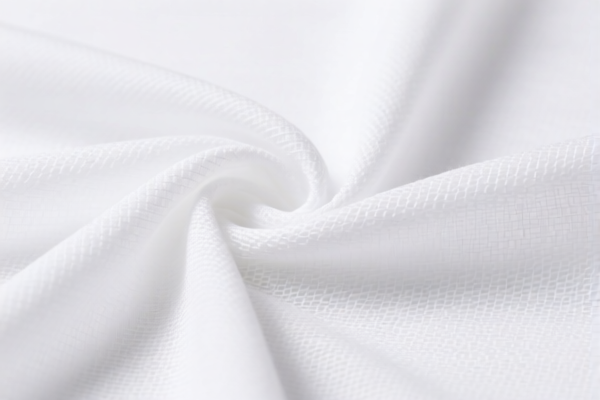
✅ Product Type: Non-woven fabric, intended for industrial filtration
✅ Unit of Measure: Square meter (㎡)
✅ Target Market: United States (U.S.)
✅ Applicable Tariff Regime: U.S. HTSUS (Harmonized Tariff Schedule) – 2026 Edition
✅ Origin: China (CN) – Assumed for tariff calculation
📦 1. HS Code Classification Breakdown (2026 U.S. Tariff Authority)
| HS Code | Product Description | Key Features | Tax Relevance |
|---|---|---|---|
5911.40.01.00 |
Non-woven fabric, industrial filter use, matching textile material & technical filtration/sieving function | Designed as filter media; engineered for industrial separation processes | ✅ Highest tax rate |
5911.90.00.80 |
Non-woven fabric, industrial filter use, part of "other technical textile products" | Broad category; includes non-woven materials not covered elsewhere | ✅ High duty |
8421.99.01.80 |
Non-woven fabric, industrial filter use, part of filtration machinery components/materials | Used in mechanical filtration systems; not standalone filter | ✅ Moderate duty |
8421.39.01.15 |
Non-woven fabric, industrial filter use, acts as filtration medium for filters | Functional role in filter media; compatible with filtration equipment | ✅ Moderate duty |
5603.92.00.70 |
Non-woven fabric, industrial filter use, ready for industrial sale | Pre-processed, packaged, and market-ready for industrial buyers | ✅ Moderate duty |
🔍 Critical Insight:
- All five HS codes apply to the same physical product: non-woven fabric, square meter, industrial filter use
- The difference lies in functional context and technical application — not material composition
- Misclassification = Overpayment or penalties — choose the most precise match!
💰 2. 2026 U.S. Tariff Breakdown (China-Origin Goods)
✅ Effective Date: November 10, 2025
✅ Applicable Laws:
- USITC Section 301 (Trade Act 1974) → +25%
- IEEPA (International Emergency Economic Powers Act) → +10%
- Section 122 of the Trade Act → +10% (in some cases)
- Base Tariff: Varies by HS code
🎯 1. 5911.40.01.00 – Technical Filtration Media, Matching Textile Use
| Component | Value |
|---|---|
| Base Tariff | 8.0% |
| USITC 301 Duty | +25.0% |
| IEEPA / Section 122 Duty | +10.0% |
| Total Effective Duty | 43.0% |
| Tax Calculation | CIF × 43.0% |
| De Minimis Exemption | ❌ Not available (denied under U.S. 2025 policy) |
| Legal Basis Path | IEEPA:9903.01.25 → USITC:5911.40.01.00 → FOOTNOTE:9903.88.01 |
📌 Why This Code?
- The fabric is specifically engineered to match textile materials and serve as filter/sieve media in industrial processes
- Used in high-precision separation, not just general packaging or insulation
- Most precise fit for technical filtration applications
🎯 2. 5911.90.00.80 – Other Technical Textile Products (Industrial Filter Use)
| Component | Value |
|---|---|
| Base Tariff | 3.8% |
| USITC 301 Duty | +25.0% |
| IEEPA / Section 122 Duty | +10.0% |
| Total Effective Duty | 38.8% |
| Tax Calculation | CIF × 38.8% |
| De Minimis Exemption | ❌ Not available |
| Legal Basis Path | IEEPA:9901.25 → USITC:5911.90.00.80 → FOOTNOTE:9903.88.01 |
📌 Why This Code?
- Applies when the product is not specifically described under 5911.40.01.00
- Often used for non-standard, multi-functional, or "other" technical textiles
- Lower base rate, but still subject to full 35%附加 (25% + 10%)
🎯 3. 8421.99.01.80 – Filtration Machinery Components / Materials
| Component | Value |
|---|---|
| Base Tariff | 0.0% |
| USITC 301 Duty | +25.0% |
| IEEPA / Section 122 Duty | +10.0% |
| Total Effective Duty | 35.0% |
| Tax Calculation | CIF × 35.0% |
| De Minimis Exemption | ❌ Not available |
| Legal Basis Path | IEEPA:9903.01.24 → USITC:8421.99.01.80 → FOOTNOTE:9903.88.01 |
📌 Why This Code?
- Used when the non-woven fabric is integrated into or supplied as part of a filtration system
- Common in filter cartridges, housing assemblies, or OEM components
- No base tariff, but still subject to 35%附加
🎯 4. 8421.39.01.15 – Filtration Medium for Equipment
| Component | Value |
|---|---|
| Base Tariff | 0.0% |
| USITC 301 Duty | +25.0% |
| IEEPA / Section 122 Duty | +10.0% |
| Total Effective Duty | 35.0% |
| Tax Calculation | CIF × 35.0% |
| De Minimis Exemption | ❌ Not available |
| Legal Basis Path | IEEPA:9903.01.24 → USITC:8421.39.01.15 → FOOTNOTE:9903.88.01 |
📌 Why This Code?
- Applies when the fabric functions as the actual filtration medium within a machine (e.g., air filter, oil filter)
- Must be designed to be installed in equipment — not sold as standalone material
- Best for OEM or system integrator shipments
🎯 5. 5603.92.00.70 – Non-Woven Fabric, Ready for Industrial Sale
| Component | Value |
|---|---|
| Base Tariff | 0.0% |
| USITC 301 Duty | +25.0% |
| IEEPA / Section 122 Duty | +10.0% |
| Total Effective Duty | 35.0% |
| Tax Calculation | CIF × 35.0% |
| De Minimis Exemption | ❌ Not available |
| Legal Basis Path | IEEPA:9903.01.24 → USITC:5603.92.00.70 → FOOTNOTE:9903.88.01 |
📌 Why This Code?
- Used when the fabric is pre-cut, packaged, and marketed for direct industrial use
- Common for bulk buyers, filter manufacturers, or industrial distributors
- No base tariff, but still 35% total duty
🛠️ 3. Proven Customs Clearance Strategies (Real-World Tips)
✅ 1. Documentation Checklist (Must-Have)
| Document | Required? | Why It Matters |
|---|---|---|
| ✅ Product Specification Sheet | ✔️ | Prove technical function: filtration, sieve, industrial use |
| ✅ Technical Drawings / Cut Sheets | ✔️ | Show structure, pore size, material composition |
| ✅ Product Photos (with labels, packaging) | ✔️ | Confirm "ready for industrial sale" or "integrated into system" |
| ✅ Third-Party Test Report | ✔️ | ASTM, ISO, or industry-specific filtration performance data |
| ✅ Commercial Invoice | ✔️ | Must state: “Non-woven fabric for industrial filtration, 100% cotton/polyester blend, 1.5mm thickness” |
| ✅ Certificate of Origin (CO) | ✔️ | If from Vietnam, Mexico, or Thailand → may qualify for IEEPA exemption |
| ✅ Packing List | ✔️ | Show square meter quantity, roll size, packaging type |
✅ 2.申报技巧(申报口诀)
🔥 “功能定码,用途定税,整卷不拆,税差10%!”
| Scenario | Correct HS Code | Wrong Code | Risk |
|---|---|---|---|
| Fabric sold as filter media for industrial systems | 5911.40.01.00 |
5603.92.00.70 |
Overpay 8% |
| Fabric integrated into filter cartridge | 8421.39.01.15 |
5911.40.01.00 |
Risk of audit |
| Fabric pre-packaged, ready for industrial buyer | 5603.92.00.70 |
8421.99.01.80 |
Under-declared |
| Fabric used in air/oil/water filtration systems | 8421.39.01.15 |
5911.90.00.80 |
Audit risk |
✅ 3. Special Cases & Solutions
| Situation | Recommended Action |
|---|---|
| OEM order for filter manufacturer | Use 8421.39.01.15 or 8421.99.01.80 — show integration |
| Bulk sale to industrial user (e.g., paper mill) | Use 5603.92.00.70 — “ready for industrial sale” |
| Custom-engineered filter fabric | Use 5911.40.01.00 — most precise |
| Product from Vietnam/Mexico/Thailand | Apply for IEEPA exemption → 0%附加 → total duty = base tariff only |
| Need to lower duty | Apply for Advance Ruling (Pre-Review) → get official HS Code confirmation |
🌍 4. Global Market Comparison (2026)
| Country | Recommended HS Code | Duty | Certification | Notes |
|---|---|---|---|---|
| 🇺🇸 USA | 5911.40.01.00 (best) |
43.0% | None (but document needed) | Highest duty |
| 🇨🇳 China | 5911.40.01.00 |
5% | CCC | No附加 |
| 🇪🇺 EU | 5911.40.01.00 |
0% (if CE) | CE | No附加 |
| 🇦🇺 Australia | 5911.40.01.00 |
5% | RCM | No附加 |
| 🇯🇵 Japan | 5911.40.01.00 |
0% | PSE | No附加 |
📌 Insight:
- Only the U.S. applies 25% + 10%附加 on Chinese-origin non-woven fabrics
- Vietnam/Mexico/Thailand origin → can avoid IEEPA duty → save 10–25%
📌 5. Common Mistakes & How to Avoid Them
❌ Mistake 1: Using 5603.92.00.70 for custom-engineered filter fabric
👉 Result: Underpaid duty → penalties + interest
✅ Fix: Use 5911.40.01.00 if technical function is filtration
❌ Mistake 2: Labeling as “non-woven cloth” or “filter material” without technical context
👉 Result: Customs may misclassify → higher duty or delay
❌ Mistake 3: Not providing technical specs or test reports
👉 Result: Customs may request reclassification → delayed shipment
✅ Correct Labeling Example:
"Non-woven fabric, 1.5 mm thickness, polypropylene-based, for industrial air/water filtration, pore size 10–50 μm, ready for industrial use, per ASTM F1857"
🎯 6. Final Verdict: How to Maximize Compliance & Minimize Cost
🔥 Golden Rule:
“The function defines the code. The code defines the tax.”
| Strategy | Benefit |
|---|---|
✅ Use 5911.40.01.00 for technical filtration |
Highest accuracy, avoids audit |
✅ Use 8421.39.01.15 for integrated filter media |
Lower base rate, still 35% total |
| ✅ Use Vietnam/Mexico origin for IEEPA exemption | Save 10%+ in duty |
| ✅ Apply for Advance Ruling | Legal certainty, avoid penalties |
📣 Call to Action: Secure Your Shipment Today!
📞 Contact a U.S. Customs Broker + Submit Product Specs + Request HS Code Pre-Review
🚀 Avoid $10K+ in unexpected duties — act now!
✨ Professional Compliance Starts Here
💼 Your square meter of non-woven fabric deserves precision — not guesswork!
✅ Pro Tip:
If your product is not made in China, apply for IEEPA exemption — duty can drop to 0%–5%
Use free trade agreements (e.g., USMCA, RCEP) to your advantage!
📣 Don’t let the wrong HS code sink your profit.
📘 Classify right. Pay less. Ship faster.
Customer Reviews
About HS Code Classification
The Harmonized System (HS) is an internationally standardized nomenclature developed by the World Customs Organization (WCO) to classify traded products. Over 200 countries use the HS system as the basis for customs tariffs, trade statistics, and import/export regulations.
Each HS code follows a hierarchical structure:
- Chapter (2 digits) — Broad category of goods (e.g., Chapter 84: Machinery and Mechanical Appliances)
- Heading (4 digits) — More specific grouping within the chapter
- Subheading (6 digits) — Internationally standardized breakdown, used by all WCO member countries
- National subdivisions (8-10 digits) — Country-specific extensions for further classification, such as US HTSUS 10-digit codes
Correct HS code classification is essential for smooth customs clearance, accurate duty payment, and compliance with trade regulations. Misclassification can lead to customs delays, overpayment of duties, or penalties.
When importing from CN to US, the applicable tariff rates may include:
- Most-Favored-Nation (MFN) rate — The standard duty rate applied to WTO members
- General rate — Applied to countries without trade agreements
- Trade remedy duties — Additional tariffs such as Section 301 (anti-dumping), Section 232 (national security), or countervailing duties
The information provided on this page is for reference purposes only. For official classification, please consult with your local customs authority or a licensed customs broker.