弹力带
CN → US| HS Code | Tariff Rate | Origin | Destination | Doc |
|---|---|---|---|---|
| 5604100000 | 41.3% | CN | US | Official Doc |
| 4008111000 | 35.0% | CN | US | Official Doc |
| 4008210000 | 35.0% | CN | US | Official Doc |
| 5903102010 | 35.0% | CN | US | Official Doc |
| 5903102090 | 35.0% | CN | US | Official Doc |
Product Images
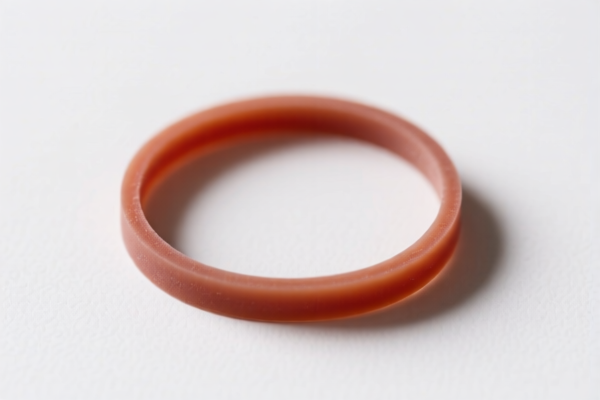
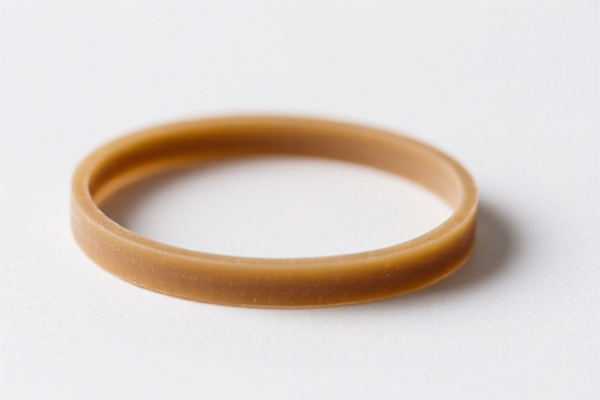
AI Analysis
🧘♂️ Elastic Bands (Resistance Bands) – Global Trade & Customs Guide 2026
🌐 HS Code Reference & Customs Clearance Strategy | 2026 Tariff Breakdown | Expert通关 Strategy
🌟 1. Product Definition & Classification: What is an "Elastic Band"?
Elastic Bands (often called Resistance Bands) are versatile tools used in fitness, rehabilitation, and industrial packaging. Their classification hinges entirely on material composition and manufacturing process.
In international trade, they fall into two distinct categories:
- Textile-Based Elastic Bands: Bands where the core is covered by woven fabric (e.g., cotton, polyester). These are often used for fitness and medical purposes where skin contact is frequent.
- Rubber-Based Elastic Bands: Bands made entirely of rubber (natural or synthetic) or rubber-coated materials. These are typically thicker, used for heavy industrial resistance or heavy-duty packaging.
⚠️ Critical Distinction Point: * If the band has a woven fabric outer layer covering the rubber/elastic core → Chapter 56 (Textiles). * If the band is pure rubber or rubber-based without a textile cover → Chapter 40 (Rubber). * If the band is a textile fabric coated with PVC/Rubber → Chapter 59 (Impregnated Textiles).
📦 2. HS Code Classification Details (2026 Official Tariff Reference)
Based on the specific material and form, here are the precise classifications from your data set:
| HS Code | Product Description & Logic | Material Form | Key Classification Feature |
|---|---|---|---|
5604.10.00.00 |
Textile-Covered Elastic Tape | Textile covering rubber/elastic core | ✅ Fits "Textile Cover": The band is defined by having a fabric outer layer. |
4008.11.10.00 |
Natural Rubber Strip/Band | Natural Rubber | ✅ Fits "Natural Rubber": Matches the shape "strip/band" with natural rubber logic. |
4008.21.00.00 |
Vulcanized Rubber Strip/Band | Vulcanized Rubber | ✅ Fits "Shape & Material": "Plate, sheet, or strip" made of vulcanized rubber. |
5903.10.20.10 |
PVC/Rubber Coated Textile | Textile + PVC/Rubber | ✅ Fits "Impregnated/Covered": Textile fabric with PVC or rubber coating. |
5903.10.20.90 |
Other Coated Textile Fabric | Textile (Other) | ✅ Fits "Other Coated": Textile fabric under the "Other" category for coating. |
🔍 Key Reminder: *
5604.10.00.00is the most common for fitness bands with fabric sheaths. *4008codes are strictly for pure rubber bands without fabric. *5903codes are for flat textiles that have been coated (like a mat or heavy-duty strap), not necessarily a cylindrical "twisted" band, though some "strip" forms fit here.
💰 3. 2026 Tariff Rate Breakdown (Detailed Tax Analysis)
✅ Target Market: United States (US) ✅ Country of Origin: China (CN) ✅ Effective Date: 2026 (Including subsequent imports) ⚠️ Policy: Section 301 (25%) + Section 122 (10%) + Base Tariff
🎯 Scenario A: Textile-Covered Bands
HS Code: 5604.10.00.00
This code attracts the highest total tax due to the base tariff being non-zero.
| Tax Component | Rate | Description |
|---|---|---|
| Base Tariff (MFN) | 6.3% | Standard Most-Favored-Nation duty. |
| Section 301 Tariff | 25.0% | Additional duty on Chinese goods under Section 301. |
| Section 122 Tariff | 10.0% | Additional duty targeting specific Chinese textile/rubber categories. |
| 🔥 Total Tax Rate | 41.3% | High Cost Alert! |
📌 Logic: The calculation is
(1 + 0.063 + 0.25 + 0.10) - 1or additive depending on specific rules, but the total effective rate is 41.3%. * Legal Path:Base 6.3%+Section 301 (25%)+Section 122 (10%).
🎯 Scenario B: Pure Rubber Bands
HS Codes: 4008.11.10.00 & 4008.21.00.00
These codes benefit from a "0%" base tariff, but the Section 301 tax remains high.
| Tax Component | Rate | Description |
|---|---|---|
| Base Tariff (MFN) | 0.0% | No standard duty for natural/vulcanized rubber strips. |
| Section 301 Tariff | 25.0% | Mandatory for Chinese-origin goods. |
| Section 122 Tariff | 10.0% | Mandatory additional layer. |
| 🔥 Total Tax Rate | 35.0% | Significant but lower than textile-covered. |
📌 Logic: Even though the base is 0%, the Section 301 (25%) + Section 122 (10%) = 35%. * Note: This applies to Natural Rubber (
4008.11) and Vulcanized Rubber (4008.21).
🎯 Scenario C: Coated Textile Bands
HS Codes: 5903.10.20.10 & 5903.10.20.90
Textile fabrics with PVC or rubber coating.
| Tax Component | Rate | Description |
|---|---|---|
| Base Tariff (MFN) | 0.0% | No standard duty for coated textiles in this subheading. |
| Section 301 Tariff | 25.0% | Mandatory Section 301 surcharge. |
| Section 122 Tariff | 10.0% | Mandatory Section 122 surcharge. |
| 🔥 Total Tax Rate | 35.0% | Same as rubber bands. |
📌 Logic: Similar to rubber bands, the total is 35.0%. The difference lies in the Base Tariff being 0% for both, unlike the textile-covered band (
5604).
🛠️ 4. Customs Clearance Practical Tips (Avoiding Pitfalls)
✅ 1. Preparation Checklist (Must-Have)
| Document | Requirement | Reason |
|---|---|---|
| Material Composition Sheet | ✅ Critical | Must explicitly state % of Textile vs. Rubber vs. PVC. |
| Product Photos | ✅ Critical | Show the cross-section to prove if there is a textile cover (5604) or pure rubber (4008). |
| Function Description | ✅ Required | "Fitness resistance band" vs. "Industrial sealing strip" affects interpretation. |
| Duty Calculation Proof | ✅ Required | Show your own calculation of the 41.3% vs 35% to avoid disputes. |
| Origin Certificate (CO) | ✅ Required | Proves "China Origin" to apply the correct Section 301/122 taxes. |
✅ 2. Declaration Strategy (The "Golden Rule")
🔥 "Material is King, Shape is Queen!"
| Scenario | Correct HS Code | Tax Rate | Risk if Wrong |
|---|---|---|---|
| Band has fabric outer layer | 5604.10.00.00 |
41.3% | If misdeclared as 4008, you might be penalized for underpayment (Base tax 6.3% difference). |
| Band is pure rubber | 4008.11.10.00 |
35.0% | Safe if proven to be natural rubber. |
| Band is coated fabric (flat) | 5903.10.20.10 |
35.0% | Ensure it's not "woven" but "coated" textile. |
| Band is plain textile (no rubber) | ❌ Not listed | N/A | Do NOT use 5604 if there is no rubber core. |
🚫 Common Mistake: * Declaring a Fabric-Covered band as
4008.11(Pure Rubber) to save the 6.3% base tax. * Consequence: Customs inspection will reject it due to "Textile Cover" visible in photos. Penalties + Back Taxes (41.3% - 35% = 6.3% + fines).
✅ 3. Special Situations
| Situation | Recommendation |
|---|---|
| Mixed Materials | If the band is 50% textile, 50% rubber, classify under 5604 (Textile covers the nature). |
| Industrial vs. Fitness | No difference in tax. Focus on material structure. |
| Section 122 Eligibility | Verify if the specific "Band" falls under the 122 Tariff list. In this dataset, ALL listed codes are subject to the 10% Section 122 tariff. |
🌍 5. Global Market Comparison (2026 Overview)
| Market | Recommended Code | Total Tax Rate | Notes |
|---|---|---|---|
| 🇺🇸 USA | 5604 or 4008 |
35% ~ 41.3% | High Tariff. Section 301 (25%) + 122 (10%) + Base. |
| 🇪🇺 EU | Varies | 0% ~ 4.5% | Usually lower base tariffs, NO Section 301/122. |
| 🇨🇳 China | Varies | 5% ~ 10% | Low tariffs for domestic or re-export scenarios. |
| 🇯🇵 Japan | Varies | 0% ~ 3.8% | Generally low tariffs for rubber/textiles. |
📌 Conclusion: * USA is the most expensive market for Elastic Bands due to the cumulative 35%-41.3% tariff. * Textile-Covered (
5604) is the most expensive due to the 6.3% base tariff. * Pure Rubber (4008) and Coated Textile (5903) offer a 35% rate, saving 6.3% compared to textile-covered.
📌 6. Final Verdict & Action Plan
🎯 Summary of Tax Structure
- Highest Tax:
5604.10.00.00(41.3%) – Textile-Covered. - Medium Tax:
4008.11.10.00,4008.21.00.00,5903.10.20.x(35.0%) – Pure Rubber or Coated. - All include: 25% Section 301 + 10% Section 122.
✅ Action Items for Importers
- Verify Material: Inspect the product cross-section. Is there visible fabric?
- Yes → Use
5604.10.00.00(Budget 41.3%). - No → Use
4008.11.10.00or5903.10.20.10(Budget 35.0%).
- Yes → Use
- Check Section 122: Confirm the product is listed under the 122 Tariff List. (Data confirms YES for all listed codes).
- Calculate Landed Cost: Add 35% to 41.3% to your CIF value immediately to avoid margin erosion.
- Document Evidence: Keep a photo of the cut section ready for Customs inspection to prove the absence/presence of textile cover.
🚀 Pro Tip: "If you can remove the fabric cover without tearing the rubber core, you might argue for
4008or5903to save 6.3% tax. But if the fabric is integral (woven over), you MUST pay5604tax."
✨ Clear Customs, Maximize Profit! 💼 Precision in Classification = Savings in Taxes! 📞 Consult your broker with the Material Composition Sheet today!
Customer Reviews
About HS Code Classification
The Harmonized System (HS) is an internationally standardized nomenclature developed by the World Customs Organization (WCO) to classify traded products. Over 200 countries use the HS system as the basis for customs tariffs, trade statistics, and import/export regulations.
Each HS code follows a hierarchical structure:
- Chapter (2 digits) — Broad category of goods (e.g., Chapter 84: Machinery and Mechanical Appliances)
- Heading (4 digits) — More specific grouping within the chapter
- Subheading (6 digits) — Internationally standardized breakdown, used by all WCO member countries
- National subdivisions (8-10 digits) — Country-specific extensions for further classification, such as US HTSUS 10-digit codes
Correct HS code classification is essential for smooth customs clearance, accurate duty payment, and compliance with trade regulations. Misclassification can lead to customs delays, overpayment of duties, or penalties.
When importing from CN to US, the applicable tariff rates may include:
- Most-Favored-Nation (MFN) rate — The standard duty rate applied to WTO members
- General rate — Applied to countries without trade agreements
- Trade remedy duties — Additional tariffs such as Section 301 (anti-dumping), Section 232 (national security), or countervailing duties
The information provided on this page is for reference purposes only. For official classification, please consult with your local customs authority or a licensed customs broker.