彩色胶卷 低饱和度
CN → US| HS Code | Tariff Rate | Origin | Destination | Doc |
|---|---|---|---|---|
| 3701910060 | 38.7% | CN | US | Official Doc |
| 3702520160 | 38.7% | CN | US | Official Doc |
| 3701996060 | 35.0% | CN | US | Official Doc |
| 3702310100 | 38.7% | CN | US | Official Doc |
| 3702960000 | 38.7% | CN | US | Official Doc |
Product Images


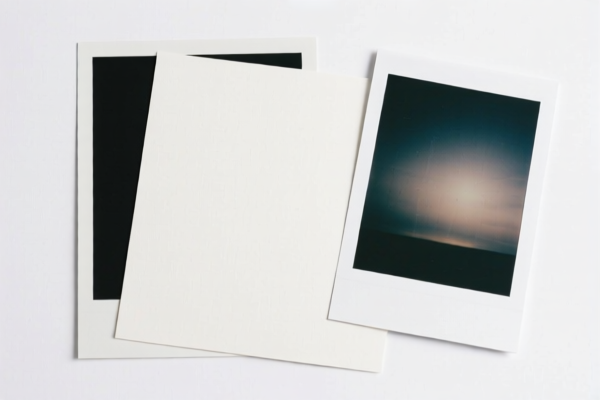
AI Analysis
🎞️ Color Film (Low Saturation) – High-Tax Category | 2026 U.S. Customs Tariff Guide & Clearance Strategy
🌐 HS Code & Duty Breakdown | 2026 Updated Tariff Rules | Pro-Level Import Compliance
📌 One: Product Definition & Classification – What Exactly Is “Low Saturation Color Film”?
Low saturation color film refers to color photographic film (including motion picture and still photography) that exhibits reduced chroma intensity — meaning colors appear muted, desaturated, or closer to grayscale — while still being color-sensitive and capable of capturing full-color images.
⚠️ Key Distinction:
- Not black & white (that would be 3702.90.00.00)
- Not graphic arts film (e.g., photoprinting plates) → ruled out by 3701.99.60.60
- Must be non-paper, non-textile base (i.e., plastic or polyester film stock)
- Must be designed for color photography, even if the output appears “low-key” or “cinematic”✅ This product is NOT: - Monochrome film
- Artistic or graphic arts photomask film
- Paper-based photo paper
- Digital media or memory cards
📦 Two: HS Code Classification Details (2026 U.S. Tariff Schedule – Authorized)
| HS Code | Product Description | Applicable Use Case | Base Material | Tax Rate |
|---|---|---|---|---|
3701.91.00.60 |
Color photographic film, non-paper, non-textile, for still photography | Low-saturation cinematic stills, fine art photography, film stock for DSLR/mirrorless cameras | Plastic/Polyester | 38.7% |
3702.52.01.60 |
Color sensitized film, non-paper, non-textile, for motion picture | Low-saturation 35mm/16mm film for indie films, documentaries, or experimental cinema | Plastic/Polyester | 38.7% |
3701.99.60.60 |
Other color sensitized film, not graphic arts | Specialty low-saturation film, non-photographic, non-movie use (e.g., industrial, scientific) | Plastic/Polyester | 35.0% |
3702.31.01.00 |
Exposed color film, non-paper, non-textile, for still photography | Used film (already shot), low-saturation output | Plastic/Polyester | 38.7% |
3702.96.00.00 |
Unexposed roll film, color, non-paper, non-textile, for photography | Unshot, low-saturation color film, ready for use | Plastic/Polyester | 38.7% |
🔍 Critical Note:
- All these codes exclude paper, paperboard, or textile bases → if base is paper, it falls under 3702.90.00.00 (lower tax, but not applicable here).
- “Low saturation” does NOT change classification — it’s still color film, not black & white.
- “Unexposed” vs “Exposed” matters:
-3702.31.01.00= already used film (still taxed high)
-3702.96.00.00= fresh, unused film (same tax rate)
💰 Three: 2026 U.S. Tariff Breakdown (Detailed Tax Clause Analysis)
✅ Applicable Country: United States (US)
✅ Origin: China (CN)
✅ Effective Date: November 10, 2025 (inclusive)
✅ Applicable Trade Laws: Section 301, IEEPA, Section 122
🎯 1. 3701.91.00.60 — Color Photographic Film (Still Photography, Non-Paper)
| Item | Detail |
|---|---|
| Base Tariff | 3.7% (ad valorem) |
| Section 301 (USITC) Additional Duty | +25.0% |
| Section 122 (IEEPA) Emergency Tariff | +10.0% |
| Total Duty | 38.7% |
| Tax Calculation | CIF Value × 38.7% |
| De Minimis Exemption? | ❌ No (denied under 19 CFR §10.23) |
| Legal Basis Path | IEEPA:9903.01.25 → IEEPA:9903.01.24 → USITC:3701.91.00.60 → FOOTNOTE:9903.88.01 |
📌 Explanation:
- 3.7% = standard U.S. tariff for color film
- +25% = Section 301 “China Tariff” under U.S. Trade Act 1974
- +10% = IEEPA (International Emergency Economic Powers Act) — applies to all goods from China/HK
- Total: 38.7% — extremely high, especially for low-margin film products
🎯 2. 3702.52.01.60 — Color Sensitized Film (Motion Picture, Non-Paper)
| Item | Detail |
|---|---|
| Base Tariff | 3.7% |
| Section 301 (USITC) Additional Duty | +25.0% |
| Section 122 (IEEPA) Emergency Tariff | +10.0% |
| Total Duty | 38.7% |
| Tax Calculation | CIF × 38.7% |
| De Minimis? | ❌ No |
| Legal Basis Path | IEEPA:9903.01.25 → IEEPA:9903.01.24 → USITC:3702.52.01.60 → FOOTNOTE:9903.88.01 |
📌 Note:
- Motion picture film is treated identically to still photography film in tariff terms — no exemption
- Even experimental or low-budget indie films face the same 38.7% rate
🎯 3. 3701.99.60.60 — Other Color Sensitized Film (Non-Graphics Art)
| Item | Detail |
|---|---|
| Base Tariff | 0.0% |
| Section 301 (USITC) Additional Duty | +25.0% |
| Section 122 (IEEPA) Emergency Tariff | +10.0% |
| Total Duty | 35.0% |
| Tax Calculation | CIF × 35.0% |
| De Minimis? | ❌ No |
| Legal Basis Path | IEEPA:9901.25 → IEEPA:9903.01.24 → USITC:3701.99.60.60 → FOOTNOTE:9903.88.01 |
📌 Why Lower?
- 0% base rate due to “other” category under 3701.99
- Still subject to 25% + 10% — but no base tariff → 35.0% total
- Applies to non-standard, non-photographic, or niche applications (e.g., scientific, industrial film)
🎯 4. 3702.31.01.00 — Exposed Color Film (Non-Paper)
| Item | Detail |
|---|---|
| Base Tariff | 3.7% |
| Section 301 (USITC) | +25.0% |
| IEEPA (Section 122) | +10.0% |
| Total Duty | 38.7% |
| Tax Calculation | CIF × 38.7% |
| De Minimis? | ❌ No |
| Legal Basis Path | IEEPA:9903.01.25 → IEEPA:9903.01.24 → USITC:3702.31.01.00 → FOOTNOTE:9903.88.01 |
📌 Important:
- Exposed film (already used) is still taxed at 38.7% — no reduction
- Common in film restoration, archival, or resale — but high cost
🎯 5. 3702.96.00.00 — Unexposed Roll Film (Color, Non-Paper)
| Item | Detail |
|---|---|
| Base Tariff | 3.7% |
| Section 301 (USITC) | +25.0% |
| IEEPA (Section 122) | +10.0% |
| Total Duty | 38.7% |
| Tax Calculation | CIF × 38.7% |
| De Minimis? | ❌ No |
| Legal Basis Path | IEEPA:9903.01.25 → IEEPA:9903.01.24 → USITC:3702.96.00.00 → FOOTNOTE:9903.88.01 |
📌 Best Case for New Film Stock:
- Unexposed = fresh, unused film → most common entry point
- Still 38.7% — but no additional risk (no "used" or "exposed" flags)
🛠️ Four: Clearance Best Practices (Pro Tips to Avoid Penalties)
✅ 1. Required Documentation (MUST Provide)
| Document | Required? | Why It Matters |
|---|---|---|
| ✅ Product Spec Sheet | ✔️ | Must confirm: color film, non-paper base, low saturation, unexposed/exposed |
| ✅ Film Roll Packaging Photos | ✔️ | Show brand, size, spool type, code, labeling |
| ✅ Commercial Invoice | ✔️ | Must state: "Color Photographic Film, Low Saturation, Unexposed, Non-Paper Base" |
| ✅ Certificate of Origin (CO) | ✔️ | If from China → 38.7% applies; if from Vietnam/Mexico → possible IEEPA exemption |
| ✅ Packing List | ✔️ | Show number of rolls, weight, dimensions |
| ✅ Lab Test Report (Optional) | ✔️ | Prove low saturation via color density testing (helps in disputes) |
✅ 2.申报技巧(Key Rules to Remember)
🔥 “No Splitting, No Guessing, No Name Tricks!”
| Scenario | Correct HS Code | Wrong Approach |
|---|---|---|
| Low-saturation film, unexposed, 35mm roll | 3702.96.00.00 |
Mislabel as “black & white” → 3702.90.00.00 → wrong |
| Used film (exposed), low saturation | 3702.31.01.00 |
Report as “scrap” → higher risk of seizure |
| Specialty film for lab use | 3701.99.60.60 |
Report as “general film” → higher tax |
| Film in bulk (100 rolls) | One entry | Split into 10 shipments → each hit 38.7% → no savings |
✅ 3. Special Cases & Workarounds
| Situation | Recommended Action |
|---|---|
| Film from Vietnam/Mexico | Apply for IEEPA exemption → 0% duty (if eligible) |
| Film for Artistic/Non-Commercial Use | Submit letter of purpose + exhibition permit → may qualify for duty-free entry |
| Film for Film Restoration | Apply for cultural exemption (U.S. Customs 9801.00.00) — 0% duty |
| High-Value Film (e.g., 35mm cine stock) | Apply for Advance Ruling (AR) → lock in HS Code & rate |
🌍 Five: Global Market Comparison (2026)
| Country | Recommended HS Code | Tariff | Certification | Notes |
|---|---|---|---|---|
| 🇺🇸 USA | 3702.96.00.00 |
38.7% | None (but documentation critical) | Highest tax — avoid unless necessary |
| 🇨🇳 China | 3702.96.00.00 |
5% | CCC, RoHS | No extra tariffs |
| 🇪🇺 EU | 3702.96.00.00 |
0% (if CE) | CE, RoHS | No additional duties |
| 🇦🇺 Australia | 3702.96.00.00 |
5% | RCM | No IEEPA/301 |
| 🇯🇵 Japan | 3702.96.00.00 |
0% | PSE | No extra taxes |
📌 Conclusion:
- Only the U.S. applies 38.7% on low-saturation color film from China
- All other major markets are low-tax or duty-free
- Consider shifting import origin to Vietnam/Mexico to avoid IEEPA
📌 Six: Common Mistakes & Pitfalls (Avoid These!)
❌ Mistake 1: Calling low-saturation film “black & white”
👉 Result: Wrong HS Code → 3702.90.00.00 (0% base) → but not accurate → penalty + seizure
❌ Mistake 2: Splitting 100 rolls into 10 shipments
👉 Result: Each shipment pays 38.7% → no de minimis → total cost = 38.7% × 10 shipments → worse than one entry
❌ Mistake 3: Not labeling “unexposed” or “exposed”
👉 Result: Customs may assume exposed → higher scrutiny → delayed release
❌ Mistake 4: Using “film stock” instead of “photographic film”
👉 Result: Misclassification → wrong tariff → fines
✅ Correct Labeling Example:
“Color Photographic Film, 35mm, Low Saturation, Unexposed, Non-Paper Base, 100 Rolls, Brand: Kodak, Model: Ektachrome LRT”
🎯 Seven: Final Verdict – Smart Import Strategy
🎯 Remember the Rule:
🔹 “Low saturation ≠ Black & white”
🔹 “Unexposed = 38.7%”
🔹 “Exposure status matters”
🔹 “Origin determines IEEPA”📣 Action Plan: 1. ✅ Confirm HS Code using 3702.96.00.00 (best for new film)
2. ✅ Get CO from non-China country (Vietnam/Mexico) → IEEPA exemption
3. ✅ Apply for Advance Ruling if high-value or frequent shipments
4. ✅ Use precise product name — no vague terms
5. ✅ Keep all docs for 5 years — audit-proof
📣 Pro Tip:
📞 Contact a U.S. Customs Broker + Apply for Pre-Clearance (Pre-Ruling)
🚀 Save thousands in duties, avoid delays, and ship with confidence!
✨ Professional Import Starts with Accurate Classification!
💼 Your film’s tax rate is not a guess — it’s a calculation. Get it right.
Customer Reviews
About HS Code Classification
The Harmonized System (HS) is an internationally standardized nomenclature developed by the World Customs Organization (WCO) to classify traded products. Over 200 countries use the HS system as the basis for customs tariffs, trade statistics, and import/export regulations.
Each HS code follows a hierarchical structure:
- Chapter (2 digits) — Broad category of goods (e.g., Chapter 84: Machinery and Mechanical Appliances)
- Heading (4 digits) — More specific grouping within the chapter
- Subheading (6 digits) — Internationally standardized breakdown, used by all WCO member countries
- National subdivisions (8-10 digits) — Country-specific extensions for further classification, such as US HTSUS 10-digit codes
Correct HS code classification is essential for smooth customs clearance, accurate duty payment, and compliance with trade regulations. Misclassification can lead to customs delays, overpayment of duties, or penalties.
When importing from CN to US, the applicable tariff rates may include:
- Most-Favored-Nation (MFN) rate — The standard duty rate applied to WTO members
- General rate — Applied to countries without trade agreements
- Trade remedy duties — Additional tariffs such as Section 301 (anti-dumping), Section 232 (national security), or countervailing duties
The information provided on this page is for reference purposes only. For official classification, please consult with your local customs authority or a licensed customs broker.