感光胶卷
CN → US| HS Code | Tariff Rate | Origin | Destination | Doc |
|---|---|---|---|---|
| 3704000000 | 35.0% | CN | US | Official Doc |
| 3705000000 | 35.0% | CN | US | Official Doc |
| 3702310100 | 38.7% | CN | US | Official Doc |
| 3702320160 | 38.7% | CN | US | Official Doc |
| 3702100060 | 38.7% | CN | US | Official Doc |
Product Images
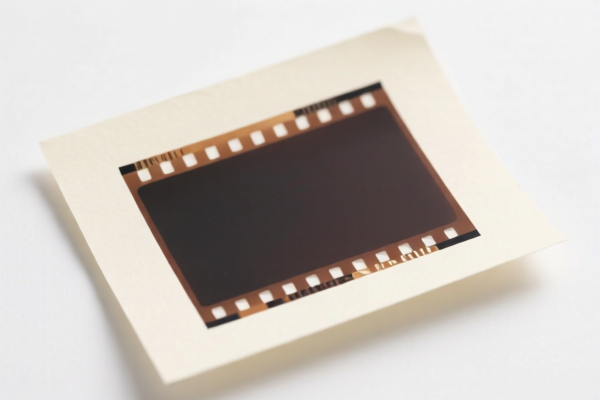
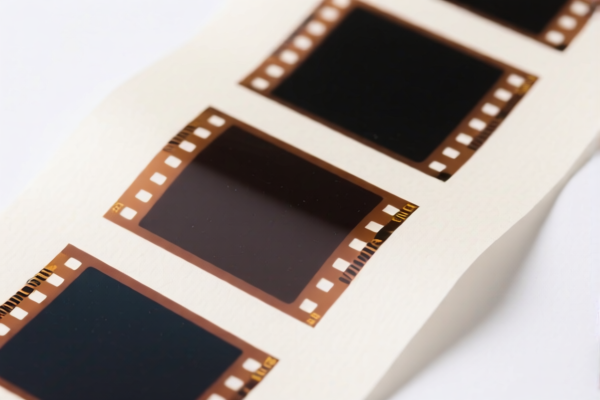


AI Analysis
Here is the Wiki-style guide for Sensitized Film Rolls (感光胶卷), tailored to your specific data and formatted to be visually engaging and professional.
🎞️ Sensitized Film Rolls (感光胶卷)
🌐 HS Code Classification & Customs Clearance Guide | 2026 Tariff Authority Analysis | Professional Clearance Strategy
📌 Product Definition: What is "Sensitized Film Roll"?
Sensitized Film Rolls are photographic materials coated with light-sensitive emulsions (typically silver halide-based). They are designed to capture images upon exposure to light (X-ray, visible, or infrared) but require chemical development ("fixing") before the image becomes permanent.
In international trade, these fall under Chapter 37: Photographic or Cinematographic Goods. The specific HS Code depends on: 1. State: Exposed but undeveloped vs. Unexposed. 2. Usage: General photography, Medical X-ray, or Industrial. 3. Format: Perforated (with holes) vs. Perforation-free (Unperforated).
⚠️ Key Classification Logic:
- 3704: For Exposed but Undeveloped film (e.g., X-ray films taken at a hospital, waiting for processing).
- 3705: For Photographic Plates and Rolled Film intended for printing (Master copies).
- 3702: For Unexposed Sensitized Films (Raw stock for photography, X-ray, or industrial use).
📦 II. Detailed HS Code Classification Matrix (Based on Your Data)
| HS Code | Product Description & Logic | Tax Rate (Total) | Key Tax Components |
|---|---|---|---|
| 3704.00.00.00 | Exposed but Undeveloped Film 🔹 Logic: The summary confirms the product is "film" form, "photosensitive," and matches the "exposed but undeveloped" usage characteristic. 🔹 Material: Consistent with classification. |
35.0% | Base: 0% Add-on: 25% Sec 122: 10% |
| 3705.00.00.00 | Photographic Plates & Film Rolls 🔹 Logic: "Film Roll" form + "Photosensitive" use. 🔹 Match: Fits the core characteristics of the "Photographic Plate & Film" category (Material & Function align). |
35.0% | Base: 0% Add-on: 25% Sec 122: 10% |
| 3702.31.01.00 | Colored/Multi-color Unexposed Film 🔹 Logic: "Film Roll" form (Non-paper/textile). 🔹 Usage: "Photosensitive" (Inferred as unexposed raw stock for Color/Multi-color). 🔹 Inference: Based on common sense as "Colored" range. |
38.7% | Base: 3.7% Add-on: 25% Sec 122: 10% |
| 3702.32.01.60 | Unperforated Silver Halide Film 🔹 Logic: "Sensitized Film Roll" implies "Unperforated". 🔹 Material: "Photosensitive" implies Silver Halide Emulsion content. 🔹 Match: Fits "Other containing silver halide emulsion" description. |
38.7% | Base: 3.7% Add-on: 25% Sec 122: 10% |
| 3702.10.00.60 | Medical/Industrial X-Ray Film 🔹 Logic: Matches "X-Ray" usage and "Sensitized Film" form. 🔹 Material: Non-paper/textile (Inferred as "Other" due to missing specific material name). |
38.7% | Base: 3.7% Add-on: 25% Sec 122: 10% |
🔍 Critical Note:
- 3704 and 3705 attract 0% Base Duty but face the full 25% + 10% = 35% penalty tax.
- 3702 series attracts a 3.7% Base Duty, followed by the same 35% penalty stack, totaling 38.7%.
- Material is Key: Whether it contains "Silver Halide" or is "X-Ray" specific determines the sub-category within 3702.
💰 III. 2026 Tariff Rate Deep Dive (Detailed Breakdown)
✅ Applicable Region: United States (US)
✅ Origin: China (CN)
✅ Effective Date: Current Active Regime
🎯 Scenario A: The "Zero-Base" Trap (Codes 3704, 3705)
Used for Exposed Film (3704) or Printing Plates/Rolls (3705)
| Component | Rate | Legal/Policy Basis |
|---|---|---|
| Base Tariff | 0.0% | Standard Most Favored Nation (MFN) rate for this subheading. |
| Section 301 (Add-on) | +25.0% | "Additional Duty" under US Trade Act Section 301 (China Origin). |
| Section 122 (1201) | +10.0% | Targeted Chinese tariffs (often associated with national security/emergency powers). |
| 💥 Total Effective Rate | 35.0% | Duty = CIF Value × 35% |
📌 Explanation:
- Even though the "Base Tariff" is free, the Section 301 (25%) and Section 122 (10%) clauses stack aggressively.
- No De Minimis Exemption: Small shipments cannot bypass this; the full 35% applies.
🎯 Scenario B: The "Base-Duty" Reality (Codes 3702)
Used for Unexposed Film Rolls (3702.31, 3702.32, 3702.10)
| Component | Rate | Legal/Policy Basis |
|---|---|---|
| Base Tariff | 3.7% | Standard MFN rate for specific sensitized film types. |
| Section 301 (Add-on) | +25.0% | "Additional Duty" under US Trade Act Section 301. |
| Section 122 (1201) | +10.0% | Targeted Chinese tariffs. |
| 💥 Total Effective Rate | 38.7% | Duty = CIF Value × 38.7% |
📌 Explanation:
- These codes incur a small base duty (3.7%) because they are raw materials for photography.
- However, the 35% penalty stack remains identical to Scenario A.
- Result: The total tax burden is even higher at 38.7%.
🛠️ IV. Customs Clearance Practical Advice (Avoid Pitfalls)
✅ 1. Essential Documentation Checklist
| Document | Requirement | Why? |
|---|---|---|
| 📄 Commercial Invoice | Must clearly state "Sensitized Film" and specific type (X-ray, Color, Unexposed). | Determines if you fall under 3702 vs 3704. |
| 📷 Product Photos | High-res images showing packaging and film canister/roll. | Proves "Film Roll" form vs. "Sheet" form. |
| 🧪 Technical Specs | Must specify: Exposed/Unexposed, Perforated/Non-Perforated, Chemical Composition (Silver Halide). | Critical for distinguishing between 3702.31 and 3702.32. |
| 🏭 Origin Certificate | Certifies origin as China (CN). | Confirms applicability of the 25% + 10% penalties. |
| 🧪 MSDS / Safety Data | If applicable (for chemicals in the roll). | Some film chemicals are hazardous; may need Hazmat handling. |
✅ 2. Declaration Strategy (The "Golden Rules")
🔥 Motto: "State is State, Form is Form, Tax is Tax!"
| Situation | ✅ Correct Declaration | ❌ Wrong Declaration |
|---|---|---|
| You shipped X-ray film that has already been scanned. | 3704.00.00.00 (Exposed, Undeveloped) ⚠️ Expect 35% tax. |
Declare as "Unexposed Film" (3702). 🚫 Risk: Seizure, Fraud, Back-taxes. |
| You shipped raw Kodak/Fujifilm rolls for photographers. | 3702.31/32 (Unexposed, Specific Subtype). ⚠️ Expect 38.7% tax. |
Declare as "Plates" (3705). 🚫 Risk: 3705 is for printing masters; wrong logic. |
| You shipped X-ray film but omitted "X-Ray" in name. | Declare as "Other Sensitized Film" (3702.10). | Use generic "Photographic Film". 🚫 Risk: Ambiguity leads to Customs Inspection. |
✅ 3. Special Handling for "Silver Halide" Content
- Code 3702.32.01.60 is specific for "Other containing silver halide emulsion".
- If your film uses non-silver halide technology (e.g., specialized digital or chemical-free film), it might fall under different "Other" categories, but the data provided assumes silver halide.
- Tip: Explicitly mention "Silver Halide Emulsion" in the description to lock in the 3702.32 code and avoid ambiguity.
🌍 V. Global Market Context (2026 Outlook)
| Region | Status for Sensitized Film | Note |
|---|---|---|
| 🇺🇸 USA | High Barriers | 35% - 38.7% total duty. Strict enforcement on "Exposure State". |
| 🇨🇳 China | Export Friendly | Domestic export policies may vary; check for export tax rebates. |
| 🇪🇺 EU | Standard MFN | Typically lower base rates; check for "Digital Shift" exemptions (some analog film is exempt). |
| 🇯🇵 Japan | Low Tariff | Generally low duties on raw film stock. |
📌 Conclusion:
The US market is the most expensive. The 35-38.7% duty significantly impacts margins. - Strategy: If shipping Exposed Film (3704), ensure it is clearly labeled "Undeveloped" to avoid being treated as "Used Goods" or "Hazardous Material." - Strategy: If shipping Unexposed Film (3702), verify the "Perforation" status. Perforated vs. Non-perforated changes the sub-code within 3702, potentially affecting the 3.7% base rate applicability.
📌 VI. Common Errors & Troubleshooting
❌ Error 1: Confusing "Exposed" vs "Unexposed"
👉 Consequence: Declaring exposed film as unexposed (3702) when it should be 3704.
👉 Result: Seizure (Customs suspects undeclared medical waste or undeveloped hazardous material).
❌ Error 2: Vague Description ("Just Film")
👉 Consequence: Customs officer guesses the code.
👉 Result: Assigned the highest possible rate or held for detailed inspection.
👉 Fix: Always state: "Sensitized Film Roll, [Exposed/Unexposed], [Perforated/Unperforated], Silver Halide."
❌ Error 3: Ignoring the "122 Clause"
👉 Consequence: Calculating tax based only on Base + 301.
👉 Result: Underpaying by 10%, leading to fines and delayed release.
🎯 VII. Final Verdict: Professional Clearance Summary
🎯 Key Takeaway:
🔹 "Exposed = 3704 (35%) / Plates = 3705 (35%)"
🔹 "Unexposed Roll = 3702 (38.7%)"
🔹 "Silver Halide = Mandatory for 3702.32"
🔹 "Always declare the specific state of exposure."
📌 Pro Tip:
If you are importing X-ray films for medical use, ensure you have the FDA Registration (if applicable) alongside the HS Code declaration. Medical devices often trigger secondary compliance checks beyond just the HS Code.
✨ Clearance Starts with Precision!
💼 Your profit margin depends on the 3.7% vs 0% base rate difference!
Customer Reviews
About HS Code Classification
The Harmonized System (HS) is an internationally standardized nomenclature developed by the World Customs Organization (WCO) to classify traded products. Over 200 countries use the HS system as the basis for customs tariffs, trade statistics, and import/export regulations.
Each HS code follows a hierarchical structure:
- Chapter (2 digits) — Broad category of goods (e.g., Chapter 84: Machinery and Mechanical Appliances)
- Heading (4 digits) — More specific grouping within the chapter
- Subheading (6 digits) — Internationally standardized breakdown, used by all WCO member countries
- National subdivisions (8-10 digits) — Country-specific extensions for further classification, such as US HTSUS 10-digit codes
Correct HS code classification is essential for smooth customs clearance, accurate duty payment, and compliance with trade regulations. Misclassification can lead to customs delays, overpayment of duties, or penalties.
When importing from CN to US, the applicable tariff rates may include:
- Most-Favored-Nation (MFN) rate — The standard duty rate applied to WTO members
- General rate — Applied to countries without trade agreements
- Trade remedy duties — Additional tariffs such as Section 301 (anti-dumping), Section 232 (national security), or countervailing duties
The information provided on this page is for reference purposes only. For official classification, please consult with your local customs authority or a licensed customs broker.