手工缝制水钻纽扣
CN → US| HS Code | Tariff Rate | Origin | Destination | Doc |
|---|---|---|---|---|
| 9606220000 | 35.0% | CN | US | Official Doc |
| 3926904000 | 12.8% | CN | US | Official Doc |
| 9606296000 | 37.9% | CN | US | Official Doc |
| 7117909000 | 28.5% | CN | US | Official Doc |
Product Images
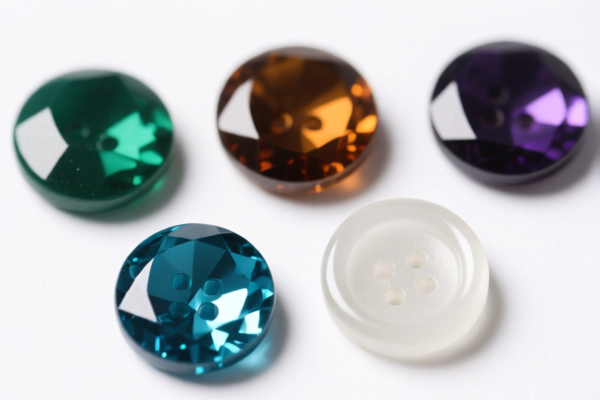
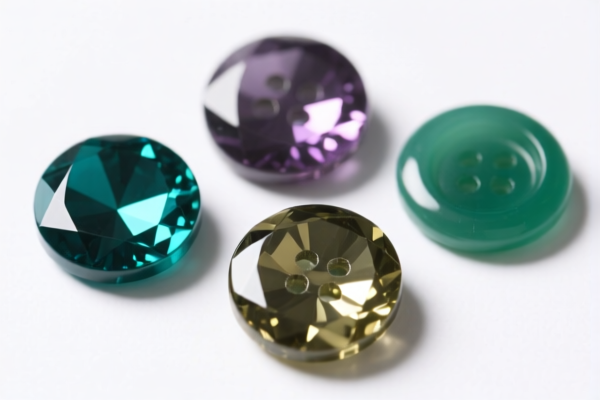
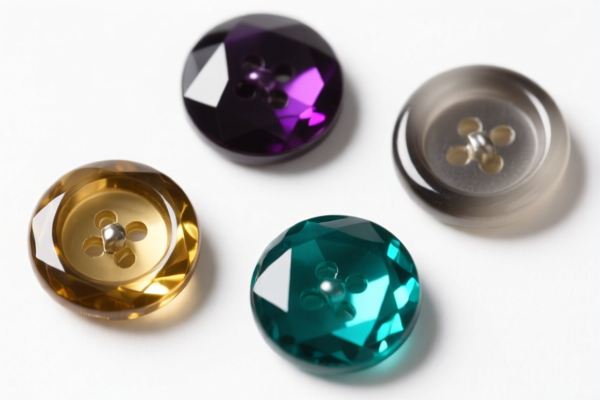
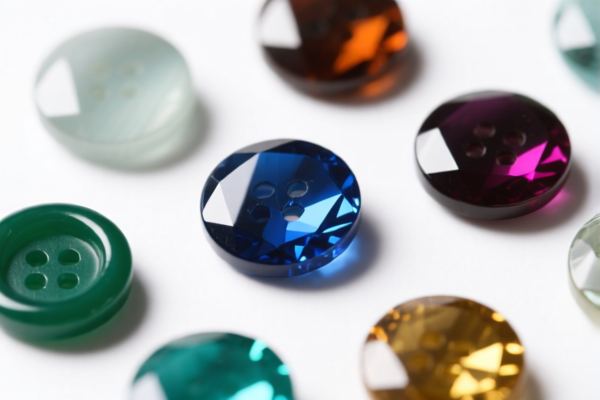
AI Analysis
💎 手工缝制水钻纽扣 (Hand-Sewn Rhinestone Buttons)
🌐 HS Code Reference & Customs Clearance Guide | 2026 Latest Tariff Analysis | Professional Clearance Strategy
📌 Part I: Product Definition & Classification: Do You Really Understand "Rhinestone Buttons"?
Rhinestone buttons are decorative accessories where synthetic gemstones (crystals, glass, or acrylic) are meticulously sewn onto a base. In international trade, their classification depends heavily on the primary material of the base and the functional vs. decorative nature of the item. They fall into several potential categories depending on how customs authorities view the "essential character" of the good:
Fabric/Plastic Base Buttons: If the button is primarily a fastening device made of plastic or fabric, even if adorned with rhinestones, it falls under Chapter 96 (Buttons, Press-fasteners).
Decorative Artifacts (Imitation Jewelry): If the rhinestone is the dominant feature and the item is viewed primarily as an ornament rather than a functional fastener, it may fall under Chapter 71 (Imitation Jewelry).
Plastic Decorative Articles: If classified broadly as a plastic ornamental item, it may fall under Chapter 39 (Articles of Plastic).
⚠️ Key Distinction Point:
- Is the item functional (holds fabric together) → Likely 9606.xx?
- Is the item decorative (primarily for aesthetic appeal, loose beads, or non-fastening) → Likely 7117.xx?
- Is it a generic plastic ornament? → Likely 3926.90?
📦 Part II: HS Code Classification Details (2026 Latest Tariff Authority Comparison)
| HS Code | Product Description | Application Scenario | Primary Characteristic |
|---|---|---|---|
9606.22.00.00 |
Sewn buttons, of plastic | Buttons where rhinestones are attached to a plastic base; considered a type of sewn button | ✅ Functional Fastener |
3926.90.40.00 |
Other articles of plastic, containing artificial gems | Decorative plastic pieces with rhinestones; viewed as a plastic ornamental article | ✅ Plastic Ornament |
9606.29.60.00 |
Other buttons, of base metal or combination materials | Buttons inferred as metal/plastic mix or "other" category under buttons if not specifically plastic/fabric | ✅ Functional/Undetermined Base |
7117.90.90.00 |
Other imitation jewelry | Items viewed primarily as imitation jewelry/decorative parts due to heavy rhinestone content | ❌ Decorative/Jewelry |
🔍 Critical Reminder:
- Chapter 96 is the most common classification for buttons, regardless of embellishment, provided they retain their function as fasteners.
- Chapter 71 applies if the item is sold as a loose decorative piece or if the rhinestone makes it indistinguishable from jewelry.
- Chapter 39 is a fallback for plastic decorative items that don't fit specific button sub-headings or are viewed as generic plastic goods.
💰 Part III: 2026 Latest Tariff Rate Details (Including Surcharges & Policy Add-ons)
✅ Applicable Country: USA (US)
✅ Origin: China (CN)
✅ Effective Time: November 10, 2025 onwards (including subsequent imports)
🎯 1. 9606.22.00.00 —— Sewn Buttons, of Plastic
| Item | Content |
|---|---|
| Base Rate | 0.0% (ad valorem) |
| USITC Surcharge | +25.0% (Under Section 301 Duties) |
| Section 122 Tariff | +10.0% (Specific provision for this category) |
| Total Tax Rate | 35.0% |
| Tax Calculation | CIF Value × 35% |
| De Minimis Exemption | ❌ Not Eligible |
| Legal Basis Path | Section 301: 9903.88.01 → Section 122: Specific Provision → USITC: 9606.22.00.00 |
📌 Explanation:
- Although the base tariff is 0%, the 25% Section 301 surcharge applies to most Chinese-made goods.
- The 10% Section 122 tariff is an additional layer for specific textile/apparel accessories.
- Total 35% is a significant cost driver for plastic-based rhinestone buttons.
🎯 2. 3926.90.40.00 —— Other Articles of Plastic, Containing Artificial Gems
| Item | Content |
|---|---|
| Base Rate | 2.8% |
| USITC Surcharge | 0.0% (Exempt or Not Applicable for this specific sub-heading under current rules) |
| Section 122 Tariff | +10.0% |
| Total Tax Rate | 12.8% |
| Tax Calculation | CIF Value × 12.8% |
| De Minimis Exemption | ❌ Not Eligible |
| Legal Basis Path | Base: 3926.90.40.00 → Section 122: +10% |
📌 Note:
- This is the most tax-efficient option if customs accepts the classification as a "plastic ornamental article."
- The base rate of 2.8% is low, and crucially, it avoids the 25% Section 301 surcharge.
- Risk: Customs may challenge this classification, arguing that buttons are specifically covered in Chapter 96.
🎯 3. 9606.29.60.00 —— Other Buttons (Metal/Composite)
| Item | Content |
|---|---|
| Base Rate | 2.9% |
| USITC Surcharge | +25.0% |
| Section 122 Tariff | +10.0% |
| Total Tax Rate | 37.9% |
| Tax Calculation | CIF Value × 37.9% |
| De Minimis Exemption | ❌ Not Eligible |
| Legal Basis Path | Section 301: 9903.88.01 → Section 122: +10% → USITC: 9606.29.60.00 |
📌 Warning:
- This classification is often used as a catch-all for buttons not specified elsewhere (e.g., metal base, or ambiguous material).
- It incurs both the 25% surcharge and the 10% Section 122 tariff, resulting in the highest effective rate.
- Only use if the button is clearly metal-based or does not fit plastic/fabric specifics.
🎯 4. 7117.90.90.00 —— Other Imitation Jewelry
| Item | Content |
|---|---|
| Base Rate | 11.0% |
| USITC Surcharge | +7.5% (Reduced surcharge for jewelry items under specific provisions) |
| Section 122 Tariff | +10.0% |
| Total Tax Rate | 28.5% |
| Tax Calculation | CIF Value × 28.5% |
| De Minimis Exemption | ❌ Not Eligible |
| Legal Basis Path | Base: 7117.90.90.00 → USITC: 9903.01.24 → Section 122: +10% |
📌 Strategic Insight:
- This offers a moderate tax rate (28.5%), lower than the standard button rates.
- Justification Required: Must prove the item is primarily imitation jewelry (decorative, not functional).
- Risk: If customs determines it is a button, they will reclassify to Chapter 96, leading to back taxes and penalties.
🛠️ Part IV: Customs Clearance Practical Advice (Real-World Pitfall Avoidance Guide)
✅ 1. Document Checklist (All Mandatory)
| Document | Required | Description |
|---|---|---|
| ✅ Product Specification Sheet | ✔️ | Detailed description: Base material (plastic/metal/fabric), gem type (glass/acrylic), sewing method |
| ✅ Product Photos | ✔️ | Clear images showing the button's structure, attachment points, and close-ups of rhinestones |
| ✅ Functionality Statement | ✔️ | Explicitly state: "Used for fastening garments" (for Chapter 96) OR "Used for decorative embellishment" (for Chapter 71) |
| ✅ Material Breakdown | ✔️ | Percentage of plastic vs. metal vs. adhesive vs. rhinestone weight |
| ✅ Commercial Invoice | ✔️ | Describe as "Sewn Rhinestone Buttons" or "Decorative Imiation Jewelry Parts" depending on classification |
| ✅ Packing List | ✔️ | Ensure no mixed shipments of functional vs. purely decorative items |
✅ 2. Declaration Strategies (Key Mantras)
🔥 “Define Function First, Material Second, Tax Consequence Third!”
| Scenario | Correct Declaration | Wrong Practice |
|---|---|---|
| Standard Sewn Buttons (Plastic base + Rhinestones) | 9606.22.00.00 – "Sewn Buttons, Plastic" |
Calling it "Jewelry" → Potential reclassification |
| Loose Rhinestone Ornaments (Not for fastening) | 7117.90.90.00 – "Imitation Jewelry" |
Calling it "Button" → Misdeclaration |
| Plastic Decorative Chips | 3926.90.40.00 – "Plastic Articles" |
Calling it "Button" if no hole/fastener |
| Metal Base Buttons | 9606.29.60.00 – "Other Buttons" |
Ignoring metal content |
✅ 3. Special Situation Handling
| Situation | Handling Advice |
|---|---|
| Mixed Material Base | If base is 51% plastic, use 9606.22.00.00. If metal, use 9606.29.60.00. |
| High Rhinestone Value | If rhinestones constitute >50% by value, argue for 7117.90.90.00 (Jewelry), but prepare for dispute. |
| OEM Custom Buttons | Provide customer design specs to prove intended use as buttons, not loose jewelry. |
| Pre-Cutting/Pre-Sewing | If pre-sewn onto fabric, it may be considered part of the garment (Chapter 61/62), not a button. |
🌍 Part V: Global Market Clearance Comparison (2026 Latest)
| Country/Region | Recommended HS Code | Tariff Rate | Certification Requirements | Remarks |
|---|---|---|---|---|
| 🇺🇸 USA | 9606.22.00.00 |
35.0% | None specific | High tariff due to Section 301 + 122 |
| 🇨🇳 China | 9606.22.00.00 |
5.0% | None | Low base tariff, no surcharges |
| 🇪🇺 EU | 9606.22.00.00 |
0% - 4% | REACH (for plastics) | No US-style surcharges |
| 🇬🇧 UK | 9606.22.00.00 |
0% - 4% | UKCA | Post-Brexit rules apply |
| 🇯🇵 Japan | 9606.22.00.00 |
5.0% - 8% | None | Stable low tariff |
📌 Conclusion:
- USA is the most challenging market due to layered surcharges (Section 301 + Section 122).
- Chapter 39 (3926.90.40.00) offers a tax advantage in the US (12.8%) if defensible as a plastic article.
- Chapter 71 (7117.90.90.00)offers a middle ground (28.5%) if the item is clearly decorative.
📌 Part VI: Common Errors & Pitfall Guide (Lessons from Tears)
❌ Error 1: Declaring "Buttons" when they are loose decorative charms
👉 Consequence: Misdeclaration of function → Potential reclassification to Jewelry or Plastic, leading to audit flags.
❌ Error 2: Declaring "Imitation Jewelry" for functional garment buttons
👉 Consequence: Customs may reject the jewelry classification, forcing reclassification to Chapter 96, resulting in higher taxes if 25% surcharge applies incorrectly or if documentation fails.
❌ Error 3: Ignoring Section 122 Tariff
👉 Consequence: Even with low base rates, missing the 10% add-on leads to underpayment and penalties.
❌ Error 4: Vague Description ("Fashion Accessories")
👉 Consequence: Customs uses their own discretion → Likely default to Chapter 96 with full surcharges.
✅ Correct Practice:
"Plastic Sewn Buttons, Adorned with Glass Rhinestones, for Use on Garments, Model XYZ, No Metal Content"
🎯 Part VII: Conclusion: Precise Classification, Cost Optimization!
🎯 Remember the Mantra:
🔹 "Function Determines Chapter, Material Determines Subheading, Surcharge Determines Cost!"
🔹 "Buttons go to Ch.96, Jewelry to Ch.71, Plastic to Ch.39. Choose wisely, pay less!"
📌 Pro Tip:
If your rhinestone buttons are primarily decorative (e.g., for shoes, bags, or loose embellishment), argue for 3926.90.40.00 (12.8%) or 7117.90.90.00 (28.5%).
If they are functional garment fasteners, expect 9606.22.00.00 (35.0%).
📣 Immediate Action:
📞 Consult with a customs broker to submit a Pre-Ruling Request with product samples and photos.
🚀 Optimize your supply chain by selecting the most tax-efficient classification supported by robust documentation.
✨ Professional Clearance Starts with Accurate Classification!
💼 Every percentage point of tax matters. Get it right the first time.
Customer Reviews
About HS Code Classification
The Harmonized System (HS) is an internationally standardized nomenclature developed by the World Customs Organization (WCO) to classify traded products. Over 200 countries use the HS system as the basis for customs tariffs, trade statistics, and import/export regulations.
Each HS code follows a hierarchical structure:
- Chapter (2 digits) — Broad category of goods (e.g., Chapter 84: Machinery and Mechanical Appliances)
- Heading (4 digits) — More specific grouping within the chapter
- Subheading (6 digits) — Internationally standardized breakdown, used by all WCO member countries
- National subdivisions (8-10 digits) — Country-specific extensions for further classification, such as US HTSUS 10-digit codes
Correct HS code classification is essential for smooth customs clearance, accurate duty payment, and compliance with trade regulations. Misclassification can lead to customs delays, overpayment of duties, or penalties.
When importing from CN to US, the applicable tariff rates may include:
- Most-Favored-Nation (MFN) rate — The standard duty rate applied to WTO members
- General rate — Applied to countries without trade agreements
- Trade remedy duties — Additional tariffs such as Section 301 (anti-dumping), Section 232 (national security), or countervailing duties
The information provided on this page is for reference purposes only. For official classification, please consult with your local customs authority or a licensed customs broker.