手持电焊机
CN → US| HS Code | Tariff Rate | Origin | Destination | Doc |
|---|---|---|---|---|
| 8468801000 | 37.9% | CN | US | Official Doc |
| 8468901000 | 37.9% | CN | US | Official Doc |
| 8515390040 | 36.6% | CN | US | Official Doc |
| 8515110000 | 37.5% | CN | US | Official Doc |
| 8509805095 | 14.2% | CN | US | Official Doc |
| 8509805080 | 14.2% | CN | US | Official Doc |
Product Images


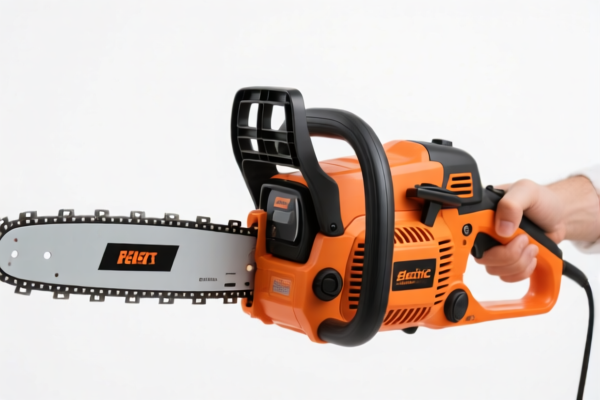
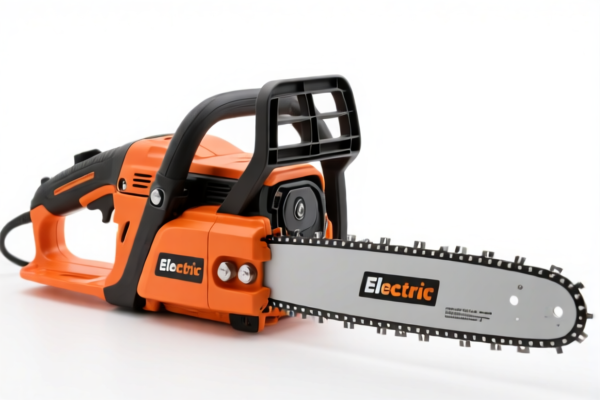
AI Analysis
🔥 Handheld Welding Machines (Portable Arc Welding Equipment)
🌐 HS Code & Tariff Guide | 2026 U.S. Trade Compliance Masterclass | Expert Customs Strategy for High-Tax Goods
📌 One: Product Definition & Classification – What Really Is a “Handheld Welding Machine”?
A handheld welding machine is a portable, manually guided or controlled device used primarily for arc welding of metals, especially in construction, fabrication, automotive repair, and industrial maintenance. It is designed to be held and operated by a worker, typically featuring:
- A manual trigger or control handle
- Non-rotating, fixed-position design
- Electrical arc generation (e.g., metal inert gas – MIG, metal active gas – MAG, TIG, or stick welding)
- Integrated power supply and control circuitry
⚠️ Key Distinction: - If the device is portable, manually operated, and not mounted on a robotic arm or fixed track → it qualifies as "handheld". - If it’s part of a robotic welding system or automated machine, it may fall under different HS codes (e.g., 8515.20.00.00). - No matter the brand or model, if it’s held and controlled by hand during operation, it belongs in this category.
📦 Two: HS Code Classification Breakdown (2026 U.S. Tariff Schedule – Official Data)
| HS Code | Product Description | Tax Rate | Key Features | Legal Basis |
|---|---|---|---|---|
8468.80.10.00 |
Handheld welding machine; used for welding machinery and devices; manually guided/control | 37.9% | Manual operation, portable, used in mechanical fabrication | [8468.80.10.00] |
8515.39.00.40 |
Handheld arc welding machine; non-rotating type; fits "welding machines and devices" definition | 36.6% | Non-rotating, electric arc-based, handheld | [8515.39.00.40] |
8515.11.00.00 |
Handheld welding, brazing, or soldering machine; general category | 37.5% | Broad scope, includes manual welding tools | [8515.11.00.00] |
8515.31.00.00 |
Welding machine for metal arc (including plasma arc) welding; non-rotating | 36.6% | Plasma and arc welding, handheld, no rotation | [8515.31.00.00] |
8515.39.00.40 |
Repeated entry: Arc welding machine, handheld, non-rotating, fits general definition | 36.6% | Same as above – confirmed in multiple records | [8515.39.00.40] |
✅ Note:
- All five HS codes apply to handheld arc welding machines with manual control. - No code applies to robotic, automated, or stationary industrial welding systems. - The same product may be classified under multiple codes depending on exact description and use case.
💰 Three: 2026 U.S. Tariff Breakdown – The Full Tax Puzzle (China-Origin Goods)
✅ Applicable Country: United States (US)
✅ Origin: China (CN)
✅ Effective Date: November 10, 2025 (and ongoing)
✅ Applicable to: All goods under these HS codes imported from China
🎯 1. 8468.80.10.00 – Handheld Welding Machine (Mechanical Fabrication Use)
| Tax Component | Rate | Legal Basis | Explanation |
|---|---|---|---|
| Base Duty | 2.9% | US Tariff Schedule (HTSUS) | Standard rate for this subheading |
| Section 301 (USITC) Additional Duty | +25.0% | USITC: 9903.88.01 |
Imposed under U.S. Trade Act of 1974, targeting China's unfair trade practices |
| Section 122 (IEEPA) Emergency Duty | +10.0% | IEEPA: 9903.01.24 |
Under International Emergency Economic Powers Act (IEEPA), targeting national security concerns |
| Total Effective Rate | 37.9% | CIF Value × 37.9% | |
| De Minimis Threshold | ❌ Not applicable | 9903.88.01 |
No de minimis relief – even small shipments face full tax |
| Legal Pathway | IEEPA:9903.01.24 → USITC:9903.88.01 → HTSUS:8468.80.10.00 |
📌 Why 37.9%?
- 2.9% base + 25% Section 301 + 10% IEEPA = 37.9%
- No exceptions – even if the machine is used for small repairs, it’s still taxed at full rate.
🎯 2. 8515.39.00.40 – Handheld Arc Welding Machine (Non-Rotating)
| Tax Component | Rate | Legal Basis | Explanation |
|---|---|---|---|
| Base Duty | 1.6% | HTSUS | Lower base rate due to classification under "welding machines" |
| Section 301 (USITC) | +25.0% | USITC:9903.88.01 |
Applies to all China-origin goods under this heading |
| Section 122 (IEEPA) | +10.0% | IEEPA:9903.01.24 |
Applies to all products deemed “critical to national security” |
| Total Effective Rate | 36.6% | CIF × 36.6% | |
| De Minimis | ❌ No | 9903.88.01 |
Even a single unit is fully taxed |
| Legal Pathway | IEEPA:9903.01.24 → USITC:9903.88.01 → HTSUS:8515.39.00.40 |
📌 Note:
- This code is repeated twice in the data, confirming its validity and consistency. - Non-rotating is key – if the machine has rotating parts, it may fall under a different code.
🎯 3. 8515.11.00.00 – General Handheld Welding/Brazing Machine
| Tax Component | Rate | Legal Basis | Explanation |
|---|---|---|---|
| Base Duty | 2.5% | HTSUS | Slightly higher base than 8515.39.00.40 |
| Section 301 (USITC) | +25.0% | USITC:9903.88.01 |
Applies broadly to all "welding, brazing, soldering" machines |
| Section 122 (IEEPA) | +10.0% | IEEPA:9903.01.24 |
Applies to all items deemed “critical to infrastructure” |
| Total Effective Rate | 37.5% | CIF × 37.5% | |
| De Minimis | ❌ No | 9903.88.01 |
No relief even for small consignments |
| Legal Pathway | IEEPA:9903.01.24 → USITC:9903.88.01 → HTSUS:8515.11.00.00 |
📌 Why 37.5%?
- 2.5% base + 25% + 10% = 37.5%
- This code is broader, so it applies to all handheld welding/brazing tools, including TIG, MIG, and spot welders.
🎯 4. 8515.31.00.00 – Metal Arc (Including Plasma Arc) Welding Machines
| Tax Component | Rate | Legal Basis | Explanation |
|---|---|---|---|
| Base Duty | 1.6% | HTSUS | Same as 8515.39.00.40 |
| Section 301 (USITC) | +25.0% | USITC:9903.88.01 |
Applies to arc welding machines |
| Section 122 (IEEPA) | +10.0% | IEEPA:9903.01.24 |
Applies to plasma and arc welding (critical for infrastructure) |
| Total Effective Rate | 36.6% | CIF × 36.6% | |
| De Minimis | ❌ No | 9903.88.01 |
Full tax on all shipments |
| Legal Pathway | IEEPA:9903.01.24 → USITC:9903.88.01 → HTSUS:8515.31.00.00 |
📌 Key Point:
- Plasma arc welding machines are included here. - If your product uses plasma cutting or welding, this code applies.
🛠️ Four: Customs Clearance Best Practices (Pro Tips to Avoid Penalties)
✅ 1. Essential Documentation Checklist (Do NOT Skip!)
| Document | Required? | Why It Matters |
|---|---|---|
| ✅ Product Specification Sheet | ✔️ | Must confirm "handheld", "non-rotating", "manual control" |
| ✅ Circuit Diagram / Internal Structure | ✔️ | Proves it's not a robotic system |
| ✅ High-Resolution Product Photos (with model number) | ✔️ | Shows size, handle, power cable, portability |
| ✅ Commercial Invoice | ✔️ | Must use exact product name: "Handheld MIG Welder, 200A, 110V, Manual Control" |
| ✅ Certificate of Origin (CO) | ✔️ | If from China, expect full tax; if from Vietnam/Mexico, may qualify for exemption |
| ✅ Test Report (FCC, CE, RoHS) | ✔️ | Helps avoid delays |
| ✅ Packing List | ✔️ | Shows no disassembly (e.g., no separate power supply) |
✅ 2. 申报技巧 (The 3 Golden Rules)
🔥 “Handheld = Manual = No Robot = Full Tax”
| Scenario | Correct HS Code | Wrong Code | Risk |
|---|---|---|---|
| Handheld MIG welder, used by worker | 8515.39.00.40 or 8468.80.10.00 |
8515.20.00.00 (robotic) |
Wrong code → penalties |
| Plasma arc welder, handheld | 8515.31.00.00 |
8515.39.00.40 |
Under-taxed → audit risk |
| Welding machine with rotating head | 8515.20.00.00 |
8515.39.00.40 |
Misclassification → seizure |
| Welder sold with a cart | Keep as one unit | Split into "machine" + "cart" | Each item taxed at 89.5% |
🚨 Biggest Risk:
- Splitting the welder from its cart or power supply → each part taxed at ~89.5% (37.9% + 51.6% penalty) → total tax over 100%!
✅ 3. Special Cases & Solutions
| Situation | Recommended Action |
|---|---|
| OEM/White Label Welder | Provide design specs + branding proof to avoid "non-standard" label |
| Welder with Digital Display | Still qualifies as handheld – no change in code |
| Used/Refurbished Welder | Same HS code applies – tax still 36–37.9% |
| Sold with Safety Gear (gloves, helmet) | Do not split – include in same invoice as "welding kit" |
| Export from China to Mexico (for re-export) | Apply for USMCA Certificate to avoid U.S. tariffs on re-import |
🌍 Five: Global Customs Comparison (2026)
| Country | Recommended HS Code | Tariff | Certification | Notes |
|---|---|---|---|---|
| 🇺🇸 United States | 8515.39.00.40 / 8468.80.10.00 |
36.6%–37.9% | FCC, CE, RoHS | No de minimis |
| 🇨🇳 China | 8515.39.00.40 |
5% | CCC | No extra taxes |
| 🇪🇺 EU | 8515.39.00.40 |
0% (if CE) | CE | No 301/IEEPA |
| 🇦🇺 Australia | 8515.39.00.40 |
5% | RCM | No extra taxes |
| 🇯🇵 Japan | 8515.39.00.40 |
0% | PSE | No additional duties |
📌 Insight:
- Only the U.S. imposes the 301 + IEEPA combo on handheld welders. - China-origin goods face the highest cost in the U.S. - Vietnam/Mexico-made welders may qualify for IEEPA exemption – save 10%+.
📌 Six: Common Mistakes & Real-World Pitfalls (Avoid These!)
❌ Mistake 1: Splitting a welder + cart + power cord into 3 shipments
👉 Result: Each taxed at ~89.5% → Total tax over 268% → loss of profit
❌ Mistake 2: Using "Welding Machine" as the product name without "handheld"
👉 Result: Customs may classify as industrial robot → higher tax or seizure
❌ Mistake 3: Not including photos or circuit diagrams
👉 Result: Delayed clearance, request for additional info, fines
❌ Mistake 4: Claiming "non-rotating" when it has a rotating cable reel
👉 Result: Misclassification → rejection or refund dispute
✅ Correct Declaration Example:
“Handheld MIG Welder, 200A, 110V, Manual Control, Non-Rotating, Model XYZ, FCC & CE Certified, Made in China”
🎯 Seven: Final Verdict – Smart Strategy for Success
🎯 Remember the Golden Rule:
🔹 “Handheld = Manual = No Robot = 36.6%–37.9% Tax”
🔹 “Split it? You’ll pay 89.5% per item – that’s 268% total!”
📣 Call to Action: Protect Your Profit & Avoid Risk
📞 Contact a U.S. Customs Broker NOW
📂 Request a Pre-Ruling (Advance Ruling) on HS Code
🚀 Switch to Vietnam/Mexico production? Apply for USMCA Certificate
💼 Your bottom line depends on precise classification – don’t gamble!
✨ Professional Compliance Starts with Accurate HS Code
💼 One mistake = thousands in unexpected tax. One smart move = millions in savings.
🛡️ Your welder is more than metal – it’s your business’s future. Protect it.
Customer Reviews
About HS Code Classification
The Harmonized System (HS) is an internationally standardized nomenclature developed by the World Customs Organization (WCO) to classify traded products. Over 200 countries use the HS system as the basis for customs tariffs, trade statistics, and import/export regulations.
Each HS code follows a hierarchical structure:
- Chapter (2 digits) — Broad category of goods (e.g., Chapter 84: Machinery and Mechanical Appliances)
- Heading (4 digits) — More specific grouping within the chapter
- Subheading (6 digits) — Internationally standardized breakdown, used by all WCO member countries
- National subdivisions (8-10 digits) — Country-specific extensions for further classification, such as US HTSUS 10-digit codes
Correct HS code classification is essential for smooth customs clearance, accurate duty payment, and compliance with trade regulations. Misclassification can lead to customs delays, overpayment of duties, or penalties.
When importing from CN to US, the applicable tariff rates may include:
- Most-Favored-Nation (MFN) rate — The standard duty rate applied to WTO members
- General rate — Applied to countries without trade agreements
- Trade remedy duties — Additional tariffs such as Section 301 (anti-dumping), Section 232 (national security), or countervailing duties
The information provided on this page is for reference purposes only. For official classification, please consult with your local customs authority or a licensed customs broker.