手机包
CN → US| HS Code | Tariff Rate | Origin | Destination | Doc |
|---|---|---|---|---|
| 4202329300 | 52.6% | CN | US | Official Doc |
| 6307909891 | 24.5% | CN | US | Official Doc |
| 6307909875 | 17.0% | CN | US | Official Doc |
| 4202329100 | 52.6% | CN | US | Official Doc |
Product Images
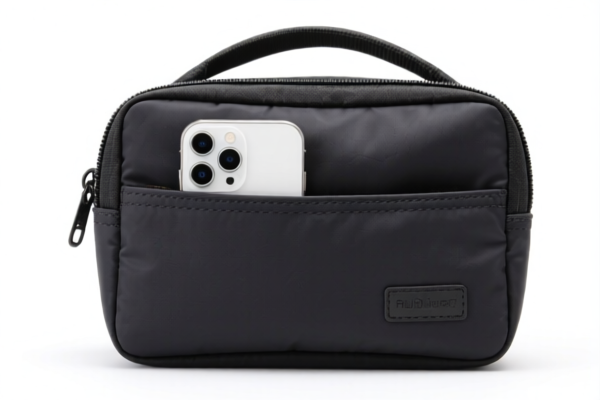
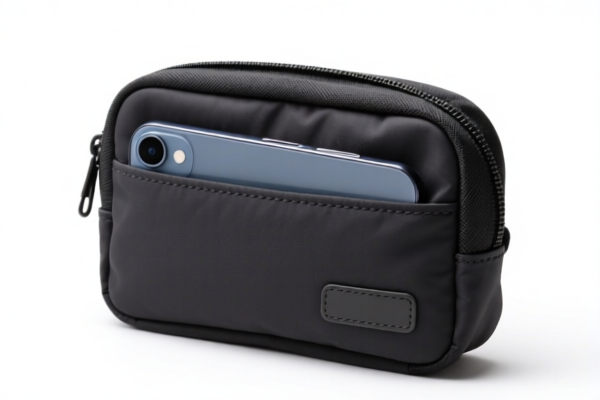
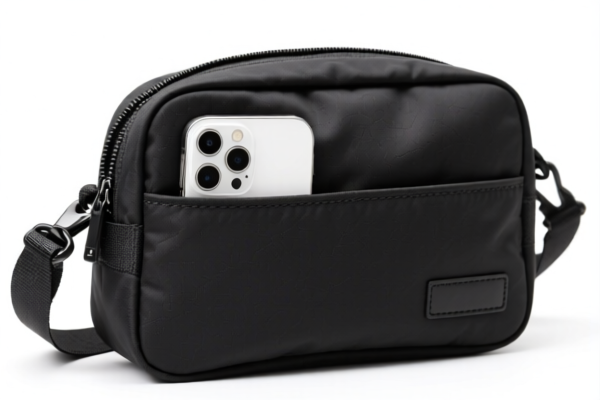
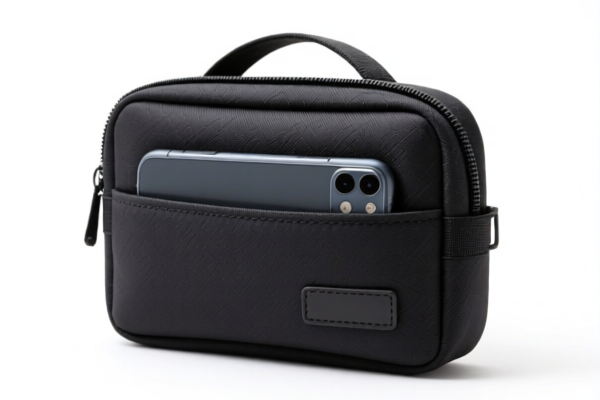
AI Analysis
👜 Wallet-Style Phone Pouches (Mobile Phone Wallets)
🌐 HS Code Classification & Customs Clearance Guide | 2026 Latest Tariff Analysis | Strategic Compliance for Textile Goods
📌 I. Product Definition & Classification: What Exactly is a "Phone Wallet"?
A "Mobile Phone Wallet" (or fabric phone pouch with wallet functionality) is a hybrid accessory designed to hold a smartphone while also accommodating cards, cash, or coins. In international trade, classification depends heavily on the primary material (fabric/textile vs. leather/plastic) and primary function (purse/wallet vs. general accessory).
⚠️ Key Classification Distinction:
- If the outer surface is textile/fabric and it retains the essential character of a wallet/purse → It generally falls under Chapter 42 (Articles of leather, travel goods, handbags).
- If classified strictly as a made-up textile article without the "wallet" structural dominance → It may fall under Chapter 63 (Other made-up textile articles).
- Critical Note: The presence of "122 Clause" (Section 301/IEEPA) tariffs significantly impacts the total cost for goods originating from China.
📦 II. HS Code Classification Details (2026 Latest Tariff Data)
Based on the provided dataset, here are the four potential HS Codes for Fabric Phone Wallets, along with their specific tax implications for US imports from China.
| HS Code | Product Description & Logic | Total Tax Rate | Tax Breakdown |
|---|---|---|---|
| 4202.32.93.00 | Fabric Phone Wallet • Form: Wallet • Material: Fabric (Textile) • Logic: Fits classification of "Other articles of luggage or handbags with outer surface of textile materials." |
52.6% | • Base Tariff: 17.6% • Section 301 Add-on: 25.0% • Section 122 Tariff: 10% |
| 6307.90.98.91 | Made-up Fabric Wallet • Logic: Classified as "Other made-up articles" (Chapter 63). No conflict in material or form; treated as a general textile product. |
24.5% | • Base Tariff: 7.0% • Section 301 Add-on: 7.5% • Section 122 Tariff: 10% |
| 6307.90.98.75 | Textile Made-up Wallet • Logic: Specific sub-category for made-up textile articles. Fits within "Other made-up articles." |
24.5% | • Base Tariff: 7.0% • Section 301 Add-on: 7.5% • Section 122 Tariff: 10% |
| 4202.32.91.00 | Cotton/Textile Wallet • Form: Wallet • Material: Fabric (Cotton/Textile requirement) • Logic: Similar to .93 but may represent a different sub-classification under "Other" textile handbags/wallets. |
52.6% | • Base Tariff: 17.6% • Section 301 Add-on: 25.0% • Section 122 Tariff: 10% |
🔍 Critical Insight:
- Chapter 42 Codes (4202.32.xxxx) incur 52.6% total tax. This is because they are classified as "handbags/wallets," which have higher base tariffs (17.6%) and the maximum Section 301 surcharge (25%).
- Chapter 63 Codes (6307.90.98.xx) incur only 24.5% total tax. These are classified as "other made-up textile articles," with a lower base tariff (7.0%) and a lower Section 301 surcharge (7.5%).
- Why the difference? Customs may view a "phone pouch" as a general textile item (Ch 63) if it lacks the structural complexity of a traditional wallet, OR as a handbag/wallet (Ch 42) if it has zippers, card slots, and a wallet-like structure.
💰 III. 2026 Latest Tariff Rate Breakdown (Detailed Analysis)
✅ Target Market: United States (US)
✅ Origin: China (CN)
✅ Effective Date: Current and projected 2026 rates based on existing IEEPA/Section 301 frameworks.
🎯 1. Chapter 42 Classification (4202.32.93.00 / 4202.32.91.00)
"High-Tariff Risk Zone" – Total 52.6%
| Item | Detail |
|---|---|
| Base MFN Tariff | 17.6% Applicable to "Other articles of luggage or handbags, with outer surface of textile materials." |
| Section 301 Surcharge | 25.0% Standard additional tariff for Chinese goods under HTS 4202.32. |
| Section 122 Tariff | 10.0% Specific additional duty applied to certain Chinese imports. |
| Total Effective Rate | 52.6% |
| Calculation Basis | CIF Value × 52.6% |
| De Minimis Exemption | ❌ Not Eligible High-value textile goods often exceed or are excluded from $800 de minimis due to tariff status. |
| Legal Authority Path | USITC:4202.32.xxxx → Section 301 Footnote → IEEPA Sec 122 |
📌 Explanation:
- Classifying as a "wallet" (Ch 42) triggers the highest possible tax burden.
- The 17.6% base is inherent to the chapter (accessories/handbags).
- The 25% is the standard trade war penalty.
- The 10% is an additional layer for specific categories.
🎯 2. Chapter 63 Classification (6307.90.98.91 / 6307.90.98.75)
"Lower-Tariff Strategy" – Total 24.5%
| Item | Detail |
|---|---|
| Base MFN Tariff | 7.0% Applicable to "Other made-up articles" of textiles. |
| Section 301 Surcharge | 7.5% Reduced surcharge rate applied to "other made-up articles" compared to handbags. |
| Section 122 Tariff | 10.0% Still applies to Chinese textile articles. |
| Total Effective Rate | 24.5% |
| Calculation Basis | CIF Value × 24.5% |
| De Minimis Exemption | ❌ Not Eligible Same restriction as above. |
| Legal Authority Path | USITC:6307.90.98.xx → Section 301 Footnote (lower tier) → IEEPA Sec 122 |
📌 Explanation:
- This classification treats the item as a general textile product rather than a fashion accessory.
- The 7.0% base is significantly lower than 17.6%.
- The 7.5% surcharge is much lower than 25%.
- Savings: Choosing Ch 63 over Ch 42 saves 28.1% in total duties.
🛠️ IV. Customs Clearance Practical Advice (Avoid Pitfalls)
✅ 1. Documentation Checklist (Mandatory)
| Document | Required? | Purpose |
|---|---|---|
| ✅ Product Photos | ✔️ | Must clearly show: 1. Fabric exterior. 2. Internal structure (card slots, phone compartment). 3. Zippers/buttons. |
| ✅ Commercial Invoice | ✔️ | Must state: • "Fabric Phone Wallet" or "Textile Phone Pouch." • Material composition (e.g., "100% Polyester Fabric"). |
| ✅ Bill of Lading/Air Waybill | ✔️ | Standard shipping docs. |
| ✅ Material Declaration | ✔️ | Explicitly state "Outer surface: Textile." |
| ✅ Origin Certificate | ✔️ | Confirm China origin to apply correct Section 301/122 rates. |
✅ 2. Classification Strategy (Key Mnemonic)
🔥 "Structure Defines Chapter: Wallet = 42, Pouch = 63!"
| Scenario | Recommended HS Code | Tax Rate | Why? |
|---|---|---|---|
| Structured Wallet (Zippers, card slots, rigid shape) | 4202.32.93.00 |
52.6% | Fits GRI 3(b): Essential character as a "wallet/handbag." |
| Simple Pouch (Soft, no slots, just phone + cash) | 6307.90.98.91 |
24.5% | Fits GRI 1: General "made-up textile article." |
| Mixed Bag (Phone + multiple accessories) | 4202.32.93.00 |
52.6% | Complexity pushes it towards Chapter 42. |
⚠️ Warning:
- Do not self-classify as Chapter 63 if the product has distinct wallet features (card holders, bi-fold design). Customs may reassess to Chapter 42, leading to back-taxes + penalties.
- If the product is plain fabric sleeve with no wallet features, Chapter 63 is safer and cheaper.
✅ 3. Special Handling for Section 122 & 301
| Issue | Solution |
|---|---|
| Section 122 (10%) | Applies to most Chinese textiles. No exemption. Factor this into cost. |
| Section 301 (25% vs 7.5%) | This is the critical decision point. • If you can prove it’s a "pouch" (Ch 63), save 17.5%. • If it’s a "wallet" (Ch 42), expect 25%. |
| Country of Origin | Ensure all manufacturing steps occur in China to avoid misdeclaration. |
🌍 V. Global Market Comparison (2026 Outlook)
| Market | Recommended HS Code | Approx. Total Tax (China Origin) | Notes |
|---|---|---|---|
| 🇺🇸 USA | 6307.90.98.91 (Preferred) |
24.5% | Use Ch 63 if structurally simple. Ch 42 is 52.6%. |
| 🇨🇳 China (Export) | N/A | 0% (Export Duty) | Focus on US import tax. |
| 🇪🇺 EU | 6307.90.98 |
~10-12% | Lower base tariffs, no Section 301. |
| 🇬🇧 UK | 6307.90.98 |
~10-12% | Post-Brexit tariffs are moderate. |
📌 Conclusion:
- The US market is the most expensive due to Section 301 and 122 tariffs.
- Chapter 63 classification is the strategic choice for cost optimization, but only if the product design supports it (i.e., not a full-featured wallet).
📌 VI. Common Errors & Pitfalls (Lessons Learned)
❌ Error 1: Calling it a "Wallet" in the invoice but classifying as Ch 63.
👉 Result: Customs flags inconsistency. May reclassify to Ch 42 → 52.6% tax + penalty.
❌ Error 2: Assuming all fabric items are Ch 63.
👉 Result: If the item has zippers, card slots, and a wallet-like shape, it’s Ch 42. Don’t gamble on this.
❌ Error 3: Ignoring Section 122.
👉 Result: Budgeting for 25% but actually owing 35% (25+10) or 52.6% (if Ch 42).
✅ Best Practice:
"Fabric Phone Pouch, Soft-Side, No Card Slots, General Textile Accessory" → 6307.90.98.91
"Fabric Phone Wallet, Multi-Compartment, Zipper Closure, Card Slots" → 4202.32.93.00
🎯 VII. Conclusion: Strategic Classification for Profit Maximization
🎯 Key Takeaway:
🔹 "Structure is King: Wallet = High Tax, Pouch = Low Tax."
🔹 "Chapter 63 saves 28% vs Chapter 42 – but only if the product design allows it."
🔹 "Always include Section 122 (10%) in your cost model."
📌 Pro Tip:
If your business volume is high, consider Advance Ruling with US Customs (CBP) to pre-approve your classification. This provides legal certainty and avoids post-import audits.
📣 Immediate Action:
📞 Review your product design.
📷 Take clear photos of the interior.
📄 Draft the Commercial Invoice carefully.
🚀 Optimize your HS Code choice to maximize profit margins!
✨ Smart Classification, Smarter Profits!
💼 Every percentage point saved is pure profit!
Customer Reviews
About HS Code Classification
The Harmonized System (HS) is an internationally standardized nomenclature developed by the World Customs Organization (WCO) to classify traded products. Over 200 countries use the HS system as the basis for customs tariffs, trade statistics, and import/export regulations.
Each HS code follows a hierarchical structure:
- Chapter (2 digits) — Broad category of goods (e.g., Chapter 84: Machinery and Mechanical Appliances)
- Heading (4 digits) — More specific grouping within the chapter
- Subheading (6 digits) — Internationally standardized breakdown, used by all WCO member countries
- National subdivisions (8-10 digits) — Country-specific extensions for further classification, such as US HTSUS 10-digit codes
Correct HS code classification is essential for smooth customs clearance, accurate duty payment, and compliance with trade regulations. Misclassification can lead to customs delays, overpayment of duties, or penalties.
When importing from CN to US, the applicable tariff rates may include:
- Most-Favored-Nation (MFN) rate — The standard duty rate applied to WTO members
- General rate — Applied to countries without trade agreements
- Trade remedy duties — Additional tariffs such as Section 301 (anti-dumping), Section 232 (national security), or countervailing duties
The information provided on this page is for reference purposes only. For official classification, please consult with your local customs authority or a licensed customs broker.