手链绳
CN → US| HS Code | Tariff Rate | Origin | Destination | Doc |
|---|---|---|---|---|
| 7117192000 | 28.5% | CN | US | Official Doc |
| 6117809570 | 32.1% | CN | US | Official Doc |
| 5609001000 | 37.9% | CN | US | Official Doc |
| 6117808500 | 32.1% | CN | US | Official Doc |
| 7117191500 | 25.5% | CN | US | Official Doc |
| 5609004000 | 38.9% | CN | US | Official Doc |
Product Images
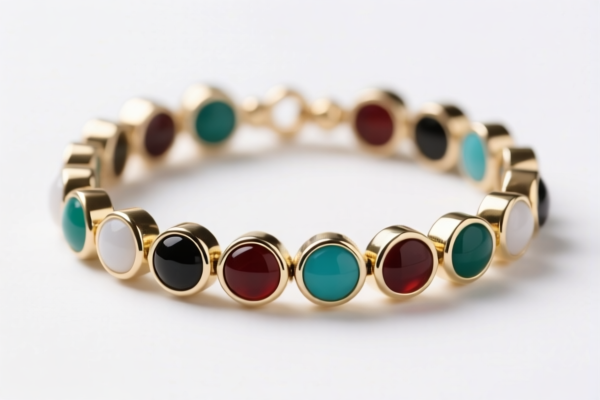
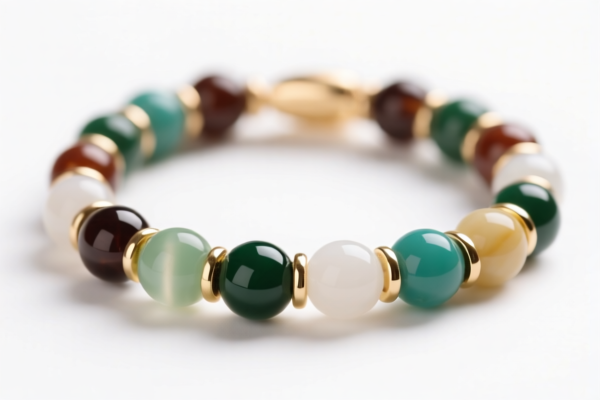
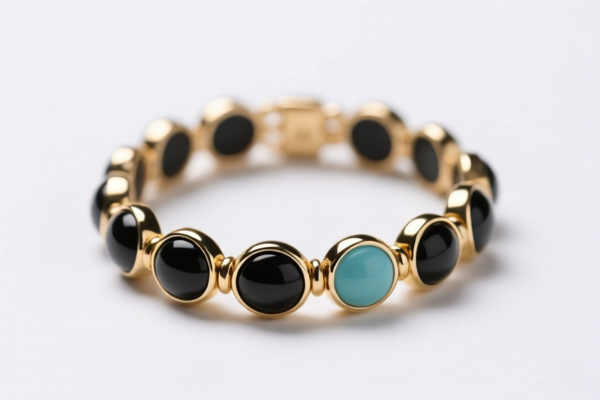
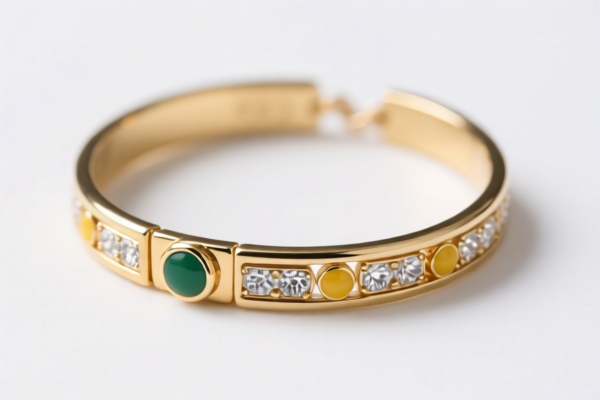
AI Analysis
🖌️ Bracelet Straps/Cords (Hand-Strung Bracelets)
🌐 HS Code Reference & Customs Clearance Guide | 2026 Latest Tariff Analysis | Professional Clearance Strategy
📌 I. Product Definition & Classification: Do You Really Understand "Bracelet Straps"?
Bracelet straps are versatile accessories used in jewelry making and fashion. In international trade, their classification depends heavily on material composition (base metal, textile, etc.) and form (chain, rope, cord). Misclassification can lead to significant tariff differences, especially with current US trade policies.
⚠️ Key Distinction Points:
- If made of base metals (e.g., stainless steel, alloy) or similar metal fittings → Classified as Imitation Jewelry.
- If made of textiles (knitted, crocheted, woven) → Classified as Textile Accessories/Apparel Accessories.
- If made of ropes, cords, or yarns → Classified as Articles of Yarn, Rope, or Cordage.
📦 II. HS Code Classification Details (2026 Latest Tariff Authority Comparison)
| HS Code | Product Description | Applicable Scenario | Total Tax Rate |
|---|---|---|---|
7117.19.15.00 |
Imitation jewelry: Base metal or composite material, rope-like form | Metal bracelets, alloy cords, metal-chain style bracelets | 25.5% |
7117.19.20.00 |
Imitation jewelry: Other base metal articles | Non-metallic fittings on metal bracelets, other metal jewelry items | 28.5% |
6117.80.85.00 |
Other made-up clothing accessories: Knitted or crocheted | Knitted bracelets, crochet cords, fabric-based straps | 32.1% |
6117.80.95.70 |
Other made-up clothing accessories: Other materials | Non-cotton/wool/textile accessories, mixed-material accessories | 32.1% |
5609.00.10.00 |
Articles of yarn, string, rope: Cotton or fiber-based | Cotton rope bracelets, corded accessories | 37.9% |
5609.00.40.00 |
Articles of yarn, string, rope: Other materials | Yarn, fiber, or strip-based rope products | 38.9% |
🔍 Key Reminder:
- Metallic components determine classification under Chapter 71 (Imitation Jewelry), regardless of whether the main body is rope-like.
- Textile/knitted bracelets fall under Chapter 61 if they are "made-up clothing accessories."
- Purely rope/yarn-based bracelets (no significant metal or textile garment features) fall under Chapter 56.
💰 III. 2026 Latest Tariff Rate Breakdown (Including Surcharges, Policy Add-ons)
✅ Applicable Country: United States (US)
✅ Origin: China (CN)
✅ Effective Date: 2025–2026 (Including subsequent imports)
🎯 1. 7117.19.15.00 —— Imitation Jewelry: Base Metal, Rope-like Form
| Item | Content |
|---|---|
| Base Tariff | 8.0% |
| Section 301 Surcharge | +7.5% |
| Section 122 Tariff | +10% |
| Total Rate | 25.5% |
| Tax Calculation | CIF Value × 25.5% |
| De Minimis Eligibility | ❌ Not Eligible (Denied) |
| Legal Basis Path | USITC:7117.19.15.00 → Section 301:7.5% → Section 122:10% |
📌 Explanation:
- This code applies to imitation jewelry made of base metals with a rope-like shape.
- The 301 surcharge (7.5%) applies to all Chinese-origin goods in this category.
- Section 122 tariffs (10%) are additional trade remedies.
- Total burden: 25.5%, which is moderate compared to textile imports.
🎯 2. 7117.19.20.00 —— Imitation Jewelry: Other Base Metal Articles
| Item | Content |
|---|---|
| Base Tariff | 11.0% |
| Section 301 Surcharge | +7.5% |
| Section 122 Tariff | +10% |
| Total Rate | 28.5% |
| Tax Calculation | CIF Value × 28.5% |
| De Minimis Eligibility | ❌ Not Eligible (Denied) |
| Legal Basis Path | USITC:7117.19.20.00 → Section 301:7.5% → Section 122:10% |
📌 Note:
- Slightly higher than7117.19.15.00due to a higher base tariff (11.0% vs 8.0%).
- Applies to other base metal imitation jewelry not classified elsewhere.
🎯 3. 6117.80.85.00 & 6117.80.95.70 —— Textile/Accessory Bracelets
| Item | Content |
|---|---|
| Base Tariff | 14.6% |
| Section 301 Surcharge | +7.5% |
| Section 122 Tariff | +10% |
| Total Rate | 32.1% |
| Tax Calculation | CIF Value × 32.1% |
| De Minimis Eligibility | ❌ Not Eligible (Denied) |
| Legal Basis Path | USITC:6117.80.85.00/95.70 → Section 301:7.5% → Section 122:10% |
📌 Note:
- Applies to knitted, crocheted, or other textile-based accessories.
- Section 301 and 122 surcharges apply equally.
- Higher base tariff (14.6%) than metal jewelry.
🎯 4. 5609.00.10.00 & 5609.00.40.00 —— Rope/Yarn/Cordage Articles
| Item | Content |
|---|---|
| Base Tariff | 2.9%–3.9% |
| Section 301 Surcharge | +25.0% |
| Section 122 Tariff | +10% |
| Total Rate | 37.9%–38.9% |
| Tax Calculation | CIF Value × 37.9%/38.9% |
| De Minimis Eligibility | ❌ Not Eligible (Denied) |
| Legal Basis Path | USITC:5609.00.10.00/40.00 → Section 301:25.0% → Section 122:10% |
📌 Note:
- Despite low base tariffs (2.9%–3.9%), the Section 301 surcharge is 25%, making the total rate the highest among all options.
- Applies to pure rope, cord, or yarn-based bracelets without significant textile garment features.
🛠️ IV. Customs Clearance Practical Advice (Battle-Tested Pitfall Avoidance)
✅ 1. Required Documentation Checklist (Non-Negotiable)
| Document | Must Provide | Description |
|---|---|---|
| ✅ Product Specifications | ✔️ | Material composition (metal %, fiber type, weight) |
| ✅ Product Photos (Clear) | ✔️ | Show close-ups of material, clasp, and form |
| ✅ Commercial Invoice | ✔️ | Clearly state "Bracelet Strap" or "Imitation Jewelry" |
| ✅ Packing List | ✔️ | Include dimensions, quantity, and packaging details |
| ✅ Origin Certificate | ✔️ | Proof of Chinese origin (for tariff calculation) |
| ✅ Material Test Report | ✔️ | Certify metal content or fiber type if disputed |
✅ 2. Declaration Tips (Key Mantra)
🔥 "Material Determines Code, Metal vs. Textile, Don’t Split, Don’t Hide!"
| Scenario | Correct Declaration | Wrong Practice |
|---|---|---|
| Metal bracelet with rope-like shape | 7117.19.15.00 |
Misdeclare as textile → 32%+ |
| Knitted fabric bracelet | 6117.80.85.00 |
Misdeclare as metal → 25%+ |
| Cotton rope bracelet | 5609.00.10.00 |
Misdeclare as textile → 37.9% |
| Mixed materials (metal + fabric) | 7117.19.20.00 (if metal dominant) |
Split declaration → Audit risk |
✅ 3. Special Case Handling
| Scenario | Handling Advice |
|---|---|
| OEM Custom Bracelets | Provide design drawings + material specs to avoid "unknown item" flags |
| Mixed Material Bracelets | Declare based on principal material or essential character; provide justification |
| Bracelets with Precious Stone Fittings | May shift to Chapter 7101–7113; consult advanced ruling |
| Low-Value Shipments | ❌ De Minimis Exemption Not Available for these HS codes from China |
🌍 V. Global Market Clearance Comparison (2026 Latest)
| Country/Region | Recommended HS Code | Tariff | Certification Required | Notes |
|---|---|---|---|---|
| 🇺🇸 United States | 7117.19.15.00 – 5609.00.40.00 |
25.5%–38.9% | None specific | High surcharges due to Section 301 & 122 |
| 🇨🇳 China (Export) | Same as above | 0% (Export) | N/A | No export tariff, but destination tariffs apply |
| 🇪🇺 European Union | 7117.19.15.00 – 6117.80.95.70 |
0%–4.5% | CE/REACH (if applicable) | No Section 301/122 equivalent; lower burden |
| 🇬🇧 United Kingdom | Same as EU | 0%–4.5% | UKCA (if applicable) | Post-Brexit tariffs similar to EU |
| 🇦🇺 Australia | Same as US | 5%–10% | None | Lower base tariffs, no 301/122 surcharges |
📌 Conclusion:
- The US market imposes the highest total tariff burden on Chinese-origin bracelet straps due to Section 301 and Section 122.
- Metal-based bracelets (7117.xx) have the lowest total rate (25.5%–28.5%).
- Rope/Yarn-based bracelets (5609.xx) have the highest total rate (37.9%–38.9%) despite low base tariffs.
- EU/UK/Australia are significantly more tariff-friendly for these goods.
📌 VI. Common Mistakes & Pitfall Avoidance (Lessons Learned)
❌ Mistake 1: Declaring a metal bracelet as "Textile Accessory"
👉 Consequence: Higher tax (32.1% vs 25.5%) + Potential audit for misclassification.
❌ Mistake 2: Declaring a rope bracelet as "Jewelry"
👉 Consequence: Wrong HS Code (7117 vs 5609) → 10–13% extra tax + Compliance risk.
❌ Mistake 3: Ignoring Section 301 & 122 Surcharges
👉 Consequence: Underestimating landed cost by 17.5–35% → Margin erosion.
❌ Mistake 4: Using vague descriptions like "Fashion Accessory"
👉 Consequence: Customs may reclassify based on visual inspection → Delays + Re-tariffing.
✅ Correct Practice:
"Imitation Jewelry Bracelet, Base Metal, Rope-Like Form, 100% Stainless Steel, Model XYZ, Origin: China"
🎯 VII. Conclusion: Precise Classification Saves Costs!
🎯 Remember the Mantra:
🔹 "Metal is Cheaper (25.5%), Rope is Expensive (38.9%), Textile is Middle (32.1%)."
🔹 "Section 301 & 122 Add 17.5–35% to Your Bill, Don’t Let Misclassification Cost You!"
📌 Pro Tip:
If your bracelet straps are manufactured in Vietnam, Mexico, or Malaysia, you may qualify for IEEPA Exemptions or FTZ Benefits, reducing tariffs to 0%–10%.
Consider applying for an Advance Ruling from US Customs to secure classification certainty.
📣 Immediate Action:
📞 Contact a Professional Customs Broker + Provide Product Photos + Apply for HS Code Advance Ruling
🚀 Ensure Smooth Clearance, Efficient Outbound Shipping, and Maximized Profit Margins!
✨ Professional Clearance Starts with Accurate Classification!
💼 Every Penny of Your Cost Deserves Precise Calculation!
Customer Reviews
About HS Code Classification
The Harmonized System (HS) is an internationally standardized nomenclature developed by the World Customs Organization (WCO) to classify traded products. Over 200 countries use the HS system as the basis for customs tariffs, trade statistics, and import/export regulations.
Each HS code follows a hierarchical structure:
- Chapter (2 digits) — Broad category of goods (e.g., Chapter 84: Machinery and Mechanical Appliances)
- Heading (4 digits) — More specific grouping within the chapter
- Subheading (6 digits) — Internationally standardized breakdown, used by all WCO member countries
- National subdivisions (8-10 digits) — Country-specific extensions for further classification, such as US HTSUS 10-digit codes
Correct HS code classification is essential for smooth customs clearance, accurate duty payment, and compliance with trade regulations. Misclassification can lead to customs delays, overpayment of duties, or penalties.
When importing from CN to US, the applicable tariff rates may include:
- Most-Favored-Nation (MFN) rate — The standard duty rate applied to WTO members
- General rate — Applied to countries without trade agreements
- Trade remedy duties — Additional tariffs such as Section 301 (anti-dumping), Section 232 (national security), or countervailing duties
The information provided on this page is for reference purposes only. For official classification, please consult with your local customs authority or a licensed customs broker.