扫地机器人
CN → US| HS Code | Tariff Rate | Origin | Destination | Doc |
|---|---|---|---|---|
| 8479897000 | 35.0% | CN | US | Official Doc |
| 8509801000 | 10.0% | CN | US | Official Doc |
| 8509805095 | 14.2% | CN | US | Official Doc |
| 8479896500 | 20.3% | CN | US | Official Doc |
| 8479897000 | 35.0% | CN | US | Official Doc |
Product Images
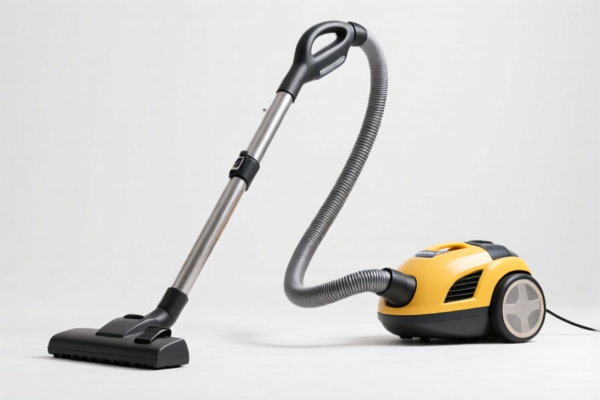
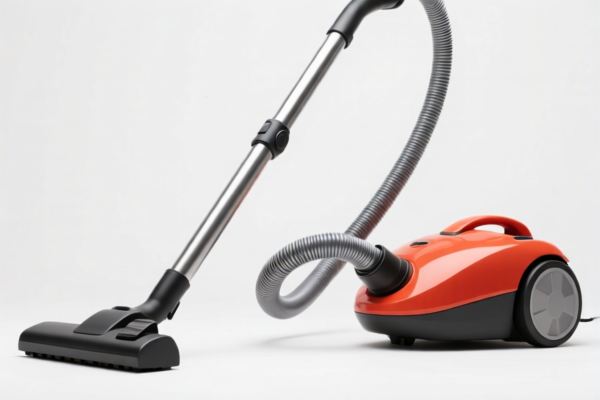

AI Analysis
🤖 Robot Vacuum Cleaners (扫地机器人)
🌐 HS Code Reference & Customs Clearance Guide | 2026 Latest Tariff Analysis | Professional Clearance Strategy
📌 I. Product Definition & Classification: Do You Really Understand "Robot Vacuums"?
Robot Vacuum Cleaners, or "Smart Floor Cleaning Devices," are autonomous home appliances designed to clean floors (carpets, hardwood, tiles) without manual intervention. In international trade, their classification depends heavily on their driving mechanism, specific function, and whether they fall under the Vacuum Cleaner category or Other Mechanical Appliances.
The data reveals three critical classification paths for Robot Vacuums: 1. As "Other Electrical Household Appliances" (8509 Series): Specifically excluding vacuum cleaners but including motorized floor cleaners. 2. As "Carpet Sweeping Machines" (8479.89.70.00): A broader mechanical category often applied if the device is viewed primarily as a mechanical sweeping tool. 3. As "Other Machines with Self-Contained Motors" (8479.89.65.00): For units classified as general-purpose mechanical appliances.
⚠️ Key Distinction: - 8509.80.10.00 is often the lowest cost option (10% total tax) as it treats the device as a standard motorized household appliance excluding vacuum cleaners. - 8479.89.70.00 carries the highest tax burden (35% total tax) by classifying it as a "Carpet Sweeping Machine" with significant USITC penalties. - 8479.89.65.00 sits in the middle (20.3% total tax) as a general mechanical device.
📦 II. HS Code Classification Details (2026 Latest Tariff Authority)
Based on the provided data, here are the three distinct classification scenarios for "Robot Vacuum Cleaners":
| HS Code | Product Description & Logic | Matching Criteria from Data |
|---|---|---|
8509.80.10.00 |
Other Electrical Household Appliances (Excluding Vacuums) Motorized consumer goods for floor cleaning that do not function strictly as "vacuum cleaners" in the traditional sense. |
• Match Basis: Electrically driven household appliance. • Form: Finished consumer good with self-contained motor. • Function: Ground cleaning appliance fitting under "Other Household Appliances." |
8509.80.50.95 |
Other Electrical Household Appliances (Specific Sub-category) A broader category for motorized home appliances not listed elsewhere. |
• Description: Home appliance with its own electric motor. • Exclusion: Not a "Vacuum Cleaner" (per exclusion list). • Logic: Fits the description of "Other Items." |
8479.89.65.00 |
Other Machines with Self-Contained Motors (General Mechanical) General purpose mechanical appliances with independent functions. |
• Match: Independent functional mechanical appliance. • Feature: Self-contained motor. • Logic: Fits "Other machines with self-contained motors." |
8479.89.70.00 |
Carpet Sweeping Machines (High Risk Category) Specifically targeted as mechanical sweeping devices. |
• Function: Highly consistent with "Carpet Sweeping Machines." • Inference: Based on cleaning equipment常识 (common sense), it possesses mechanical sweeping functions. • Risk: Highest tariff impact. |
🔍 Critical Warning: -
8509.80.10.00offers the best tax rate (10%) by leveraging the "Other Household Appliance" logic to avoid "Vacuum Cleaner" duties. -8479.89.70.00carries a massive 35% tax burden due to the "Carpet Sweeping Machine" classification combined with 25% USITC penalties. -8479.89.65.00is a moderate option (20.3%) but requires proving the device is a "general machine" rather than a specific cleaner.
💰 III. 2026 Latest Tariff Rate Breakdown (Including Surcharges & Policy Add-ons)
✅ Applicable Country: USA (US)
✅ Origin: China (CN)
✅ Effective Time: Includes 2026 latest policy adjustments (Section 301 & 122)
🎯 1. 8509.80.10.00 —— Best Case: Motorized Household Appliance (Non-Vacuum)
| Item | Content |
|---|---|
| Base Tariff | 0.0% (ad valorem) |
| USITC Add-on (Section 301) | +0.0% (No Section 301 penalty applied under this code) |
| Section 122 Tariff | +10.0% (Targeted surcharge) |
| Total Tax Rate | 10.0% |
| Calculation | CIF Value × 10% |
| De Minimis Exemption | ❌ No (Not eligible) |
| Legal Path | 122: 10% surcharge on consumer goods → 8509.80.10.00 |
📌 Explanation: - This code avoids the heavy "Section 301" penalties (25%) often applied to vacuum cleaners or specific machinery. - It treats the robot as a generic "other household electrical appliance." - Total Cost: Only the 10% Section 122 surcharge applies. This is the most cost-effective classification strategy.
🎯 2. 8509.80.50.95 —— Moderate Case: Other Home Appliance
| Item | Content |
|---|---|
| Base Tariff | 4.2% |
| USITC Add-on | +0.0% |
| Section 122 Tariff | +10.0% |
| Total Tax Rate | 14.2% |
| Calculation | CIF Value × 14.2% |
| De Minimis Exemption | ❌ No |
| Legal Path | 8509.80.50.95 (Other appliances) → 122: 10% |
📌 Explanation: - While still avoiding the 25% Section 301 penalty, this code carries a 4.2% base tariff. - Total cost is slightly higher than
8509.80.10.00but significantly lower than the 8479 codes.
🎯 3. 8479.89.65.00 —— Intermediate Case: Other Mechanical Machine
| Item | Content |
|---|---|
| Base Tariff | 2.8% |
| USITC Add-on (Section 301) | +7.5% (Partial penalty applied) |
| Section 122 Tariff | +10.0% |
| Total Tax Rate | 20.3% |
| Calculation | CIF Value × 20.3% |
| De Minimis Exemption | ❌ No |
| Legal Path | 8479.89.65.00 → USITC:7.5% → 122:10% |
📌 Explanation: - This code classifies the robot as a "general mechanical appliance" rather than an electrical household tool. - It attracts a 7.5% Section 301 penalty, making it more expensive than the 8509 codes.
🎯 4. 8479.89.70.00 —— Worst Case: Carpet Sweeping Machine
| Item | Content |
|---|---|
| Base Tariff | 0.0% |
| USITC Add-on (Section 301) | +25.0% (High penalty applied) |
| Section 122 Tariff | +10.0% |
| Total Tax Rate | 35.0% |
| Calculation | CIF Value × 35% |
| De Minimis Exemption | ❌ No |
| Legal Path | 8479.89.70.00 (Carpet Sweeping) → USITC:25% → 122:10% |
📌 Explanation: - CRITICAL RISK: Customs may classify "Robot Vacuums" as "Carpet Sweeping Machines" to apply the maximum 25% Section 301 penalty. - Combined with the 10% Section 122 surcharge, the total tax hits 35%. - Strategy: Avoid this code if possible by arguing the device is a "General Household Appliance" (8509) rather than a "Carpet Sweeping Machine" (8479).
🛠️ IV. Customs Clearance Practical Advice (Real-World Pitfall Avoidance)
✅ 1. Preparation Checklist (Essential Documents)
| Document | Requirement | Purpose |
|---|---|---|
| ✅ Product Specification Sheet | ✔️ | Must explicitly state "Electrical Household Appliance" and exclude "Vacuum Cleaner" terminology if possible. |
| ✅ Circuit Diagram / Block Diagram | ✔️ | Prove the device is a complete unit with a motor, not a "mechanical sweeping tool" (which triggers 8479). |
| ✅ Product Photos (with Nameplate) | ✔️ | Show brand, model, voltage, and power rating to support the "Household Appliance" (8509) claim. |
| ✅ Third-Party Test Report | ✔️ | FCC, CE, UL (Safety certification supports the "Finished Consumer Good" status). |
| ✅ Commercial Invoice | ✔️ | Crucial: Describe as "Robot Floor Cleaner" or "Smart Cleaning Device." Avoid terms like "Carpet Sweeper" or "Carpet Machine." |
| ✅ Packing List | ✔️ | Show all accessories (charger, dock) included in one shipment (avoid splitting parts). |
✅ 2. Declaration Strategy (The "Golden Rule")
🔥 口诀: "Call it Appliance, Not Sweeper; Avoid 35%, Keep 10%!"
| Scenario | Correct Declaration | Wrong Declaration (Risk) |
|---|---|---|
| Full Robot Unit | 8509.80.10.00 (Household Appliance) | 8479.89.70.00 (Carpet Sweeper) → 35% Tax |
| Product Name | "Robot Vacuum Cleaner" or "Smart Floor Cleaner" | "Carpet Sweeping Machine" or "Carpet Machine" |
| Function Description | "Electrically driven, self-contained motor, household use" | "Mechanical sweeping device for carpets" |
| Exclusion | Explicitly state "Not a standard vacuum cleaner" (to avoid higher vacuum tariffs) | Do not highlight "Vacuum" or "Sweeping" too aggressively if 8479 is the fallback. |
💡 Pro Tip: - If the device has both suction (vacuum) and sweeping brushes, try to emphasize the electrical appliance nature (8509) to avoid the 25% penalty on 8479. - Do not use the term "Carpet Sweeper" in the commercial invoice or description; use "Robot Floor Cleaner."
✅ 3. Special Handling Scenarios
| Situation | Handling Suggestion |
|---|---|
| OEM Custom Units | Provide client order + design specs to prove it's a "Finished Consumer Good" (8509), not a "General Machine" (8479). |
| Multi-Function (Sweep + Vacuum) | If it vacuums, argue for 8509 (Household Appliance). If forced to 8479, argue it's "Other Mechanical" (65.00) to avoid the "Carpet Sweeper" (70.00) penalty. |
| Battery Included | Ensure batteries are declared separately if required, but the main unit is the appliance. |
| "Robot" in Name | "Robot" does not automatically trigger 8479. Emphasize the Electrical Motor and Household usage. |
🌍 V. Global Market Comparison (2026)
| Country/Region | Recommended HS Code | Tariff (CN Origin) | Certification | Notes |
|---|---|---|---|---|
| 🇺🇸 USA | 8509.80.10.00 | 10% (Best) | FCC + UL | Avoid 8479.89.70 (35%) |
| 🇨🇳 China | 8509.80.10.00 | 0% (MFN) | CCC | No Section 301 |
| 🇪🇺 EU | 8509.80.10.00 | 0% (if CE) | CE + RoHS | No Section 301 |
| 🇯🇵 Japan | 8509.80.10.00 | 0% | PSE | No Section 301 |
📌 Conclusion: - USA is the only market with Section 122 (10%) and potential Section 301 (up to 25%) penalties. - Classification is the difference between 10% and 35% tax. - 8509.80.10.00 is the strategic target for US imports.
📌 VI. Common Mistakes & Pitfalls (Lessons Learned)
❌ Mistake 1: Calling the product "Carpet Sweeping Machine" in the invoice. 👉 Consequence: Automatic classification to 8479.89.70.00 → 35% Tax.
❌ Mentally Splitting: Separating the "sweeping motor" from the "robot body." 👉 Consequence: Customs sees it as a "Machine" (8479) rather than an "Appliance" (8509).
❌ Mistake 3: Using generic terms like "Automatic Sweeper" without specifying "Household Appliance." 👉 Consequence: Risk of higher duty rates.
❌ Mistake 4: Failing to prove "Self-Contained Motor." 👉 Consequence: May be re-classified to "Parts" or "Machines" with higher penalties.
✅ Correct Approach:
"Smart Robot Floor Cleaner, Model XYZ, Electric Motor, Household Use, FCC Certified."
🎯 VII. Conclusion: Precision Classification = Profit Protection
🎯 Remember the Mantra:
🔹 "8509 for 10%, 8479 for 35%: Choose your words wisely!" 🔹 "Avoid 'Carpet Sweeper' words; Emphasize 'Household Appliance'!"
📌 Tips: - If your robot vacuum is manufactured in Vietnam, Mexico, or Thailand, you may qualify for IEEPA/Section 301 Exemptions, reducing the total tax to 0%~5%. - Apply for Advance Rulings (AR) from US Customs (CBP) before shipping to lock in the 10% rate.
📣 Immediate Action:
📞 Contact a professional customs broker + Provide product photos + Apply for HS Code Advance Ruling. 🚀 Let your Robot Vacuums pass through customs smoothly, maximize profit, and minimize risk!
✨ Professional Clearance Starts with Accurate Classification! 💼 Every cent of your cost deserves precise calculation!
Customer Reviews
About HS Code Classification
The Harmonized System (HS) is an internationally standardized nomenclature developed by the World Customs Organization (WCO) to classify traded products. Over 200 countries use the HS system as the basis for customs tariffs, trade statistics, and import/export regulations.
Each HS code follows a hierarchical structure:
- Chapter (2 digits) — Broad category of goods (e.g., Chapter 84: Machinery and Mechanical Appliances)
- Heading (4 digits) — More specific grouping within the chapter
- Subheading (6 digits) — Internationally standardized breakdown, used by all WCO member countries
- National subdivisions (8-10 digits) — Country-specific extensions for further classification, such as US HTSUS 10-digit codes
Correct HS code classification is essential for smooth customs clearance, accurate duty payment, and compliance with trade regulations. Misclassification can lead to customs delays, overpayment of duties, or penalties.
When importing from CN to US, the applicable tariff rates may include:
- Most-Favored-Nation (MFN) rate — The standard duty rate applied to WTO members
- General rate — Applied to countries without trade agreements
- Trade remedy duties — Additional tariffs such as Section 301 (anti-dumping), Section 232 (national security), or countervailing duties
The information provided on this page is for reference purposes only. For official classification, please consult with your local customs authority or a licensed customs broker.