扶手椅套
CN → US| HS Code | Tariff Rate | Origin | Destination | Doc |
|---|---|---|---|---|
| 3926305000 | 22.8% | CN | US | Official Doc |
| 4016990500 | 20.9% | CN | US | Official Doc |
| 6307908995 | 17.0% | CN | US | Official Doc |
| 4016996050 | 37.5% | CN | US | Official Doc |
| 6307909891 | 24.5% | CN | US | Official Doc |
Product Images
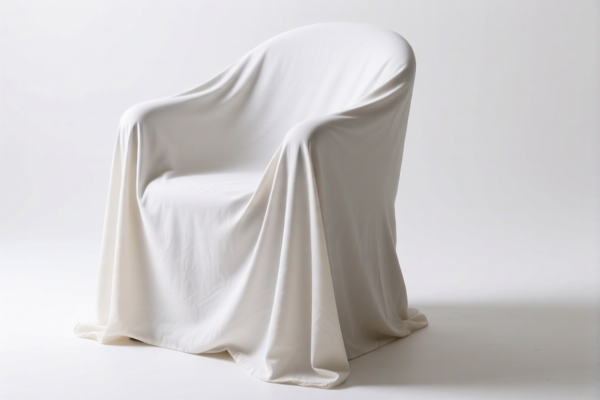
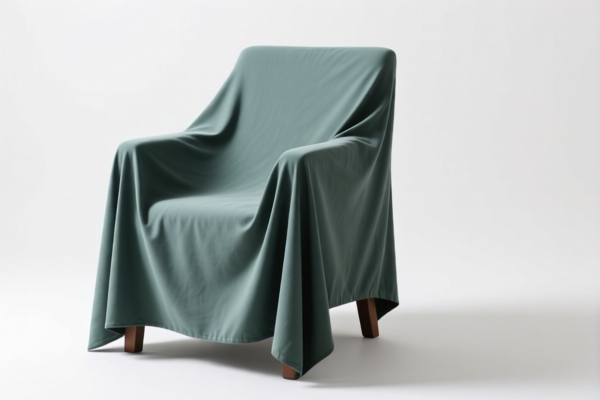
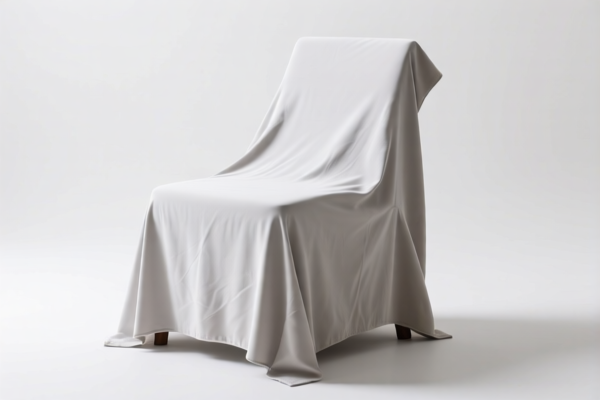
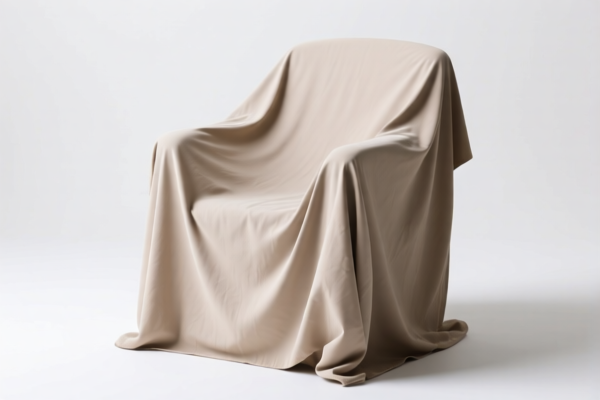
AI Analysis
🪑 Armchair Covers (Armrest Covers / Furniture Slipcovers)
🌐 HS Code Reference & Customs Clearance Guide | 2026 Latest Tariff Analysis | Professional Clearance Strategy
📌 I. Product Definition & Classification: Do You Really Understand "Armchair Covers"?
Armchair covers (often referred to as "Armrest Covers," "Seat Cushion Covers," or "Furniture Slipcovers") are protective textiles or elastic fabrics designed to protect the upholstery of furniture, particularly armchairs, sofas, and office chairs.
In international trade, their classification depends heavily on material composition and form/function:
Textile-based Covers: Made from cotton, polyester, linen, or blended fibers. These fall under Chapter 63 ("Other made up textile articles").
Rubber/Elastic-based Covers: Made from vulcanized rubber, silicone, or synthetic elastic materials. These fall under Chapter 40 ("Rubber and articles thereof").
Plastic/PVC-based Covers: Made from rigid or semi-rigid plastic parts (e.g., plastic armrest caps). These fall under Chapter 39 ("Plastics and articles thereof").
⚠️ Key Distinction Point:
- If the item is a fabric slipcover (soft, textile) → Classify under 6307.
- If the item is a rubber/silicone sleeve (elastic, non-textile) → Classify under 4016.
- If the item is a plastic cap/coupler (rigid or semi-rigid plastic part) → Classify under 3926.
📦 II. HS Code Classification Details (2026 Latest Tariff Authority Comparison)
Based on the provided data, here are the 5 potential classifications for "Armchair Covers" with their respective tax implications:
| HS Code | Product Description | Material Inference | Form/Usage Category | Total Tax Rate |
|---|---|---|---|---|
3926.30.50.00 |
Other plastic articles; fittings/accessories for furniture | Plastic inferred | Fittings/accessories for armchairs/car seats | 22.8% |
4016.99.05.00 |
Other made up rubber articles; household items | Vulcanized Rubber/Elastic inferred | Household items (finished consumer goods) | 20.9% |
6307.90.89.95 |
Other made up textile articles; other finishes | Cotton/Fabric inferred | Textile finishes (similar to bedspreads/curtains) | 17.0% |
4016.99.60.50 |
Other vulcanized rubber articles; other articles | Rubber/Plastic Elastic inferred | Other vulcanized rubber articles | 37.5% |
6307.90.98.91 |
Other made up textile articles; other articles | Fabric/Synthetic Fiber inferred | Other textile finished products | 24.5% |
🔍 Critical Analysis:
- The lowest tax rate (17.0%) applies if the cover is identified as a textile product (e.g., a fabric slipcover) under6307.90.89.95.
- The highest tax rate (37.5%) applies if it is classified as a specialized rubber article under4016.99.60.50.
- Plastic fittings (3926.30.50.00) sit in the middle at 22.8%.
💰 III. 2026 Latest Tariff Rate Breakdown (Including Surtaxes & Policy Add-ons)
✅ Applicable Country: United States (US)
✅ Origin: China (CN)
✅ Effective Time: Post-2025 Tariff Structure (Including Section 301 & IEEPA)
🎯 1. 3926.30.50.00 —— Plastic Fittings/Accessories
| Item | Content |
|---|---|
| Base Duty | 5.3% |
| Section 301 Surtax | 7.5% (Specific category rate) |
| Section 122 Tariff | 10.0% (Targeted surcharge) |
| Total Tax Rate | 22.8% |
| Tax Calculation | CIF Value × 22.8% |
| De Minimis Exemption | ❌ Not Eligible (High-duty goods usually excluded or subject to strict scrutiny) |
| Legal Basis Path | USITC:3926.30.50.00 → Section 301 Footnote → IEEPA:122 |
📌 Explanation:
- If your product is a plastic armrest cap or plastic connector, it falls here.
- The 7.5% Surtax + 10% Section 122 makes it significantly more expensive than textile alternatives.
🎯 2. 4016.99.05.00 —— Rubber Household Items
| Item | Content |
|---|---|
| Base Duty | 3.4% |
| Section 301 Surtax | 7.5% |
| Section 122 Tariff | 10.0% |
| Total Tax Rate | 20.9% |
| Tax Calculation | CIF Value × 20.9% |
| De Minimis Exemption | ❌ Not Eligible |
| Legal Basis Path | USITC:4016.99.05.00 → Section 301 Footnote → IEEPA:122 |
📌 Explanation:
- If the cover is made of silicone or elastic rubber and marketed as a "household item," this is the most favorable rubber classification.
- Lower base duty (3.4%) compared to other rubber categories.
🎯 3. 6307.90.89.95 —— Textile Finished Articles (Lowest Tax!)
| Item | Content |
|---|---|
| Base Duty | 7.0% |
| Section 301 Surtax | 0.0% |
| Section 122 Tariff | 10.0% |
| Total Tax Rate | 17.0% |
| Tax Calculation | CIF Value × 17.0% |
| De Minimis Exemption | ❌ Not Eligible (Due to Section 122) |
| Legal Basis Path | USITC:6307.90.89.95 → Section 122 (Note: No Section 301 surtax for this specific subheading in some interpretations) |
📌 Explanation:
- Best Option for Textile Covers!
- Although the base duty is higher (7.0%), the Section 301 surtax is 0%, and only the 10% Section 122 applies.
- Total tax is 17.0%, the lowest among all 5 options.
- Condition: Must be clearly identified as fabric/textile (e.g., polyester, cotton blend).
🎯 4. 4016.99.60.50 —— Other Vulcanized Rubber Articles (Highest Tax!)
| Item | Content |
|---|---|
| Base Duty | 2.5% |
| Section 301 Surtax | 25.0% |
| Section 122 Tariff | 10.0% |
| Total Tax Rate | 37.5% |
| Tax Calculation | CIF Value × 37.5% |
| De Minimis Exemption | ❌ Not Eligible |
| Legal Basis Path | USITC:4016.99.60.50 → Section 301 Footnote 9903.88.01 → IEEPA:122 |
📌 Explanation:
- Avoid this classification if possible!
- The 25% Section 301 surtax is the standard heavy penalty for rubber articles.
- Even with a low base duty (2.5%), the total tax hits 37.5%, drastically reducing profit margins.
🎯 5. 6307.90.98.91 —— Other Textile Finished Articles
| Item | Content |
|---|---|
| Base Duty | 7.0% |
| Section 301 Surtax | 7.5% |
| Section 122 Tariff | 10.0% |
| Total Tax Rate | 24.5% |
| Tax Calculation | CIF Value × 24.5% |
| De Minimis Exemption | ❌ Not Eligible |
| Legal Basis Path | USITC:6307.90.98.91 → Section 301 Footnote → IEEPA:122 |
📌 Explanation:
- This is the "Other" category for textiles.
- It incurs the 7.5% Section 301 surtax, making it more expensive than6307.90.89.95(which has 0% Surtax).
- Use only if6307.90.89.95does not fit your specific product description.
🛠️ IV. Customs Clearance Practical Advice (Battle-Tested Pitfall Avoidance)
✅ 1. Document Preparation Checklist (Non-Negotiable)
| Document | Must Provide | Purpose |
|---|---|---|
| ✅ Product Composition Label | ✔️ | Must specify exact % of cotton/polyester/rubber. Crucial for HS Code selection. |
| ✅ Product Photos | ✔️ | Show the item on an armchair to prove it is a "cover" and not a "furniture part." |
| ✅ Material Test Report | ✔️ | Third-party lab test confirming fabric vs. rubber vs. plastic. |
| ✅ Commercial Invoice | ✔️ | Describe as "Fabric Armchair Slipcover" or "Textile Furniture Cover." Avoid vague terms like "Accessory." |
| ✅ Packing List | ✔️ | List net weight and gross weight accurately. |
| ✅ Origin Certificate | ✔️ | If applicable, to verify CN origin for surtax calculation. |
✅ 2. Declaration Tips (Key Mnemonic)
🔥 "Fabric First, Rubber Second, Plastic Last, Tax Varies!"
| Scenario | Correct Declaration | Wrong Declaration | Consequence |
|---|---|---|---|
| Fabric Cover | "Polyester Armchair Slipcover" | "Furniture Accessory" | Risk of being reclassified to Plastic (22.8%) or Rubber (20.9-37.5%) |
| Rubber Cover | "Silicone Armrest Protector" | "Textile Cover" | Misclassification penalty + Back taxes |
| Plastic Cap | "Plastic Armrest Cap" | "Cover" | Ambiguity leads to higher duty assessment |
📌 Key Strategy:
- If your product is textile, insist on6307.90.89.95(17.0%) because it has 0% Section 301 surtax.
- Do NOT declare a fabric cover as a "rubber article" just to confuse the system; it will trigger audits and penalties.
✅ 3. Special Cases Handling
| Situation | Handling Advice |
|---|---|
| Mixed Material (e.g., Fabric + Rubber Grip) | If fabric >50% by weight, classify as textile (6307). If rubber >50%, classify as rubber (4016). |
| Elastic Banding | If the main body is fabric but has rubber threads, still generally classified as textile unless rubber is the primary value component. |
| OEM Custom Shapes | Provide custom patterns. Ensure the invoice specifies "Custom Shaped Textile Cover" to support 6307 classification. |
| Sample Shipment | Even for samples, declare accurately. Misdeclaring a fabric sample as "plastic" can lead to future audits of bulk shipments. |
🌍 V. Global Main Market Clearance Comparison (2026 Latest)
| Country/Region | Recommended HS Code | Estimated Tax (China Origin) | Certification Requirements | Notes |
|---|---|---|---|---|
| 🇺🇸 USA | 6307.90.89.95 (Textile) |
17.0% (10% Sec 122) | None specific | Best Rate. Avoid 4016 (37.5%) |
| 🇺🇸 USA | 4016.99.05.00 (Rubber) |
20.9% (7.5% S301 + 10% S122) | None specific | Second best for rubber items |
| 🇺🇸 USA | 3926.30.50.00 (Plastic) |
22.8% (7.5% S301 + 10% S122) | None specific | Mid-range for plastic parts |
| 🇨🇳 China | 6307.90.90.00 |
~5-7% | CCC (if applicable) | Low duty, no surtax |
| 🇪🇺 EU | 6307.90.98 |
~4% (MFN) | CE (if functional) | No Section 301/122 equivalent |
| 🇬🇧 UK | 6307.90.98 |
~4% | UKCA | Post-Brexit rules apply |
📌 Conclusion:
- USA is the most complex market due to Section 301 and Section 122 tariffs.
- Textile classification (6307.90.89.95) is the cheapest entry point (17.0%) for armchair covers in the US.
- Rubber classification (4016.99.60.50) is the most expensive (37.5%) due to high Section 301 surtax.
- Plastic classification (3926.30.50.00) is moderate (22.8%) but still higher than textile.
📌 VI. Common Mistakes & Pitfall Guide (Blood & Tears Lessons)
❌ Mistake 1: Declaring a fabric slipcover as "Furniture Accessory" without material specification
👉 Result: Customs may guess it's plastic or rubber → Reclassified to 3926 or 4016 → Tax jumps from 17% to 22-37%!
❌ Mistake 2: Using "Cover" as a vague description for a plastic armrest cap
👉 Result: Misleading description → Customs audit → Delay + Fines. Be specific: "Plastic Armrest Protector."
❌ Mistake 3: Assuming all "Rubber" items have the same tax
👉 Result: 4016.99.05.00 (20.9%) vs. 4016.99.60.50 (37.5%). Big difference! Choose "Household Item" if applicable for lower rate.
❌ Mistake 4: Ignoring Section 122 Tariff
👉 Result: All HS codes above include a 10% Section 122 tariff. Do not calculate tax without it.
✅ Correct Practice:
"Textile Armchair Slipcover, 100% Polyester, Stretch Fit, Color: Grey, HS Code 6307.90.89.95"
🎯 VII. Conclusion: Precise Classification, Maximum Profit!
🎯 Remember the Mantra:
🔹 "Fabric is King (17%), Rubber is Risky (21-38%), Plastic is Middle (23%)."
🔹 "Specify Material Clearly, Avoid Vague Terms, Save Thousands on Tariffs!"
📌 Pro Tip:
If your product is mostly fabric but has some rubber elastics, ensure the fabric constitutes >50% of the value/weight to justify 6307 classification. If rubber is dominant, aim for 4016.99.05.00 (20.9%) rather than 4016.99.60.50 (37.5%) by describing it as a "Household Item."
📣 Immediate Action:
📞 Contact your freight forwarder with material composition details.
📄 Request HS Code Pre-Ruling from US CBP if shipment volume is high.
🚀 Optimize your supply chain by choosing textile-based covers for the US market to minimize tariff costs!
✨ Professional Clearance Starts with Precise Classification!
💼 Every percentage point saved is profit earned!
Customer Reviews
About HS Code Classification
The Harmonized System (HS) is an internationally standardized nomenclature developed by the World Customs Organization (WCO) to classify traded products. Over 200 countries use the HS system as the basis for customs tariffs, trade statistics, and import/export regulations.
Each HS code follows a hierarchical structure:
- Chapter (2 digits) — Broad category of goods (e.g., Chapter 84: Machinery and Mechanical Appliances)
- Heading (4 digits) — More specific grouping within the chapter
- Subheading (6 digits) — Internationally standardized breakdown, used by all WCO member countries
- National subdivisions (8-10 digits) — Country-specific extensions for further classification, such as US HTSUS 10-digit codes
Correct HS code classification is essential for smooth customs clearance, accurate duty payment, and compliance with trade regulations. Misclassification can lead to customs delays, overpayment of duties, or penalties.
When importing from CN to US, the applicable tariff rates may include:
- Most-Favored-Nation (MFN) rate — The standard duty rate applied to WTO members
- General rate — Applied to countries without trade agreements
- Trade remedy duties — Additional tariffs such as Section 301 (anti-dumping), Section 232 (national security), or countervailing duties
The information provided on this page is for reference purposes only. For official classification, please consult with your local customs authority or a licensed customs broker.