折叠自行车
CN → US| HS Code | Tariff Rate | Origin | Destination | Doc |
|---|---|---|---|---|
| 8714913000 | 0.0% | CN | US | Official Doc |
| 8714998000 | 27.5% | CN | US | Official Doc |
| 9506910030 | 22.1% | CN | US | Official Doc |
| 9506910010 | 22.1% | CN | US | Official Doc |
Product Images
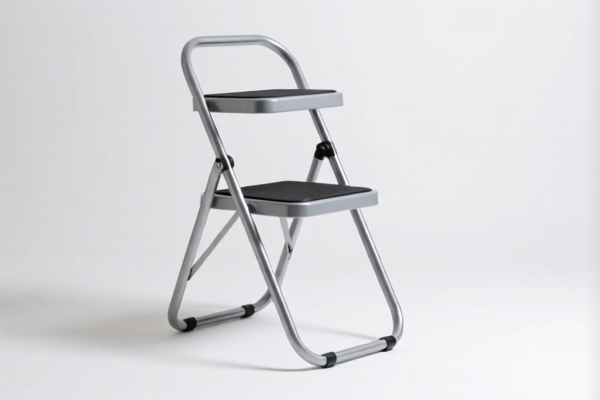
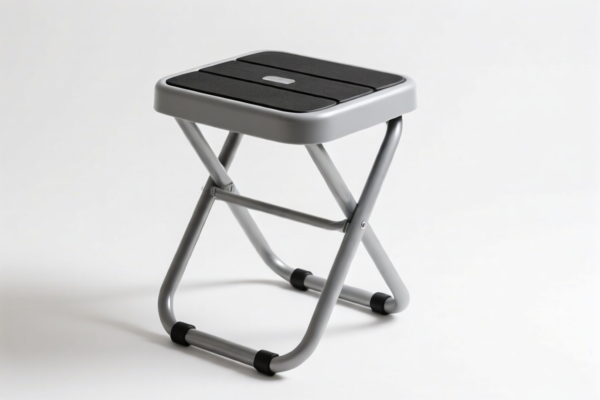
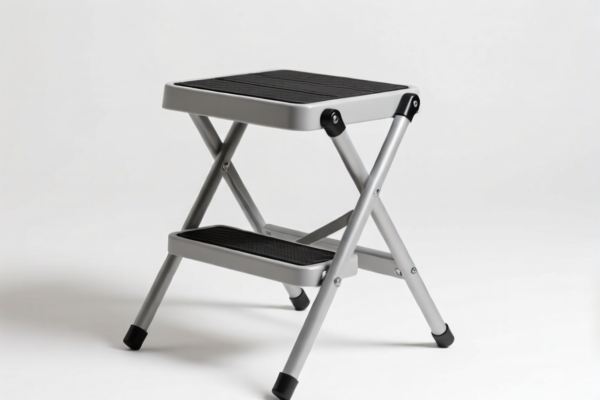
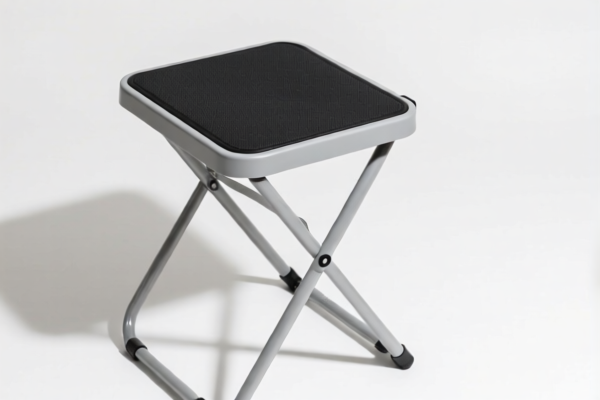
AI Analysis
🚲 Folding Bicycles: The Ultimate HS Code & Customs Clearance Guide (2026 Edition)
🌐 HS Code Reference & Customs Strategy | 2026 Latest Tariff Analysis | Professional Clearance Protocol
📌 I. Product Definition: What Exactly Is a "Folding Bike"?
A folding bicycle is a pedal-powered vehicle designed to fold for compact storage or transport. In international trade, its classification is highly controversial because it straddles two distinct categories: Toys/Sports Goods and Non-Motorized Vehicles.
The key determinant for customs authorities is the primary intent and design complexity: 1. Toy/Sport Category: Lightweight, small wheels, often used by children or as recreational "fun" items without serious utility. 2. Transport Vehicle Category: Sturdy frame, adult-sized, intended for daily commuting or serious athletic use.
⚠️ Critical Distinction Point:
- If it resembles a tricycle, scooter, or toy in form and function → Chapter 95 (Toys/Sports).
- If it meets the technical definition of a non-motorized cycle (pedals, gears, human power only) → Chapter 87 (Vehicles).
📦 II. HS Code Classification Matrix (2026 Latest Customs Data)
| HS Code | Product Description | Applicability Context | Classification Logic |
|---|---|---|---|
| 9503.00.00.90 | Other toys; folded/transportable vehicles classified as toys | Children's play, lightweight recreational items | Fits "tricycles, scooters, pedal cars & similar wheeled toys" |
| 8711.60.00.50 | Motorcycles & mopeds (including mopeds); parts thereof | Misclassification Alert: Fits morphology if interpreted as auxiliary engine cycles | Fits "bicycles & motorcycles" morphology broadly |
| 8712.00.48.00 | Other bicycles; non-motorized cycles | Adult commuting, standard folding bikes | Fits "non-motorized bicycle" definition strictly |
| 8712.00.50.00 | Other vehicles; non-motorized | Fallback category for unlisted non-motorized vehicles | Fits "other vehicles" morphology/usage fallback |
| 9503.00.00.73 | Tricycles, scooters, pedal toys | Small-wheeled, toy-like folding bikes | Fits "tricycles, scooters, pedal cars & similar wheeled toys" |
| 8711.90.01.00 | Parts & accessories for motorcycles/mopeds | Fallback "other" category for vehicle classification | Fits "other" category under motorcycle/moped heading |
🔍 Key Insight:
- Chapter 95 (Toys) implies lower tariffs but stricter scrutiny on "toy" designation.
- Chapter 87 (Vehicles) implies higher duties but aligns with serious transport utility.
- US Customs often disputes folding bikes, leaning toward Chapter 87 if they are adult-sized, leading to significantly higher taxes.
💰 III. 2026 Tariff Rate Breakdown (Including Surcharges & Policies)
✅ Applicable Country: United States (US)
✅ Origin: China (CN)
✅ Effective Date: Post-November 2025 (Current Enforcement)
🎯 1. 9503.00.00.90 & 9503.00.00.73 —— Toy/Recreational Classification
| Item | Detail |
|---|---|
| Base Duty | 0.0% |
| USITC Surcharge (Section 301) | +25.0% |
| IEEPA Surcharge (China-specific) | +10.0% |
| Total Duty Rate | 35.0% |
| Tax Calculation | CIF Value × 35% |
| De Minimis Exemption? | ❌ No (deny_de_minimis applies to China-origin goods under these codes due to surcharges) |
| Legal Basis | IEEPA:9903.01.25 → USITC:9503.00.00.90 → FOOTNOTE:9903.88.01 |
📌 Explanation:
- Even though the base duty is 0%, the 35% combined surcharge makes this expensive.
- These codes are safer if the product is clearly a toy (e.g., small wheels, child-sized).
- Risk: If customs determines it’s an adult bicycle, they will reclassify to Chapter 87, potentially leading to penalties.
🎯 2. 8712.00.48.00 —— Standard Non-Motorized Bicycle
| Item | Detail |
|---|---|
| Base Duty | 11.0% |
| USITC Surcharge (Section 301) | +25.0% |
| IEEPA Surcharge (China-specific) | +10.0% |
| Total Duty Rate | 46.0% |
| Tax Calculation | CIF Value × 46% |
| De Minimis Exemption? | ❌ No |
| Legal Basis | IEEPA:9903.01.24 → USITC:8712.00.48.00 → FOOTNOTE:9903.88.01 |
📌 Explanation:
- This is the most expensive standard classification.
- Applies if the bike is deemed a serious transport vehicle (adult size, functional gears).
- High Risk: Most importers try to avoid this due to the 46% effective rate.
🎯 3. 8712.00.50.00 —— Other Non-Motorized Vehicles (Fallback)
| Item | Detail |
|---|---|
| Base Duty | 3.7% |
| USITC Surcharge (Section 301) | +25.0% |
| IEEPA Surcharge (China-specific) | +10.0% |
| Total Duty Rate | 38.7% |
| Tax Calculation | CIF Value × 38.7% |
| De Minimis Exemption? | ❌ No |
| Legal Basis | IEEPA:9903.01.24 → USITC:8712.00.50.00 → FOOTNOTE:9903.88.01 |
📌 Explanation:
- A "fallback" classification for non-motorized vehicles not specifically listed elsewhere.
- Slightly cheaper than8712.00.48.00but still high.
- Used when the bike doesn’t fit neatly into standard bicycle subheadings.
🎯 4. 8711.60.00.50 & 8711.90.01.00 —— Motorcycle/Auxiliary Cycle Misclassifications
| Item | Detail |
|---|---|
| Base Duty | 0.0% |
| USITC Surcharge (Section 301) | +25.0% |
| IEEPA Surcharge (China-specific) | +10.0% |
| Total Duty Rate | 35.0% |
| Tax Calculation | CIF Value × 35% |
| De Minimis Exemption? | ❌ No |
| Legal Basis | IEEPA:9903.01.24 → USITC:8711.60.00.50 |
📌 Explanation:
- These codes are often incorrectly applied to folding bikes that are not motorcycles.
- Customs may reject this classification if the bike lacks an engine or auxiliary motor.
- Use Case: Only if the folding bike has a small electric assist (making it a "pedelec" or moped) or if argued as a "vehicle with auxiliary engine."
🛠️ IV. Customs Clearance Practical Advice (Real-World Pitfall Guide)
✅ 1. Required Documentation Checklist (Mandatory)
| Document | Required? | Note |
|---|---|---|
| ✅ Product Specification Sheet | ✔️ | Must include weight, wheel size, folding mechanism details |
| ✅ High-Resolution Photos | ✔️ | Must show fully open and fully folded states. Label must be visible. |
| ✅ Commercial Invoice | ✔️ | Description must be precise: "Folding Bicycle, Non-Motorized, Adult/Child Use" |
| ✅ Packing List | ✔️ | Ensure no loose parts (tools, locks) are listed separately to avoid partial classification |
| ✅ FCC/CE Certification | ✔️ | If electric assist is present, FCC is mandatory. For manual bikes, less critical but good for proof of quality |
| ✅ Declaration of Intent | ✔️ | State whether for toy/recreation or transport/commuting |
✅ 2. Declaration Strategy (Key Mantra)
🔥 “Size Matters, Intent Rules, Toy or Vehicle? Choose Clearly!”
| Scenario | Recommended HS Code | Risk Level | Reason |
|---|---|---|---|
| Small wheels (<16”), child-sized, lightweight | 9503.00.00.90 / 9503.00.00.73 |
🟡 Medium | Argued as "toy/sport" → 35% duty. Lower risk of being reclassified if genuinely small. |
| Standard adult size, functional gears, commuting | 8712.00.48.00 |
🔴 High | Likely to be classified as vehicle → 46% duty. High scrutiny. |
| Electric Assist Folding Bike | 8711.60.00.50 |
🟠 Medium-High | May be considered a "moped" or "auxiliary cycle." Requires FCC. |
| Ultra-lightweight, minimal features | 8712.00.50.00 |
🟡 Medium | Fallback vehicle category → 38.7% duty. Less clear than toy classification. |
⚠️ Warning:
- Never declare a serious adult bicycle as a "toy" to save costs. US Customs (CBP) frequently audits this.
- Consequence: If audited, you will pay the difference in duty (46% - 35% = 11%) + penalties + interest.
✅ 3. Special Cases & Handling
| Situation | Handling Advice |
|---|---|
| OEM/White Label Products | Provide original manufacturer’s catalog showing "toy" designation if applicable. |
| Folding Bike with Electric Motor | Must use 8711 codes. Requires FCC ID. Do not classify as non-motorized. |
| Kit for Assembly | If sold as "parts for folding bicycle," classify under 8714 (Parts) → Base duty 0% + 25% + 10% = 35%. But CBP may still classify as bike if it’s 90% complete. |
| Dropshipping/De Minimis | ❌ Not Eligible. China-origin folding bikes under $800 do not qualify for Section 321 de minimis exemption due to Section 301/IEEPA surcharges. |
🌍 V. Global Market Comparison (2026)
| Market | Recommended HS Code | Total Duty (China Origin) | Key Requirement | Notes |
|---|---|---|---|---|
| 🇺🇸 USA | 9503.00.00.90 or 8712.00.48.00 |
35% or 46% | FCC (if electric), CE/UL | High duty risk. No de minimis. |
| 🇪🇺 EU | 8712.00 |
6% (CE Mark) | CE, GDPR (if electric) | No Section 301-like tariffs. Lower cost. |
| 🇨🇳 China | 8712.00 |
0% (Domestic) | CCC (if electric) | Exports to China are duty-free. |
| 🇬🇧 UK | 8712.00 |
6% | UKCA Mark | Post-Brexit rules apply. |
| 🇨🇦 Canada | 8712.00 |
0% (If under CUSMA/USMCA eligible) | No specific surcharges | Generally low duty for non-China sources. |
📌 Conclusion:
- USA is the most challenging market for folding bikes due to 35-46% effective duties.
- EU and other markets are more favorable (~6% or less).
- Strategy: Consider sourcing from Vietnam, Thailand, or Mexico to avoid Section 301/IEEPA surcharges (if rules of origin are met).
📌 VI. Common Mistakes & Pitfalls (Blood Lessons)
❌ Mistake 1: Declaring an adult-sized, functional folding bike as a Toy (9503)
👉 Consequence: CBP reclassifies to 8712 → Back pay 11% duty + penalties.
✅ Fix: Be honest about usage. If it’s for commuting, declare as vehicle.
❌ Mistake 2: Ignoring Electric Assist
👉 Consequence: Manual bike declared as motorized → Fine. Motorized declared as manual → FCC violation + seizure.
✅ Fix: Always disclose motor presence. Use 8711 if applicable.
❌ Mistake 3: Assuming De Minimis applies to China-origin goods
👉 Consequence: Package held at customs → Returned or taxed.
✅ Fix: Assume 100% duty liability for China-origin folding bikes to the US.
🎯 VII. Conclusion: Smart Classification Saves Money!
🎯 Key Takeaway:
🔹 "Toy" classification (35%) is cheaper than "Vehicle" (46%), but risky if the bike is serious.
🔹 "No De Minimis" for China – always budget for duties.
🔹 "Be Transparent" – misclassification leads to audits and fines.
📌 Pro Tip:
If your folding bike is electric, ensure FCC compliance is documented.
If it’s manual, provide photos showing folding mechanism and size specifications to support your HS Code choice.
Consider pre-classification ruling from US Customs for high-volume shipments.
📣 Action Step:
📞 Consult a Licensed Customs Broker before shipping.
📦 Provide Clear Photos + Specs to avoid ambiguity.
🚀 Plan for 35-46% Duty to protect your profit margin.
✨ Professional Clearance Starts with Accurate Classification!
💼 Every Dollar of Duty Counts – Optimize Your Supply Chain Today!
Customer Reviews
About HS Code Classification
The Harmonized System (HS) is an internationally standardized nomenclature developed by the World Customs Organization (WCO) to classify traded products. Over 200 countries use the HS system as the basis for customs tariffs, trade statistics, and import/export regulations.
Each HS code follows a hierarchical structure:
- Chapter (2 digits) — Broad category of goods (e.g., Chapter 84: Machinery and Mechanical Appliances)
- Heading (4 digits) — More specific grouping within the chapter
- Subheading (6 digits) — Internationally standardized breakdown, used by all WCO member countries
- National subdivisions (8-10 digits) — Country-specific extensions for further classification, such as US HTSUS 10-digit codes
Correct HS code classification is essential for smooth customs clearance, accurate duty payment, and compliance with trade regulations. Misclassification can lead to customs delays, overpayment of duties, or penalties.
When importing from CN to US, the applicable tariff rates may include:
- Most-Favored-Nation (MFN) rate — The standard duty rate applied to WTO members
- General rate — Applied to countries without trade agreements
- Trade remedy duties — Additional tariffs such as Section 301 (anti-dumping), Section 232 (national security), or countervailing duties
The information provided on this page is for reference purposes only. For official classification, please consult with your local customs authority or a licensed customs broker.