折叠轮椅收纳袋
CN → USProduct Images

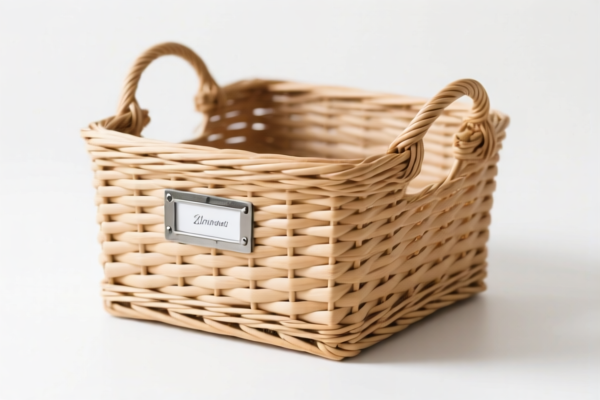
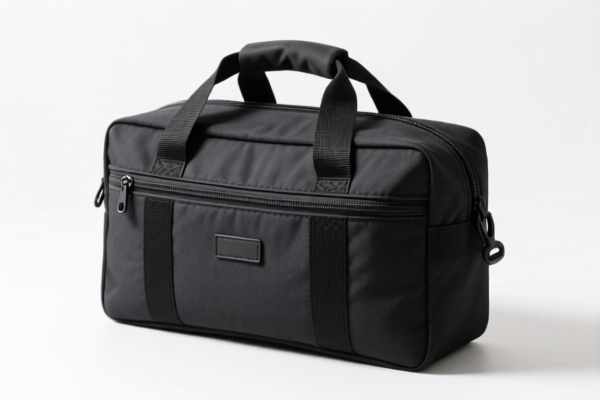
AI Analysis
🛋️ Folding Wheelchair Storage Bag
🌐 HS Code Reference & Customs Clearance Guide | 2026 Latest Tariff Breakdown | Professional Import Strategy
📌 One, Product Definition & Classification: Do You Really Know What a "Folding Wheelchair Storage Bag" Is?
A folding wheelchair storage bag is a protective, portable carrying case designed specifically for folding manual wheelchairs. It is typically made of durable fabric (e.g., polyester, nylon, canvas), features reinforced stitching, padded interior, straps, handles, and sometimes a shoulder strap or backpack-style carry system.
⚠️ Key Distinction:
- If the bag is only a fabric cover with no structural support or functional design for wheelchair transport → may fall under textile or luggage categories.
- If it is designed and marketed as a functional, structured storage/transport bag for folding wheelchairs → must be classified under HS Code 9402.90.90.00.
📦 Two, HS Code Classification Details (2026 Latest Tariff Authority Comparison)
| HS Code | Product Description | Applicable Use Case | Designed for Wheelchair Transport? |
|---|---|---|---|
9402.90.90.00 |
Other furniture, not elsewhere specified, including accessories and parts; bags or cases for wheelchairs (folding) | Folding wheelchair transport bags, protective covers with handles/straps, travel cases | ✅ Yes |
4202.92.90.00 |
Other travel, sports, or similar bags, of man-made fibers | General-purpose backpacks, duffels, gym bags | ❌ No (unless specifically marketed for wheelchairs) |
6307.90.90.00 |
Other made-up articles, not elsewhere specified | Blanket covers, storage sacks, non-specific textile containers | ❌ No |
9402.90.10.00 |
Furniture for indoor use, not elsewhere specified, including accessories | Non-transportable furniture parts or covers | ❌ No (e.g., static chair covers) |
3926.20.90.00 |
Other articles of plastics, not elsewhere specified | Plastic storage bins or non-textile cases | ❌ No (unless made of plastic and not for wheelchair use) |
🔍 Critical Note:
- Only bags specifically designed, marketed, or used for transporting folding wheelchairs qualify for9402.90.90.00.
- A generic backpack or duffel bag cannot be declared as a wheelchair storage bag, even if it fits the chair — misclassification leads to penalties.
💰 Three, 2026 Latest Tariff Rate Breakdown (Including Additional Taxes & Policies)
✅ Applicable Country: United States (US)
✅ Origin: China (CN)
✅ Effective Date: November 10, 2025 (including future imports)
🎯 1. 9402.90.90.00 — Other Furniture Accessories: Wheelchair Transport Bags
| Item | Detail |
|---|---|
| Base Duty Rate | 0% (ad valorem) |
| USITC Additional Duty | +25% (under Section 301 of U.S. Trade Act) |
| IEEPA Additional Duty | +10% (International Emergency Economic Powers Act – China/HK products) |
| Total Effective Duty | 45% |
| Tax Calculation | CIF Value × 45% |
| De Minimis Threshold (US) | ❌ Not eligible (denied de minimis under US law) |
| Legal Basis Path | IEEPA:9903.01.25 → IEEPA:9903.01.24 → USITC:9402.90.90.00 → FOOTNOTE:9903.88.01 |
📌 Explanation:
- The 25% USITC tariff stems from the U.S. Section 301 investigation on Chinese goods.
- The 10% IEEPA tariff is a national security-related surcharge on imports from China.
- Total: 45% — one of the highest effective rates in the consumer goods category.
- No de minimis relief → even small shipments are fully taxed.
🛠️ Four, Customs Clearance Practical Tips (Real-World Pro Tips to Avoid Pitfalls)
✅ 1. Required Documentation Checklist (No Exceptions)
| Document | Must Provide | Notes |
|---|---|---|
| ✅ Product Specification Sheet | ✔️ | Include material, dimensions, weight, strap type, intended use (e.g., “for folding manual wheelchair”) |
| ✅ Product Photos (with label & use case) | ✔️ | Show bag fitted on wheelchair, handles, straps, interior padding |
| ✅ Commercial Invoice | ✔️ | Clearly state: “Folding Wheelchair Storage Bag, for Manual Wheelchair, Model XYZ” |
| ✅ Origin Certificate (CO) | ✔️ | If from Vietnam, Mexico, or Thailand, may qualify for IEEPA exemption |
| ✅ Packing List | ✔️ | Show bag is shipped with wheelchair or separately, but clearly labeled |
| ✅ Third-Party Test Report | ✔️ | Optional but recommended: UL, CE, or RoHS (if applicable) |
✅ 2.申报技巧 (Declaration Tips – Key Mantras)
🔥 “Bag for chair? Only if designed for it. Label it right, or pay 45%!”
| Scenario | Correct HS Code | Wrong Practice |
|---|---|---|
| Bag with handles, straps, padded interior, marketed for folding wheelchairs | 9402.90.90.00 |
Misreported as 4202.92.90.00 → 10% duty instead of 45% → underpayment risk |
| Generic duffel bag used to carry a wheelchair | ❌ Not eligible for 9402.90.90.00 |
申报为“wheelchair bag” → customs rejection or penalty |
| Bag sold with wheelchair as a set | 9402.90.90.00 (as part of set) |
Split shipment → each item taxed separately → higher total cost |
| Bag made of plastic (not fabric) | 3926.20.90.00 |
Misclassified as textile → duty mismatch |
✅ 3. Special Case Handling
| Situation | Recommended Action |
|---|---|
| OEM/Custom Branding Bag | Provide proof of design intent (e.g., CAD, mockup, marketing materials) |
| Bag with removable liner or pockets | Still qualifies under 9402.90.90.00 if core function is wheelchair transport |
| Bag used in medical or disability programs | Can apply for non-commercial import exemption — requires documentation from nonprofit or healthcare provider |
| Bag sold as part of a wheelchair kit | Declare as a set under 9402.90.90.00 — avoid split classification |
🌍 Five, Global Market Customs Comparison (2026 Latest)
| Country/Region | Recommended HS Code | Duty Rate | Certification Required | Notes |
|---|---|---|---|---|
| 🇺🇸 United States | 9402.90.90.00 |
45% (China origin) | None (but recommend RoHS/FCC if electronic parts) | Highest tariff globally |
| 🇨🇳 China | 9402.90.90.00 |
5% | CCC (if electronic) | No additional tariffs |
| 🇪🇺 European Union | 9402.90.90.00 |
0% (if CE compliant) | CE, RoHS | No extra duties |
| 🇦🇺 Australia | 9402.90.90.00 |
5% | RCM | No additional tariffs |
| 🇯🇵 Japan | 9402.90.90.00 |
0% | PSE | No extra charges |
📌 Conclusion:
- The U.S. is the only market imposing a 45% effective tariff on these bags from China.
- Origin matters: If manufactured in Vietnam, Mexico, Thailand, or Malaysia, you may qualify for IEEPA exemption → 0% duty.
📌 Six, Common Mistakes & How to Avoid Them (Real-World Lessons)
❌ Mistake 1: Calling a generic backpack a “wheelchair bag”
👉 Result: Customs rejects classification → delay, fines, or seizure
❌ Mistake 2: Splitting shipment — bag and wheelchair in separate boxes
👉 Result: Each item taxed separately → total duty up to 90%
❌ Mistake 3: Using “storage bag” or “carrying case” without mentioning wheelchair use
👉 Result: Misclassified as 4202.92.90.00 → underpaid duty → audit risk
❌ Mistake 4: Not providing photos or proof of design intent
👉 Result: Customs cannot verify function → hold-up or rejection
✅ Correct Declaration Example:
“Folding Wheelchair Storage Bag, 25” x 18” x 12”, Polyester Fabric, Padded Interior, Adjustable Shoulder Strap, Reinforced Handles, Designed for Manual Folding Wheelchairs, Model WCB-2025, CE & RoHS Certified”
🎯 Seven, Final Verdict: Precision in Classification = Profit Protection!
🎯 Remember the Mantra:
🔹 “If it’s made for a wheelchair, declare it as such. Mislabel it, and pay 45%!”
🔹 “HS Code decides your cost. One wrong digit, and your profit vanishes.”
📌 Pro Tip:
If your bag is originated in Vietnam, Mexico, Thailand, or Malaysia, you can apply for IEEPA exemption → 0% duty.
👉 Apply for Advance Ruling (Pre-Approval) before shipment to avoid surprises.
📣 Take Action Now:
📞 Contact a licensed customs broker + submit product images + request HS Code pre-ruling
🚀 Ensure your folding wheelchair storage bag clears customs smoothly, avoids penalties, and protects your margins!
✨ Smart Classification. Smart Trade. Smart Profit.
💼 Your next shipment starts with the right HS Code.
Customer Reviews
About HS Code Classification
The Harmonized System (HS) is an internationally standardized nomenclature developed by the World Customs Organization (WCO) to classify traded products. Over 200 countries use the HS system as the basis for customs tariffs, trade statistics, and import/export regulations.
Each HS code follows a hierarchical structure:
- Chapter (2 digits) — Broad category of goods (e.g., Chapter 84: Machinery and Mechanical Appliances)
- Heading (4 digits) — More specific grouping within the chapter
- Subheading (6 digits) — Internationally standardized breakdown, used by all WCO member countries
- National subdivisions (8-10 digits) — Country-specific extensions for further classification, such as US HTSUS 10-digit codes
Correct HS code classification is essential for smooth customs clearance, accurate duty payment, and compliance with trade regulations. Misclassification can lead to customs delays, overpayment of duties, or penalties.
When importing from CN to US, the applicable tariff rates may include:
- Most-Favored-Nation (MFN) rate — The standard duty rate applied to WTO members
- General rate — Applied to countries without trade agreements
- Trade remedy duties — Additional tariffs such as Section 301 (anti-dumping), Section 232 (national security), or countervailing duties
The information provided on this page is for reference purposes only. For official classification, please consult with your local customs authority or a licensed customs broker.