拉绳启动器
CN → US| HS Code | Tariff Rate | Origin | Destination | Doc |
|---|---|---|---|---|
| 8483509080 | 37.8% | CN | US | Official Doc |
| 8483608000 | 37.8% | CN | US | Official Doc |
| 8431100090 | 0.0% | CN | US | Official Doc |
| 8431200000 | 35.0% | CN | US | Official Doc |
| 8409919990 | 37.5% | CN | US | Official Doc |
| 8409999990 | 35.0% | CN | US | Official Doc |
Product Images
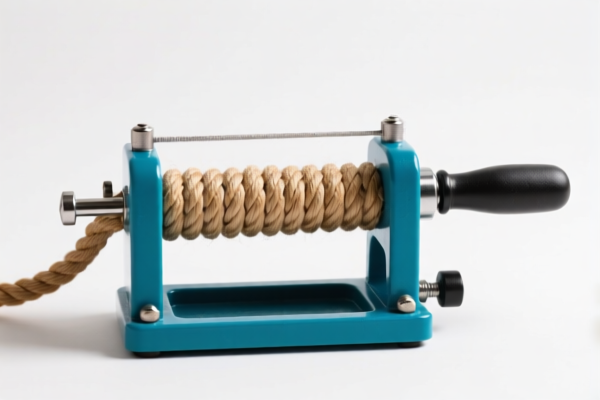
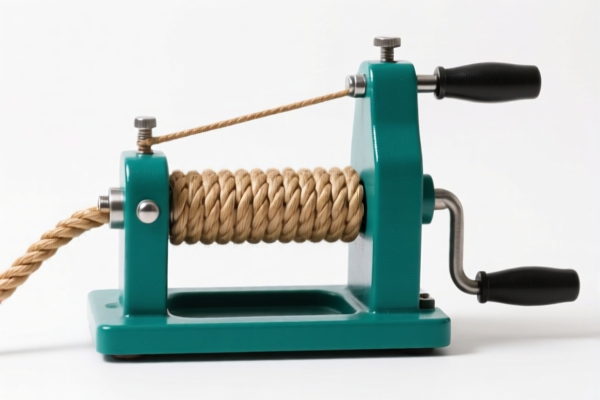
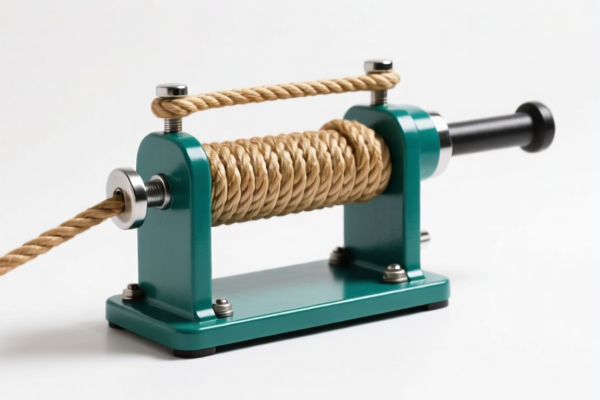
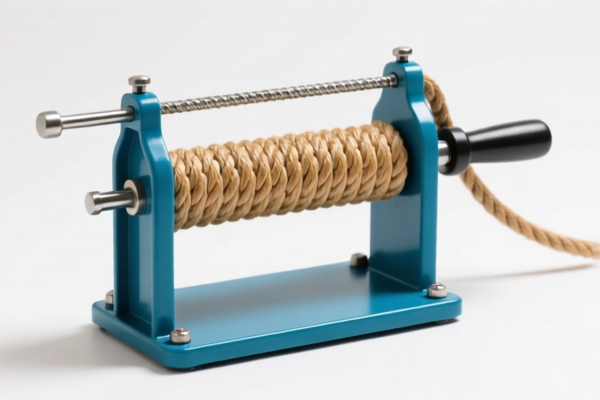
AI Analysis
🚜 Rope Pull Starters (Engine Starting Mechanisms)
🌐 HS Code Reference & Customs Clearance Guide | 2026 Latest Tariff Analysis | Professional Clearance Strategy
📌 I. Product Definition & Classification: What Exactly is a "Rope Pull Starter"?
A rope pull starter (also known as a recoil starter) is a mechanical device used to start internal combustion engines by manually pulling a cord that rotates a pulley, engaging a starter gear or rotating the flywheel. In international trade, its classification depends heavily on which engine it serves and its functional role (starter vs. transmission component).
⚠️ Key Classification Distinction:
- If primarily viewed as a starting accessory for Spark-Ignition Engines (e.g., small engines in lawnmowers, generators) → Chapter 8409
- If viewed as a mechanical transmission/transmission component (e.g., flywheel/pulley mechanism) → Chapter 8483
- If viewed as a general mechanical part without specific engine attribution → Chapter 8431
- Crucial Note: The total tax burden is extremely high due to additional duties, regardless of the specific HS Code chosen.
📦 II. HS Code Classification Details (2026 Latest Tariff Authority Comparison)
| HS Code | Product Description | Applicable Scenario | Key Classification Logic |
|---|---|---|---|
8409.91.99.90 |
Parts of Spark-Ignition Internal Combustion Engines | Small engines (lawnmowers, chainsaws, portable generators) | Classified under "Other parts" specifically for spark-ignition engines |
8409.99.99.90 |
Parts of Other Internal Combustion Engines (Diesel/Compression Ignition) | Larger diesel engines, industrial engines | "Other parts" category for non-spark-ignition engines |
8483.50.90.80 |
Flywheels, Pulleys, and Variable Speed Transmission Devices | Functional view as a mechanical transmission/flywheel component | Classified as "Other flywheels and pulleys" |
8483.60.80.00 |
Other Transmission/Control Components | Viewed as a generic transmission/control part (metal/plastic) | "Other" category for transmission/control mechanisms |
8431.20.00.00 |
Parts of Machinery of Heading 8425-8430 | General mechanical starting/control component | Broad "parts" category with no material conflict |
🔍 Critical Reminder:
- 8409 Codes: Best if the starter is sold with or clearly intended for spark-ignition engines.
- 8483 Codes: Best if the starter is viewed as a transmission mechanism (pulley/flywheel system) regardless of engine type.
- 8431 Code: A "fallback" option for general mechanical parts, offering a slightly lower base duty but still subject to high add-ons.
💰 III. 2026 Latest Tariff Rate Breakdown (Including Add-ons & Policy Surcharges)
✅ Applicable Country: United States (US)
✅ Origin: China (CN)
✅ Effective Date: November 10, 2025 (and subsequent imports)
🎯 1. 8409.91.99.90 – Parts of Spark-Ignition Engines (Most Common)
| Item | Details |
|---|---|
| Base Duty Rate | 2.5% (ad valorem) |
| Section 301 Add-on Duty | +25.0% |
| Section 122 Duty | +10.0% |
| Total Effective Tax Rate | 37.5% |
| Tax Calculation | CIF Value × 37.5% |
| De Minimis Exemption | ❌ Not Eligible (deny_de_minimis) |
| Legal Authority Path | Base: 2.5% → Section 301: 25.0% → Section 122: 10.0% |
📌 Explanation:
- Base 2.5%: Standard US duty for engine parts under Chapter 8409.
- Section 301 (25%): Retaliatory tariffs on Chinese goods under US Trade Law Section 301.
- Section 122 (10%): Additional duty on imported goods under Section 122 of the Trade Act.
- Total 37.5%: A very high total tax rate. Must be factored into cost calculations.
🎯 2. 8483.50.90.80 & 8483.60.80.00 – Mechanical Transmission/Pulley Components
| Item | Details |
|---|---|
| Base Duty Rate | 2.8% (ad valorem) |
| Section 301 Add-on Duty | +25.0% |
| Section 122 Duty | +10.0% |
| Total Effective Tax Rate | 37.8% |
| Tax Calculation | CIF Value × 37.8% |
| De Minimis Exemption | ❌ Not Eligible (deny_de_minimis) |
| Legal Authority Path | Base: 2.8% → Section 301: 25.0% → Section 122: 10.0% |
📌 Note:
- These codes fall under Chapter 8483 (Transmission shafts, bearings, gears, etc.).
- Even though the base rate (2.8%) is slightly higher than 8409 (2.5%), the total remains nearly identical due to the heavy add-ons.
- Useful if the product is marketed as a "starter assembly" with pulley/flywheel integration.
🎯 3. 8431.20.00.00 & 8409.99.99.90 – General Parts / Diesel Engine Parts
| Item | Details |
|---|---|
| Base Duty Rate | 0.0% (ad valorem) |
| Section 301 Add-on Duty | +25.0% |
| Section 122 Duty | +10.0% |
| Total Effective Tax Rate | 35.0% |
| Tax Calculation | CIF Value × 35.0% |
| De Minimis Exemption | ❌ Not Eligible (deny_de_minimis) |
| Legal Authority Path | Base: 0.0% → Section 301: 25.0% → Section 122: 10.0% |
📌 Explanation:
- Base 0.0%: Both 8431 (parts of machinery) and 8409.99 (parts of diesel engines) can have 0% base duty depending on specific subheading interpretations.
- Savings: This results in a 2.5% lower total tax compared to the spark-ignition engine parts code.
- Strategy: If the starter is compatible with or intended for diesel/compression-ignition engines, or if it can be classified as a general mechanical part, this offers the lowest total tax rate.
🛠️ IV. Customs Clearance Practical Advice (Actionable Pitfall Avoidance Guide)
✅ 1. Documentation Checklist (All Required)
| Document | Must Provide | Description |
|---|---|---|
| ✅ Product Specification Sheet | ✔️ | Include compatibility (spark vs. diesel), material (metal/plastic), and mechanism type. |
| ✅ Technical Diagram | ✔️ | Show how the rope, pulley, and starter gear interact. Clarify if it’s a standalone unit or part of an engine assembly. |
| ✅ Product Photos (with Label) | ✔️ | Clear image of the label showing model number, brand, and any engine compatibility codes. |
| ✅ Commercial Invoice | ✔️ | Clearly state "Rope Pull Starter for Internal Combustion Engine" – Do not use vague terms like "Engine Part" without context. |
| ✅ Packing List | ✔️ | Detail contents. If shipped with an engine, it may be classified as part of the engine (different rules apply). |
| ✅ Origin Certificate | ✔️ | If not Chinese origin, request to avoid Section 301/122 duties (if applicable). |
✅ 2. Declaration Tips (Key Mnemonics)
🔥 “Match the Engine, Specify the Function, Avoid Ambiguity, Save on Tax!”
| Scenario | Correct Declaration | Wrong Practice |
|---|---|---|
| Starter for Lawnmower/Chainsaw | 8409.91.99.90 |
Declare as "Hardware" → Misclassification Risk |
| Starter for Generator/Diesel Engine | 8409.99.99.90 or 8431.20.00.00 |
Declare as "Plastic Part" → 37.8% Tax |
| Starter with Flywheel/Pulley Integrated | 8483.50.90.80 |
Declare as "Simple Rope" → Valuation Dispute |
| Loose Rope/Handle Only | Different HS (e.g., 3926/7326) | Declare as "Complete Starter" → Over-declaration |
✅ 3. Special Handling Scenarios
| Scenario | Handling Advice |
|---|---|
| OEM Custom Starters | Provide end-customer order + engine model compatibility chart to justify 8409 classification. |
| Kit with Engine | If shipped with the engine, it is usually considered part of the engine. The entire unit may be classified under the engine’s HS Code (often 8407/8408), potentially changing the tax structure. |
| Spare Parts vs. Assembly | If it’s a complete assembly (gears, pulley, housing), 8483 or 8409 is appropriate. If just the rope/handle, reconsider classification. |
| Material Misclassification | Ensure the description matches the material (metal/plastic). Misdeclaring plastic as metal can lead to penalties. |
🌍 V. Global Market Customs Comparison (2026 Latest)
| Country/Region | Recommended HS Code | Duty Rate (China Origin) | Certification Requirements | Notes |
|---|---|---|---|---|
| 🇺🇸 USA | 8409.91.99.90 / 8431.20.00.00 |
35.0% – 37.8% | None specific, but safety certs recommended | High Tariff Environment due to 301/122 |
| 🇨🇳 China | 8409.91.99.90 |
~5-10% | CCC (if applicable) | Lower base duty |
| 🇪🇺 EU | 8409.91.99.90 |
~0-3% | CE, RoHS | No Section 301/122 equivalents |
| 🇬🇧 UK | 8409.91.99.90 |
~0-5% | UKCA, RoHS | Post-Brexit tariffs apply |
| 🇯🇵 Japan | 8409.91.99.90 |
~0-3% | PSE | Low base duties |
📌 Conclusion:
- The USA is the only major market with these punitive additional duties (Section 301/122).
- Total tax burden is ~35-38%, significantly impacting profit margins.
- EU/UK/Asia markets have much lower duties, making them more attractive if supply chain diversification is possible.
📌 VI. Common Errors & Pitfalls (Blood & Tears Lessons)
❌ Error 1: Declaring as "Engine Part" without specifying engine type
👉 Consequence: Customs may default to the higher tax rate (8483 or 8409.91) or hold shipment for clarification.
❌ Error 2: Ignoring Section 122 and 301 duties in cost calculations
👉 Consequence: Underestimating landed cost by ~35%, leading to unexpected cash flow issues.
❌ Error 3: Splitting a complete starter assembly into "rope", "pulley", and "housing"
👉 Consequence: Each component may be taxed separately, potentially increasing total tax or triggering misdeclaration penalties. Declare as a single unit.
❌ Error 4: Using vague terms like "Mechanical Device"
👉 Consequence: Customs may classify under 8483 or 9031 (measuring instruments) incorrectly, leading to disputes.
✅ Correct Practice:
"Rope Pull Starter Assembly, Model XYZ, for 2HP Spark-Ignition Engine, Metal/Plastic Components, No Electronic Control"
🎯 VII. Conclusion: Precise Classification Saves Money!
🎯 Remember the Key Takeaways:
🔹 "Base Duty Matters, But Add-ons Kill Profit!" (Total 35-38% in USA)
🔹 "Spark-Ignition = 8409.91 | Diesel/General = 8409.99/8431"
🔹 "De Minimis Does NOT Apply" – Every shipment is subject to full duty.
🔹 "Match the End-Use" – Declare based on the engine type it serves.
📌 Pro Tip:
If your rope pull starter is originating from Vietnam, Mexico, Thailand, or Malaysia, you may avoid Section 301/122 duties, reducing the total tax to 0-5%.
✅ Recommendation:
📞 Apply for an Advance Ruling from US Customs and Border Protection (CBP) to lock in the correct HS Code and duty rate before shipment.
📦 Ensure Commercial Invoices are Precise – "Rope Pull Starter for [Specific Engine Type]" prevents ambiguity.
📣 Immediate Action:
🚀 Audit Your Supply Chain: Is origin shifting to avoid tariffs?
📝 Document Everything: Specs, diagrams, and compatibility charts are your best defense.
💰 Calculate Landed Cost Correctly: Include 35-38% tax for US imports.
✨ Professional Clearance, Starting with Accurate Classification!
💼 Every Percent Saved in Duty is Pure Profit!
Customer Reviews
About HS Code Classification
The Harmonized System (HS) is an internationally standardized nomenclature developed by the World Customs Organization (WCO) to classify traded products. Over 200 countries use the HS system as the basis for customs tariffs, trade statistics, and import/export regulations.
Each HS code follows a hierarchical structure:
- Chapter (2 digits) — Broad category of goods (e.g., Chapter 84: Machinery and Mechanical Appliances)
- Heading (4 digits) — More specific grouping within the chapter
- Subheading (6 digits) — Internationally standardized breakdown, used by all WCO member countries
- National subdivisions (8-10 digits) — Country-specific extensions for further classification, such as US HTSUS 10-digit codes
Correct HS code classification is essential for smooth customs clearance, accurate duty payment, and compliance with trade regulations. Misclassification can lead to customs delays, overpayment of duties, or penalties.
When importing from CN to US, the applicable tariff rates may include:
- Most-Favored-Nation (MFN) rate — The standard duty rate applied to WTO members
- General rate — Applied to countries without trade agreements
- Trade remedy duties — Additional tariffs such as Section 301 (anti-dumping), Section 232 (national security), or countervailing duties
The information provided on this page is for reference purposes only. For official classification, please consult with your local customs authority or a licensed customs broker.